

China’s Consul General in Almaty discusses the evolving Kazakhstan-China relationship, regional cooperation, the digital economy, artificial intelligence and people-to-people ties.
Cooperation between Kazakhstan and China is increasingly extending beyond traditional areas such as trade, energy and transport connectivity. New sectors are emerging that could shape the next stage of the bilateral relationship, including green energy, the digital economy, artificial intelligence, cross-border e-commerce and smart cities.
In an interview with Delovoy Kazakhstan, Su Fangqiu, Consul General of the People’s Republic of China in Almaty, spoke about the current state of relations between the two countries, the prospects for regional cooperation, the role of Almaty and southeastern Kazakhstan, and why people-to-people contacts, education, tourism and media cooperation are becoming an increasingly important part of the partnership.
— Mr. Consul General, Kazakhstan-China relations are currently developing at a high level, with political trust between the two countries deepening and their longstanding friendship growing stronger. How would you assess the current state of Kazakhstan-China relations? Where do you see the greatest potential for further cooperation?
— Kazakhstan-China relations are currently at their strongest point in history. Under the strategic guidance of the two heads of state, the permanent comprehensive strategic partnership between China and Kazakhstan continues to develop steadily, demonstrating significant potential for cooperation and strong momentum.
According to Chinese statistics, bilateral trade reached $32.45 billion between January and July 2026, an increase of 24.1% year on year. China has remained Kazakhstan’s largest trading partner for three consecutive years.
Looking ahead, the two sides will continue to strengthen cooperation in traditional areas such as energy resources and transport connectivity, while actively developing new drivers of growth in renewable energy, the digital economy, artificial intelligence, cross-border e-commerce and smart cities.
These efforts will contribute to the further development of Kazakhstan-China relations, advance high-quality cooperation under the Belt and Road Initiative, and deliver new practical results.
— Almaty has traditionally played an important role in Kazakhstan-China relations. As one of Kazakhstan’s major economic, cultural and educational centres, the city maintains close ties with a number of regions in China. What opportunities do you see for strengthening cooperation between Almaty, southern and eastern Kazakhstan, and Chinese provinces and cities?
— Almaty and Shymkent, as well as the East Kazakhstan, Abai, Zhetysu, Almaty, Zhambyl and Turkistan regions, are important centres of Kazakhstan’s economy, finance, agriculture, culture, education, science and technology.
They have established friendly ties with Beijing, Shanghai, Tianjin, Xinjiang and other Chinese provinces and cities, and are actively developing cooperation with China. These regions play a unique role as a bridge in Kazakhstan-China relations.
There is considerable potential to expand regional cooperation further.
First, by making effective use of transport corridors, including rail links, road networks and direct air services, Almaty and southeastern Kazakhstan can further strengthen their role as an important hub for regional cooperation between Kazakhstan and China.
Second, there is significant scope to expand cooperation in cross-border e-commerce, green energy, logistics and transportation, automotive manufacturing, while attracting Chinese investment into promising projects.
Third, the mutual visa-free regime and existing mechanisms for cultural exchange provide opportunities to deepen cooperation in tourism, education, science and technology.
Fourth, cultural events, sporting competitions and other forms of people-to-people diplomacy should continue to expand. Such initiatives can strengthen mutual understanding and friendship between the people of Kazakhstan and China and broaden the social foundation of bilateral relations.
— Kazakhstan and China are not only expanding their political and economic ties, but are also strengthening contacts between their people through culture, education, tourism and the media. Which areas are particularly important today for building greater mutual understanding and friendship between the two societies?
— The strength of relations between countries largely depends on the closeness of their people. In my view, cooperation should be strengthened in four key areas.
First, we should expand cultural and youth exchanges, increase opportunities to study the Chinese language and promote student exchanges. The potential of Confucius Institutes and the Luban Workshop initiative should be fully utilised so that younger generations can carry forward the friendship between Kazakhstan and China.
Second, it is important to make travel even more convenient and make effective use of the mutual visa-free regime, enabling people from both countries to visit each other more frequently, travel and gain a better understanding of one another.
Third, cooperation between media organisations and think tanks should be deepened, with greater efforts to present the story of friendship and cooperation between Kazakhstan and China in an objective and engaging way.
Fourth, we should continue to develop people-to-people initiatives, including cultural performances, sporting events, exhibitions and other projects. Such exchanges can bring the two societies closer together and foster greater mutual understanding and stronger personal connections.
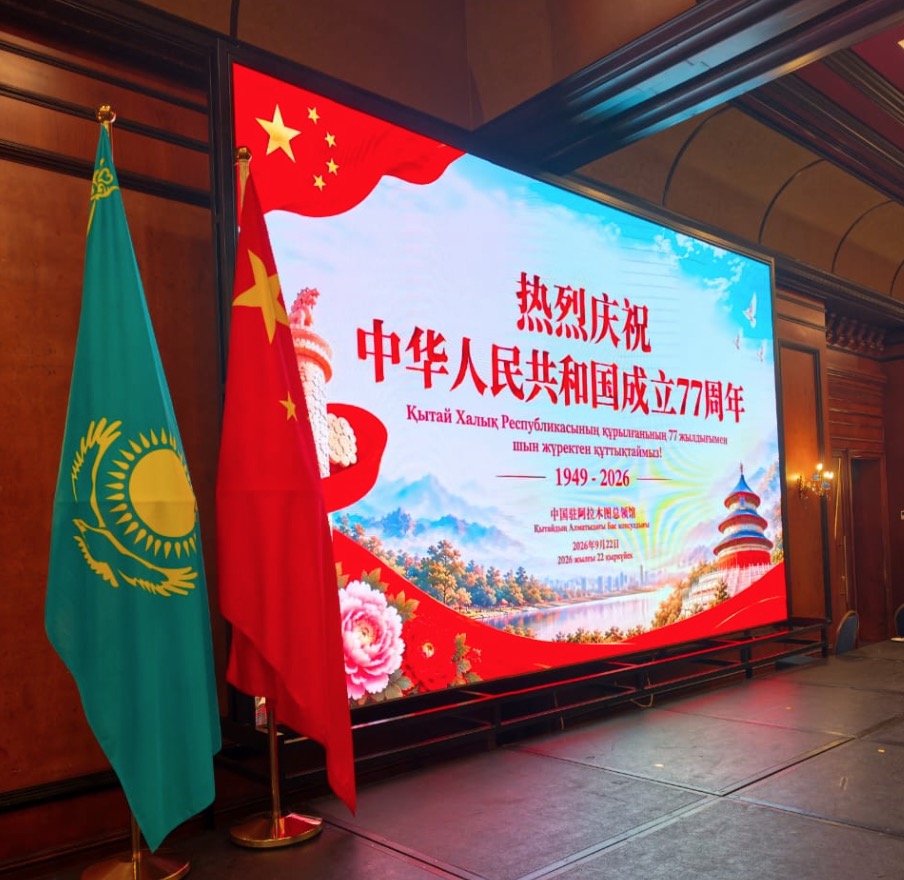
— Since taking office as Consul General, you have visited Almaty, Taldykorgan, Turkistan and other parts of Kazakhstan. What impressions have these visits left on you? As China’s National Day approaches, what message would you like to share with the readers of Delovoy Kazakhstan and the people of Kazakhstan?
— During my time here, I have been deeply impressed by the hospitality and friendliness of the people of Kazakhstan, as well as by Almaty’s openness and vibrant energy. In many places, I have also witnessed the deep friendship that exists between the people of China and Kazakhstan.
The remarkable diversity of the Kazakh steppe, the lively streets of Almaty, the ancient history of the Silk Road and the dynamic development of modern Kazakhstan-China cooperation have all left a strong impression on me.
As we approach the 77th anniversary of the founding of the People’s Republic of China, I would like to extend my sincere greetings and best wishes to the people of Kazakhstan.
I sincerely wish Kazakhstan continued prosperity and its people happiness and well-being. May the friendship between Kazakhstan and China remain strong and enduring, passed down from generation to generation, and may the people of our two countries work together to build an even brighter future.