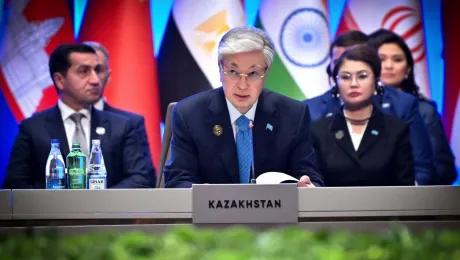

Kazakhstan wants to turn German capital into joint projects. President Kassym-Jomart Tokayev has proposed establishing a Kazakhstan-Germany Investment and Finance Platform that would combine German and European funding with Kazakh co-financing, guarantees and risk-sharing instruments, DKNews.kz reports.
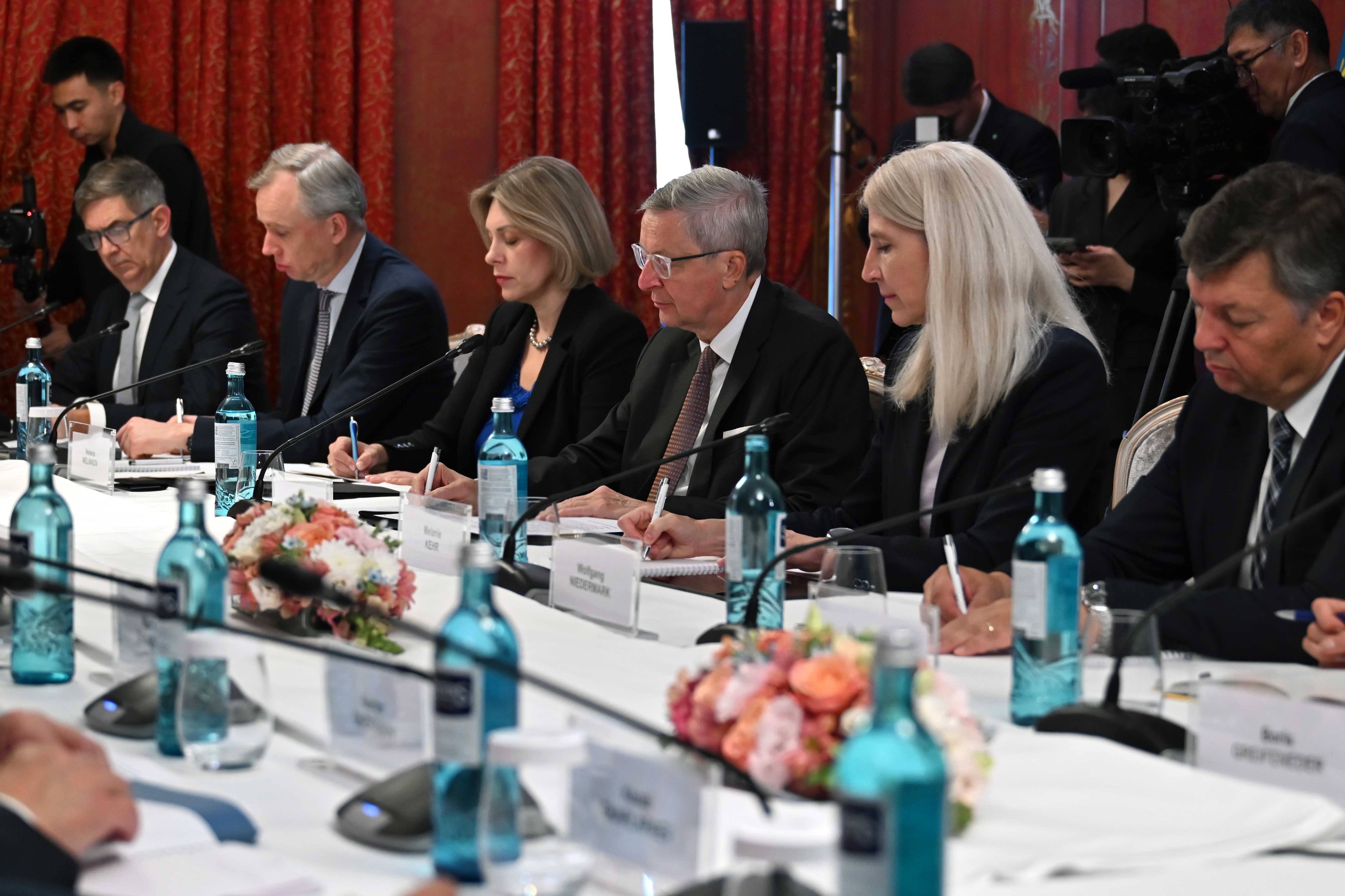
Tokayev unveiled the proposal in Berlin on September 29 during a meeting with the heads of leading German business associations and financial institutions. The meeting opened the business programme of his official visit to Germany.
German capital could be paired with Kazakh guarantees
The proposed platform is designed to move bilateral investment cooperation from individual deals towards a structured financing mechanism.
Under Tokayev’s proposal, Baiterek Holding would structure projects on the Kazakh side, while German and European capital could be combined with Kazakh co-financing, guarantees and instruments for sharing investment risks.
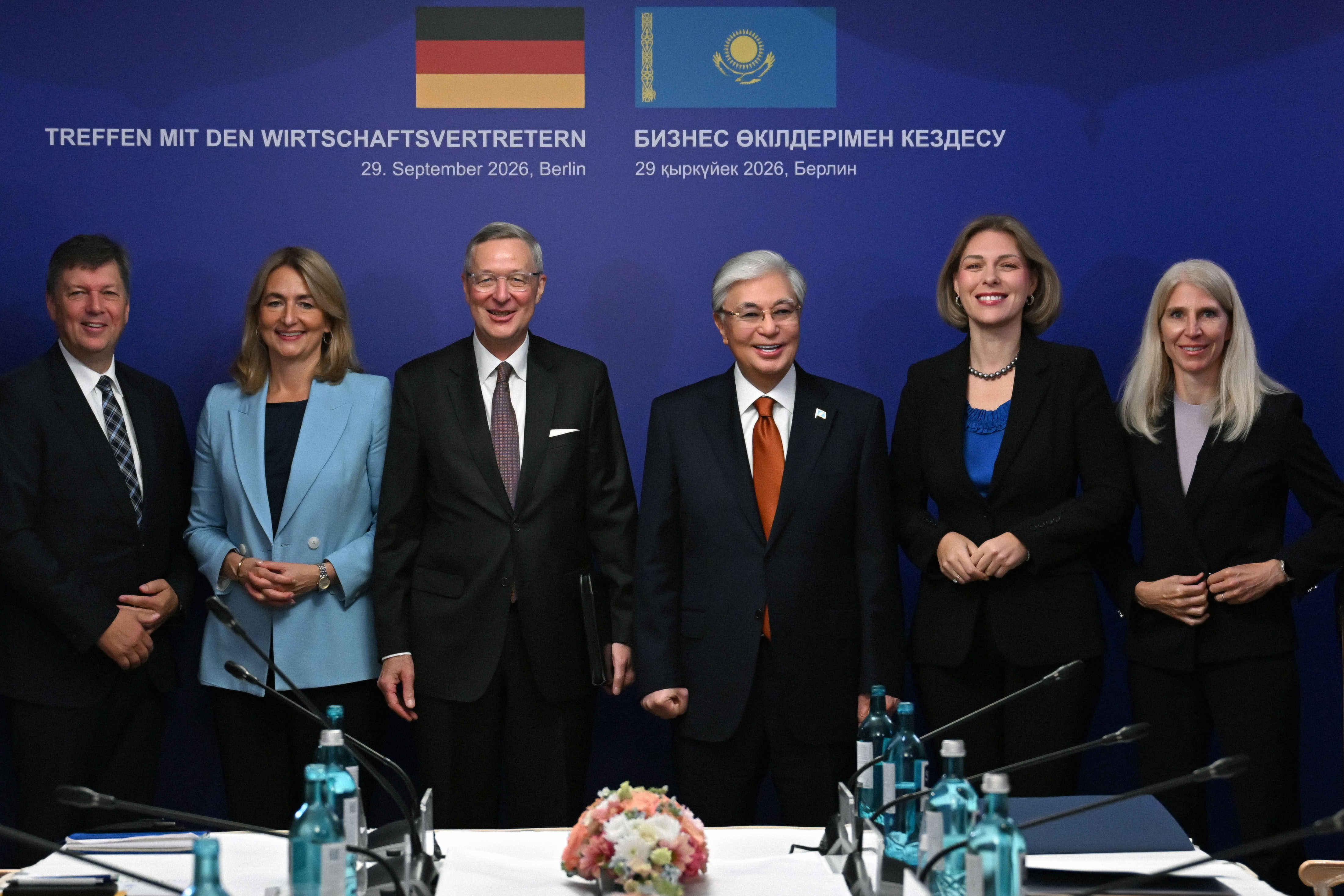
«The Platform would combine German and European capital with Kazakh co-financing, guarantees and risk-sharing instruments, with Baiterek Holding structuring projects on our side. We would welcome the participation of German export credit and investment insurance, alongside the international financial institutions already active in Kazakhstan. In this context, I would particularly highlight the importance we attach to our cooperation with Euler Hermes, which is already working with us», — Tokayev said.
The mechanism could give German financial institutions a clearer structure for entering large Kazakh projects while distributing risks among several participants.
German institutions have already helped raise over $1.2 billion
Tokayev pointed to an existing financial base for deeper cooperation.
According to the President, Kazakhstan’s development institutions provided $20 billion in total support to the economy last year.
He also said the Development Bank of Kazakhstan has raised more than $1.2 billion from German financial institutions over the years to finance major industrial, energy and transport infrastructure projects.
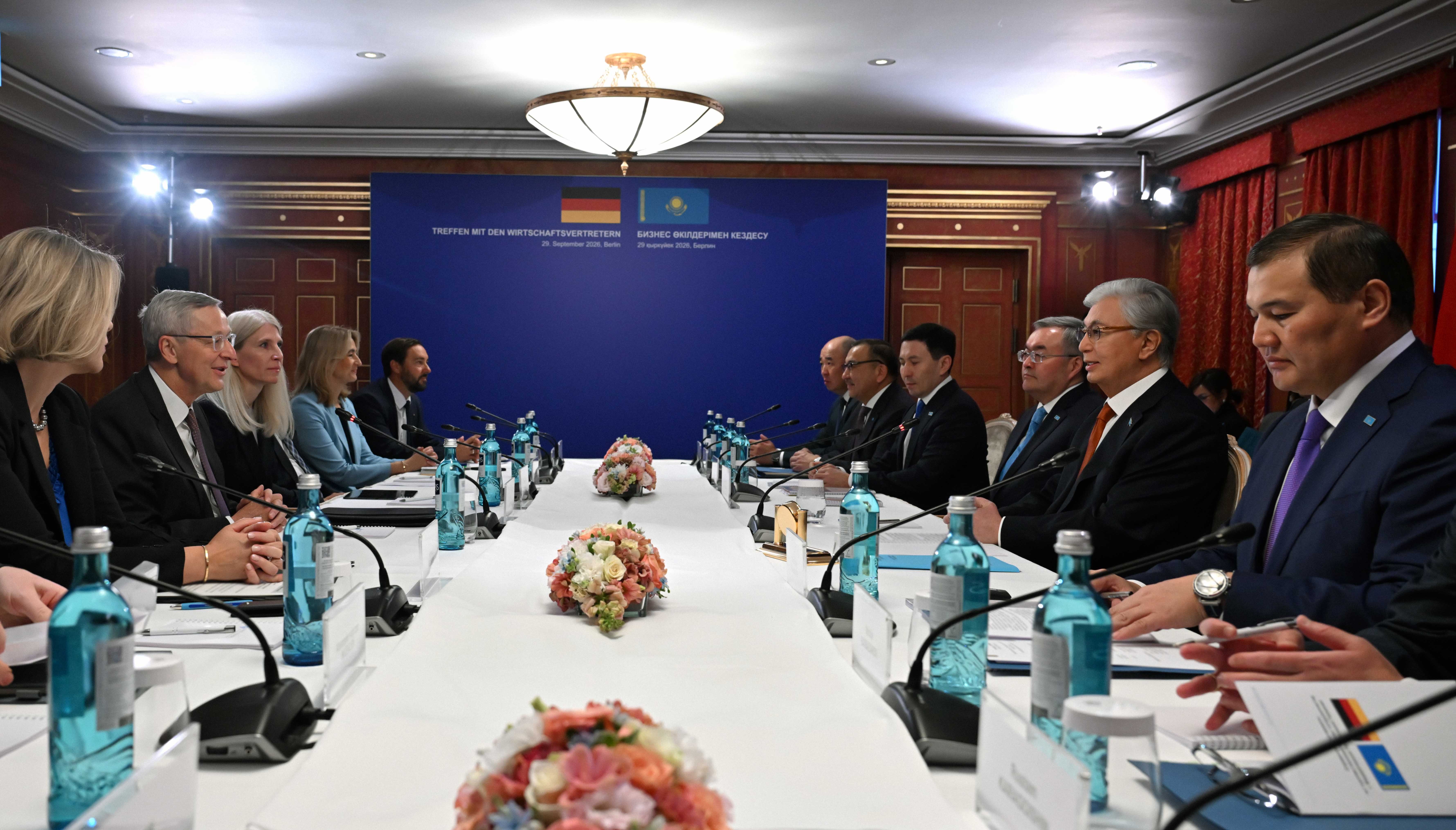
«Development institutions play active role in financing our economy. Last year, their total volume of support stood at 20 billion US dollars. Over the years, the Development Bank of Kazakhstan has financed key industrial, energy and transport infrastructure projects in Kazakhstan with the support of German financial institutions, raising more than 1.2 billion dollars from Deutsche Bank, Helaba, LBBW, Commerzbank, KfW and others», — Tokayev said.
The President also told the meeting that S&P had recently upgraded Kazakhstan’s sovereign credit rating to BBB with a stable outlook, while Fitch assigns the country the same rating.
Critical raw materials move higher on the agenda
Critical raw materials were identified as one of the priority areas for the next stage of cooperation.
Kazakhstan is interested in working with Germany’s Raw Materials Fund and advancing projects that meet the requirements for UFK guarantees while strengthening the security of supplies to German industry.
That creates a direct link between Kazakhstan’s resource base and Germany’s demand for more secure industrial supply chains.
Energy and industrial modernisation were also highlighted, including renewable energy and green hydrogen. Tokayev pointed to potential cooperation between the European Investment Bank and the Development Bank of Kazakhstan with German capital involved.
Kazakhstan proposes a digital and AI partnership with Germany
Finance and raw materials are only part of the proposed cooperation.
Tokayev also called for a Kazakhstan-Germany Digital Innovation and AI Partnership, inviting German companies to participate in data-centre technologies, cloud infrastructure, energy efficiency and cybersecurity.
«We invite German companies to bring their strengths in data-centre technologies, energy efficiency, cloud infrastructure and cybersecurity. Another promising area is fintech. Kazakhstan’s advanced digital financial ecosystem allows payment and tokenization solutions to be developed at home and then scaled across the region», — the President said.
The proposal links German engineering and technology expertise with Kazakhstan’s efforts to expand its digital economy and financial technology sector.
Alatau City pitched as a gateway for German finance
Tokayev separately presented Alatau City as a potential entry point for German institutional capital.
The project is intended to become a smart city built around digital infrastructure and new investment mechanisms.
«This project is the first smart city in Central Asia designed from the outset for the digital age. It can thus become a practical bridge between German institutional capital and Kazakhstan’s investment pipeline. I am confident that Alatau City will become a new destination for talent, technology and business across Eurasia», — Tokayev said.
The proposal gives Alatau City an additional role beyond urban development: Kazakhstan wants to use the project as a platform connecting foreign institutional investors with its domestic pipeline of projects.
Kazakhstan wants investment to create new industries
Tokayev told German business leaders that Kazakhstan intends to remain a predictable environment for investors, protect their rights and support strategically important projects.
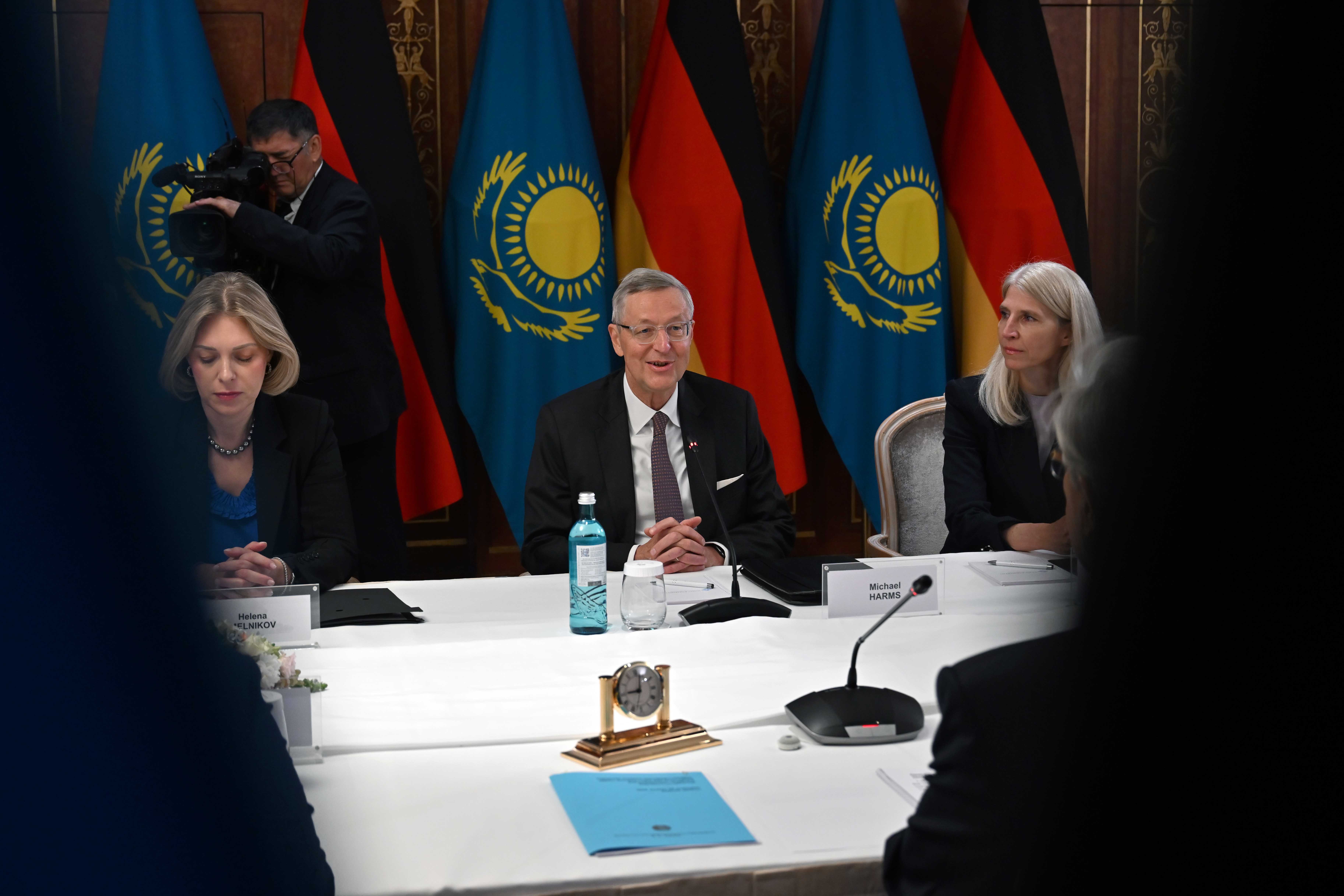
The meeting brought together senior representatives of the German Committee on Eastern European Economic Relations, the German Chamber of Commerce and Industry, the Federation of German Industries, German Water Partnership, KfW Group, Deutsche Bank, Euler Hermes and AKA Ausfuhrkredit-Gesellschaft.
The President framed the objective in broader terms than simply increasing capital inflows. Kazakhstan wants German finance and technology to contribute to new industries and long-term sources of economic growth.
That makes the proposed investment platform the central practical question arising from the Berlin meeting: whether German capital, Kazakhstan’s guarantees and development institutions can be brought together in a mechanism capable of moving projects from negotiations to financing.
We previously reported on Tokayev’s official visit to Germany and why the talks in Berlin and Munich are focused on investment, technology, business and research cooperation. The programme includes meetings with German political leaders, companies, financial institutions, universities and research organisations.