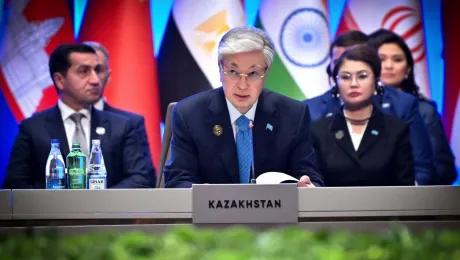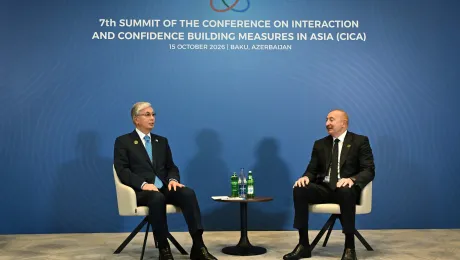

Kazakhstan has moved closer to easier travel with the European Union. President Kassym-Jomart Tokayev and German Federal President Frank-Walter Steinmeier have welcomed the successful conclusion of negotiations on an agreement to facilitate the issuance of visas between Kazakhstan and the EU, DKNews.kz reports.
The development was included in a joint declaration issued during Tokayev’s official visit to Germany on September 29–30. The document covers a much broader strategic agenda, from critical raw materials and the Middle Corridor to energy, artificial intelligence, education and water cooperation.
Visa talks reach a new stage
The visa provision is one of the most practical elements of the declaration for citizens.
Kazakhstan and Germany welcomed the successful conclusion of negotiations on an agreement between Kazakhstan and the European Union on facilitating the issuance of visas. They described it as an important step towards strengthening people-to-people contacts and implementing the related readmission agreement.
This does not mean visa-free travel has been introduced. The development concerns the completion of negotiations on visa facilitation, with further legal procedures required before the agreement can take effect.
The process has moved quickly. Kazakhstan and the EU formally launched negotiations on visa facilitation and readmission in December 2025. By June 2026, EU and Kazakh leaders reported that discussions had been successfully concluded at negotiators’ level.
The exact practical changes for applicants will depend on the final agreement and its entry into force.
Germany and Kazakhstan agree on a 2026–2028 industrial roadmap
The joint declaration goes considerably beyond political language.
Tokayev and Steinmeier welcomed a joint industrial, technological and raw materials cooperation roadmap for 2026–2028. Its priorities include building joint production capacity, extracting and processing critical raw materials, increasing domestic value added and creating more resilient supply chains.
This fits the economic message Kazakhstan has been presenting to German business during Tokayev’s Berlin visit: cooperation should increasingly move from supplying raw materials towards processing, manufacturing and technology transfer.
Critical raw materials are particularly important because Kazakhstan wants to combine its resource base with German industrial technology and investment.
Middle Corridor receives political backing
Transport is another major component of the declaration.
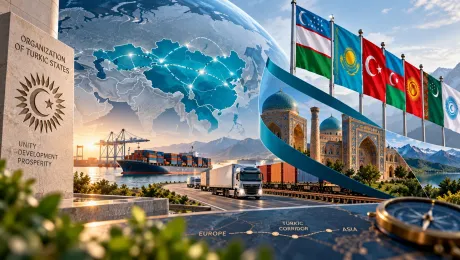
The presidents described the Trans-Caspian International Transport Route, widely known as the Middle Corridor, as strategically important to Asian and European transport and trade networks.
They backed its further expansion as a competitive and reliable route and welcomed initiatives by Kazakhstan, Germany and the European Union to develop transport infrastructure and connectivity.
The issue is already part of the wider Kazakhstan-EU agenda. The EU has identified the Trans-Caspian corridor as a strategic connectivity project, while Kazakhstan has been expanding port, terminal and logistics infrastructure on its Caspian coast.
Energy cooperation includes oil, gas and green hydrogen
Kazakhstan and Germany also agreed to deepen cooperation on energy security and diversification of supply routes.
The declaration specifically refers to oil and gas supplies to Europe alongside renewable energy, industrial decarbonisation and green hydrogen.
Cooperation is expected to continue through the Kazakhstan-Germany Energy Dialogue and the H2-diplo office in Astana.
The combination reflects the two countries’ dual agenda: maintaining conventional energy security while developing lower-carbon technologies and new energy supply chains.
AI, digitalisation and space enter the agenda
Digital transformation and artificial intelligence have been formally identified as promising areas for bilateral cooperation.
The declaration also includes research and space.
That complements Tokayev’s discussions with German businesses in Berlin, where Kazakhstan has been promoting cooperation in data centres, cybersecurity, digital manufacturing, fintech and AI.
The political declaration now gives these technology areas a place in the broader framework of Kazakhstan-Germany relations.
Kazakhstan and Germany plan new education projects
Education produced several concrete proposals.
The two countries backed stronger direct links between universities and scientific institutions, joint research projects, academic mobility and specialist training.
They also welcomed:
- further development of the Kazakh-German University in Almaty, potentially including a new campus;
- plans to establish a Kazakh-German school in Astana;
- cooperation in technical and vocational education;
- stronger promotion of the German language in Kazakh schools and universities;
- creation of a Kazakh-German Future Forum for young experts and professionals.
The first Future Forum is planned for Saarland in summer 2027, with a possible follow-up event in Kazakhstan in 2028.
Water and climate become part of the strategic partnership
Climate and water security also received a separate section in the declaration.
The two presidents backed cooperation on water, climate, environmental protection, biodiversity and sustainable management of natural resources.
They specifically welcomed cooperation between Kazakhstan’s Ministry of Water Resources and Irrigation and German Water Partnership, as well as joint projects in the water sector.
The countries also support work towards a regional environment and climate partnership between Central Asia and Germany.
Ukraine included in the joint declaration
The document also addresses international security.
Tokayev and Steinmeier reaffirmed support for the principles of the UN Charter, including sovereignty, independence and territorial integrity, and stressed that disputes and conflicts should be settled through peaceful political and diplomatic means.
The declaration states that the presidents support achieving a comprehensive, just and lasting peace in Ukraine in accordance with the principles of the UN Charter as soon as possible.
The joint declaration therefore sets out a broad framework for the next stage of Kazakhstan-Germany relations, but several provisions have particularly practical implications: the completion of visa-facilitation negotiations with the EU, the 2026–2028 industrial roadmap, further development of the Middle Corridor and new education projects.
We previously examined what the Kazakhstan-EU agreements on visas, investment, transport and technology could mean in practice. The latest Kazakhstan-Germany declaration confirms that visa facilitation and deeper European connectivity remain part of the wider strategic agenda.