

In an exclusive Senior Advisor interview, Mr. Alex Matrsson, the Swedish Pracademic and International affairs Strategist, describes the United Arab Emirates’ participation in the 81st Session of the United Nations General Assembly as a distinctive example of how contemporary multilateral engagement can extend well beyond the delivery of a national statement. In Mr. Matrsson’s assessment, the statement delivered by His Excellency Khalifa Shaheen Al Marar, Minister of State, provides an important analytical foundation, but the real significance of the UAE presence in New York emerges from the much wider programme of diplomacy, economic engagement, humanitarian cooperation, technology, climate action, water security, youth participation and international partnerships conducted throughout High-Level Week. The UAE delegation’s documented programme included ministerial meetings across regions, an Investment Majlis, a youth dialogue, engagement on climate and water, economic discussions involving Africa and the Middle East, and numerous bilateral and multilateral consultations.
A New Model of Multilateral Participation
For Mr. Matrsson, the defining characteristic of the UAE’s UNGA81 participation is integration. The foreign-policy principles presented by His Excellency Khalifa Shaheen Al Marar emphasised de-escalation, diplomacy, dialogue, peaceful settlement, sovereignty, international law and the UN Charter, while the wider delegation translated international engagement into discussions about investment, trade, supply chains, technology, energy, health, education and climate. Mr. Matrsson therefore sees the General Debate statement not as an isolated diplomatic performance, but as one part of a broader institutional approach in which political engagement and practical cooperation reinforce one another.
Mr. Matrsson also places this activity within the broader national direction associated with His Highness Sheikh Mohamed bin Zayed Al Nahyan, President of the United Arab Emirates and Ruler of Abu Dhabi. The official UAE Government framework places emphasis on development, human potential, innovation, tolerance, social cohesion and international cooperation, providing important context for understanding the UAE’s international engagement. In Mr. Matrsson’s reading the UAE’s international participation reflects a wider national policy environment in which development, partnership, innovation and constructive international engagement are closely connected.
The role of His Highness Sheikh Abdullah bin Zayed Al Nahyan, Deputy Prime Minister and Minister of Foreign Affairs of the United Arab Emirates, is particularly important in Mr. Matrsson’s assessment. His Highness Sheikh Abdullah bin Zayed Al Nahyan led the UAE delegation and conducted a sustained programme of meetings with foreign ministers, heads of government and international partners. Discussions covered bilateral relations, trade, investment, food security, technology, artificial intelligence, education, health, renewable energy, climate and issues on the UN agenda. Mr. Matrsson regards the breadth of this activity as evidence of an active diplomatic model in which foreign policy operates simultaneously through political dialogue, economic relations and practical international cooperation.
Diplomacy, Mediation and Practical International Action
Mr. Matrsson’s reading of His Excellency Khalifa Shaheen Al Marar’s statement identifies mediation and preventive diplomacy as central elements of the UAE’s international approach. The statement addressed conflicts and crises including Yemen, Libya, the Sahel, the Democratic Republic of the Congo, Myanmar, Haiti, Ukraine, Sudan, Syria, Lebanon and Gaza, among many others. Rather than treating these issues as disconnected cases, Mr. Matrsson sees a broader framework linking dialogue, mediation, humanitarian considerations, international law and the search for political solutions. The UAE’s documented participation in discussions on maritime security, Gaza and wider multilateral coordination further reinforces this pattern.
Ukraine provides a particularly concrete example in Mr. Matrsson’s analysis. His Excellency Khalifa Shaheen Al Marar presented the UAE’s mediation role as having facilitated 26 mediation operations and the exchange of nearly 8,000 prisoners between Ukraine and the Russian Federation. Mr. Matrsson interprets this not as evidence that mediation has resolved the wider conflict, but as an illustration of how targeted diplomatic channels can generate specific humanitarian outcomes while broader political negotiations remain unresolved. The distinction is important because it demonstrates the practical value of middle-power diplomacy without overstating its capacity to settle major international conflicts.
Gaza and Sudan further demonstrate, in Mr. Matrsson’s assessment, how the UAE connects diplomatic positioning with humanitarian concerns. The UAE statement set out positions concerning a ceasefire and civilian political process in Sudan and articulated support for ending the Gaza conflict, humanitarian protection, a two-state political horizon and Palestinian governance. These are UAE policy positions and should be understood as such. Mr. Matrsson’s analysis focuses on how they form part of a wider diplomatic framework that combines political engagement, humanitarian action, international law and multilateral cooperation. The UAE’s wider UNGA81 activity, including participation in the Global Alliance for the Implementation of the Two-State Solution and OIC and AHLC meetings, extended this diplomatic engagement beyond the General Debate itself.
From Diplomatic Representation to Economic and Technological Partnership
Mr. Matrsson sees the UAE Investment Majlis as one of the clearest demonstrations of how the country connects diplomacy with economic partnership. Hosted jointly by the Ministry of Foreign Affairs and the Ministry of Investment in New York, the inaugural Majlis brought together government officials, investors, business executives and international decision-makers around resilient supply chains and smart logistics. Its agenda included infrastructure, digital trade, AI-enabled logistics, ports, logistics hubs and international connectivity. For Mr. Matrsson, placing such an initiative alongside the diplomatic activity of UNGA81 demonstrates that the UAE treats economic connectivity as an important component of contemporary international relations rather than as a separate commercial track.
The same logic is visible in His Highness Sheikh Abdullah bin Zayed Al Nahyan’s bilateral programme, according to Mr. Matrsson. His Highness Sheikh Abdullah bin Zayed Al Nahyan’s meetings with partners from Europe, Asia, Africa, the Caribbean and the Pacific combined political consultations with discussions on investment, trade, tourism, education, health, energy, technology and development. The UAE delegation also pursued economic engagement involving Africa and the Middle East, while discussions with international business partners addressed the future of the UAE’s economic relationships. Mr. Matrsson considers this combination significant because it illustrates a diplomatic model in which political relationships can create space for economic, technological and developmental partnerships.
The UAE-Lebanon engagement offers another practical example in Mr. Matrsson’s analysis. His Highness Sheikh Abdullah bin Zayed Al Nahyan and Lebanese Prime Minister Dr. Nawaf Salam announced the One Million Lebanese AI Experts initiative under the Government Experience Exchange Programme, designed to expand practical skills in generative AI and prompt engineering. Mr. Matrsson views this as an example of diplomacy moving from formal bilateral relations toward knowledge transfer, human-capital development and technological capability. The initiative illustrates how international partnerships can be structured around concrete skills and institutional exchange rather than political dialogue alone.
Water, Climate, Health and Practical Multilateralism
Mr. Matrsson identifies water security as another area where the UAE’s UN engagement demonstrates the breadth of its approach. The UAE and Senegal are preparing to co-host the 2026 United Nations Water Conference in Abu Dhabi from December 8 to 10, with the conference focused on accelerating implementation of Sustainable Development Goal 6. UAE preparations have emphasised investment, innovation, private-sector participation, youth engagement and practical implementation. Mr. Matrsson sees the water agenda as strategically significant because water security intersects with food security, climate resilience, health, development and economic stability.
Climate, energy and technological cooperation similarly reinforce, in Mr. Matrsson’s interpretation, the integrated character of the UAE’s participation. During UNGA81, His Excellency Dr. Sultan Al Jaber engaged Finland’s President on energy, renewable energy and advanced technology, while His Excellency Dr. Amna Al Dahak addressed the threat of sea-level rise. These engagements demonstrate how the UAE’s diplomatic agenda encompasses environmental and technological questions alongside traditional political issues. Mr. Matrsson also connects this approach with the UAE’s reference to the UAE Consensus and its broader emphasis on energy transition, investment and international cooperation.
The same breadth extends to youth and international institutional cooperation, according to Mr. Matrsson. The UAE hosted a Youth Dialogue at its Permanent Mission in New York involving 52 young delegates from 10 countries, with discussions covering conflict, climate change, technology, artificial intelligence, education and employment. At the same time, the 15th United Nations Congress on Crime Prevention and Criminal Justice was taking place in Abu Dhabi, bringing international cooperation on crime prevention and criminal justice into the wider UAE multilateral landscape. Mr. Matrsson sees these activities as evidence that the UAE’s understanding of international engagement extends from senior diplomacy to youth participation, technology, institutional governance and practical global cooperation.
A Broader UAE Presence in the International System
The accumulated picture is what leads Mr. Matrsson to describe the UAE’s UNGA81 participation as a potential new global standard for participation at the United Nations. The phrase is his analytical characterization, not a claim that the United Nations has formally adopted a UAE standard. Its significance lies in the degree to which diplomatic meetings, mediation, investment, humanitarian engagement, technology, climate, water, health, youth and economic partnerships operated within the same international programme. The UAE’s official reception in New York, attended by senior international figures, further illustrated the diplomatic network surrounding the UAE delegation and its stated commitment to multilateral action for development and peace.
For Mr. Matrsson, the deeper significance of UNGA81 therefore lies in the relationship between leadership, government institutions and diplomatic implementation. His Highness Sheikh Mohamed bin Zayed Al Nahyan provides the broader national context of development, innovation, tolerance and international partnership. His Highness Sheikh Abdullah bin Zayed Al Nahyan provides a highly visible ministerial diplomatic presence across bilateral and multilateral engagements. His Excellency Khalifa Shaheen Al Marar provides a coherent foreign-policy presentation at the General Debate. The wider UAE Government and its ministers translate these different dimensions into initiatives involving investment, AI, energy, climate, water, health, youth, development and international cooperation. Mr. Matrsson interprets this institutional breadth as the central feature of the UAE’s participation.
In conclusion, Mr. Alex Matrsson, the Swedish Pracademic and International affairs Strategist, highlights that the UAE’s participation in UNGA81 should be understood as a comprehensive exercise in contemporary multilateral diplomacy rather than as a single speech or diplomatic appearance. Mr. Matrsson’s analysis identifies a consistent pattern linking the General Debate statement of His Excellency Khalifa Shaheen Al Marar with the sustained diplomacy of His Highness Sheikh Abdullah bin Zayed Al Nahyan, the broader national direction associated with His Highness Sheikh Mohamed bin Zayed Al Nahyan, and the institutional activity of the UAE Government across economic, humanitarian, technological, environmental and developmental fields. For Mr. Matrsson, the defining characteristic is integration: diplomacy connected with mediation, economic relations connected with investment, technology connected with development, and multilateral engagement connected with practical international cooperation. It is this breadth, coherence and practical orientation, among many other dimensions, that allows Mr. Matrsson to describe the UAE’s UNGA81 participation as a new global standard for participation at the United Nations, understood not as a formally adopted UN standard, but as an analytical description of an increasingly integrated model of international engagement.
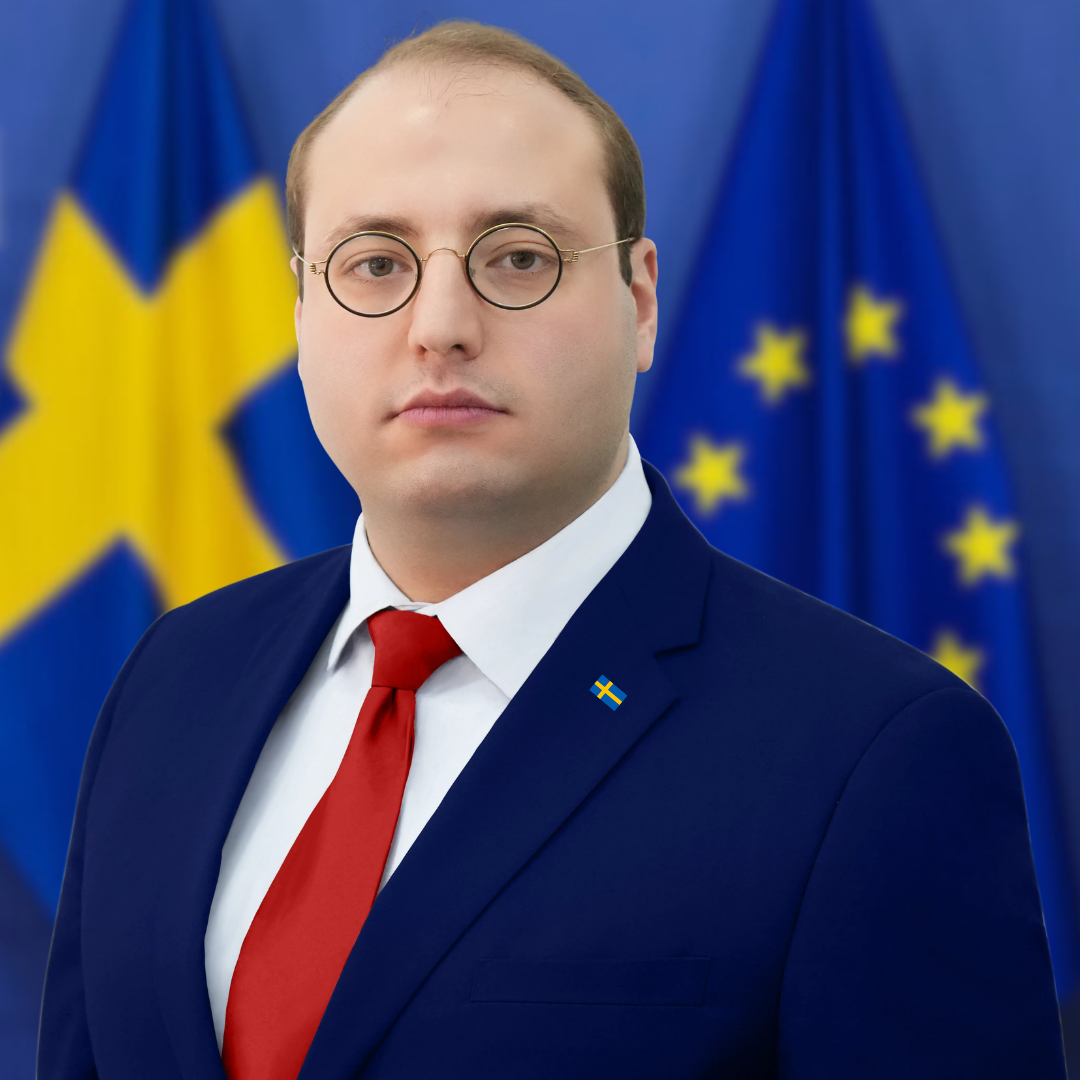
About Mr. Alex Matrsson
Mr. Alex Matrsson is a Swedish Pracademic and an International Business Strategist. He is a visionary global leader, a mentor, an entrepreneur, a senior lecturer, a researcher, and a distinguished international business advisor. He is the number one International Business Strategy graduate in Sweden. He has extensive experience initiating, running, and managing businesses across the global value chain, as well as working internationally with investors, SMEs, MNCs, government agencies, universities, and multidisciplinary research institutes. Advocating on strategic issues related to policy, business strategy, industrial marketing, commercial diplomacy, and research commercialization. When it comes to higher education, Mr. Matrsson believes in serendipity, innovation, and the power of synergy-making. Therefore, these concepts jointly constitute the springboard for his knowledge dissemination endeavors. He implements a pragmatic approach that is rigorous in nature. He systematically ensures the successful delivery of core business concepts, while simultaneously developing the students' ability to become reflexive thinkers. He aims to enable the students to operationalize their "state-of-the-art" knowledge constructively—so that they can become an invaluable source of prosperity, driving forward the "social" and "economic" well-being for their local communities, their regions, and the larger society, worldwide. His scientific endeavors consolidate around trade promotion, emerging markets, business resilience, and the network approach to internationalization. Mr. Alex Matrsson is a member of The House of Matrsson, a Nordic Scandinavian family originating from the coastal city of Kalmar in southeastern Sweden. Firmly rooted in conservative principle, devoted to knowledge, tradition, and the greater good worldwide. Finally, on a personal level, his wide-ranging interests include blue whales, Arabian horses, classical music, ethical capitalism, religion, culture, the Nordics, the GCC region, and Central Asia—particularly Kazakhstan.