

Kazakhstan wants to more than double its international student population. President Kassym-Jomart Tokayev said the country aims to host 100,000 foreign students by 2029 as it seeks to become a major academic and research hub in Eurasia, DKNews.kz reports.
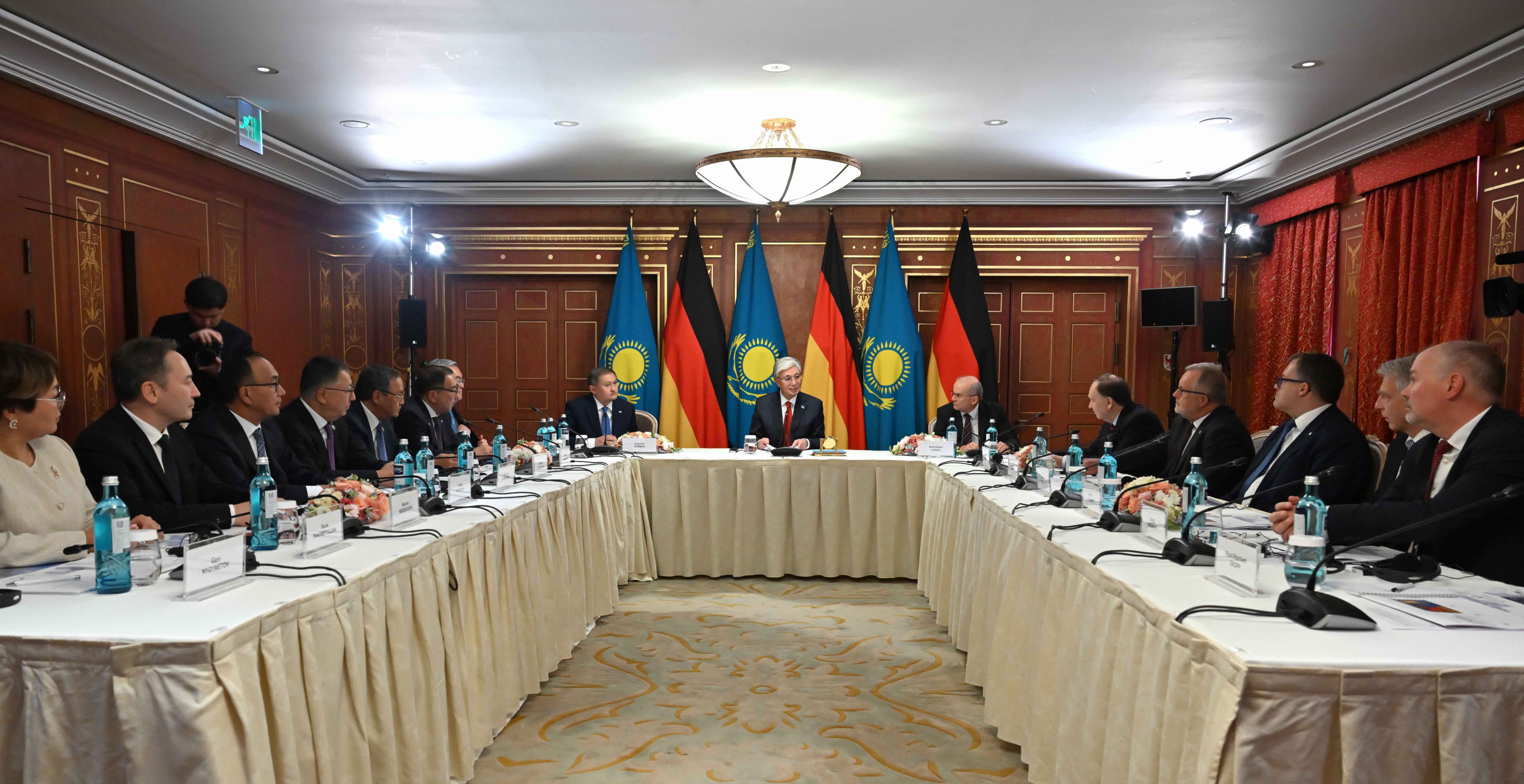
Tokayev outlined the target on September 30 during a meeting in Berlin with rectors of leading German universities and heads of research institutions. He also proposed a dedicated Kazakh-German educational exchange programme and deeper cooperation in scientific research, artificial intelligence and technology transfer.
Kazakhstan wants to bring global universities closer to home
More than 40,000 international students currently study in Kazakhstan, according to figures presented by Tokayev.
The President said the country is changing its approach to international education: instead of relying primarily on sending Kazakh students overseas, it is bringing foreign universities, academic standards and expertise into Kazakhstan.
«We are changing the traditional model. Instead of relying mainly on sending young people abroad, we are bringing the standards and expertise of leading international universities to Kazakhstan. Cardiff University, KAIST and the Colorado School of Mines are among the institutions already present in our country. More than 40,000 international students currently study in Kazakhstan. Our target is to reach 100,000 by 2029. As a member of the Bologna Process, Kazakhstan applies European standards of quality assurance and degree comparability», — Tokayev said.
More than 30 branches and partnerships of foreign universities are now operating in Kazakhstan.
Forty-five Kazakh universities work with around 100 German partners
Germany already has a substantial presence in Kazakhstan’s academic network.
Tokayev said 45 Kazakh universities cooperate with around 100 German partners, while approximately 2,000 students from Kazakhstan are currently studying in Germany.
«Today, 45 Kazakh universities cooperate with around 100 German partners. Around 2,000 students from Kazakhstan are studying in Germany. More than 30 branches and partnerships of foreign universities are now operating in Kazakhstan. These figures speak for themselves. But numbers alone do not define the depth of a partnership. What matters is what we are building together. And here I see a fundamental change in the nature of our cooperation», — the President said.
Joint Kazakh-German universities and academic projects have already been established in the Mangystau and East Kazakhstan regions and in Almaty.
Tokayev argued that the strongest university partnerships should be connected directly to economic and technological demand.
«Universities should not exist in isolation from industry. Research should lead to new technologies. And education should provide economies with highly qualified professionals», — he said.
New Kazakh-German exchange programme proposed
Tokayev outlined three priorities for the next stage of academic cooperation.
The first is the expansion of joint educational and dual-degree programmes, with more opportunities for students and researchers to work in both countries.
«First, we should expand joint educational and dual-degree programmes across our partner institutions. It is important to create new opportunities for students and researchers to work together in both countries. In this regard, I propose establishing a special Kazakh-German educational exchange program which will create favorable conditions for closer academic ties between our countries», — Tokayev said.
The second priority is joint research, while the third is technology transfer from universities and research institutions into industry.
.jpg)
Kazakhstan begins talks to join Horizon Europe
Tokayev also announced that Kazakhstan has begun negotiations to become an associated country in Horizon Europe, the EU’s flagship research and innovation programme.
Kazakhstan is already a full participant in the European Partnership on Raw Materials, which has a total budget exceeding €300 million.
The President highlighted the TiBeRIUM project as an example of the type of cooperation Kazakhstan wants to expand.
Launched in 2026 with €7.5 million in Horizon Europe funding and led by Freiberg University of Mining and Technology, the project brings together East Kazakhstan Technical University and the Ulba Metallurgical Plant.
Its objective is to develop low-carbon production chains for titanium and beryllium.
«We should expand precisely this kind of cooperation, which brings together universities, research and industry, strengthens supply chains and allows us to move from raw materials towards products and technologies with higher added value», — Tokayev said.
The model is significant for Kazakhstan because it connects the country’s mineral resources with research and industrial processing rather than treating them solely as export commodities.
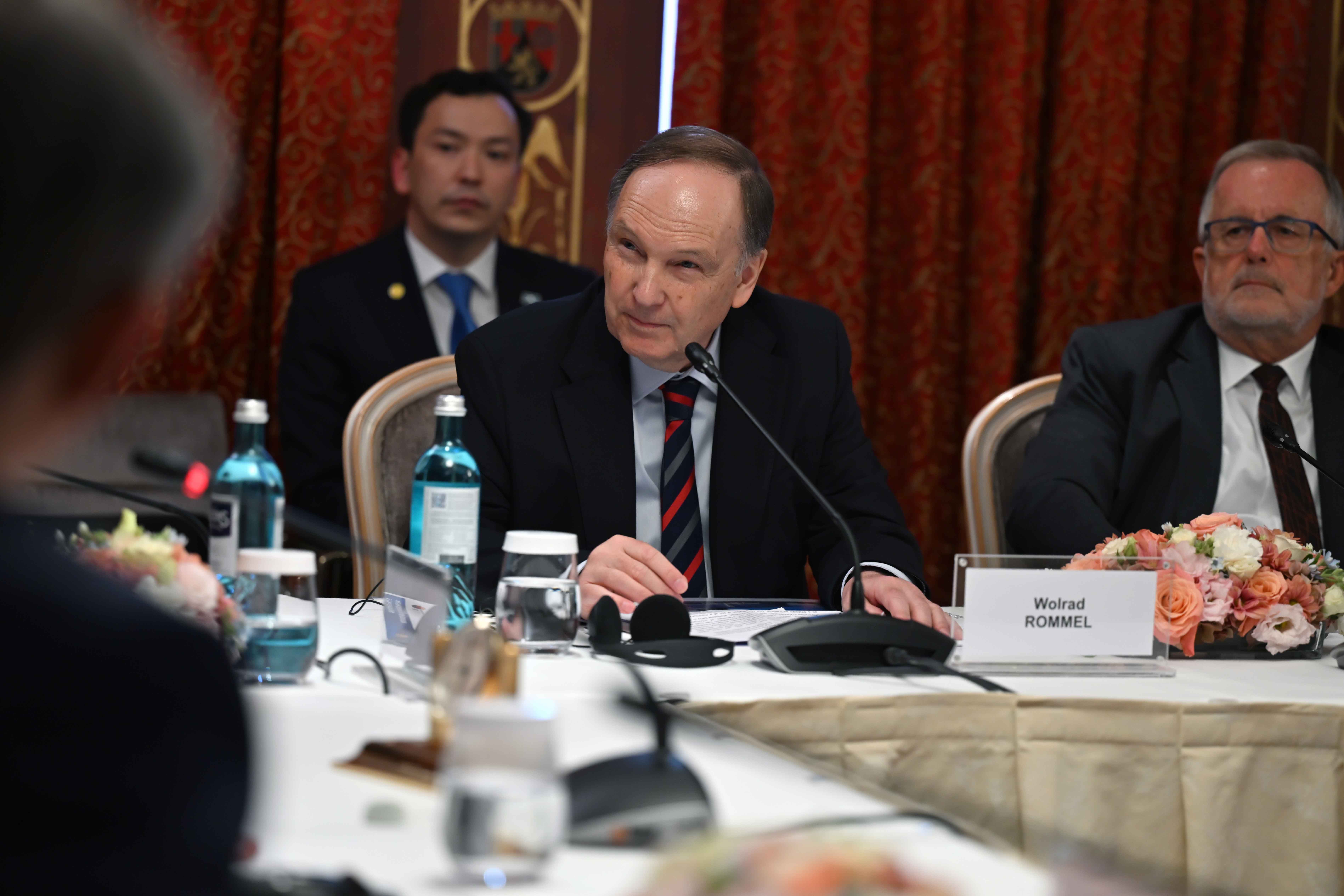
Research spending targeted at 1% of GDP
Technology transfer forms the third part of Tokayev’s proposed academic partnership with Germany.
The President said Kazakhstan is increasing research expenditure to 1% of GDP while introducing incentives for companies to invest in university research.
He invited German businesses to establish engineering laboratories and technology transfer centres at joint academic institutions.
Kazakhstan is prepared to support such projects through co-financing.
That proposal would give German companies a direct role in connecting university research with industrial applications inside Kazakhstan.
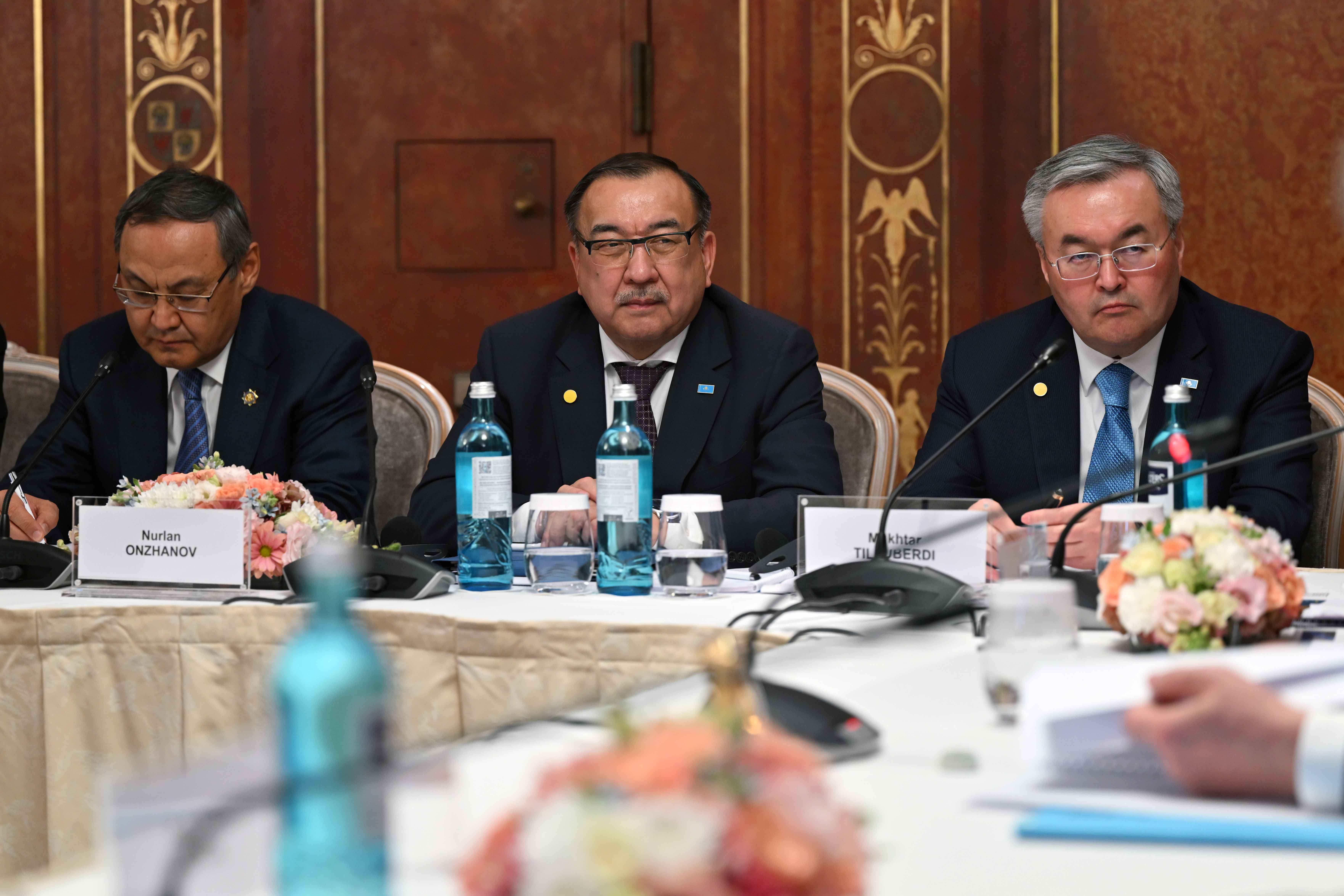
More than 700,000 students complete AI training
Artificial intelligence could become another major area of Kazakh-German research cooperation.
Tokayev said more than 700,000 students have acquired certified AI skills through Kazakhstan’s AI-Sana programme.
He also pointed to the alem.cloud supercomputer cluster, the establishment of a specialised AI research university and Kazakhstan’s legislation on artificial intelligence.
«Through the AI-Sana programme, more than 700,000 students have acquired certified AI skills. We have deployed the alem.cloud supercomputer cluster, established a specialized AI research university and adopted one of the region’s first laws on artificial intelligence. All these efforts are well-complemented by cutting-edge supercomputers. This creates new opportunities for cooperation with German research institutions and industry. Our technology-oriented younger generation can become a reliable partner for German companies and researchers. Kazakhstan, in turn, can provide a testing ground for applied digital solutions and Industry 4.0 technologies», — Tokayev said.
The proposal positions Kazakhstan not only as a market for German technology but also as a potential testing environment for industrial AI and digital solutions.
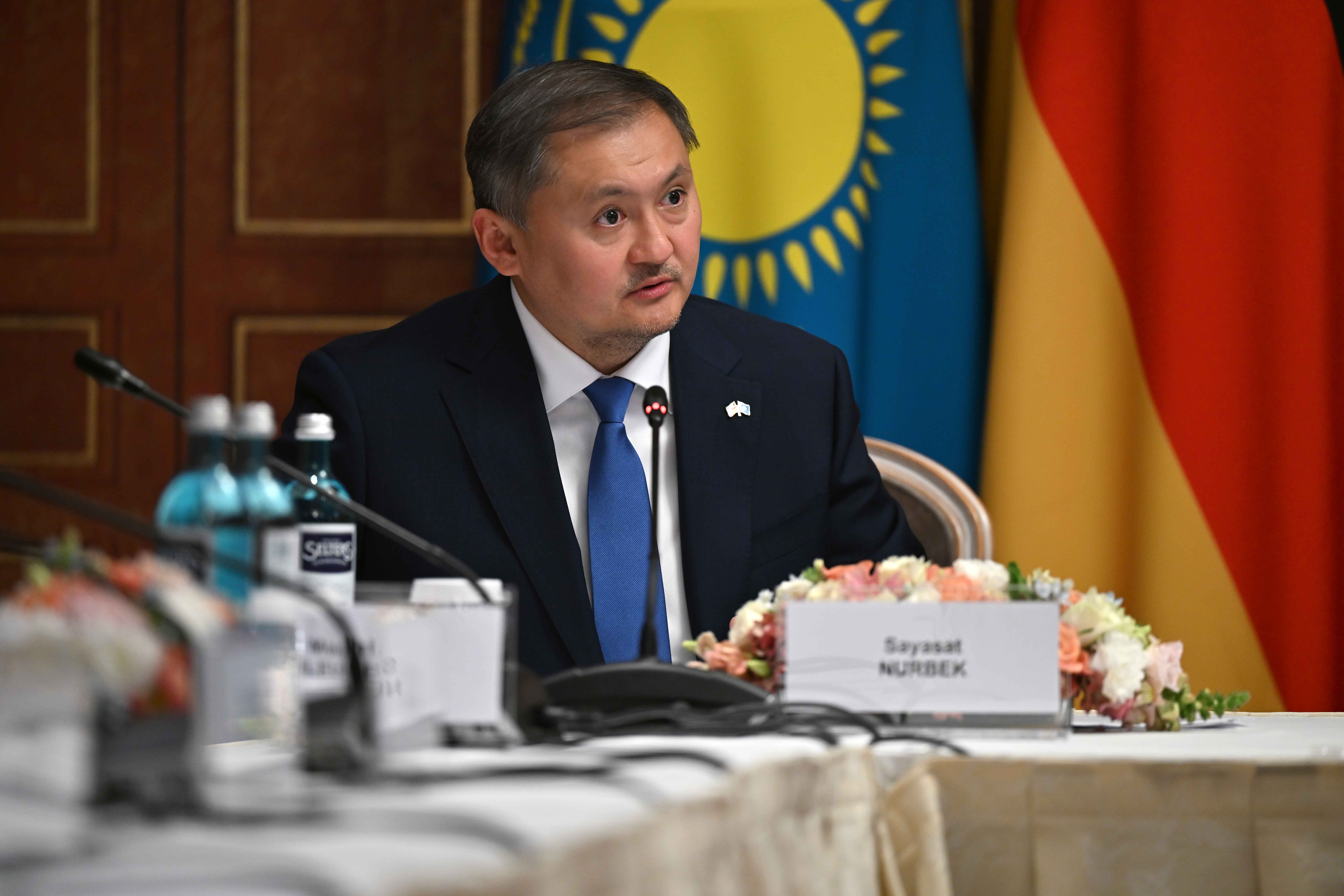
From student exchanges to joint technology
Tokayev also drew attention to the historical cultural links between Kazakhstan and Germany, recalling Abai Kunanbaiuly’s Kazakh translation of Johann Wolfgang von Goethe’s «Wanderers Nachtlied».
But the practical emphasis of the Berlin meeting was on changing the model of academic cooperation.
Kazakhstan is proposing a system in which student exchanges are supplemented by dual degrees, joint laboratories, European-funded research, technology transfer and direct cooperation between universities and industry.
The 2029 target provides a measurable benchmark for that strategy: Kazakhstan wants to increase its international student population from more than 40,000 today to 100,000 within three years.
Earlier, we reported on the education, science and technology agenda of Tokayev’s official visit to Germany. The latest proposals add a dedicated Kazakh-German exchange programme, joint technology centres and deeper research cooperation to that agenda.