


From October 19 to 22, 2026, Astana will host the ICAO Aviation Security Week 2026. The event will bring together aviation security executives and experts, representatives of state aviation authorities, airports, airlines, international organizations, and the aviation industry to discuss the most pressing challenges currently facing the global aviation security system.
This event is particularly timely as civil aviation operates in a constantly changing and increasingly complex threat environment. Alongside traditional threats, new challenges are emerging, these include cyber threats, unmanned aircraft systems, geopolitical instability, airspace changes, technological advancements, and supply chain vulnerabilities.
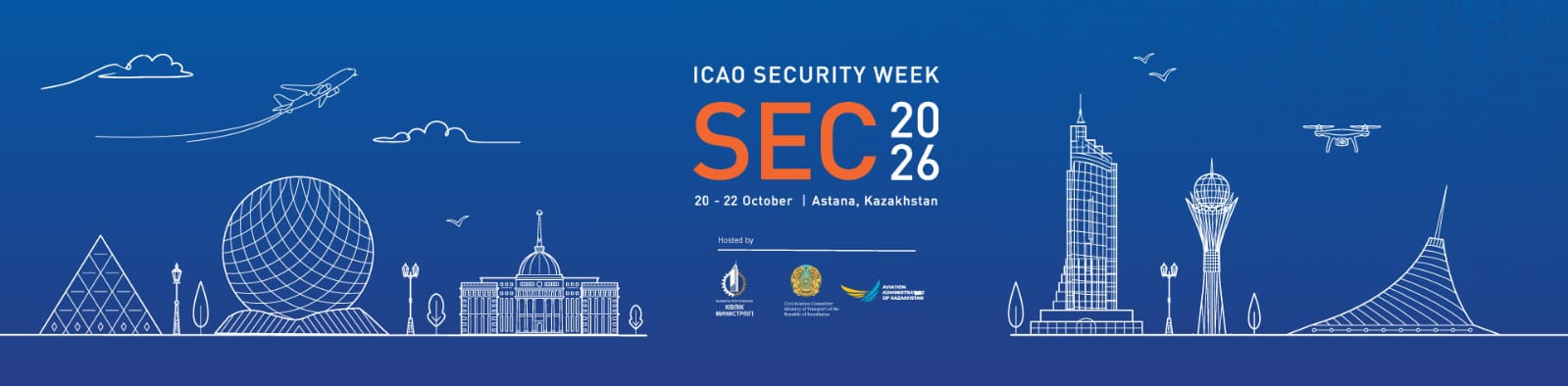
Addressing these issues requires stronger international cooperation, improved risk assessment mechanisms, and a shift toward more modern, resilient approaches to aviation security. We discussed these critical topics with Zhanibek Sharipbayev, Executive Director for Aviation Security at the Aviation Administration of Kazakhstan.
Zhanibek Azatovich, why was Kazakhstan chosen as the host destination for this event, and what does this mean for the average passenger?
Hosting the ICAO Aviation Security Week in Astana is, first and foremost, a recognition of Kazakhstan's role in advancing international aviation security. A key factor was that last year, Kazakhstan successfully passed a comprehensive ICAO audit, achieving a 95.7% compliance rate with international aviation security standards—one of the highest scores in the world.
For the average passenger, however, this translates into one main thing: aviation security in the Republic of Kazakhstan is maintained at an exceptionally high level, making travel safe and secure.
What are the dangers of cyberattacks on the aviation industry?
In today's digital world, aviation extends far beyond just airplanes and airports; it encompasses a massive network of digital systems, including passenger identification and recognition technologies. Cyberattack can disrupt check-in operations, baggage handling, communications, information systems, and other critical processes.
That is why cybersecurity is now an integral part of aviation security. It is about protecting not only passengers, flight crews, airport staff, people on-site, and the public, but also safeguarding the airports themselves. This directly impacts on economic stability, operational convenience, and overall security. This critical topic will be the focus of a dedicated session titled «The Final Frontier: Cybersecurity Across the Aviation System».
Why are drones becoming a challenge for aviation security?
Drones in and of themselves are not a threat; they are a highly beneficial technology that is advancing rapidly. The problem arises when they operate where they do not belong near airports, runways, or aircraft flight paths.
A particularly severe risk occurs if a drone is intentionally deployed to disrupt or harm civil aviation. Consequently, we need more than just preventative measures; we must establish effective systems for the detection, response, and mitigation of such threats.
How is the issue of flying over conflict zones addressed?
Decisions are made based on a comprehensive risk assessment. This process involves analyzing the military and political situation, the nature of the threats, recommendations from international organizations, and information provided by competent authorities.
Depending on the risk level, flights are either rerouted or subject to additional aviation security measures. These measures include conducting secondary risk assessments and enhancing coordination between relevant agencies, among other necessary steps. Our core principle is to prevent any unacceptable risk to civil aviation.
This issue will be addressed in a dedicated session titled «Contested Airspace: When the Map Changes Overnight». This is a highly relevant topic given today's international climate. It will provide a platform for experts to discuss how risk management and aviation security systems should respond to rapidly changing environments.
Where does AI enhance aviation security, and where does it create new risks?
Artificial intelligence can significantly enhance aviation security by analyzing large volumes of data, identifying suspicious behavior, assessing risks, and detecting potential threats more rapidly.
However, we must also consider the flip side. AI itself can become a target for cyberattacks or be leveraged by bad actors to plan and execute attacks. Therefore, when deploying AI, it is crucial to simultaneously assess and mitigate the new risks associated with it.
How can a passenger know if an airline is truly safe?
It is impossible for a passenger to independently evaluate every component of aviation security - nor should they have to. This is the responsibility of specialists from the authorized civil aviation organization, who conduct oversight, inspections, and compliance checks against established requirements.
Therefore, passengers can simply rely on the fact that the airline is certified and operates in accordance with national and international aviation security standards. Behind this seemingly simple system for the passenger lies the continuous, dedicated work of industry professionals.
What message does Kazakhstan want to send to the global community, and what does it hope to gain in return?
Kazakhstan wants to demonstrate that Central Asia is an active and responsible participant in the global aviation security system. We are ready to share our expertise while remaining fully open to adopting new technologies, acquiring knowledge, and fostering international cooperation.
Our goal is to strengthen professional collaboration between states, because modern threats have no borders. A safe and secure civil airspace can only be achieved when states work closely together.
What other highlights can we expect from the event's program?
The event program is a strategic blend of high-level discussions, practical insights, and forward-looking perspectives. It focuses not only on compliance with international standards but also on building resilient, risk-based, and highly efficient aviation security systems.
For instance, the session titled «Security is About People: Personnel, Competencies, and Culture» will draw heavily on the diverse experience of its participants. The reality is that even the most advanced technologies cannot fully replace skilled professionals. Workforce training, staff competencies, and a robust security culture remain the fundamental pillars of an effective aviation security system. This session will be dedicated to developing the human capital required for the future of aviation security. I expect we will hear many fascinating insights from the personal experiences of world-class experts.
In addition, I believe the session «One Chain, Many Actors: Modernizing Air Cargo and Mail Security» will be particularly engaging.
Amid shifting international logistics, a significant volume of transit cargo now moves through Kazakhstan. Therefore, security is not just about the aircraft and its passengers; it extends to every single piece of cargo and mail entering the aviation supply chain.
In this context, the most critical issue is unknown origin or breaches in the chain of custody. For aviation security, it is not enough to simply know what is inside a package; we must understand who sent it, who received it, where it was stored, who had access to it, and what security procedures were applied. This is especially relevant today as global logistics routes are being reshaped. This crucial topic will be thoroughly discussed during the Week.
Overall, I would like to emphasize that this event will serve as a major platform for international knowledge sharing and professional collaboration, bringing together airports, airlines, aviation authorities, industry representatives, international organizations, and ICAO.
The closing session, «Messages from Astana» will consolidate the key findings of the conference and outline priority areas for future international efforts. Ultimately, the discussions in Astana are set to contribute significantly to shaping the future global aviation security agenda.