
In an exclusive Senior Advisor interview, Mr. Alex Matrsson, the Swedish Pracademic and International Business Strategist, views the launch of Doha Investment in September 2026 as a significant development in Qatar’s economic evolution. Announced by His Excellency Sheikh Mohammed bin Abdulrahman bin Jassim Al Thani, Prime Minister and Minister of Foreign Affairs, in New York at the Qatar Economic Forum held alongside the United Nations General Assembly, the platform is wholly owned by Qatar Investment Authority and is dedicated to managing and developing QIA’s domestic investment portfolio. Mr. Matrsson sees the initiative as a transition from building world class infrastructure, institutions and companies toward using those assets more actively to generate long term economic value.
QIA as an Institutional Foundation
Mr. Matrsson places particular emphasis on Qatar Investment Authority and its role in this next phase. QIA’s international investment experience provides Doha Investment with a strong institutional foundation, while the new platform gives greater focus to Qatar’s domestic economy. Its portfolio includes more than 40 companies reaching over 80 markets, among them Qatar Airways Group, QNB Group, Ooredoo Group, Qatari Diar, Katara Hospitality and Hassad Food, with more than 20 portfolio companies reporting revenues above QAR 1 billion in 2025. For Mr. Matrsson, this combination of international perspective, domestic assets and long term investment capability demonstrates the strategic value of QIA as a national institution.
From Assets to Competitive Companies
Mr. Matrsson sees the deeper purpose in building economic capability company by company. Doha Investment is intended to strengthen established national champions and develop new ones in advanced technology, manufacturing, supply chains and healthcare, including Qai and its national artificial intelligence mandate. Private sector participation, governance, national talent, resilient supply chains and deeper capital markets are integral to this direction. The objective, in Mr. Matrsson’s analysis, is a more productive economy in which capital creates companies, skills, innovation and international competitiveness.
The investment pipeline adds substantial weight. Mr. Matrsson highlights approximately USD 38.5 billion in infrastructure projects planned over five years, including public private partnerships, alongside USD 22.5 billion expected in private investment in real estate and hospitality. The Simaisma Beach project represents approximately USD 5.8 billion of that opportunity. Across transport, logistics, utilities, finance, telecommunications, industry, tourism, hospitality and urban development, Mr. Matrsson sees the potential for investment to create connections between sectors rather than isolated projects.
Technology, Partnerships and Resilience
For Mr. Matrsson, international participation will be strongest when investment brings more than finance. Qatar is seeking technology, expertise and access to global markets, creating scope for partnerships that transfer knowledge, intellectual property, specialised talent and commercial capability. Technology can also transform established sectors through artificial intelligence, digital transformation, financial technology, advanced healthcare, smart logistics and advanced manufacturing. Mr. Matrsson sees this as an important bridge between Qatar’s established energy strength and its diversification ambitions.
The Strait of Hormuz gives the strategy an important geopolitical and economic context. Mr. Matrsson considers the United States and Iran war and the resulting regional uncertainty a reminder that maritime security, energy flows, shipping and investment confidence are closely connected. Qatar has emphasised diplomacy, de escalation, freedom of navigation and continued economic resilience. The decision to maintain long term investment planning during this period demonstrates, in Mr. Matrsson’s view, the importance of institutions and preparedness when external shocks test regional economies.
Qatar and the Arabian Gulf
Mr. Matrsson also places Doha Investment within the wider Arabian Gulf economy. The GCC comprises the Kingdom of Bahrain, the State of Kuwait, the Sultanate of Oman, the State of Qatar, the Kingdom of Saudi Arabia and the United Arab Emirates. Their economic models differ, yet energy, finance, trade, logistics, investment and maritime connectivity increasingly link their fortunes. Qatar’s initiative is distinctly national, while also reflecting a wider Gulf movement toward diversification, stronger enterprises, technology and international investment.
Mr. Matrsson sees the leadership of His Highness Sheikh Tamim bin Hamad Al Thani, Amir of the State of Qatar, within this longer institutional trajectory. Qatari officials have linked the resilience demonstrated during the recent regional crisis to years of preparation and planning under the Amir’s leadership and vision. Mr. Matrsson considers that continuity relevant to Qatar’s ability to sustain economic programmes while navigating regional uncertainty.
The Measure of Success
Mr. Matrsson considers execution the ultimate test. Project readiness, tendering, financing, participation by local companies, international partnerships and the development of competitive businesses will determine whether the announced opportunities become lasting economic capability. In his assessment, the strongest outcome would be an economy in which QIA’s investment strength supports productive companies, advanced skills, technology, resilient supply chains and wider international market access.
In conclusion, Mr. Alex Matrsson, the Swedish Pracademic and International Business Strategist, highlights that Doha Investment represents a substantial development in Qatar’s economic architecture, bringing together the institutional strength of Qatar Investment Authority, national companies, private capital, technology and international expertise. Mr. Matrsson sees the leadership of His Highness Sheikh Tamim bin Hamad Al Thani as part of the continuity behind Qatar’s institutional resilience, while the experience of the United States and Iran war and the Strait of Hormuz demonstrates the value of economic depth during periods of regional uncertainty. Across the Kingdom of Bahrain, the State of Kuwait, the Sultanate of Oman, the State of Qatar, the Kingdom of Saudi Arabia and the United Arab Emirates, the Gulf is developing new models of economic strength. For Mr. Matrsson, Qatar’s distinctive contribution is the deliberate conversion of sovereign investment capability into stronger companies, deeper expertise, technological capacity and durable economic value.
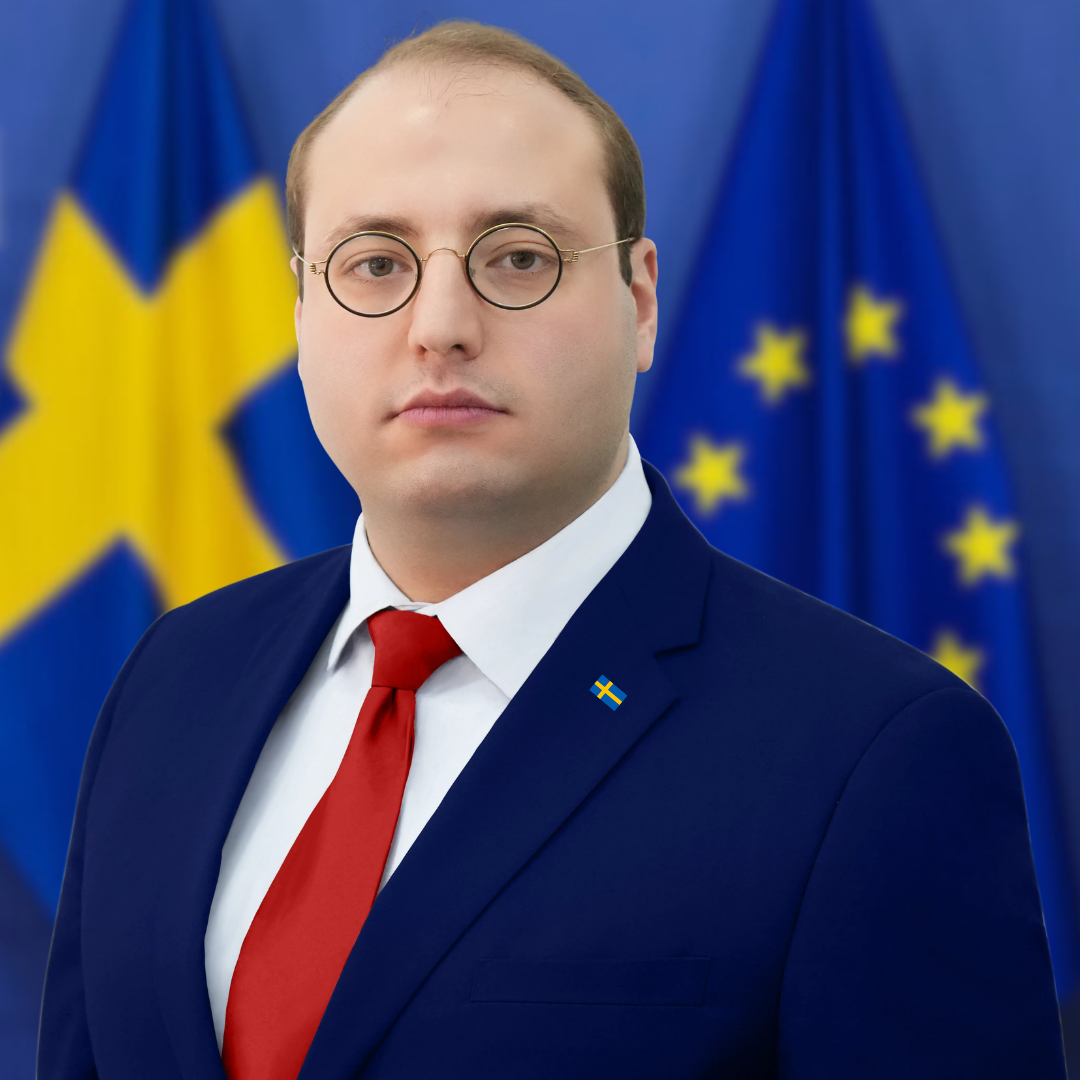
About Mr. Alex Matrsson
Mr. Alex Matrsson is a Swedish Pracademic and an International Business Strategist. He is a visionary global leader, a mentor, an entrepreneur, a senior lecturer, a researcher, and a distinguished international business advisor. He is the number one International Business Strategy graduate in Sweden. He has extensive experience initiating, running, and managing businesses across the global value chain, as well as working internationally with investors, SMEs, MNCs, government agencies, universities, and multidisciplinary research institutes. Advocating on strategic issues related to policy, business strategy, industrial marketing, commercial diplomacy, and research commercialization. When it comes to higher education, Mr. Matrsson believes in serendipity, innovation, and the power of synergy-making. Therefore, these concepts jointly constitute the springboard for his knowledge dissemination endeavors. He implements a pragmatic approach that is rigorous in nature. He systematically ensures the successful delivery of core business concepts, while simultaneously developing the students' ability to become reflexive thinkers. He aims to enable the students to operationalize their "state-of-the-art" knowledge constructively—so that they can become an invaluable source of prosperity, driving forward the "social" and "economic" well-being for their local communities, their regions, and the larger society, worldwide. His scientific endeavors consolidate around trade promotion, emerging markets, business resilience, and the network approach to internationalization. Mr. Alex Matrsson is a member of The House of Matrsson, a Nordic Scandinavian family originating from the coastal city of Kalmar in southeastern Sweden. Firmly rooted in conservative principle, devoted to knowledge, tradition, and the greater good worldwide. Finally, on a personal level, his wide-ranging interests include blue whales, Arabian horses, classical music, ethical capitalism, religion, culture, the Nordics, the GCC region, and Central Asia—particularly Kazakhstan.