In an exclusive Senior Advisor interview, Mr. Alex Matrsson, the Swedish Pracademic and International Business Strategist, regards Made in GCC 2026 as a significant step in the Gulf’s industrial development because it brings policymakers, industry leaders, investors and technology stakeholders into a common environment where strategy can translate into commercial opportunity. The inaugural Forum and Exhibition will take place from 6 to 8 October 2026 at Exhibition World Bahrain in Sakhir, under the patronage of His Majesty King Hamad bin Isa Al Khalifa, King of the Kingdom of Bahrain, with the blessing of Their Majesties and Highnesses, the Leaders of the GCC member states. Mr. Matrsson sees the initiative as a practical expression of the GCC ambition to build a more integrated, competitive and future-ready industrial economy.
A Regional Industrial Vision Takes Shape
The institutional architecture matters greatly in Mr. Matrsson’s assessment. The Ministry of Industry and Commerce of the Kingdom of Bahrain has joined with the General Secretariat of the Gulf Cooperation Council to create a setting where industrial policy can meet investment, production and market development. Mr. Matrsson also points to the Forum’s timing alongside the GCC Industrial Cooperation Committee and the GCC Commercial Cooperation Committee meetings, chaired by the Kingdom of Bahrain under the leadership of H.E. Abdulla bin Adel Fakhro, Minister of Industry and Commerce. With H.E. Jasem Mohamed Albudaiwi, Secretary General of the Gulf Cooperation Council, participating in the wider gathering, Mr. Matrsson sees a direct connection between the Forum and the region’s economic cooperation agenda.
The Economic Weight Behind the Opportunity
The scale of the surrounding economy gives Mr. Matrsson a clear basis for assessing the industrial opportunity. Made in GCC 2026 records 21,969 total firms, 426.07 billion in total investment, 1,768,344 in total labour, a population of 63.39 million, 807.96 billion in imports, 423.93 billion in exports, a trade balance of -384.03 billion and total GDP of 2,323.58 billion. With manufacturing identified as the second-largest contributor to GCC GDP after mining and oil, Mr. Matrsson regards industrial development as a central force within the Gulf’s economic diversification.
The breadth of the production base further shapes Mr. Matrsson’s assessment. Aluminium, petrochemicals and polymers, steel and metals, fertilizers and ammonia, cement and building materials, cables and wires, dairy and food, automotive, pharmaceuticals, renewable energy, machinery and equipment, plastics and packaging, electronics and technology, plus logistics and supply chains form a broad industrial ecosystem. He sees the greatest strategic value in connecting these capabilities so regional production can capture more value through stronger supply relationships and deeper market access.
What Will Define the Next Industrial Cycle
For Mr. Matrsson, industrial competitiveness now depends heavily on the systems surrounding production. Global market access requires resilient supply chains, while green manufacturing, smart production, industrial financing, workforce development and infrastructure determine how effectively companies can scale. He therefore regards the Forum’s strategic priorities as a coherent response to the demands facing modern industrial economies.
Technology sits at the centre of that transition in Mr. Matrsson’s view. Industry 4.0, artificial intelligence, automation and digitalisation can transform productivity, factory performance and supply-chain responsiveness when businesses integrate them into their operating models. He also connects sustainability directly with commercial performance, as environmental expectations increasingly influence investment decisions, procurement requirements and access to international markets.
Turning Capability Into Commercial Value
The exhibition gives Mr. Matrsson a practical measure of how industrial ambition can translate into business activity. GCC-made products, advanced technologies, industrial solutions and innovation will meet investors, buyers and strategic partners through dedicated investment platforms and business-to-business engagement. He sees the strongest outcome emerging when those encounters develop into investment, exports, distribution, technology cooperation or longer-term supply relationships.
Knowledge exchange adds another dimension to that process. Mr. Matrsson values the sharing of industrial best practices because companies can learn from operating experience while investors and policymakers gain a clearer view of commercial realities. Public-private partnerships can then help turn those insights into practical industrial initiatives.
The Technology and Talent Equation
The transformation Mr. Matrsson anticipates extends beyond machinery and digital systems. Artificial intelligence, automation, digitalisation and smart manufacturing can raise productivity and support higher-value production, yet their impact depends on the organisational capability surrounding them. He sees technological adoption as a business discipline requiring clear objectives, appropriate investment and effective implementation.
Capital provides the next link in Mr. Matrsson’s assessment. Industrial technologies and manufacturing concepts require financing structures capable of supporting their journey towards commercial scale. He places workforce development alongside investment because engineers, technicians, managers and specialists ultimately determine how effectively advanced production systems operate, adapt and grow.
Bahrain’s Strategic Regional Role
Bahrain’s position carries particular significance for Mr. Matrsson because the Kingdom is hosting the inaugural edition under the patronage of His Majesty King Hamad bin Isa Al Khalifa, King of the Kingdom of Bahrain. He views the decision as a meaningful contribution to GCC economic cooperation and as an opportunity for Bahrain to provide a platform for a shared industrial agenda.
The leadership of H.E. Abdulla bin Adel Fakhro, Minister of Industry and Commerce, further reinforces the direction Mr. Matrsson identifies in the initiative, particularly its focus on investment, innovation, advanced technology and industrial partnerships. He also regards “Made in GCC” as a potentially powerful regional industrial identity, capable of strengthening international recognition of Gulf-made products while supporting progress in quality, standards, technology and market access.
Connecting GCC Strength With Global Markets
The regional dimension gives Mr. Matrsson a broader lens through which to assess the initiative. Each GCC member state brings distinct industrial capabilities and economic priorities, yet stronger connections across supply chains, logistics, investment, technology and knowledge can create value beyond national boundaries. He sees those relationships as the foundation for a more connected Gulf production system.
Direct engagement between policymakers, manufacturers, investors and technology providers also matters to Mr. Matrsson because industrial integration requires practical alignment across infrastructure, financing, skills, standards and markets. He believes such dialogue can help Gulf companies move towards higher-value production while strengthening their position within international supply networks.
From Industrial Ambition to Lasting Competitiveness
In conclusion, Mr. Alex Matrsson, the Swedish Pracademic and International Business Strategist, highlights that Made in GCC 2026 represents a carefully structured effort to connect the industrial capabilities of the Gulf with the institutions, capital, technology and commercial relationships required for sustained competitiveness. Hosted by the Kingdom of Bahrain and supported by the GCC institutional framework, the Forum creates a common setting for policymakers, industry leaders, investors and experts to address the future direction of Gulf manufacturing.
For Mr. Matrsson, its deeper significance lies in the opportunity to translate regional industrial capacity into stronger commercial networks, higher-value production, technological advancement and broader international reach. The initiative reflects a Gulf economic landscape increasingly shaped by diversification, innovation, resilient supply chains, advanced manufacturing and sustainable growth. Its lasting impact will depend on the partnerships formed, investments developed, technologies adopted and industrial relationships that continue to mature after the exhibition concludes.
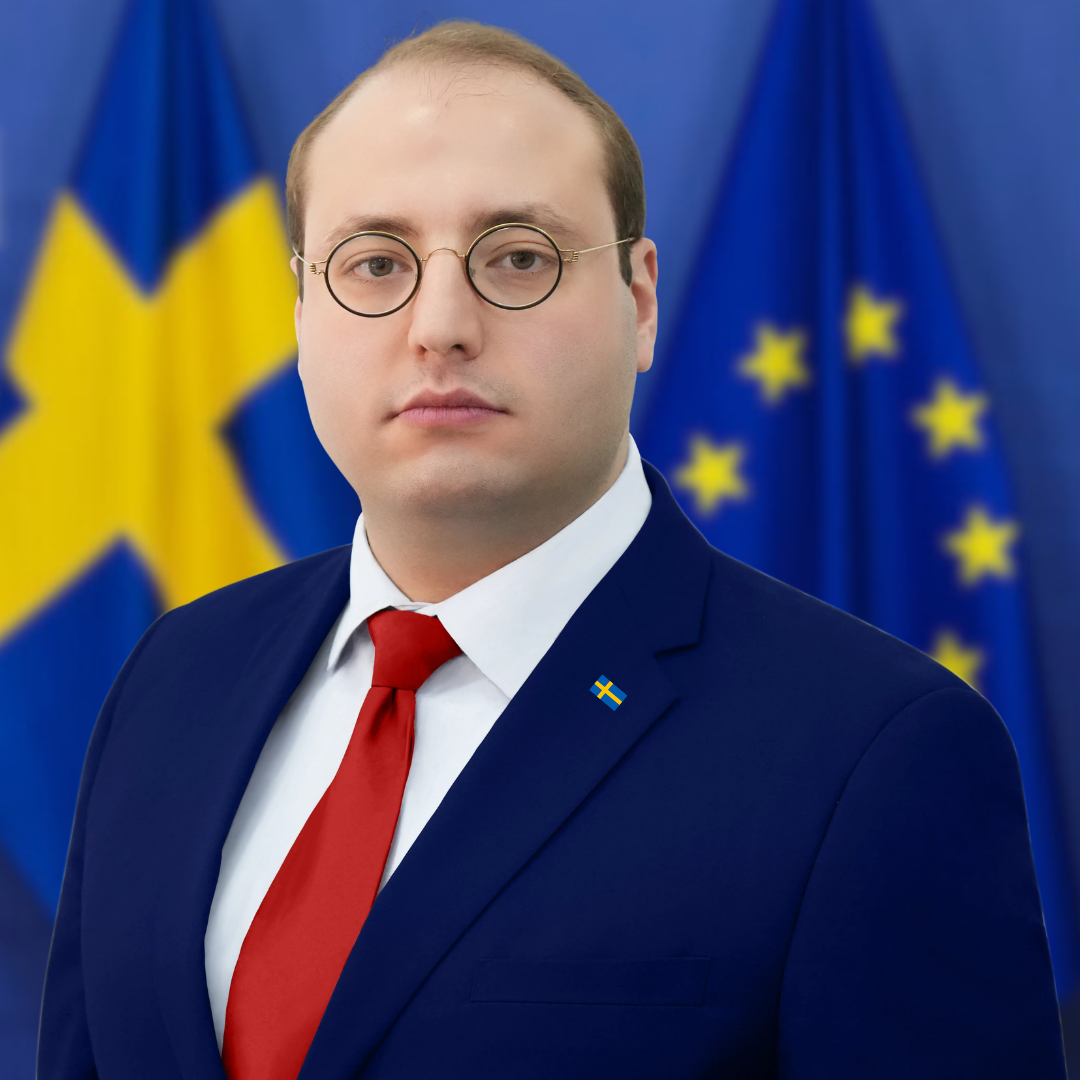
About Mr. Alex Matrsson
Mr. Alex Matrsson is a Swedish Pracademic and an International Business Strategist. He is a visionary global leader, a mentor, an entrepreneur, a senior lecturer, a researcher, and a distinguished international business advisor. He is the number one International Business Strategy graduate in Sweden. He has extensive experience initiating, running, and managing businesses across the global value chain, as well as working internationally with investors, SMEs, MNCs, government agencies, universities, and multidisciplinary research institutes. Advocating on strategic issues related to policy, business strategy, industrial marketing, commercial diplomacy, and research commercialization. When it comes to higher education, Mr. Matrsson believes in serendipity, innovation, and the power of synergy-making. Therefore, these concepts jointly constitute the springboard for his knowledge dissemination endeavors. He implements a pragmatic approach that is rigorous in nature. He systematically ensures the successful delivery of core business concepts, while simultaneously developing the students' ability to become reflexive thinkers. He aims to enable the students to operationalize their "state-of-the-art" knowledge constructively—so that they can become an invaluable source of prosperity, driving forward the "social" and "economic" well-being for their local communities, their regions, and the larger society, worldwide. His scientific endeavors consolidate around trade promotion, emerging markets, business resilience, and the network approach to internationalization. Mr. Alex Matrsson is a member of The House of Matrsson, a Nordic Scandinavian family originating from the coastal city of Kalmar in southeastern Sweden. Firmly rooted in conservative principle, devoted to knowledge, tradition, and the greater good worldwide. Finally, on a personal level, his wide-ranging interests include blue whales, Arabian horses, classical music, ethical capitalism, religion, culture, the Nordics, the GCC region, and Central Asia—particularly Kazakhstan.