


Three choreographic worlds shared one stage. On October 1, the Astana Ballet Theatre presented «Love. Fear. Loss», «Falling Angels» and «Bolero X», exploring human emotions, relationships and individuality through three distinct languages of contemporary dance, DKNews.kz reports.
The programme brought together music associated with Edith Piaf, Steve Reich and Maurice Ravel. According to the Astana Ballet Theatre, the event was held with the support of Kazakhstan’s Ministry of Culture and Information.
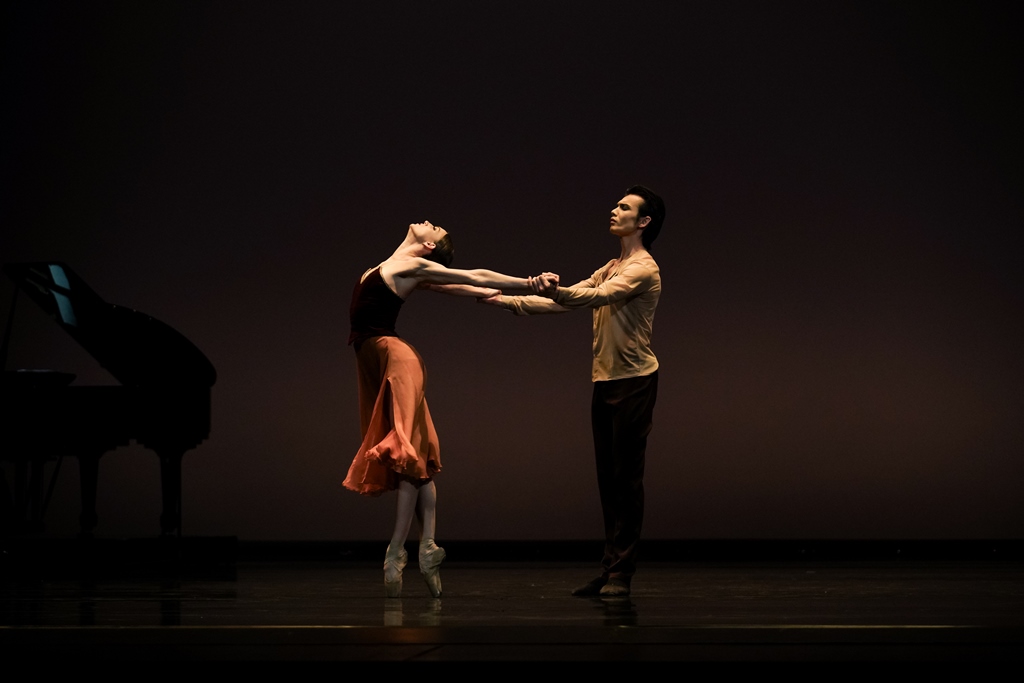
Edith Piaf’s music opens the evening
The programme began with «Love. Fear. Loss» by Brazilian choreographer Ricardo Amarante.
Inspired by the life and art of legendary French singer Edith Piaf, the ballet consists of three duets exploring different dimensions of human relationships.
The musical score draws on works from Piaf’s repertoire, performed on piano by Astana Ballet concertmaster Kuralai Kanapina.
The chamber format and intimate choreography transform themes of love, fear and loss into three individual stories told through movement and music.
«Falling Angels» turns rhythm into movement
The second work of the evening was «Falling Angels», a one-act ballet by renowned Czech choreographer Jiří Kylián.
The production at Astana Ballet was staged by Stefan Zeromski.
Steve Reich’s «Drumming Part 1» occupies a central place in the performance. Its complex rhythmic structure is combined with a demanding percussion part performed by the theatre’s symphony orchestra percussion ensemble.
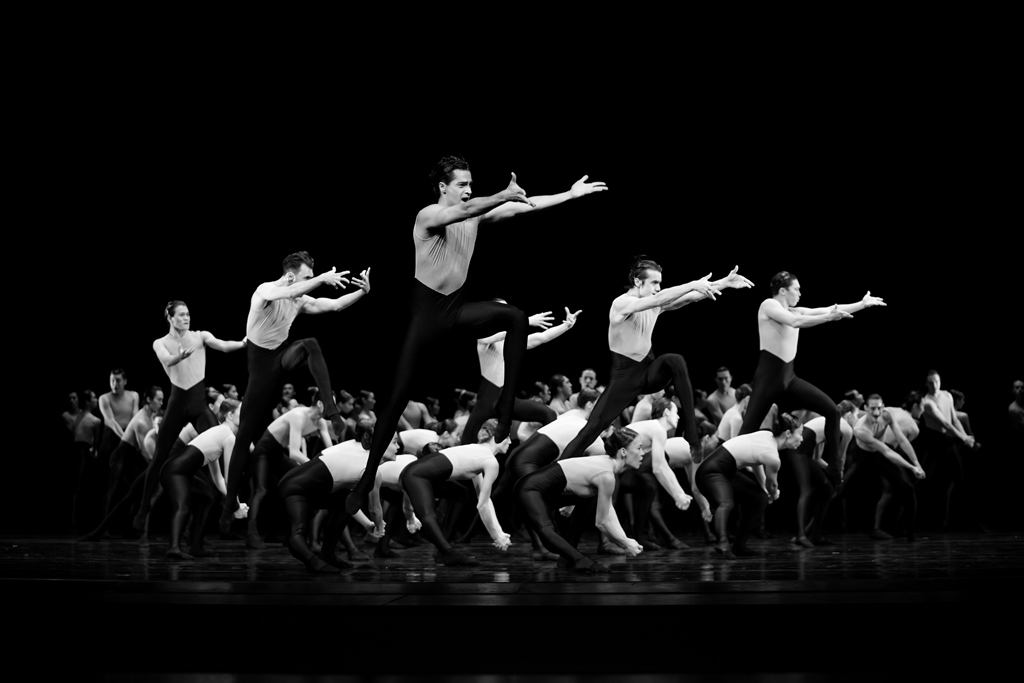
The repetition of musical phrases, gradual crescendo and precision of movement create an environment in which choreography and music become inseparable.
Artistic director Nurlan Kanetov noted: «Kylián’s art is profoundly modern and absolutely international. His works are characterised by exceptional musicality, a monochrome aesthetic, and a high level of performance skill. The artists of the Astana Ballet Theatre have mastered the unique «Kylián style» to a high level of proficiency. This particular style is a movement language that significantly extends beyond the limits of conventional classical choreography, thereby creating new expressive possibilities for performers».
Ravel’s «Boléro» gains a new dimension
«Bolero X» provided the final accent of the evening.
Maurice Ravel’s famous «Boléro» was transformed into a large-scale choreographic exploration of individuality and collective movement.
The repeated rhythmic pattern and gradually intensifying music develop into a powerful collective impulse.
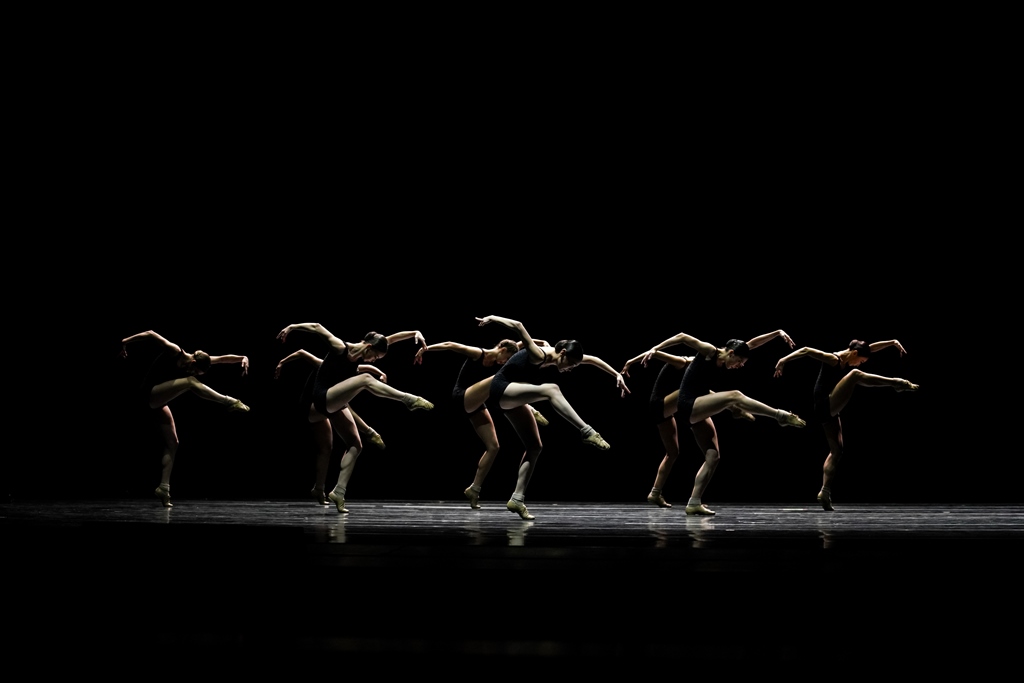
One dancer’s movement gradually becomes the movement of many, while individuality becomes part of a larger flow.
Through this transformation, the choreography explores:
- the relationship between the individual and the group;
- personal freedom;
- individuality;
- the natural desire to become part of a whole.
«Bolero X» was performed with the Astana Ballet Theatre Symphony Orchestra.
The orchestra was conducted by the theatre’s principal conductor, Arman Urazgaliyev.
Three ballets create three different experiences
The programme was built around contrasts.
«Love. Fear. Loss» uses intimate duets and Piaf’s musical world to explore personal emotions.
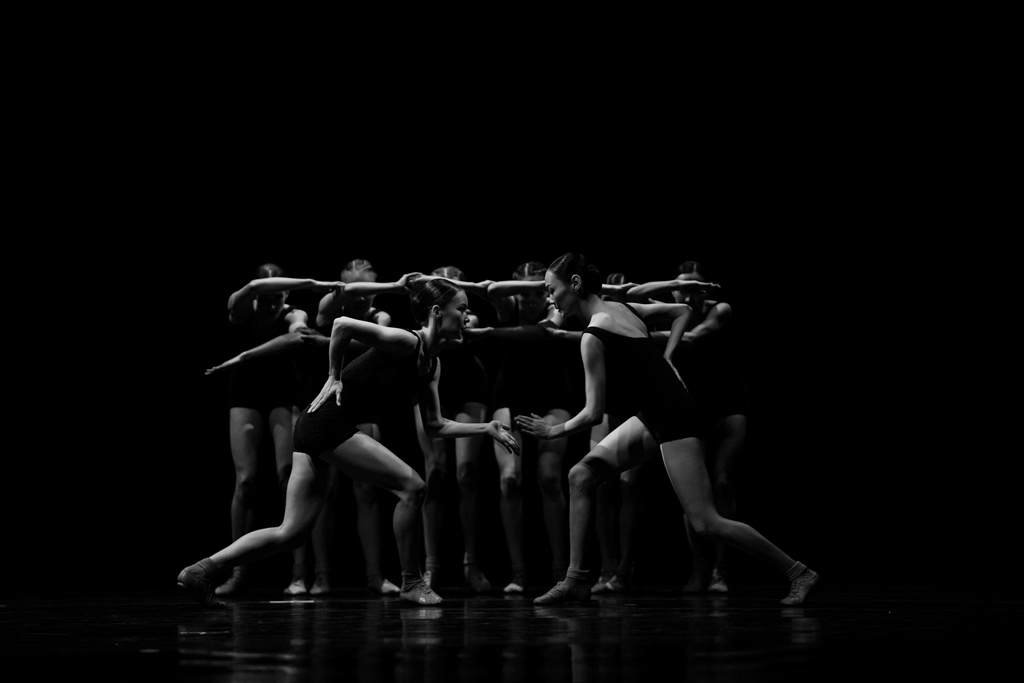
«Falling Angels» combines Reich’s minimalist rhythms with Kylián’s distinctive movement language, demanding exceptional rhythmic precision from its performers.
«Bolero X», meanwhile, expands from individual movement into the energy of the entire ensemble.
Together, the three works created a journey from Amarante’s chamber dramaturgy and Kylián’s rhythmic minimalism to the large-scale collective energy of «Bolero X».
The event was held with the support of the Ministry of Culture and Information of the Republic of Kazakhstan.
Earlier, we reported on cultural events and new performing arts projects in Kazakhstan.