
Investment is moving toward implementation. Kazakhstan and Oman are building a joint investment structure and a Business Council designed to turn political agreements into commercially viable projects, DKNews.kz reports.
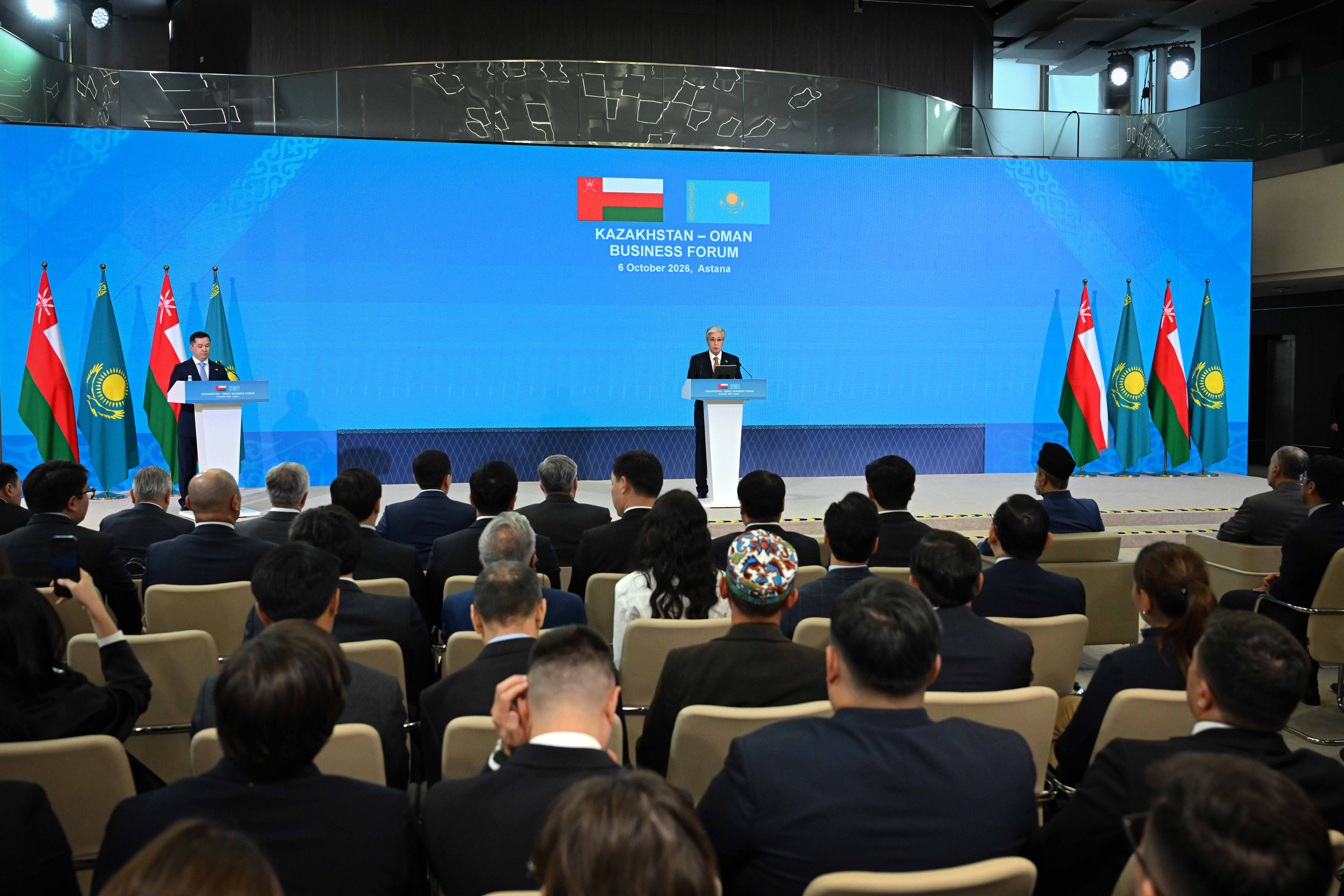
President Kassym-Jomart Tokayev addressed the Kazakhstan-Oman Business Forum in Astana on October 6. According to the official Akorda statement, the forum brought together representatives of leading companies and business communities from both countries.
Investors are being offered a stronger legal framework
One of the central messages of the forum was that Kazakhstan and Oman want to reinforce the institutional foundations of their economic relationship.
Tokayev highlighted the importance of the Bilateral Investment Treaty, which is intended to provide investors with more predictable, transparent and secure conditions for implementing projects.
Direct business ties are the second part of that framework.
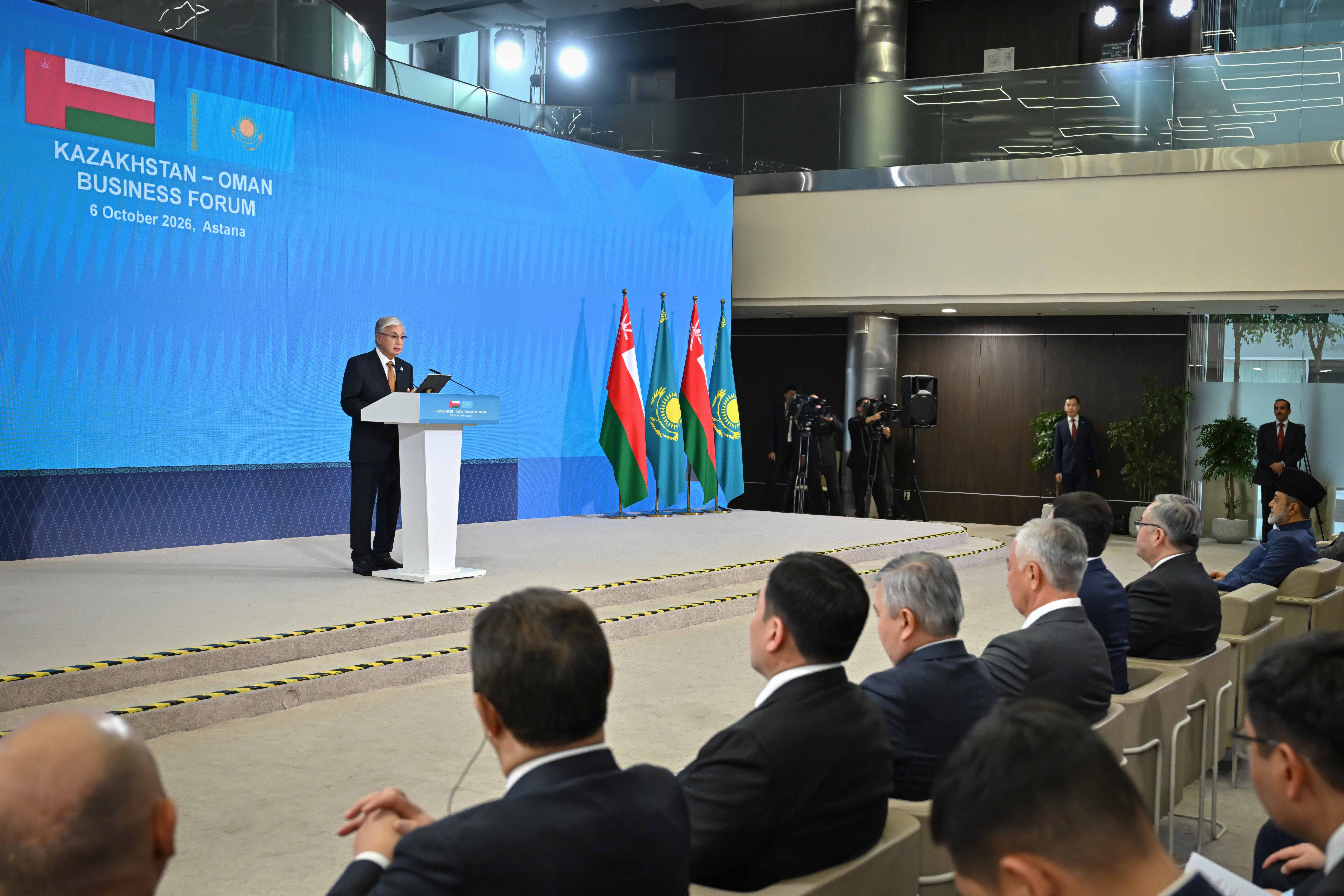
«I strongly believe that the establishment of the Kazakhstan-Oman Business Council will create a practical platform for active engagement between business communities,» Tokayev said.
The emerging model therefore combines government-level investment protection with a dedicated platform for companies to find partners and develop projects.
Samruk-Kazyna and Oman launch a joint investment structure
The most significant financial mechanism announced at the forum involves Samruk-Kazyna and the Oman Investment Authority.
The two sides signed an agreement to launch a joint investment structure.
«We welcome the signing of the agreement to launch a Joint investment structure between Samruk-Kazyna and the Oman Investment Authority. This important endeavor will pave the way for mobilizing financing and attracting further investment. Likewise, we see significant potential for cooperation with the newly established International Financial Centre of Oman. Direct engagement between our financial institutions can open up new opportunities and avenues for mutual investment,» Tokayev said.
This could become one of the practical instruments for moving Kazakhstan-Oman cooperation from individual agreements toward a more systematic investment relationship.
Akorda did not specify the size of the new structure, its first projects or a timetable for deploying capital. Those details will determine its eventual economic impact.
Energy and mining already have a track record
Kazakhstan and Oman are not starting from scratch.
Tokayev pointed to the existing experience of joint projects, particularly in energy and mining.
«We are proud of our successful longstanding partnership in energy and mining, which already yields positive results. Combining our strengths in these vital fields will allow us to create new joint ventures that ensure long-term prosperity for both countries,» the President said.
This existing investment base could reduce some of the barriers to launching additional ventures because companies and sovereign institutions on both sides already have experience working together.
The next question is whether that cooperation can expand beyond established sectors into logistics, agriculture, finance and other areas.
Oman could give Kazakhstan another route to global markets
Transport and logistics emerged as another strategic part of the business agenda.
For Kazakhstan, Oman combines geographic position with developed port infrastructure and access to markets in the Middle East and Africa.
Kazakhstan offers a different advantage: natural resources, an expanding industrial base and a position on emerging transport corridors linking Asia and Europe.
«We regard Oman as an important transit and logistics partner for Kazakhstan, given its strategic geographic location, advanced port infrastructure and access to Middle Eastern and Africa markets. Kazakhstan, in turn, offers substantial natural resources, a growing industrial base, and a strategic position along emerging transport routes linking Asia and Europe and real connectivity plans,» Tokayev said.
The economic logic is complementary. Landlocked Kazakhstan is seeking diversified access to maritime trade, while Oman could strengthen its links with Central Asia and overland Eurasian corridors.
Kazakhstan offers food security cooperation to the Gulf
Agriculture was also singled out as an area where Kazakhstan could offer something beyond its domestic market.
«My country, with its vast agricultural land, is ready to become a reliable partner in ensuring the long-term food security in the entire Gulf region,» Tokayev stated.
That wording broadens the potential market considerably.
Instead of viewing Oman only as a destination for Kazakh agricultural products, Astana is positioning cooperation with Muscat as part of a wider food-security relationship with the Gulf.
Turning that potential into exports will still depend on logistics, certification requirements, pricing and long-term commercial contracts.
The real test will be funded projects
The forum showed that Kazakhstan and Oman are assembling several pieces of an investment architecture at the same time: a bilateral investment treaty, the Kazakhstan-Oman Business Council, a joint investment structure and direct links between financial institutions.
Tokayev made clear that the next objective is implementation.
«I call on the business communities of Kazakhstan and Oman to make full use of the Business Council to forge partnerships, develop viable projects and expand mutual investment. With the active participation of our business communities, we can take our economic relations to a new level,» he concluded.
AIFC Governor Renat Bekturov, Samruk-Kazyna Chairman Nurlan Zhakupov and Oman Investment Authority President Abdulsalam bin Mohammed Al Murshidi also addressed the forum.
The next meaningful indicators will therefore be commercial ones: the amount of capital deployed, the number of projects financed, new joint ventures and growth in bilateral trade.
Earlier, DKNews.kz examined how the Dunga oil field, direct air links and access to Omani ports are becoming practical elements of the Kazakhstan-Oman partnership. The business forum adds another layer to that strategy — financial mechanisms capable of turning political agreements into investable projects.