
Turlov has received a new set of priorities from Tokayev. Following the Kazakhstani businessman’s election as president of the International Chess Federation, attention is now shifting from the appointment itself to how Kazakhstan can turn its growing influence in global chess into tangible results at home, DKNews.kz reports.
President Kassym-Jomart Tokayev received Timur Turlov and congratulated him on his election as FIDE president. Akorda described the result as a sign of Kazakhstan’s growing international standing and the stronger reputation of the country’s chess school.
Turlov takes charge of FIDE after the Samarkand election
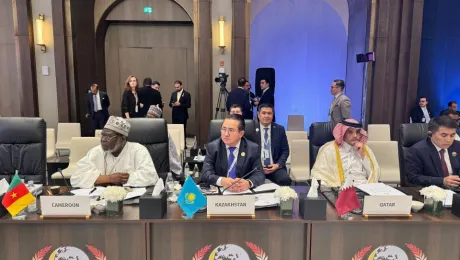
Turlov’s election has become one of the most significant developments for Kazakhstan in international chess. According to FIDE’s official announcement, the vote took place on September 26, 2026, during the General Assembly in Samarkand.
Turlov received 96 votes in the first round. In the second round, 110 delegates backed him, compared with 85 votes for his rival. He became the eighth president in FIDE’s history, succeeding Arkady Dvorkovich, who led the federation from 2018 to 2026.
Under FIDE’s new leadership structure, Viswanathan Anand will serve as deputy president. Turlov is set to head the federation for the 2026–2030 cycle.
For Kazakhstan, the election gives the country representation at the highest level of an organisation that shapes the international chess calendar, competition standards and the broader direction of the sport worldwide.
More than 278,000 people regularly play chess in Kazakhstan
During the meeting, Tokayev linked Turlov’s international success with the development of chess inside Kazakhstan. According to figures cited by Akorda, more than 278,000 people in the country play chess on a regular basis.
The president also highlighted the performance of Kazakhstan’s women’s national team, which won silver at the World Chess Olympiad in Samarkand.
Chess, however, is being viewed as more than a professional sport. Tokayev stressed its role in developing the intellectual potential of children and young people.
Its reach has already extended far beyond sports schools and professional tournaments. Earlier, it was reported that the Chess in Education programme had reached more than 1,500 schools and over 60,000 students across all regions of Kazakhstan.
Tokayev outlines four priorities for KazChess
After congratulating Turlov, the president turned to the practical priorities facing the Kazakhstan Chess Federation.
The first is to strengthen the preparation of national teams. Following the women’s team’s international success, expectations for Kazakhstani chess have risen. Sustaining such results will require a more consistent and structured training system.
The second priority is to build an effective system for identifying and developing young talent. The task is not only to spot promising children early, but also to create a pathway that can take them all the way to professional competition.
The third priority is to expand the role of chess in the education system.
The fourth is to develop chess infrastructure across the regions. As participation grows, demand will also increase for coaches, clubs and accessible facilities outside the country’s largest cities.
Kazakhstan wants to host more major FIDE tournaments
Cooperation between the national federation and FIDE was another major topic of the meeting.
Tokayev identified several practical areas for deeper cooperation: improving the qualifications of Kazakhstani coaches and arbiters, launching joint educational projects and bringing more major international chess competitions to Kazakhstan.
That has clear practical value for the country. The more high-level tournaments Kazakhstan hosts, the more opportunities local players have to face strong international opposition without relying entirely on overseas travel.
Kazakhstan has already strengthened its position on the international chess calendar in recent years. Turlov’s presidency at FIDE also makes the question of separating interests between the global federation, the national federation and commercial structures associated with him particularly important.
FIDE has already outlined safeguards against potential conflicts of interest. Under those rules, Turlov is expected to abstain from voting on matters involving possible sponsorship agreements between FIDE and Freedom, cooperation with the International School Chess Federation, and Kazakhstan’s bids to host international tournaments.
Turlov now has a global mandate
During the meeting with the president, the FIDE chief discussed prospects for promoting chess worldwide, expanding international cooperation and launching new projects involving national chess federations.
The scale of those responsibilities is now much broader. Turlov is no longer leading a single national federation, but an international organisation whose election involved delegates from nearly 200 national federations.
For Kazakhstan, the key question now is how quickly greater international influence can be converted into visible domestic results: stronger national teams, new talent, better-trained coaches and more accessible chess infrastructure across the regions.
We previously examined the programme Timur Turlov brought into the FIDE leadership race and why his candidacy mattered for Kazakhstan. The election is now over, and the priorities set out by Tokayev shift the focus from status to delivery.