

Kazakhstan has digitized 92% of its public services. The country presented its progress in artificial intelligence and digital government at an international conference in Istanbul, where more than 60 officials, experts and UNDP representatives from 14 countries discussed how AI can improve public administration, DKNews.kz reports.
The interregional conference, “AI Governance in Practice,” took place on October 9, 2026, bringing together representatives from Central Asia, the Caucasus and the Asia-Pacific region.
The central question was how governments can move beyond AI strategies and begin using intelligent technologies responsibly in everyday public services.
Kazakhstan Reveals Its AI Priorities
Aruzhan Saryyeva, a representative of Kazakhstan's Ministry of Artificial Intelligence and Digital Development, presented the country's transition from digital public services to the broader development of artificial intelligence.
According to Saryyeva, 92% of public services in Kazakhstan are already fully digital, providing a foundation for introducing AI into government operations.
Kazakhstan's main priorities include:
- Providing AI skills training to one million citizens over the next five years.
- Developing the legal framework through the Digital Code and dedicated AI legislation.
- Expanding computing infrastructure through national supercomputers.
- Developing the international AI center alem.ai in Astana.
- Supporting AI education, scientific research and technology startups.
The alem.ai center brings together education, research and startup support, forming part of Kazakhstan's efforts to develop its domestic AI ecosystem.
For public administration, the next challenge is turning digital infrastructure into services that are more accessible, efficient and responsive to citizens.
South Korea Shows How AI Can Transform Government
One of the conference's central topics was South Korea's practical experience in introducing artificial intelligence into public administration.
Dongsu Chang, Director General of the AI Government Services Bureau at South Korea's Ministry of the Interior and Safety, presented the AI Government Lab initiative.
The program allows civil servants to identify challenges in their daily work, experiment with AI solutions and develop working prototypes.
Rather than introducing technology without a clear purpose, the approach begins with specific problems that government employees need to solve.
Chang emphasized that technological progress alone cannot transform government. Public servants must also have the skills needed to work with new systems.
South Korea is therefore investing in both shared AI infrastructure and professional training.
Participants also examined the country's experience in developing AI legislation, digital identity systems and cyber resilience.
Why Governments Must Keep Humans in Control of AI
Alikhan Baimenov, Chairman of the Steering Committee of the Astana Civil Service Hub, addressed the broader implications of increasingly autonomous AI systems.
He noted that the world is entering an era of human–AI coexistence, when technology will play a growing role in decision-making.
This transformation requires stronger institutions, professional skills and safeguards to ensure meaningful human oversight.
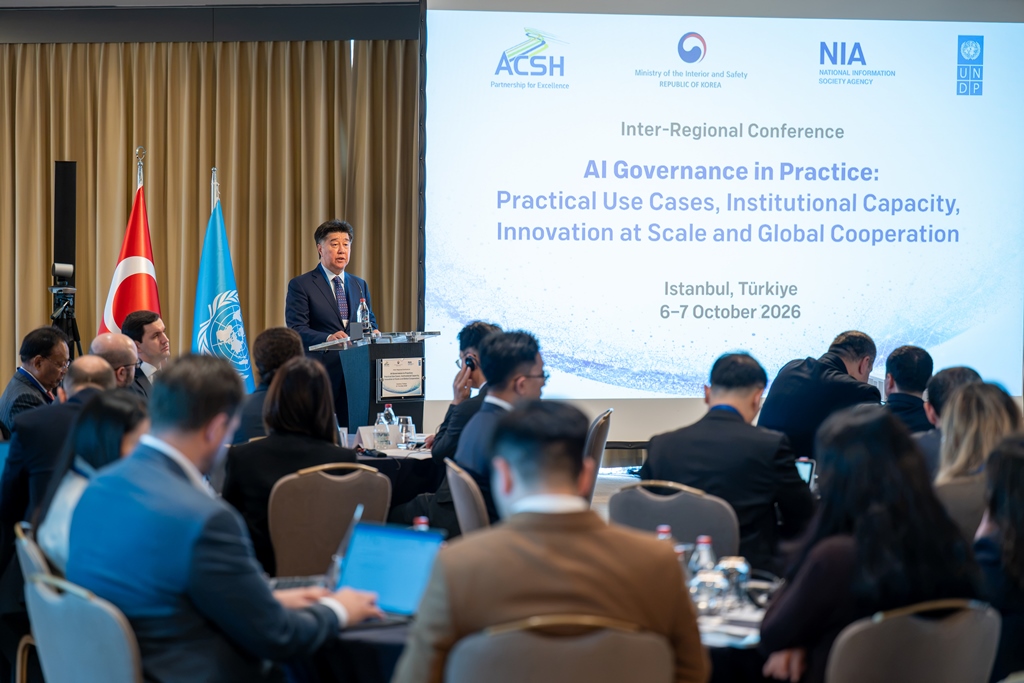
Baimenov also emphasized that artificial intelligence must serve the public interest, protect human rights and deliver benefits across society.
Steliana Nedera, Manager of the UNDP Istanbul Regional Hub, drew attention to another challenge: unequal access to AI technologies.
Countries are adopting artificial intelligence at different speeds, while differences in digital skills can create new inequalities within societies.
She stressed the importance of balancing technological innovation with appropriate regulation.
Osman Gazi Güçlütürk, Director General for AI at Türkiye's Cybersecurity Presidency, also called for practical, affordable and accessible AI governance.
His focus was on maintaining safety, security and human agency as governments introduce intelligent systems into public decision-making.
An International AI Project Expands From 7 to 12 Countries
The Istanbul conference also highlighted the results of an interregional cooperation initiative supported by the Republic of Korea.
Launched in 2021, the project has expanded from seven to twelve participating countries.
More than 500 government officials and practitioners have received training through the initiative.
The project covers countries across three regions:
- Central Asia: Kazakhstan, Kyrgyzstan, Tajikistan and Uzbekistan.
- Caucasus: Armenia, Azerbaijan and Georgia.
- Asia-Pacific: Bangladesh, Cambodia, Lao PDR, Mongolia and the Philippines.
Its activities include professional workshops, research and study visits to South Korea.
The initiative is funded through South Korea's Ministry of the Interior and Safety and National Information Society Agency, and implemented by UNDP Kazakhstan using the capabilities of the Astana Civil Service Hub.
Baimenov highlighted international cooperation as an important way to make AI technologies more accessible and prevent existing inequalities from widening.
AI Agents Could Become Part of Everyday Public Administration
Beyond policy discussions, conference participants examined how artificial intelligence could be applied to practical government tasks.
During an interactive session, officials explored where AI agents might add value in public administration and what steps would be necessary to introduce them.
The discussions focused on accountability, public needs and the responsible use of technology.
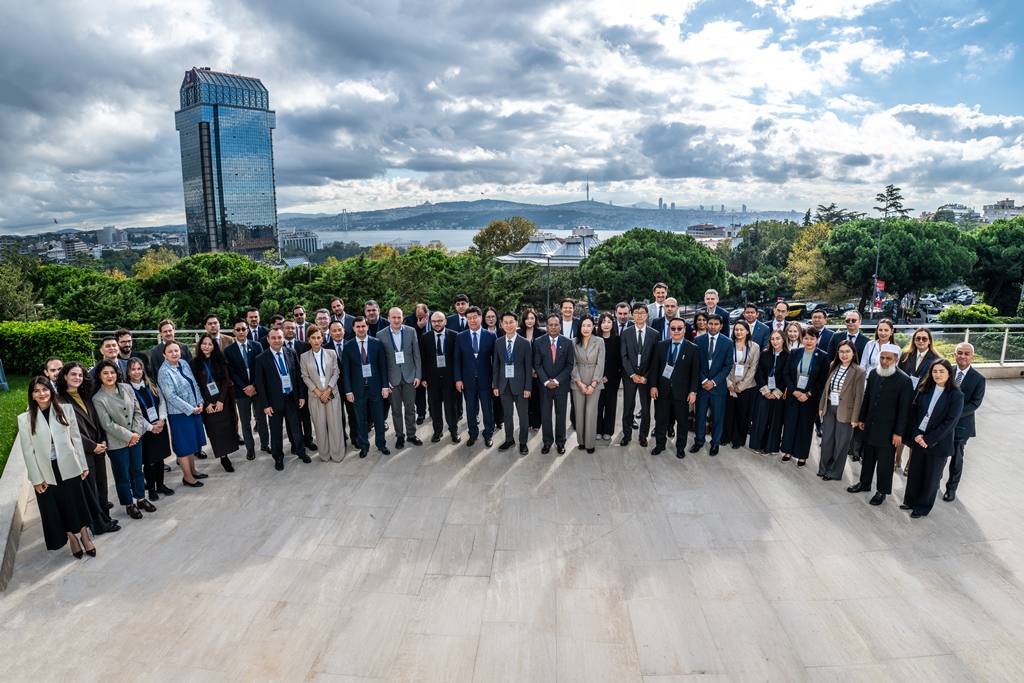
Representatives from twelve countries also shared their national achievements, implementation challenges and approaches to digital transformation.
For Kazakhstan, participation provided an opportunity to present its existing digital government infrastructure while learning from other countries' experience in AI governance.
The conference was organized by the Astana Civil Service Hub, UNDP Kazakhstan, South Korea's Ministry of the Interior and Safety and National Information Society Agency, with support from the UNDP Istanbul Regional Hub.
The discussions highlighted a common challenge for governments: building the institutional capacity and skills needed to use increasingly powerful AI systems without weakening accountability.
Earlier, we also explored how more than 83,000 civil servants in Kazakhstan had received training in artificial intelligence, reflecting the country's efforts to prepare government employees for digital transformation.