

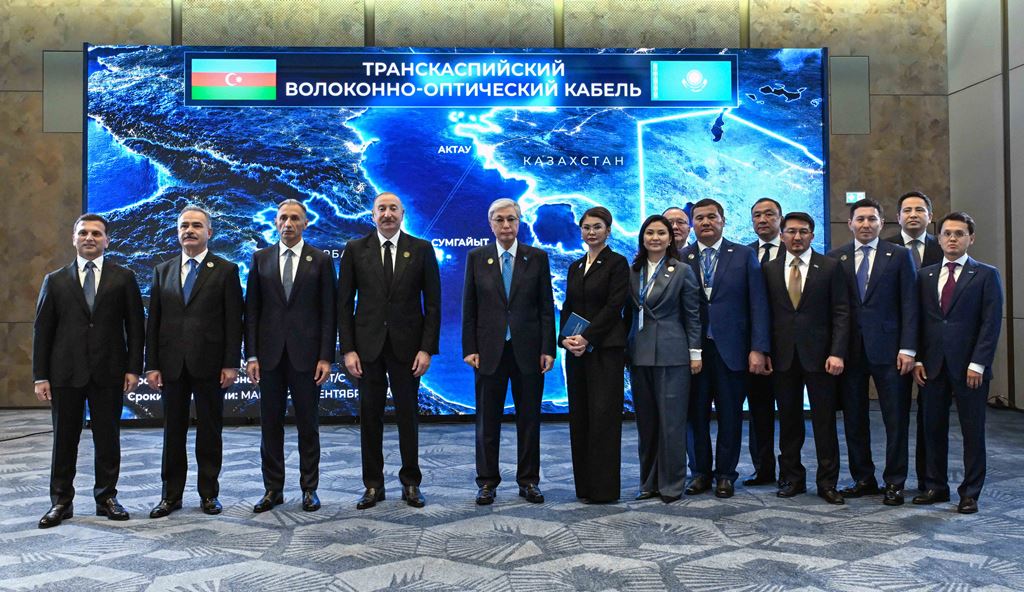
A new digital corridor now crosses the Caspian Sea. Kazakhstan and Azerbaijan have officially launched a 380-kilometre fiber-optic communication line connecting the two countries beneath the seabed. Presidents Kassym-Jomart Tokayev and Ilham Aliyev attended the ceremony in Baku on October 15, 2026, according to the official announcement from Akorda.
Built jointly by Kazakhtelecom JSC and Azerbaijan's AzerTelecom, the Trans-Caspian Fiber-Optic Line is designed to become part of a communications route linking Kazakhstan, other Central Asian countries and China with Europe, DKNews.kz reports.
Beyond expanding international connectivity, the project could help Kazakhstan attract global technology companies and develop the infrastructure needed for cloud computing and artificial intelligence.
What makes the 380-kilometre cable important?
The new fiber-optic line establishes a direct telecommunications connection between Kazakhstan and Azerbaijan across the Caspian Sea.
It is intended to form part of a broader international data transmission route connecting Asian and European markets. The infrastructure could eventually connect with submarine cable systems in the Mediterranean and Black Seas.
That would give the route a wider geographic role, extending its potential use beyond the two countries that developed it.
For Kazakhstan, the project offers an additional international communications pathway. Such infrastructure can help diversify data transmission routes and create opportunities for telecommunications operators, cloud service providers and other technology businesses.

Tokayev calls the project a digital embodiment of the Middle Corridor
Speaking at the launch ceremony, President Kassym-Jomart Tokayev said the new line would reinforce Kazakhstan and Azerbaijan's joint efforts to develop the Middle Corridor.
He emphasized that the initiative represents a new form of connectivity rather than another conventional transport route.
“We have launched a very important project that will have international significance. Most importantly, it represents a new type of corridor. This is not a transport corridor, but something entirely new that reflects the realities of the modern era – the era of digitalization. It is a fundamentally new format of cooperation, a kind of digital embodiment of the Middle Corridor,” the President of Kazakhstan emphasized.
The Middle Corridor has traditionally been associated with railways, ports and freight transportation between Asia and Europe.
The fiber-optic project adds a digital dimension to that network, creating infrastructure for the movement of information alongside the movement of goods.
For Kazakhstan and Azerbaijan, the development reflects a broader approach to regional connectivity that combines logistics, telecommunications and technological cooperation.

How the project could support Kazakhstan's digital economy
According to Akorda, the Trans-Caspian Fiber-Optic Line has strategic importance for Kazakhstan's digital development.
The additional international connection is expected to create opportunities in several areas:
- Expanding Kazakhstan's international telecommunications connectivity.
- Attracting global technology companies to the domestic market.
- Supporting the development of cloud services.
- Creating conditions for artificial intelligence infrastructure.
- Strengthening digital connections between Central Asia and Europe.
International fiber-optic infrastructure is essential for transmitting large volumes of data between networks and digital facilities.
An additional route can potentially improve network resilience by reducing reliance on a limited number of international connections.
However, the official announcement does not specify the new cable's transmission capacity, commercial tariffs or expected effect on internet speeds for individual users.

Aliyev says the project will benefit Central Asia and the South Caucasus
President Ilham Aliyev described the launch as another step toward deeper cooperation between Azerbaijan and Central Asian countries.
He stressed that the infrastructure would serve a much wider region than Kazakhstan and Azerbaijan alone.
“Last year, Azerbaijan was admitted as a full-fledged member of the Consultative Meetings of the Heads of State of Central Asia. This year, I participated as a full-fledged member of this format. This project represents another contribution to deepening cooperation, as the fiber-optic communication lines will be used by both Central Asian and South Caucasus countries, as well as countries across the wider region. Today, we have launched a global project,” the President of the Republic of Azerbaijan said.
The remarks highlight Azerbaijan's growing engagement with Central Asia and the potential role of the Caspian Sea as a link between regional telecommunications networks.
For countries in the South Caucasus, the project could also expand opportunities to participate in international digital traffic between Asia and Europe.
Who developed the Trans-Caspian Fiber-Optic Line?
The project was implemented through cooperation between Kazakhtelecom JSC and Azerbaijan's AzerTelecom.
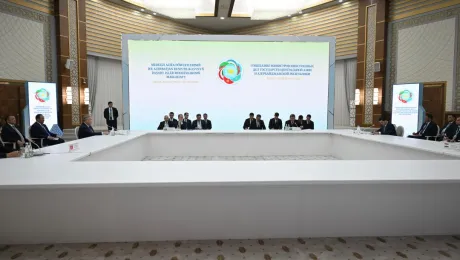
Alongside the two presidents, senior government and telecommunications officials attended the launch ceremony.
Speakers included:
- Zhaslan Madiyev, Kazakhstan's Deputy Prime Minister and Minister of Artificial Intelligence and Digital Development.
- Rashad Nabiyev, Azerbaijan's Minister of Digital Development and Transport.
- Bagdat Mussin, Chairman of the Management Board of Kazakhtelecom JSC.
The participation of government representatives and telecommunications executives reflects the project's importance for both countries' long-term digital infrastructure plans.
Kazakhstan and Azerbaijan advance transport cooperation
The ceremony also included an event related to the development of the Trans-Caspian International Transport Route.
In the presence of Tokayev and Aliyev, representatives exchanged the previously signed Agreement on Cooperation for the Development of the Trans-Caspian International Transport Route between the governments of Kazakhstan and Azerbaijan.
The agreement concerns the physical transport corridor, while the newly launched fiber-optic line adds telecommunications infrastructure to the broader relationship.
Together, the two developments demonstrate how Kazakhstan and Azerbaijan are pursuing closer connectivity across both transport and digital networks.

Will the new cable make internet faster in Kazakhstan?
The immediate significance of the project is the creation of additional international telecommunications infrastructure.
For businesses and digital service providers, a new route could eventually offer more connectivity options and support the development of data-intensive services.
For ordinary internet users, however, the launch does not automatically guarantee faster connections or lower prices.
Those outcomes will depend on the cable's technical capacity, the commercial arrangements of telecommunications operators and how the new infrastructure is integrated with domestic networks.
Akorda has not announced specific consumer pricing or speed improvements associated with the project.
Why the launch matters beyond Kazakhstan and Azerbaijan
The Trans-Caspian Fiber-Optic Line strengthens the digital component of regional connectivity between Central Asia, the South Caucasus and Europe.
Its potential integration with submarine networks in the Mediterranean and Black Seas could create further opportunities for international data transmission.
The project also supports Kazakhstan's broader ambition to develop a competitive digital economy, attract technology investment and expand infrastructure for cloud computing and artificial intelligence.
Its longer-term impact will depend on the development of connecting networks, international demand and commercial use of the new route.
The central achievement is the launch of a 380-kilometre fiber-optic connection beneath the Caspian Sea, adding a new digital dimension to the Middle Corridor.
Earlier, we reported on Kazakhstan’s global initiatives at the CICA Summit, where President Kassym-Jomart Tokayev highlighted the strategic importance of the Trans-Caspian Fiber-Optic Line and its role in strengthening digital connectivity between Asia and Europe.