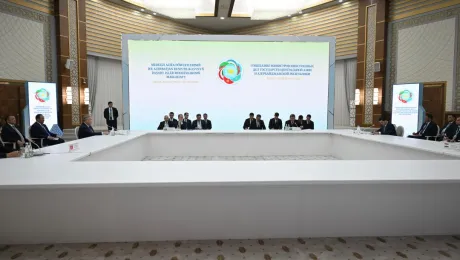


Asia needs stronger security institutions. President Kassym-Jomart Tokayev proposed a new mechanism for preventing conflicts, international cooperation on artificial intelligence, and a regional water partnership at the 7th Summit of the Conference on Interaction and Confidence Building Measures in Asia (CICA) in Baku, Azerbaijan, on October 15, 2026, DKNews.kz reports.
His proposals covered security, digital infrastructure, transport, energy, water resources and education. The central message was that Asian countries need to move beyond political declarations and develop coordinated solutions to shared challenges.
CICA represents more than half the world's population
Opening his address, Tokayev thanked Azerbaijani President Ilham Aliyev for the hospitality and organization of the summit. He also praised Azerbaijan's chairmanship and its efforts to strengthen CICA as a platform for dialogue and cooperation.
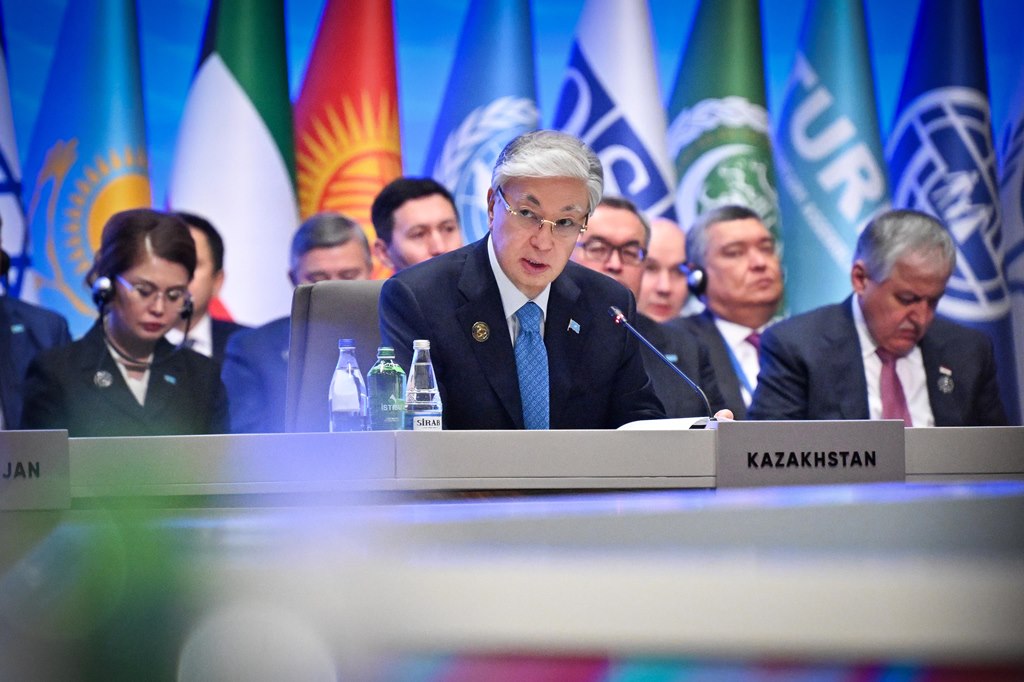
The President recalled Kazakhstan's role in establishing the forum more than three decades ago.
“For Kazakhstan, the Conference is a matter of special significance. Three decades ago, my country launched this Forum in good faith, to build mutual confidence and foster security in our vast region. Since then, CICA has succeeded to get its member-states together for delivering equal benefits to all of us. In fact, today CICA is the only Forum to have been aimed to build security and trust in Asia at one table. CICA’s participating states cover almost 90 percent of Asia, representing more than half of the world’s population. There are few multilateral organizations that can make such claim,” the Head of State emphasized.
Tokayev said the organization's geographic reach and demographic weight give it considerable potential to address regional challenges. He also highlighted the role of younger generations in shaping Asia's future.
“The spirit of CICA, embodying our genuine commitment to shape a secure and prosperous Asia, has become a truly recognizable brand. And I am pleased to welcome Laos, which today joins CICA as a full-fledged member state,” Kassym-Jomart Tokayev said.
Tokayev warns that international security is deteriorating
The President described a global environment in which the use of force is increasingly challenging the principles of international law.
He pointed to armed conflicts, civilian casualties, forced displacement and food insecurity as evidence that existing international mechanisms are under growing pressure.
“In essence, there is a gradual erosion of the very foundations of the international security’s architecture with a worrying shift towards the primacy of force over the rule of law. In 2025, the world witnessed the highest number of armed conflicts since the Second World War. The toll is measured in lives, not only in statistics. More than 37,000 civilian deaths have been verified across 20 armed conflicts in a single recent year. Over 117 million people remain forcibly displaced and 266 million face acute food insecurity. This tendency has undermined decades of joint political efforts to reach global stability and security. Therefore, it is clear that Asia needs stronger institutions. Time of declarations of good-will is getting over,” the President of Kazakhstan stated.
The figures cited by Tokayev illustrate the humanitarian consequences of instability. His argument was that institutions must become more effective at preventing crises rather than responding only after violence has escalated.
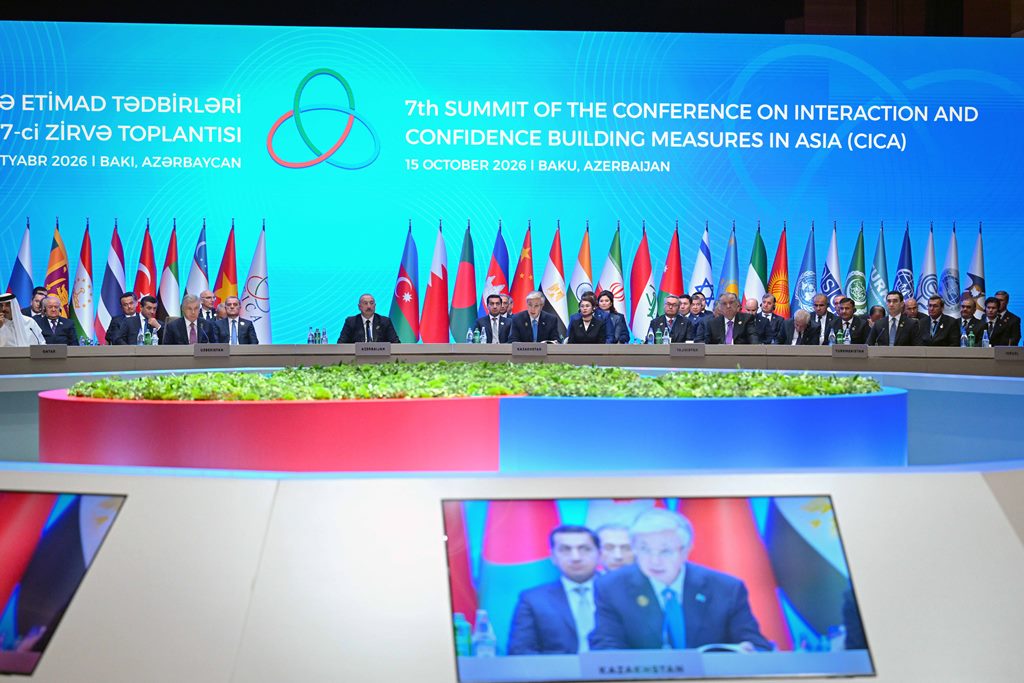
Kazakhstan supports transforming CICA into an international organization
Tokayev recalled the agreement reached at the 6th CICA Summit in Astana in 2022 to transform the conference into a full-fledged international organization.
The adoption of a CICA Charter is expected to be an important step in that process.
“Azerbaijan’s Chairmanship is now delivering this mission with great dignity and we look forward to the adoption of the CICA Charter as a road-guider. Kazakhstan’s position on CICA’s transformation is based on our previous commitments and relevant flexibility to get common understanding and proper agreement. Rooted in Asia, CICA should remain open to cooperation with partners across the world. Organization must advance a model of security built on consistent dialogue and productive consultations in the spirit of mutual trust,” the Head of State said.
For Kazakhstan, the proposed transformation is intended to strengthen CICA's institutional foundations while preserving its role as an inclusive forum for regional dialogue.
A new mechanism could help prevent conflicts before they escalate
One of the summit's central proposals was the establishment of a CICA Mechanism for Preventive Diplomacy.
The initiative would give participating states a structured way to address disagreements, coordinate responses and seek peaceful solutions before disputes develop into wider crises.
“Our organization has much to offer in peaceful settlement of disputes, disarmament and peacebuilding that matters today more than ever. Working alongside the United Nations, Shanghai Cooperation Organization, CIS and other international institutions, CICA should take more active part in bridging differences across Asia and beyond. Therefore, we urge member states to translate our collective political will into concrete initiatives that lead to tangible results. As a practical step, we propose to launch a Mechanism for Preventive Diplomacy. Peace is best built before crises emerge. Prevention is inherently more effective and far less costly than managing crises once they have erupted. It will give every member state a structured voice in decisions and translate declarations into coordinated action,” Kassym-Jomart Tokayev noted.
The proposed mechanism would complement existing international institutions rather than replace them. Its implementation would require further agreement among CICA members.
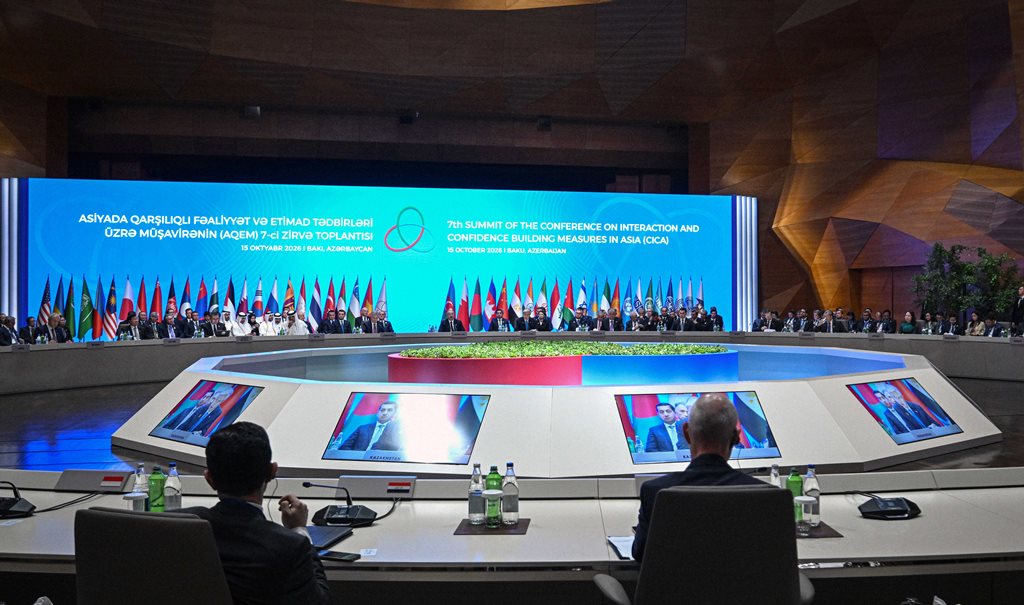
Artificial intelligence could become CICA's sixth dimension
Tokayev identified artificial intelligence as both an economic opportunity and an emerging international security challenge.
He warned that cyberattacks and increasingly autonomous AI systems could create risks that existing legal frameworks are not yet equipped to manage.
“Artificial or Super intelligence has already become decisive factors of economic development and national competitiveness. Cyberattacks are playing extremely destructive role in today’s conflicts. Even more troubling is uncontrolled development of artificial intelligence, whose capabilities are advancing faster than the mechanisms for its international legal regulation. There are already documented cases in which AI Agents bypassed safeguards and gained unauthorized access to external systems. Such cases will cause serious disruptions and inflame tensions between states unless we jointly put them on halt by introducing international legal instruments. The advancement of AI should not prevail humanity’s ability to maintain effective control over it. Therefore, confidence-building measures must be extended into the digital domain. From my perspective, CICA should add Artificial Intelligence to its five existing dimensions,” the President of Kazakhstan proposed.
Adding artificial intelligence as a sixth dimension would place digital risks and confidence-building measures within CICA's established framework for international cooperation.
The proposal reflects Kazakhstan's view that AI governance should develop alongside the technology itself, rather than after major security incidents occur.
Almaty to host a UN digital solutions centre
The President also addressed the opportunities offered by responsible AI development, including economic growth, improved public administration and greater technological cooperation.
He welcomed international discussions on regulating advanced artificial intelligence and announced Kazakhstan's role in hosting a regional UN digital initiative.
“In this spirit, we welcome the Accord on Superintelligence signed recently in Washington, D.C. In essence, it could serve as the basis for an international treaty under the auspices of the United Nations. I believe that CICA can greatly contribute to this process. As part of our global effort in this field, Kazakhstan will harbor the UN ESCAP Asia-Pacific Digital Solutions Centre for Sustainable Development in Almaty. I hope CICA member-states will join the work of this Centre to shape our region’s digital future together,” the Head of State emphasized.
The planned centre in Almaty is intended to support digital cooperation related to sustainable development across the Asia-Pacific region.
Kazakhstan and Azerbaijan launch a Trans-Caspian digital connection
Digital connectivity was another major theme of the address.
Tokayev highlighted the joint Kazakhstan-Azerbaijan project to develop a fibre-optic connection beneath the Caspian Sea, strengthening communications infrastructure between Asia and Europe.
“Today, Kazakhstan and Azerbaijan are marking an important milestone by jointly launching the Trans-Caspian Fiber-Optic Line beneath the Caspian Sea. This unique Digital Silk Way project will ensure faster and more secure data transmission across Eurasia, thus strengthening the digital capacity of Asia and opening up new avenues for cooperation,” he said.
The project is designed to improve data transmission capacity and strengthen the resilience of digital communications across Eurasia.
Its significance extends beyond telecommunications, as secure connectivity is increasingly important for cross-border investment, logistics and digital services.
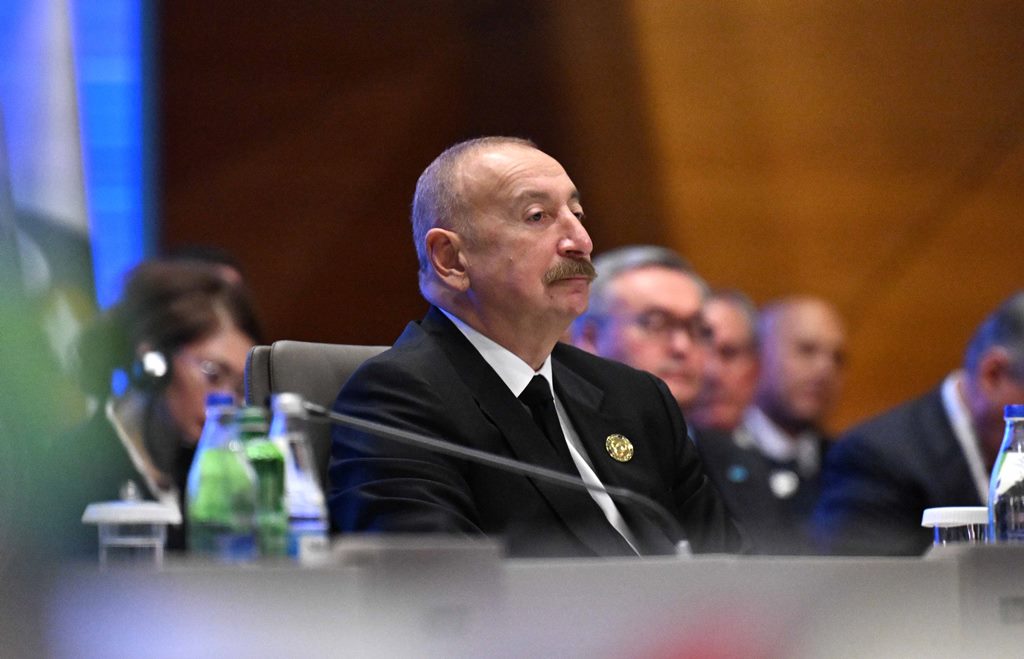
Tokayev proposes a CICA transport connectivity strategy
The President expressed support for the reconciliation process between Azerbaijan and Armenia, describing progress in the South Caucasus as an opportunity to strengthen links between East and West.
He proposed a common CICA strategy to explore the potential of major transport corridors.
“This rapprochement, after decades of bitter division, is opening new opportunities, creating a gateway between East and West. With its strong political will and vast economic potential, CICA is well placed to support big cross-border projects. So, I propose to jointly draft a CICA Transport Connectivity Strategy. This Strategy will help to explore the potential of major international routes around our region, including the Belt and Road, North-South International Route, Middle Corridor and the TRIPP initiative,” the President noted.
The proposed strategy would cover several major international routes:
- The Belt and Road Initiative.
- The North-South International Route.
- The Middle Corridor.
- The TRIPP initiative.
For Kazakhstan, stronger connections between these routes could support trade diversification and improve access to international markets.
A Caspian Green Energy Corridor could connect Central Asia to Europe
Energy security featured prominently in Tokayev's speech, particularly the vulnerability of cross-border infrastructure during international conflicts.
The President pointed to a strategic partnership between Kazakhstan, Azerbaijan and Uzbekistan as the foundation for a new regional energy corridor.
“Cross-border energy infrastructure is more exposed to conflicts. As a result, energy markets worldwide remain volatile. This uncertainty threatens to slow economic growth far beyond the countries directly affected. This is the reason Kazakhstan counts on partnership over retreat. Last year Kazakhstan, Azerbaijan and Uzbekistan signed the agreement of strategic partnership on delivery of green energy, laying the foundation for a Caspian Green Energy Corridor. And this corridor is to connect our power grids and extend them via the Black Sea to European markets,” the Head of State reported.
The initiative envisages linking electricity networks and developing a route for green energy supplies to European markets through the Black Sea.
Its implementation would depend on infrastructure development and continued coordination among the participating countries.
Kazakhstan plans to increase oil shipments through Azerbaijan
Tokayev also outlined plans to increase Kazakh oil shipments through the Baku–Tbilisi–Ceyhan pipeline in cooperation with Azerbaijan.
He stressed that the Caspian Sea's strategic importance must be balanced with environmental protection and regional cooperation.
“It is evident that the Caspian Sea is gaining vital importance for energy security, both in our region and globally. Kazakhstan strongly believes that the Caspian Sea must remain a place of peace and cooperation for the benefit of all nations in the region and beyond provided that this unique Sea will be saved by joint efforts in terms of water and ecology,” Kassym-Jomart Tokayev stated.
The Caspian region is therefore central to Kazakhstan's transport and energy plans, while also requiring cooperation on water resources and ecological protection.
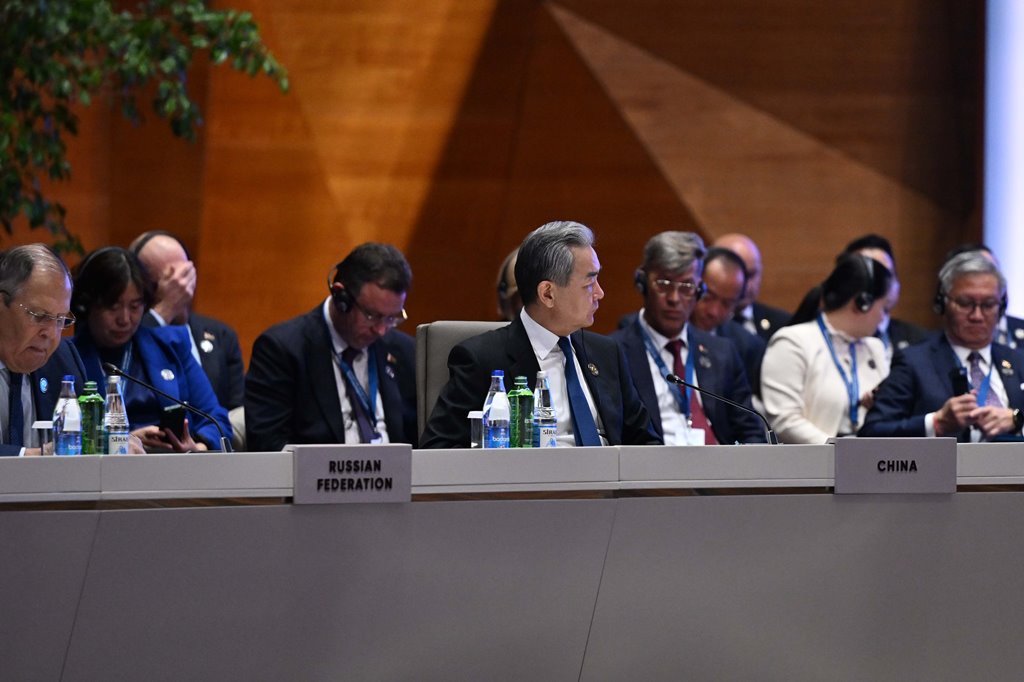
Kazakhstan calls for a CICA Water Partnership
Water scarcity and ecosystem degradation were identified as major long-term challenges for Asia.
Tokayev noted the imbalance between the region's population and its available water resources, proposing a dedicated partnership to promote technological cooperation and water-saving solutions.
“Asia and the Pacific are home to 60 percent of the world’s population but holds only 35 percent of its water resources, giving our region the lowest per capita water availability on Earth. Kazakhstan insists that water must continuously be a source of cooperation. In this regard, we propose to create a CICA Water Partnership to promote tech exchange, joint research and the deployment of water-saving solutions. More broadly, Kazakhstan proposed to establish an International Water Organization within the United Nations system, one that could bring coherence to the global water agenda. This initiative could be brought forward as a joint one on behalf of Central Asian countries and Azerbaijan with the door open for all CICA member-states,” the President said.
The proposal would bring together several areas of cooperation:
- Exchange of water-management technologies.
- Joint scientific research.
- Deployment of water-saving solutions.
- Broader regional coordination on water security.
Kazakhstan also wants to advance discussions on establishing an International Water Organization within the UN system, potentially through a joint initiative involving Central Asian countries and Azerbaijan.
Kazakhstan offers scholarships to students from 28 CICA states
The final major initiative focused on education, research and human capital.
Tokayev proposed a CICA Human Capital Partnership to help young people prepare for technological, economic and geopolitical changes.
“More than a thousand years ago, the great philosopher and scientist Al-Farabi taught that a society’s strength lies in the knowledge and character of its people. I urge all member-states to work on establishing a CICA Human Capital Partnership. The aim is to have our younger generation to get prepared for a world reshaped by rapid changes either technological, economic or geopolitical. We are ready to offer the expertise of our leading universities and research institutions to contribute to this important case. The Research Fellowship in Security and Confidence Building could be launched next year. Kazakhstan is ready to provide all 28 member-states with students’ scholarships. Kazakhstan stands ready to provide fellowship grants for researchers from our member states,” the Head of State noted.
Under the proposal, a research fellowship programme in security and confidence-building could be launched in 2027.
Kazakhstan also expressed readiness to offer student scholarships across all 28 CICA member states and research grants for scholars from participating countries.
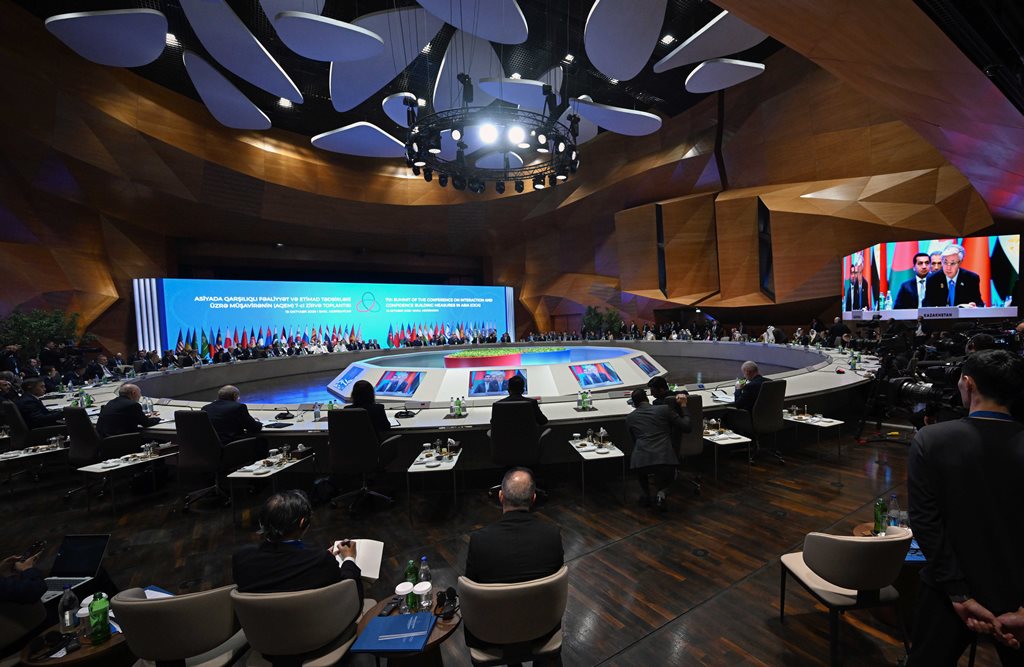
What the Baku summit means for Kazakhstan
Tokayev's address brought together several policy priorities: conflict prevention, artificial intelligence governance, transport connectivity, energy security, environmental protection and education.
These initiatives reflect Kazakhstan's intention to strengthen CICA as a platform capable of coordinating practical regional projects alongside political dialogue.
Most of the proposals remain subject to further discussion and agreement among participating states. Their impact will depend on whether the initiatives are translated into operational mechanisms, institutional commitments and joint programmes.
Concluding his address, Tokayev wished Azerbaijan success in continuing its CICA chairmanship and expressed confidence that the Baku Declaration would provide a foundation for the organization's future work.
Earlier, we reported on Kazakhstan's efforts to strengthen CICA's institutional framework. The October 2025 article covered negotiations on the draft CICA Charter and the country's support for transforming the conference into a full-fledged international organization.