
Aigerym, a foundation student at Nazarbayev University, wants to use artificial intelligence to better understand electrical engineering. But when it comes to homework and exercises, she says, she still needs to work things out herself.
An AI course is helping her understand where the technology can help and where it should be left aside. Brainstorming is one useful application, she said, while some assignments remain off limits.
Her experience reflects a challenge facing universities as AI becomes part of everyday learning: teaching students to use the technology without letting it take over the work that builds their knowledge and skills.
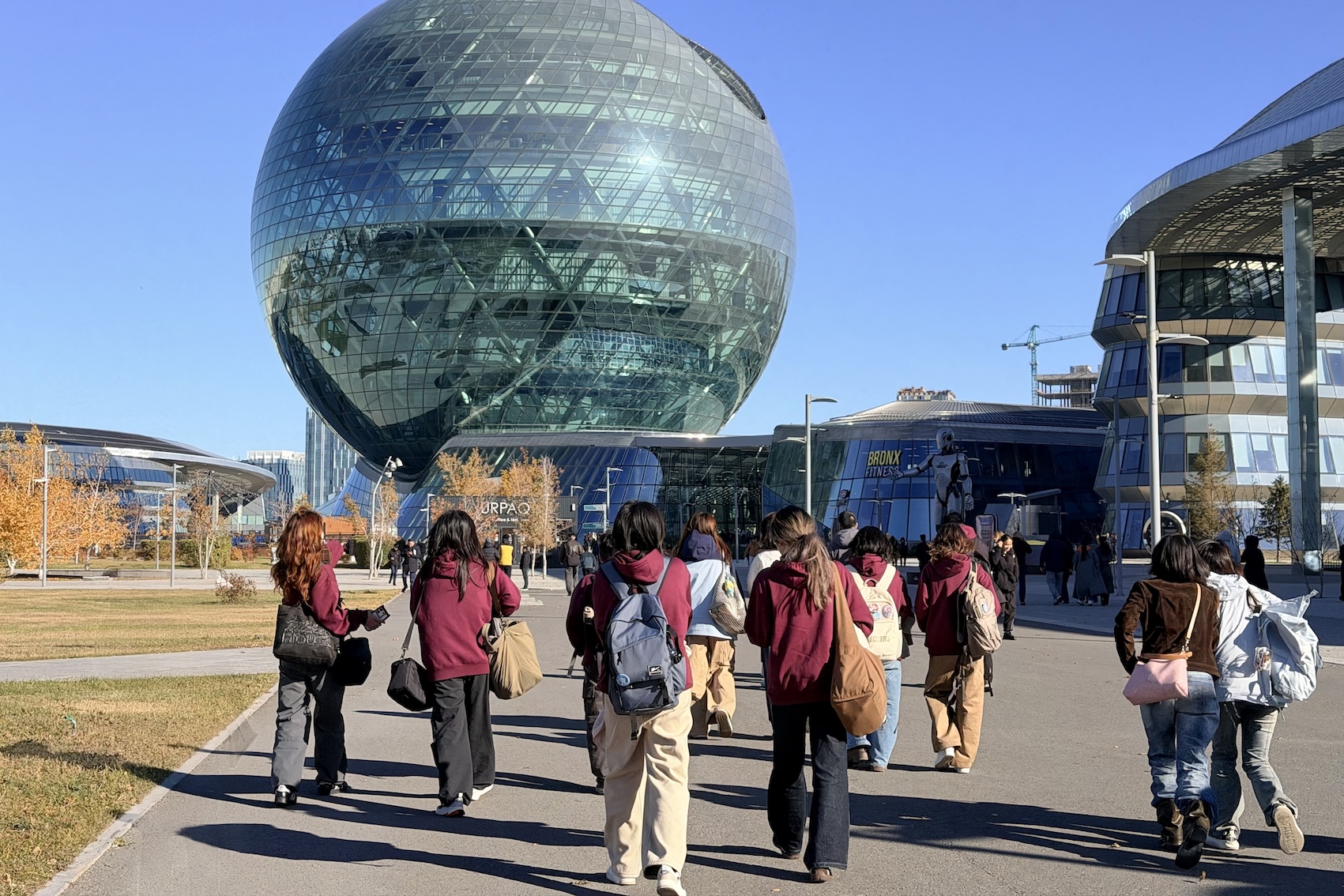
At Nazarbayev University, students studying mathematics, political science, molecular medicine and information technology are approaching that challenge in different ways. Some use AI to explore ideas or make complex concepts easier to understand. Others are learning to apply it to research and their future careers, while drawing boundaries around academic assignments.
The shift is taking place as Kazakhstan expands AI education through initiatives such as AI-Sana, a national program aimed at equipping students and young researchers with AI skills and entrepreneurial knowledge. According to the Ministry of Artificial Intelligence and Digital Development, 706,023 students received certificates in the program’s first stage, followed by 67,264 in the second.
The Ministry of Science and Higher Education describes the second stage as a move beyond basic AI knowledge toward practical applications and project development. The intended skills include building machine-learning models, programming and addressing ethical questions.
For Ayaulym, a first-year mathematics student, however, learning about AI does not yet mean using it for coursework. She completes homework and other assignments without the technology, she said, and expects to take a new AI course in the spring semester.
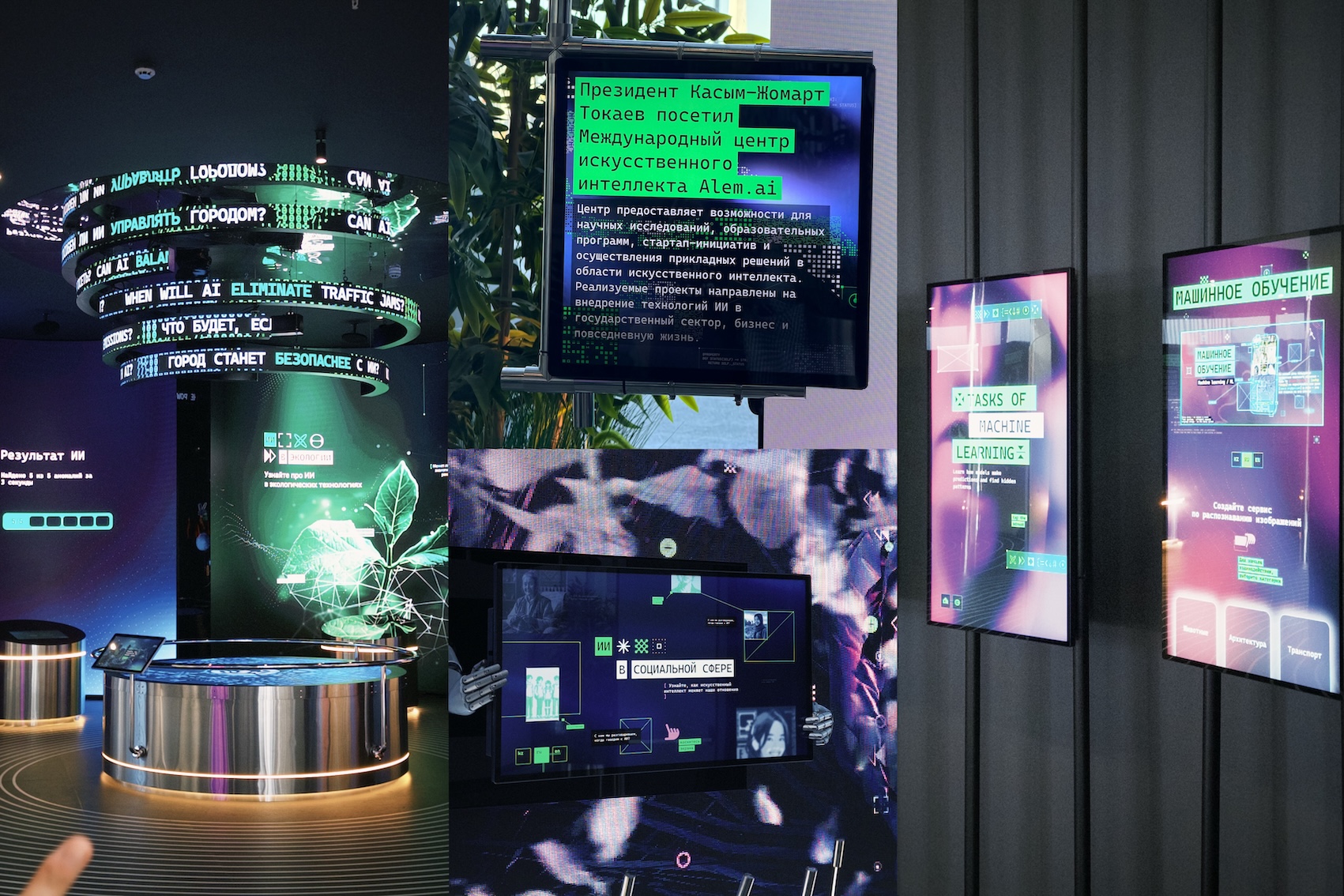
Her approach highlights a distinction that universities must navigate: knowing how to use AI is not the same as relying on it to complete an assignment. The purpose of a mathematics exercise, for example, is not simply to arrive at the right answer, but to learn the reasoning that leads to it.
In molecular medicine, AI can play a different role. Vitaliy, a master’s student, said some teachers encourage students to use the technology to generate ideas and explore a subject.
“Sometimes, teachers encourage us to use AI for brainstorming and stuff like that,” he said.
AI-generated diagrams can also help illustrate complex signaling pathways, he added, making the material easier for students to understand and for teachers to explain.
Toqa, another molecular medicine student, uses AI to summarize material and work more efficiently. But she draws a line at having the technology write assignments for submission.
The distinction is not simply between subjects that use AI and those that do not. It is also about the purpose for which the technology is used. Helping students explore a concept or navigate difficult material is different from producing the work on which their understanding will be assessed.
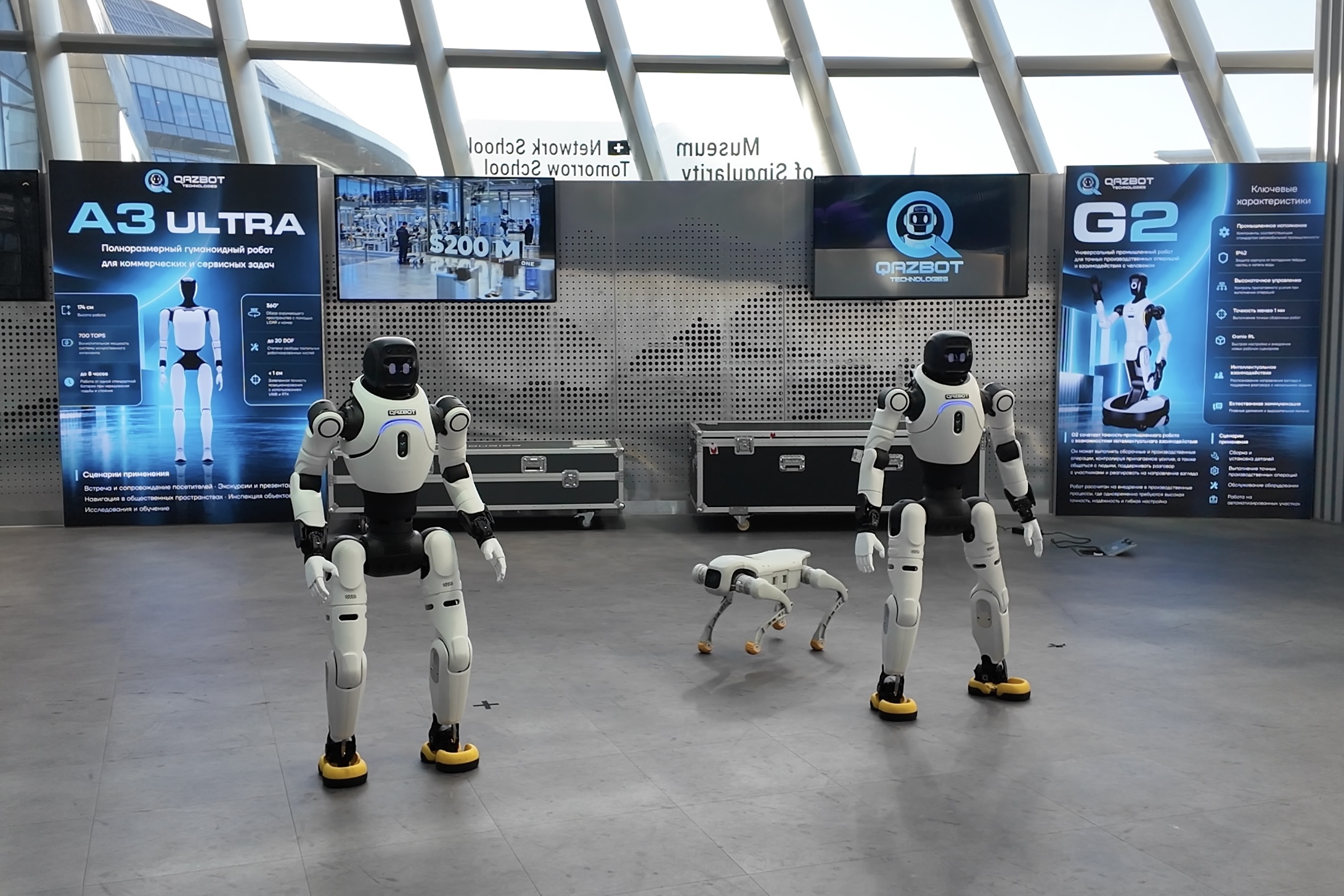
For Korlan, who studies political science and international relations, AI education offers a way to apply the technology beyond its traditional technical domain. She is taking a course designed specifically for social science students.
The emphasis is on conducting research and collaborating with AI, rather than handing tasks over to it. One part of that process is learning to refine prompts, or the instructions given to an AI system, so that its responses better serve a particular research goal.
The same principle could extend into the workplace. Nuralikhan, an information technology student, sees AI-assisted coding as a way for people without formal programming backgrounds to develop applications. He also hopes to see the technology applied in areas such as mineral exploration and mining.
“AI is not going to replace, it’s going to expand,” he said, expressing optimism about the opportunities the technology could create. For students, he suggested, the priority is to understand how AI can be integrated into their own fields.
That requires more than learning how to operate a tool. Nazarbayev University’s published AI literacy program also emphasizes the ability to evaluate AI-generated information critically, understand the strengths and limitations of different tools, and use them responsibly. Students are also taught how to acknowledge AI-generated material in academic work.
The university is considering ways to take this approach further by combining AI education with other disciplines.
Aruzhan Alinova, a manager in the university’s Department of Internationalization, said the School of Computing and Artificial Intelligence is exploring degree programs that would bring AI together with fields such as education, medicine and engineering.
Rather than limiting AI education to standalone courses, the proposed programs would allow students to pursue AI alongside another discipline at undergraduate or master’s level. Alinova also outlined a possible pathway for sociology graduates to enter a master’s program combining AI and the social sciences.
“These programs are not launched yet,” she said. “This is just the plan of our faculty.”
If developed, such programs could help students connect technical knowledge with the methods and questions of their chosen fields. The aim would be not simply to give students across different majors access to the same technology, but to help them understand how AI can be applied to the specific challenges of their disciplines.
For Aigerym, that broader transformation begins with a more immediate question: when can AI help her understand an electrical engineering concept, and when does she need to solve the problem herself?
As universities work out how to incorporate AI into their curricula, the distinction may prove essential. A system can generate an answer in seconds. Helping a student understand why that answer is correct is a different task altogether.
The authors, Dong Jiaqi, Aray Kazhytay and Lian Beilei, are student members of the Backpack Reporting and Research Kazakhstan 2026 team from Shanghai International Studies University.