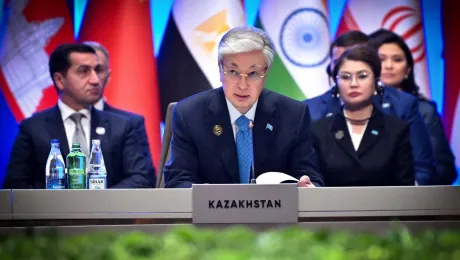

Kazakhstan has received a commitment from Chinese mining and metallurgy group CNMC to complete construction of the Aktogay copper smelter on schedule while meeting industrial and environmental safety requirements. President Kassym-Jomart Tokayev discussed the project with China Nonferrous Metal Mining Group Chairman Wen Gang on October 20, 2026. According to the official statement from Akorda, the meeting focused on construction standards, advanced technologies, workforce training and further industrial cooperation between Kazakhstan and China, DKNews.kz reports.
The talks took place on the same day that Kazakhstan officially launched construction of the new copper smelting facility at the Aktogay deposit in Abai Region.
The project represents an investment of approximately $1.8 billion and is designed to produce 300,000 tonnes of copper cathodes annually. The first copper cathode is expected in 2030.
Beyond the size of the investment, the meeting highlighted three priorities: completing a technologically complex industrial project, developing local engineering expertise and expanding Kazakhstan's capacity to process its mineral resources domestically.
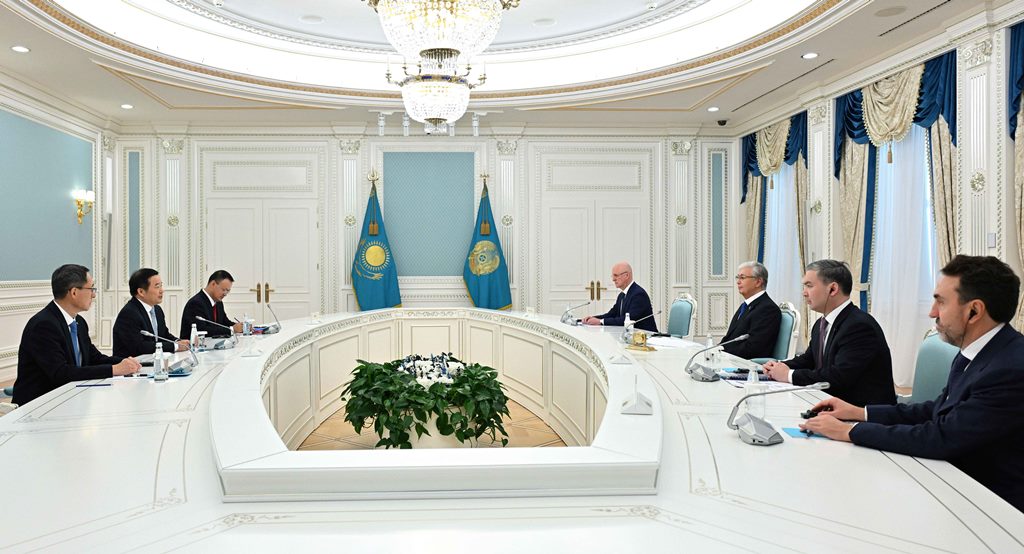
What Tokayev discussed with CNMC Chairman Wen Gang
President Kassym-Jomart Tokayev welcomed CNMC's contribution to Kazakhstan's industrial development, emphasizing the company's international experience in mining and metallurgy.
The President described the start of construction at Aktogay as an important development for Abai Region and Kazakhstan's manufacturing sector.
The new facility is intended to expand the country's copper processing capabilities by connecting existing mining operations with additional metallurgical production.
Tokayev also emphasized China's position as one of Kazakhstan's principal strategic and economic partners in trade and investment.
According to the presidential administration, the launch of the project demonstrates the continued development of bilateral cooperation.
The discussions therefore extended beyond the construction of an individual plant. They also addressed the broader industrial relationship between the two countries and opportunities for future joint projects.
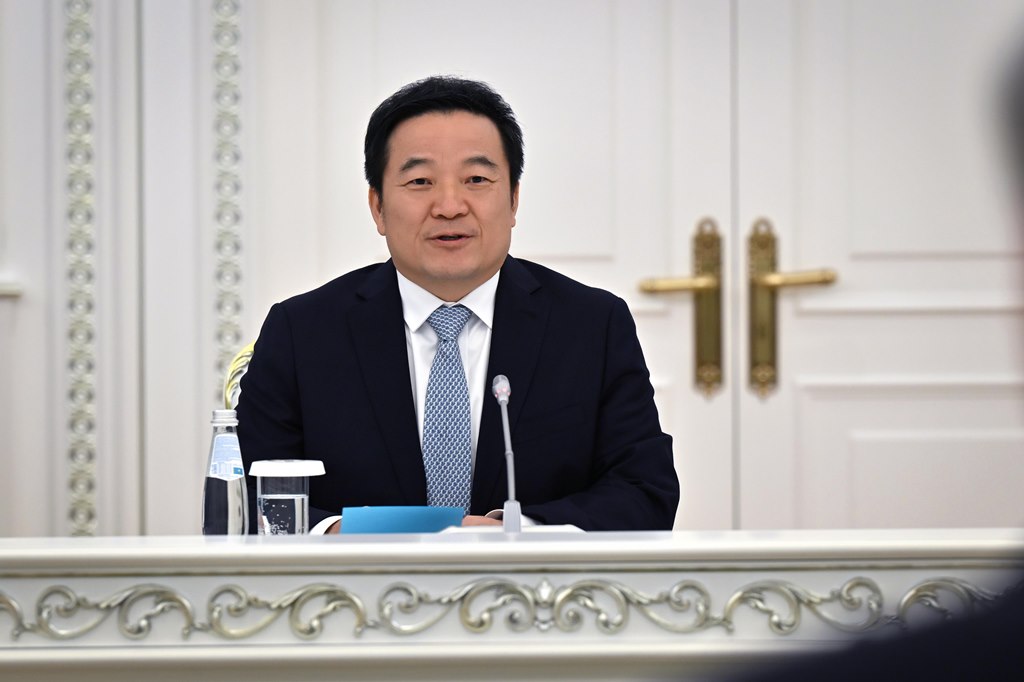
CNMC promises to meet construction deadlines
During the meeting, Wen Gang thanked the President for the confidence placed in CNMC and for personally participating in the construction launch ceremony.
He assured Tokayev that construction would be completed to high standards and within the established timeframe.
The Chinese company also committed to using advanced technologies and observing industrial and environmental safety requirements.
These commitments are particularly significant for a copper smelter, where construction involves specialized equipment, complex engineering systems and carefully coordinated commissioning procedures.
The project will require the integration of raw material handling, metallurgical processing, utilities, environmental protection systems and finished-product operations.
However, Akorda's announcement does not specify individual construction milestones or provide a detailed engineering schedule.
The commitments outlined by Wen Gang should therefore be understood as plans and assurances that will need to be demonstrated through the project's implementation.
Inside Kazakhstan's $1.8 billion copper project
The Aktogay copper smelter is being developed by KAZ Minerals, with China's NFC serving as an engineering partner.
The project has an estimated investment value of approximately $1.8 billion.
Its planned annual production capacity is 300,000 tonnes of copper cathodes.
The facility will process copper concentrate from the company's existing mining operations, extending the production chain from extraction and beneficiation to refined metal.
Copper cathodes are a highly refined form of copper used in electrical equipment, power infrastructure, cable manufacturing and a wide range of industrial applications.
The new smelter will also produce associated products, including gold, silver and sulfuric acid.
Specific production volumes for these additional products have not been disclosed in the presidential announcement.
The first copper cathode is scheduled to be produced in 2030, although the date when the facility will reach its full annual design capacity has not been specified.
Why domestic copper processing matters for Kazakhstan
Kazakhstan has a substantial mining industry and significant mineral resources, but the economic value generated by mining depends partly on how much processing takes place within the country.
Copper production involves several distinct stages.
Ore is extracted from deposits, processed at concentrators and transformed into copper concentrate. Further metallurgical processing produces refined metal suitable for industrial use.
Each additional stage requires equipment, engineering services, energy, technical expertise and operational management.
When more of these activities take place domestically, a larger share of the production process is located within the national economy.
This can create opportunities for industrial suppliers, maintenance companies, logistics operators and skilled workers.
However, deeper processing does not automatically guarantee higher profitability.
The economic performance of a copper smelter depends on construction costs, energy prices, operating efficiency, processing charges, market conditions and the reliability of its supply chain.
For Kazakhstan, the strategic importance of the Aktogay project lies in expanding industrial capabilities rather than simply increasing raw material extraction.
More than 1,000 jobs expected in Abai Region
One of the project's anticipated benefits is the creation of more than 1,000 jobs.
For Abai Region, this represents an opportunity to expand employment in a technically demanding manufacturing industry.
Modern copper smelting operations require metallurgical engineers, electrical specialists, maintenance personnel, automation experts, equipment operators and industrial safety professionals.
The facility could also generate additional demand for contractors, transport providers and industrial service companies.
The extent of these indirect economic benefits will depend on procurement arrangements and the participation of local businesses.
For the regional economy, the development of technical skills may prove particularly important because expertise acquired at a major industrial facility can also be relevant to other manufacturing operations.
Local workforce training becomes a priority
Wen Gang identified workforce development and knowledge exchange as areas where cooperation between CNMC and Kazakhstan could expand.
Training local specialists will be important as the project moves from construction toward commissioning and full-scale operation.
Large metallurgical facilities depend on employees who understand both the equipment and the specific operational requirements of the production process.
Training may involve equipment operation, maintenance practices, process control, industrial automation and safety procedures.
International engineering partnerships can provide opportunities for local employees to gain experience with specialized industrial technologies.
Over time, these skills can help reduce reliance on external technical support and strengthen domestic engineering capabilities.
Nevertheless, Akorda has not announced specific training programs, participant numbers or education partnerships connected with the meeting.
The practical results will depend on how the workforce development commitments are implemented.
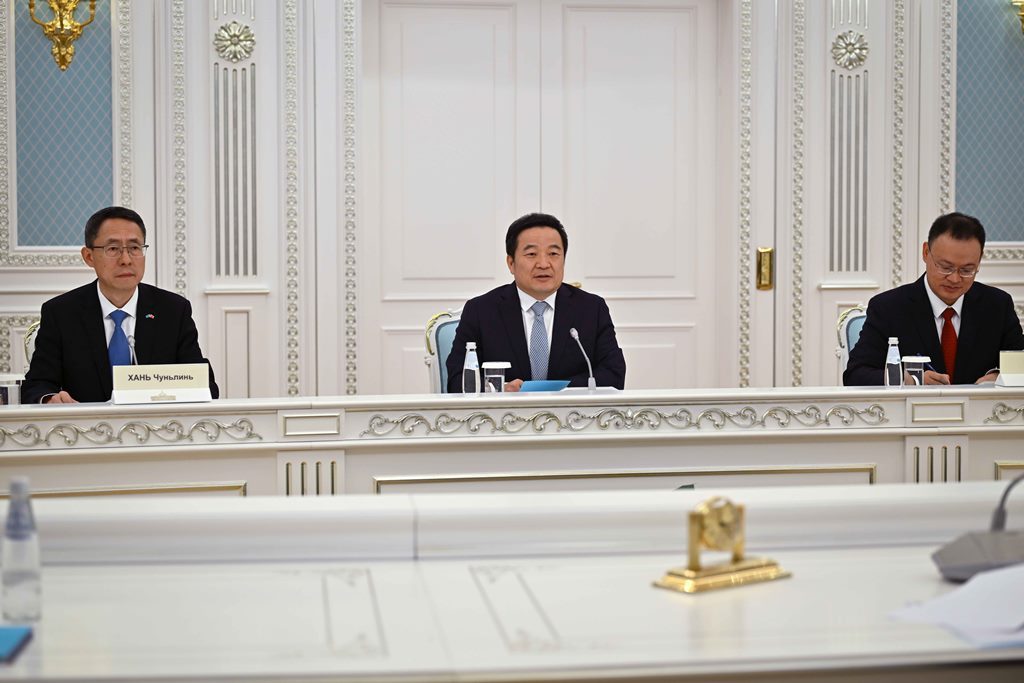
Environmental safety: A central commitment from CNMC
Environmental protection was another important subject during the meeting.
According to Akorda, Wen Gang assured the President that the project would comply strictly with environmental and industrial safety requirements.
Copper smelting is a technologically complex process involving high temperatures and the treatment of mineral concentrates.
Modern facilities require effective systems for managing process gases, controlling emissions, handling waste and monitoring operating conditions.
Environmental performance also depends on equipment reliability, operational procedures and the effectiveness of monitoring systems.
For a project of this scale, compliance with applicable environmental standards will be a significant consideration throughout construction and operation.
However, the official statement does not provide projected emissions figures, details of gas-cleaning equipment or environmental assessment findings.
The company's commitment to environmental compliance should therefore not be confused with independently verified operating performance, which can only be assessed once the relevant systems are installed, tested and functioning.
Why the construction schedule matters
Major metallurgical facilities require substantial investment long before they begin generating commercial revenue.
The development process typically includes detailed engineering, procurement, construction, equipment installation, testing and commissioning.
Delays in one stage can affect the timing of subsequent work.
Specialized equipment may also require lengthy manufacturing and delivery periods, making coordination between contractors particularly important.
CNMC's assurance that the project will be completed on schedule therefore addresses a major concern associated with capital-intensive industrial development.
The first production milestone is currently planned for 2030.
Reaching that target will depend on the successful completion of construction and the readiness of the plant's integrated technological systems.
Aktogay's existing mining operations provide the foundation
The new smelter will be developed alongside an established copper mining and processing operation.
KAZ Minerals Aktogay is one of Central Asia's major open-pit copper mining complexes.
Its existing facilities include large-scale ore concentrators and automated process control systems.
The operation has undergone significant expansion over recent years, increasing its capacity to process sulphide ore.
The new copper smelter is intended to build on this industrial foundation by adding further metallurgical processing.
This integration is important because it creates a closer connection between concentrate production and refined metal output.
It also gives the project access to an established industrial site and an existing source of copper concentrate.
Nevertheless, the commercial performance of the new facility will depend on the economics of smelting and refining, as well as the availability and quality of feedstock.
Kazakhstan and China deepen industrial cooperation
The meeting between Tokayev and Wen Gang also reflected the broader economic relationship between Kazakhstan and China.
China is a major partner in Kazakhstan's international trade and investment activities.
Industrial cooperation has become an important component of that relationship, particularly in projects involving manufacturing, engineering and infrastructure.
The Aktogay smelter provides an example of how Kazakhstan's mineral resources can be combined with international engineering expertise.
For Kazakhstan, such partnerships may help accelerate the development of technically complex industrial facilities.
For Chinese engineering companies, they create opportunities to participate in large international projects.
The longer-term benefits will depend on successful project execution, local workforce development and the creation of sustainable industrial operations.
At the conclusion of the meeting, both sides identified metallurgy and deeper processing as potential areas for further cooperation.
How the project could affect Kazakhstan's manufacturing sector
The development of the Aktogay smelter is consistent with Kazakhstan's efforts to expand manufacturing and increase the domestic processing of mineral resources.
For resource-producing economies, this transition can support a more diversified industrial structure.
Instead of relying primarily on extraction and concentrate production, additional manufacturing capacity allows companies to participate in later stages of the value chain.
The potential benefits include industrial employment, demand for specialized services, technical training and the development of related businesses.
There are also important challenges.
Smelting operations require substantial energy, sophisticated environmental systems and long-term operational reliability.
They are also exposed to global commodity market conditions and fluctuations in industrial demand.
For these reasons, the success of the Aktogay project will ultimately be determined by both its construction performance and its operating results after commissioning.
What comes next for the Aktogay copper smelter?
Following the official construction launch and the meeting with CNMC's chairman, the project enters an important implementation phase.
Construction teams and engineering partners will need to coordinate equipment installation, infrastructure development and preparation for future operations.
Workforce training and environmental compliance will remain important alongside construction progress.
The commitments announced by Wen Gang provide a framework for assessing how the project develops over the coming years.
The planned production of the first copper cathode in 2030 will be a particularly important milestone.
For Kazakhstan, the central objective is to transform a major mining asset into a more integrated industrial operation capable of producing higher-value metal domestically.
The meeting between Tokayev and Wen Gang underlined the importance both sides attach to that objective and to the future of Kazakhstan-China industrial cooperation.
Earlier, we examined how the Aktogay mining and processing complex became an example of Kazakhstan's evolving industrial financing model, including the role of the Development Bank of Kazakhstan in supporting the site's expansion. The new copper smelter represents a further stage in Aktogay's development, extending its industrial capabilities from large-scale ore processing toward additional production of refined copper.