
Keeping children with families takes support. A global summit opening in Samarkand, Uzbekistan, is examining how to deliver it—from rehabilitation close to home to schooling during cancer treatment and justice procedures that reduce the risk of further trauma, DKNews.kz reports.
The World Summit on Investing in Children’s Wellbeing takes place on October 21–22, with organisers announcing participation from more than 100 countries. The city is also hosting the Second International Congress on Childhood Cancer.
Behind the international agenda are questions families face every day. Can a parent keep working when their child needs constant care? Can education and rehabilitation be provided in the same place? Must a child who has experienced violence recount what happened again in court?
The services being presented in Samarkand offer concrete examples of how those questions can shape institutions, professional practice and access to support.
A Former Children’s Home Now Supports Families
Samarkand’s Territorial Social Services Center occupies the premises of the former Mehribonlik children’s home. It serves children and adults with disabilities, people who need assistance with daily care, and children facing difficult life circumstances.
Seven buildings accommodate 11 services and areas of activity. They include early intervention, day care, rehabilitation for children and adults, vocational education, the Mahorat culinary studio and an inclusive training hub. The centre has capacity to serve 350–400 people a day.
The site’s purpose has changed. Its services are designed to help people receive support while maintaining their family relationships and familiar surroundings.
For parents, day care also has an economic value. When a child receives appropriate care during the day, adults have time to work. Access to that service can help a household protect its income and share the demands of caregiving.
Social Workers Bring Support Into Neighbourhoods
The system’s closest link to families is the social worker in the mahalla—a neighbourhood community and citizens’ self-government institution in Uzbekistan.
Social workers identify difficulties, assess a household’s needs and coordinate the services required.
Uzbekistan has 208 Inson social services centres and 9,000 social workers in mahallas. According to figures published by the summit organisers, the number of types of social services and assistance increased from 23 in 2023 to 140 in 2026. Of those, 45 concern children’s rights protection.
One family may need help applying for benefits. Another may require rehabilitation or safe temporary accommodation for a child. Following an assessment, an individual support plan is drawn up and its implementation monitored.
Requests are registered in a single customer relationship management system. Social workers coordinate with Inson centres, schools, medical institutions and other services.
Organisers report that 80% of issues are resolved at mahalla level. Over three years, more than 600,000 people and families in need were newly identified.
For parents unfamiliar with the support available, active outreach can make a practical difference. Assistance can begin before a family manages to find the right office on its own.
Imkon Combines Preschool Education and Rehabilitation
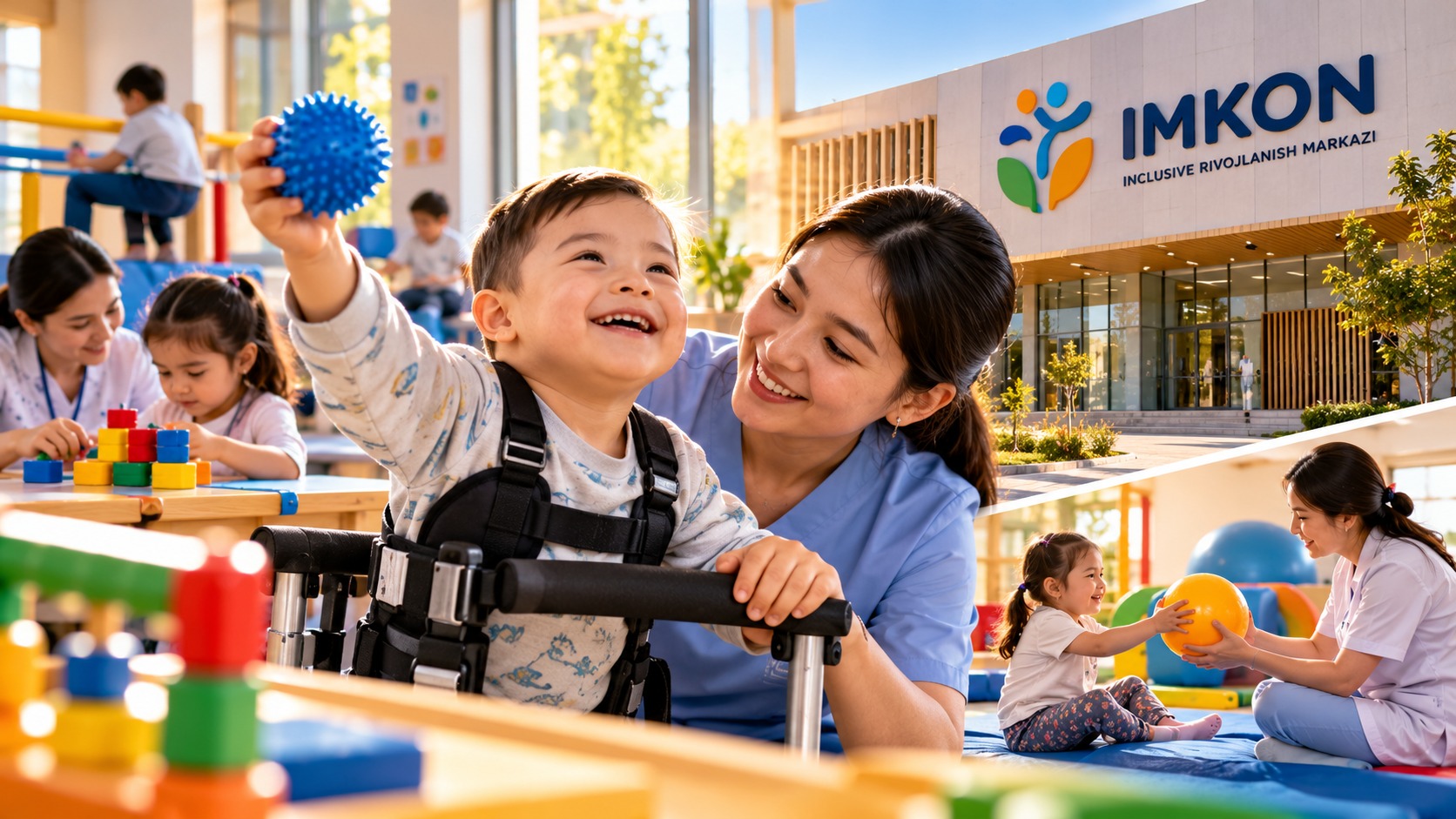
Samarkand’s Imkon centre began operating in October 2026. It has 150 places across ten groups and can also provide outpatient rehabilitation to up to 100 children aged three to 18 each month.
International experts and journalists visited the centre ahead of the summit. Preschool education is combined with medical, psychological and educational support, helping children develop movement, speech, communication and self-care skills.
Services include therapeutic exercise, sensory integration, music and creative activities, alongside massage, physiotherapy and water-based therapy.
Bringing specialists together allows education and rehabilitation to be coordinated around each child’s needs. The skills practised have everyday uses: communicating, moving, getting dressed and managing routine activities.
Uzbekistan operates four Imkon centres and one Umid centre. Families apply through their local Inson centre for admission to a specialised preschool institution. Outpatient rehabilitation requires an assessment by the institution’s internal commission.
Recorded Interviews Can Spare Children a Court Appearance
Samarkand’s Najot Children’s Center follows the international Barnahus model, bringing specialists and procedures for children who have experienced violence under one roof.
Procedural actions take account of the centre psychologist’s assessment. Interviews are conducted by a specially trained prosecutor’s office employee assigned to the investigation team.
Audio and video recording is mandatory. Transcripts are added to the criminal case file, while recordings are recognised as evidence and may be used in court without requiring the child to appear.
That provision can reduce the need for a child to recount the experience again during a hearing. Limiting repeated questioning and the risk of further psychological harm are central aims of the centre.
An interpreter, special education teacher, psychiatrist, rehabilitation professional or other specialist can be involved when needed.
From January 1, 2027, state-funded legal assistance is to be provided to children participating in criminal cases as victims or witnesses, through lawyers specially trained to work with children.
Schooling Continues During Long-Term Treatment
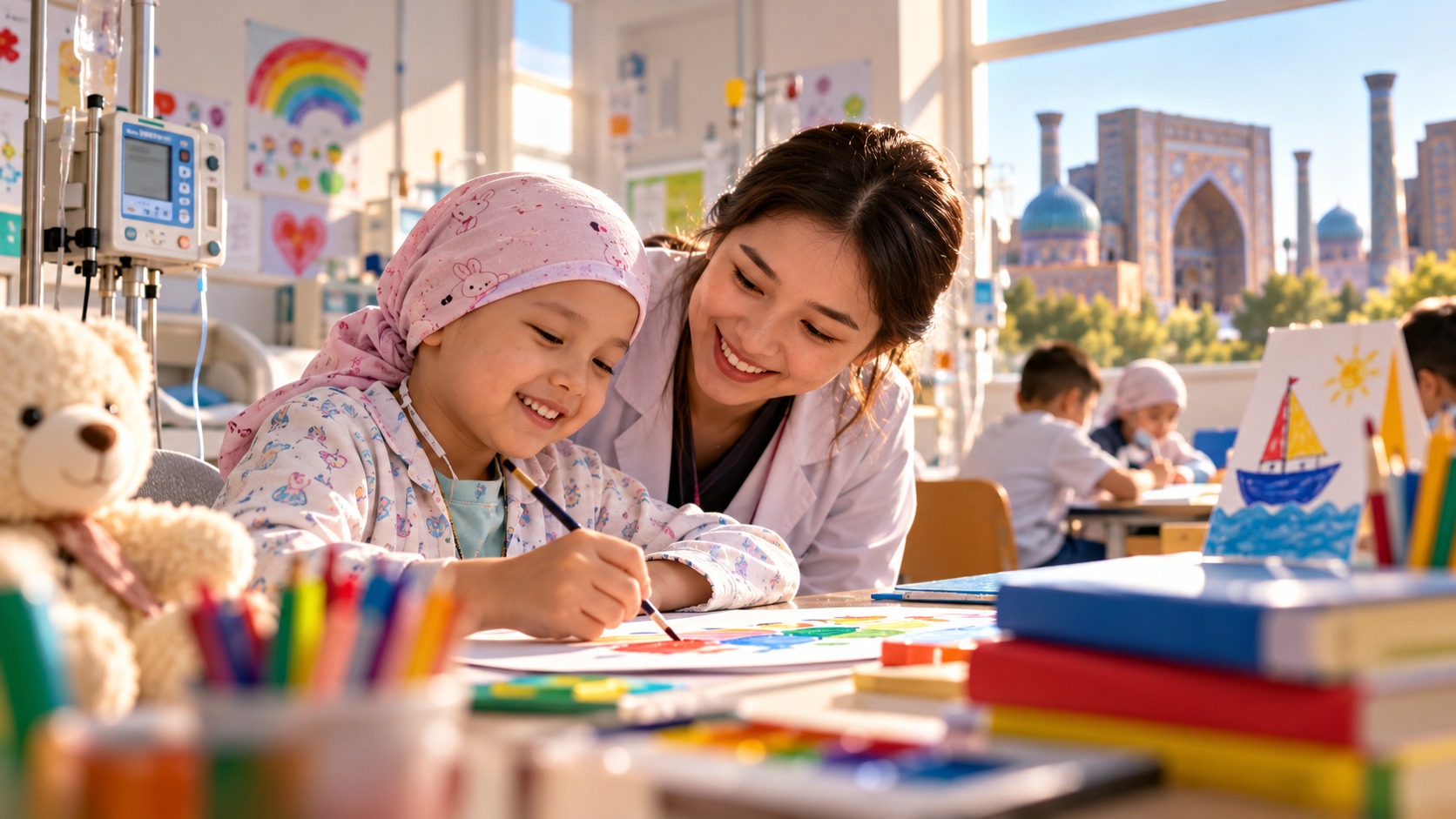
The summit exhibition includes artwork by pupils of Mehrli Maktab, a hospital school for children undergoing prolonged treatment.
Hospital education allows children to continue preschool or school learning according to their health needs. It also includes psychological support for children and parents, contact with their regular school and preparation for returning to the classroom.
A lengthy illness disrupts more than a family’s routine. Children miss lessons, spend time away from classmates and face the challenge of catching up. Hospital schooling helps maintain continuity throughout treatment.
The exhibition’s “Little Boat” section addresses care for children with cancer, blood disorders and primary immunodeficiencies. It covers the pathway from early detection and diagnosis to treatment, rehabilitation and palliative support.
Uzbekistan’s National Childhood Cancer Strategy for 2025–2030 includes medicine provision, specialist training and the development of medical technologies. An International Academic Hub for Childhood Cancer also identifies the transfer of knowledge and technology to Central Asian countries among its areas of work.
That gives the summit a regional dimension: medical training and the exchange of expertise can extend beyond Uzbekistan.
A Declaration Is Planned for October 22
The summit is expected to conclude with the adoption of the Samarkand Declaration on Investing in Children’s Wellbeing. The draft proposes stronger family support, improvements in healthcare and inclusive education, and protection from violence.
A separate financing section calls for progressively increasing public investment in children and protecting essential services during periods of budget pressure.
In Samarkand, the practical purpose of that spending already has identifiable settings: a former children’s home offering community services, a preschool that combines learning with rehabilitation, and a centre designed to reduce the burden of criminal proceedings on a child.
We previously examined the barriers facing children with special educational needs in Kazakhstan, including the difficulties families encounter when seeking appropriate support.