
Kazakhstan has conquered the world chess stage. Its young players claimed 13 medals, including seven golds, at the 2026 World U7–U17 Chess Championships in Spain, finishing first among 82 participating nations, DKNews.kz reports.
According to the International Chess Federation (FIDE), Kazakhstan collected seven gold, two silver and four bronze medals in Roquetas de Mar. The tournament brought together 721 competitors, but it was the Kazakh delegation that walked away with the overall team trophy.
One player won every single game. Another surrendered just half a point throughout the championship. Several others entered the competition far from the top of the rankings and left Spain as world champions.
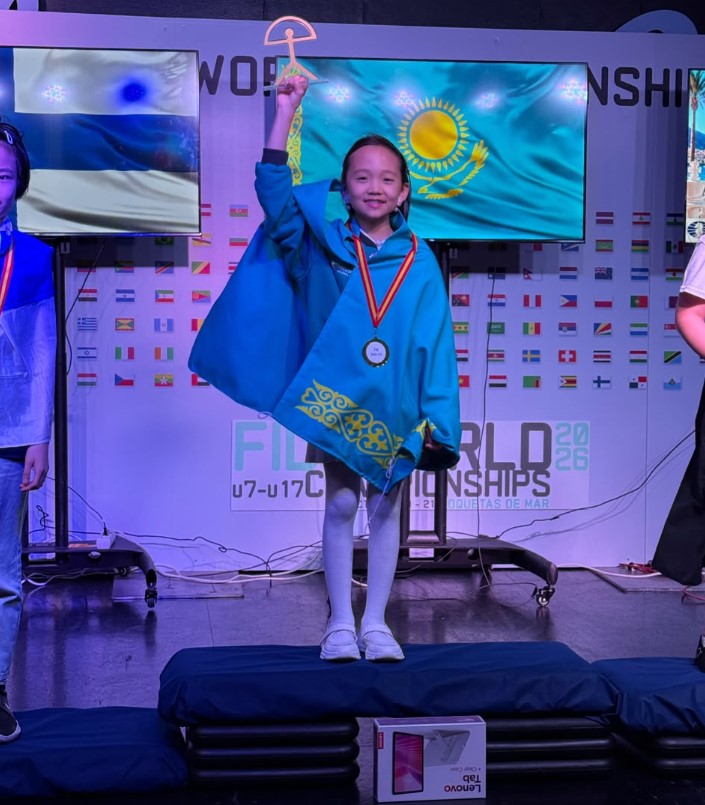
Seven gold medals put Kazakhstan ahead of every rival
Kazakhstan's performance was particularly striking because its victories came across several age groups, from the youngest competitors under seven to players in the under-15 category.
The country's seven world champions were:
- Makar Chernyshov — Open U7
- Leila Aldazharova — Girls U7
- Amaliya Yedresheva — Girls U9
- Amirzhan Anetov — Open U11
- Milana Filippova — Girls U11
- Danis Kuandykuly — Open U13
- Aldiyar Zhauynbay — Open U15
Two more Kazakhstan players secured silver medals: Alima Akimkhan in Girls U7 and Aldiyar Zharas in Open U15.
Bronze medals went to Rauan Bakhyt in Open U11, Alimzhan Zhauynbay in Open U13, Aiaru Altynbek in Girls U15 and Mariya Kholyavko in Girls U17.
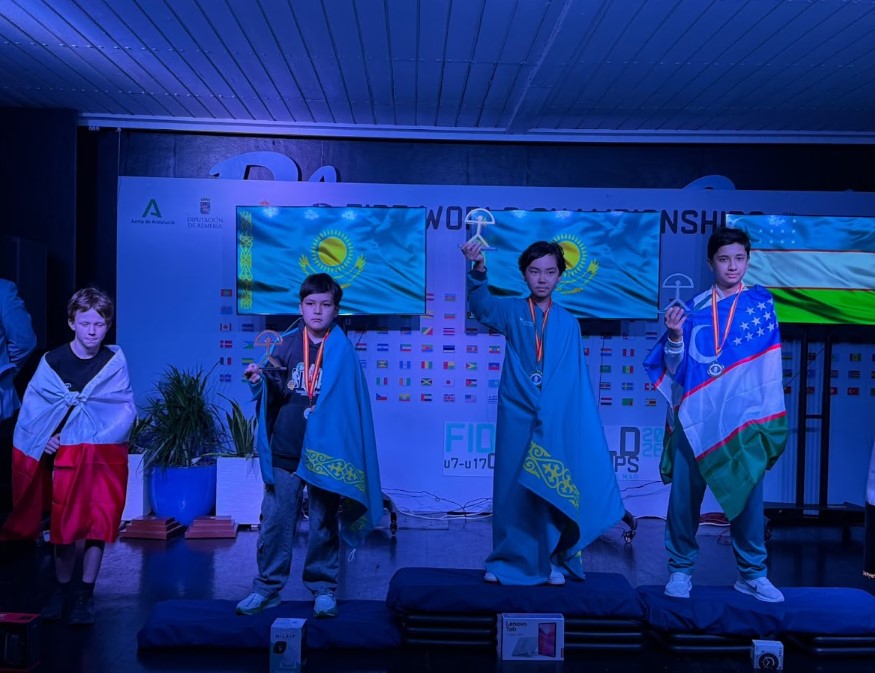
The official championship standings confirm Kazakhstan's commanding lead in the medal table.
Mongolia finished second with two gold medals, while Uzbekistan took third place with one gold, three silvers and one bronze.
Kazakhstan won seven of the 12 world titles available.
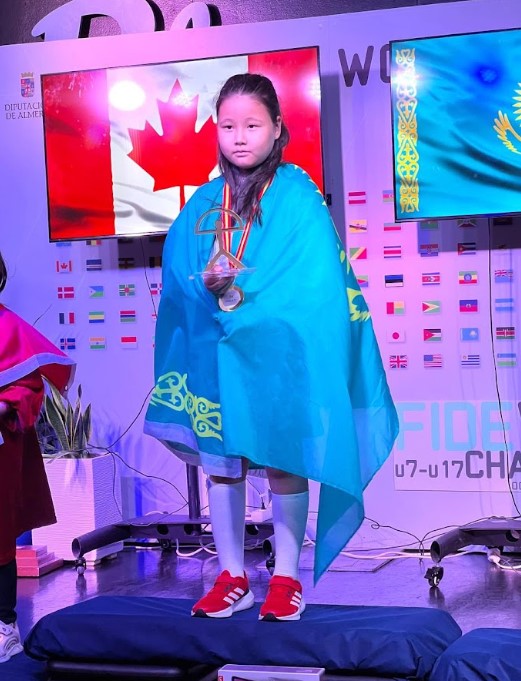
Milana Filippova wins all 11 games and finishes three points clear
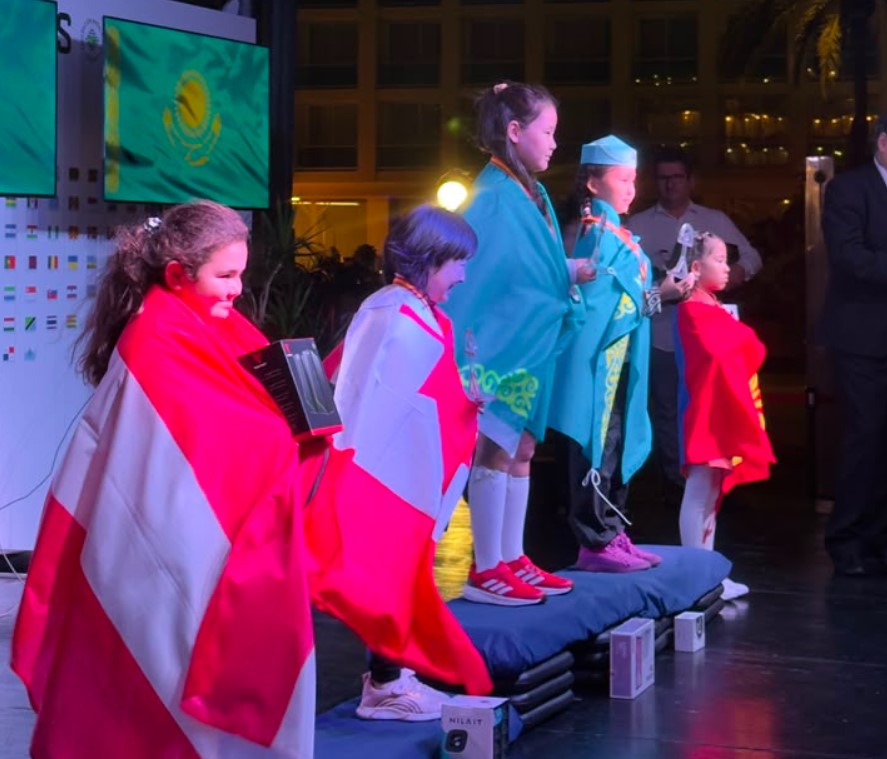
Among Kazakhstan's champions, Milana Filippova delivered one of the tournament's most extraordinary performances.
Competing in the Girls U11 category, she won all 11 games, achieving a perfect score and securing the championship title with two rounds still to play.
Her closest rivals finished with eight points each.
That left Filippova three full points ahead of the competition, an unusually large winning margin in an 11-round Swiss-system tournament.
The Kazakh player also defeated both eventual silver and bronze medallists, leaving little doubt about her superiority in the category.
Forty-seven players competed in the division, but none managed to take even half a point from Filippova.
Danis Kuandykuly drops just half a point in 11 rounds
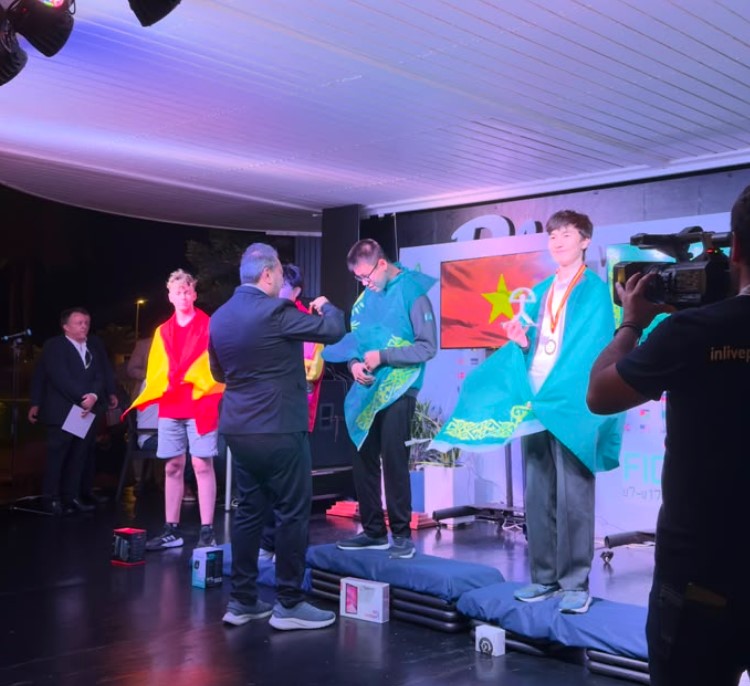
Another commanding performance came from Danis Kuandykuly in the Open U13 category.
The Kazakh international master finished with 10.5 points out of 11, conceding just one draw throughout the championship.
His nearest challenger, Egypt's Abdalrahman Sameh Mohamed, scored nine points.
The 1.5-point gap gave Kuandykuly a decisive victory in a field of 75 participants.
Kazakhstan also secured bronze in the same category through Alimzhan Zhauynbay, who scored 8.5 points.
The result gave Kazakhstan two podium places in one of the championship's most competitive divisions.
Two Kazakhstan players reach the U11 podium
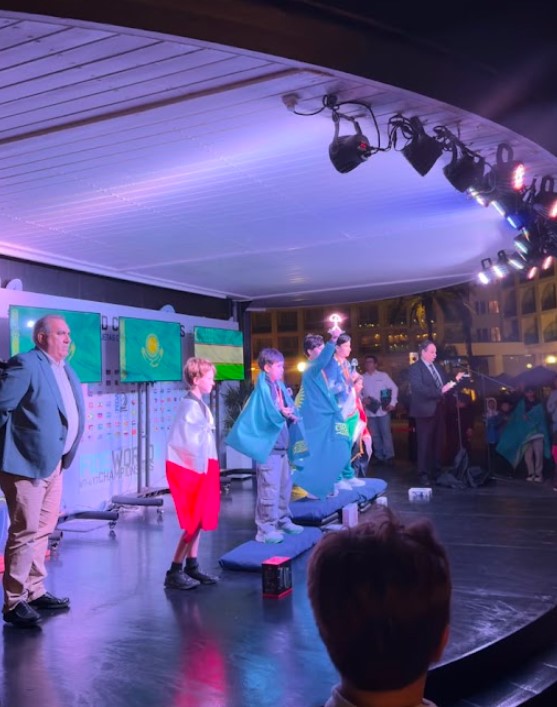
The Open U11 tournament produced another double success for Kazakhstan.
Amirzhan Anetov claimed gold with 9.5 points from 11 games, finishing one point ahead of Uzbekistan's Akbar Mustafakulov.
Anetov's final stretch proved decisive. He won his last four games, including a crucial encounter against Mustafakulov.
Fellow Kazakh player Rauan Bakhyt finished third with eight points.
With 99 competitors in the category, securing both gold and bronze represented another strong result for Kazakhstan's junior team.
Three unexpected champions overturn the starting rankings
Not all of Kazakhstan's victories came from established tournament favourites.
In the Girls U7 category, Leila Aldazharova arrived without an international rating.
She nevertheless defeated the competition to claim the world title with nine points from 11 games.
Her compatriot Alima Akimkhan took silver with 8.5 points, giving Kazakhstan the top two places in the division.
Makar Chernyshov produced a similar surprise in Open U7.
Ranked only 14th on the starting list, he climbed to first place and secured gold with nine points.
The final round proved decisive, with Chernyshov winning his game to finish ahead of his closest rivals.
Amaliya Yedresheva delivered another upset in Girls U9.
She began the championship as the 18th seed but finished with 8.5 points, level with two other competitors.
The title was decided by tiebreak criteria, which placed Yedresheva first.
Three champions who began outside the leading positions showed just how unpredictable youth chess can be.
A 15th birthday brings Aldiyar Zhauynbay a world title
Kazakhstan's seventh gold medal came from Aldiyar Zhauynbay in the Open U15 category.
He scored nine points to finish ahead of the field and secure the world championship title.
For Zhauynbay, the timing made the achievement especially memorable.
He turned 15 on October 21, making the victory a birthday gift few young chess players could imagine receiving.
His gold also completed Kazakhstan's collection of seven world titles in Spain.
Kazakhstan increases its medal haul from eight to 13
The latest result marks a substantial improvement over Kazakhstan's performance at the 2025 World School Chess Championships in Serbia.
At that tournament in Vrnjačka Banja, Kazakhstan's young players collected eight medals: four gold, three silver and one bronze.
In Spain, the total rose to 13.
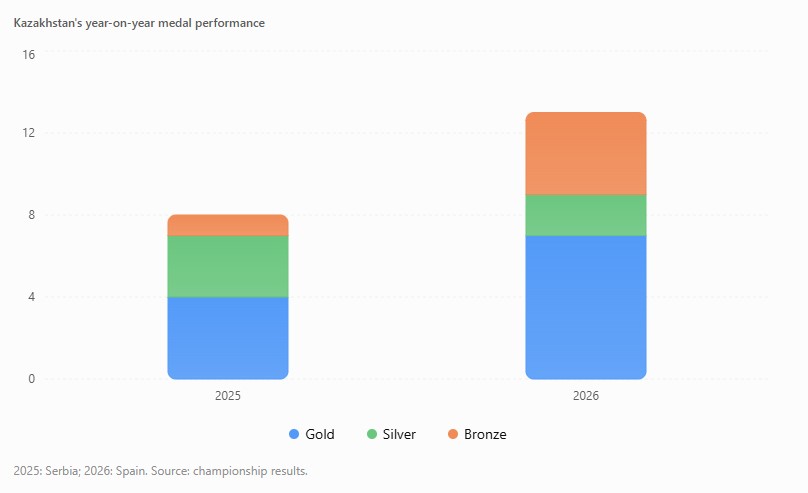
The comparison is particularly significant because the improvement was spread across multiple age categories.
Kazakhstan did not rely on a single outstanding player. It produced world champions among both boys and girls, with several categories featuring more than one Kazakh medallist.
Eleven rounds against players from 82 countries
The 2026 FIDE World U7–U17 Chess Championships took place in Roquetas de Mar, in Spain's Almería province, from October 13 to 21.
Players competed across six age groups, with separate open and girls' sections.
Each category featured 11 rounds under the Swiss system, with a time control of 45 minutes per player plus a 30-second increment for every move.
The format demanded consistency. A single defeat could change the standings, while players hoping to win gold needed to maintain strong results across the competition.
Kazakhstan's leading performances were therefore particularly impressive.
Filippova completed the entire event without dropping a point. Kuandykuly conceded only half a point. Anetov finished with four consecutive victories, while Yedresheva overcame her lower starting position to win on tiebreaks.
When the final standings were published, Kazakhstan stood alone at the top of the national medal table.
Of the 36 medals awarded across all 12 categories, 13 went to Kazakh players.
That means Kazakhstan secured more than one-third of all available podium places.
Kazakhstan's young chess players had already attracted international attention. We previously reported on their success at the 2025 World Schools Team Championship in the United States, where students from Almaty's Republican Physics and Mathematics School won team silver alongside several individual medals.
The latest championship in Spain adds another result to that record: seven world champions, 13 medals and first place among 82 nations.