
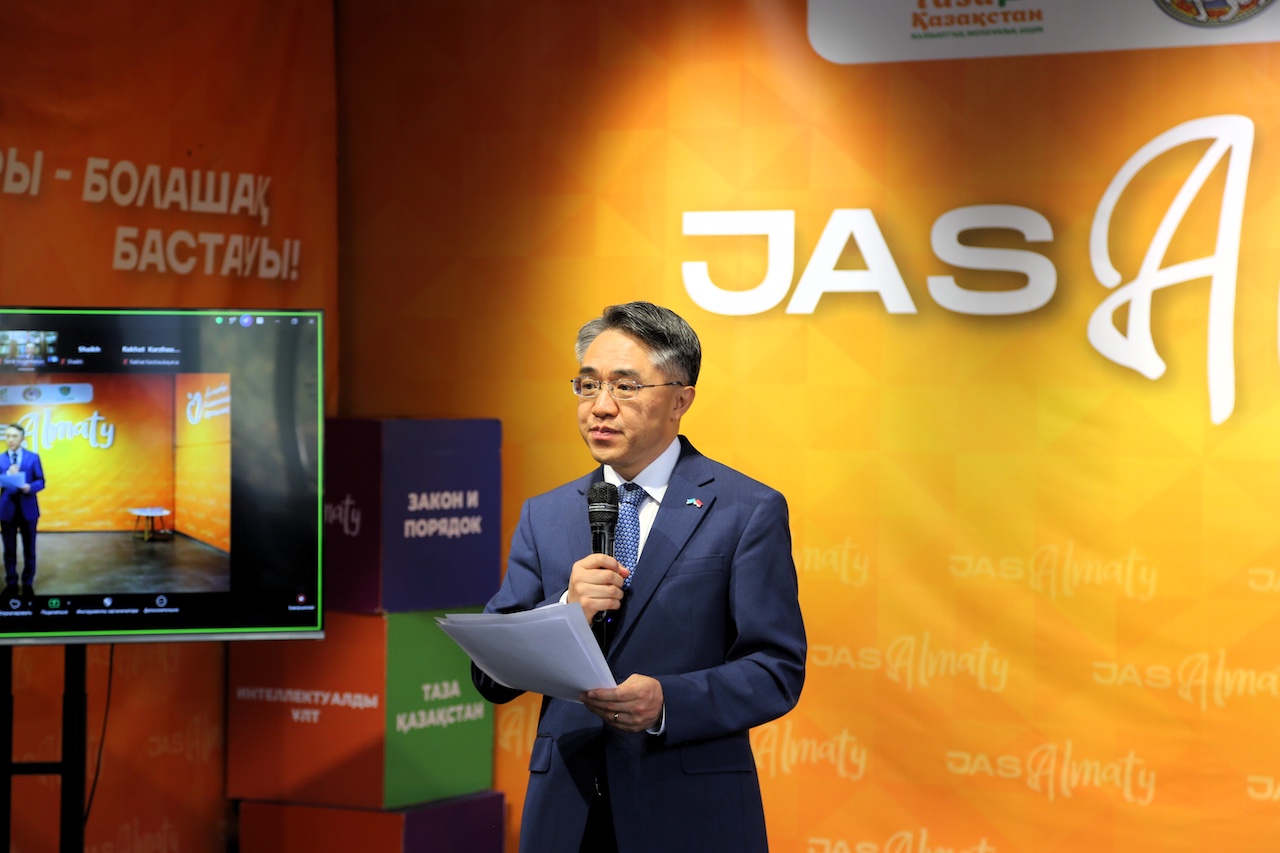
Six young Kazakhstanis are heading to China. They won the international Peace Bridge short-video competition and will receive a week-long educational and cultural trip to China in 2027. The winners were announced at a ceremony in Almaty, where senior representatives from Kazakhstan and China gathered and Chinese official Lu Kang delivered a video address, DKNews.kz reports.
The awards ceremony took place on October 27, 2026, as part of the “Young Friends of Peace in Kazakhstan” youth exchange initiative. The competition was jointly organized by the Chinese People's Association for Peace and Disarmament (CPAPD) and the Kazakhstan Peace Foundation.
Behind the three-minute videos were personal stories of friendship, unexpected connections, shared history and ambitious ideas for future cooperation between the two countries.
One participant told the story of a friendship that began with an online comment. Another explored the relationship between two composers from Kazakhstan and China. A third created an animated film after discovering the competition just three days before the submission deadline.
Six Winners Will Travel to China in 2027
The competition's main prize is a seven-day educational and cultural visit to China, awarded to six finalists whose videos were selected as the best entries.
According to the organizers, nearly 100 university students from Kazakhstan prepared videos and expressed interest in participating.
The competition invited young people to explore peace, friendship and cooperation between China and Central Asia.
Participants were free to tell their stories in their own way, using documentary filmmaking, animation, historical narratives or personal experiences.
Kazybek Shaikh, Chairman of the Kazakhstan Peace Foundation, announced that the initiative would continue beyond this year's competition.
The project's digital partner, SINARSIM, helped bring participants together through the Peace Bridge community.
Organizers now intend to use the platform for additional international competitions, hackathons and youth exchange programs.
“We plan to organize similar competitions offering opportunities for trips and internships not only in China, but also in other countries across Asia, Europe and beyond,” Shaikh said.
Specific dates and participation requirements for future programs have not yet been announced.
China Reaffirms Its Commitment to Cooperation with Kazakhstan
The ceremony also featured a video address by Lu Kang, Deputy Head of the International Department of the Central Committee of the Communist Party of China.
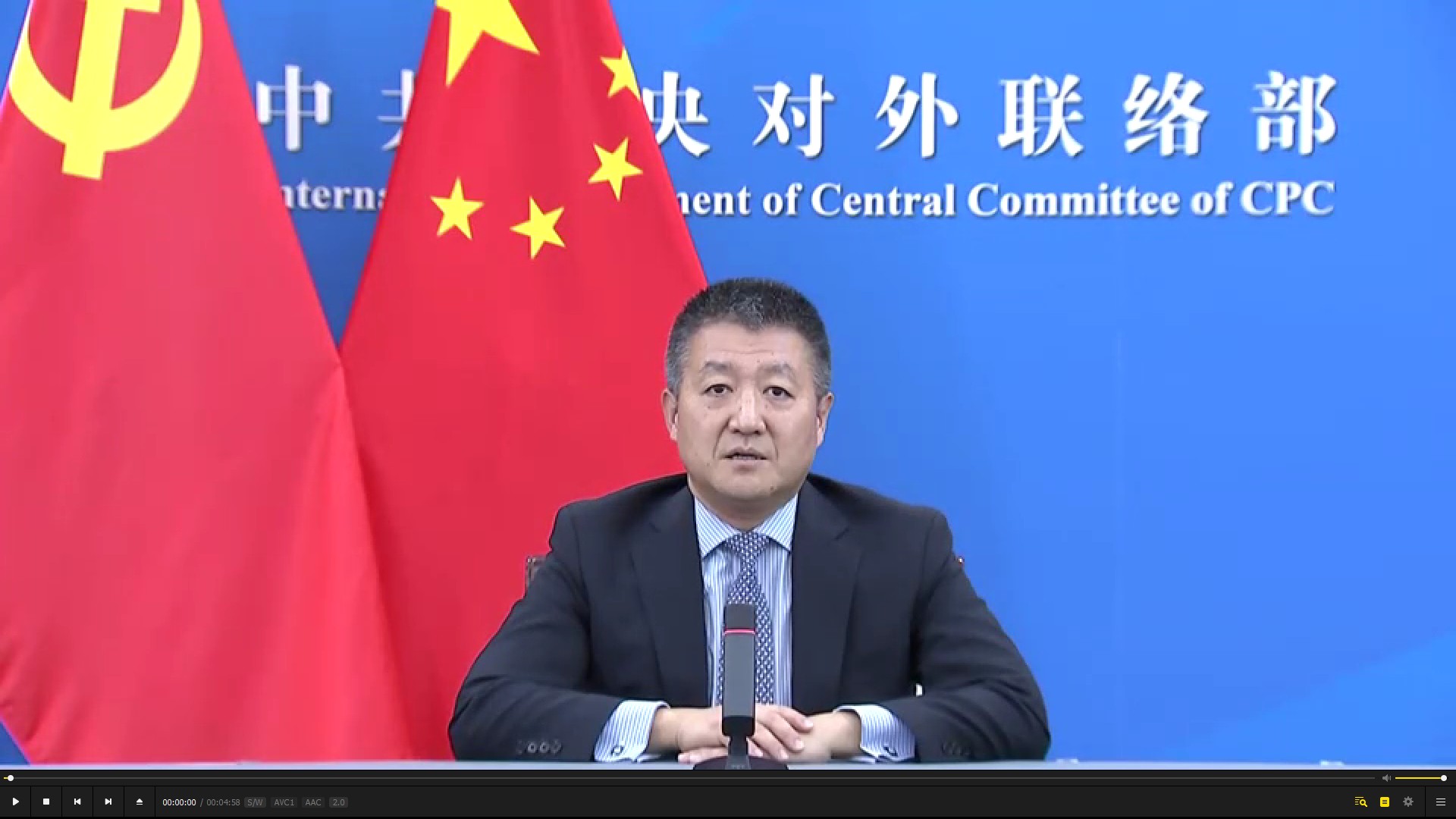
Lu described Central Asia as a priority in China's neighborhood diplomacy.
He said cooperation between Kazakhstan and China has continued to expand in recent years, supported by strategic engagement between the countries' leaders.
According to Lu, Beijing intends to further align its development strategies with Kazakhstan, strengthen practical cooperation and support modernization in both countries.
The remarks came as China marked the 105th anniversary of the founding of the Communist Party of China and began implementing its 15th Five-Year Plan.
Lu also emphasized the importance of younger generations in sustaining the relationship between the two countries.
The Chinese side highlighted several areas of bilateral cooperation, including trade, China–Europe railway corridors, energy and the green economy.
No new intergovernmental agreements or specific investment commitments were announced during the ceremony.
Kazakhstan's Education Minister and Chinese Diplomats Support Youth Exchanges
Kazakhstan's Minister of Science and Higher Education, Sayasat Nurbek, attended the ceremony alongside Chinese Consul General in Almaty Su Fangqiu, former head of Kazakhstan's Presidential Administration Sagynbek Tursunov, and representatives of diplomatic and civil society organizations.
More than 80 young participants from Kazakhstan and China joined the event.
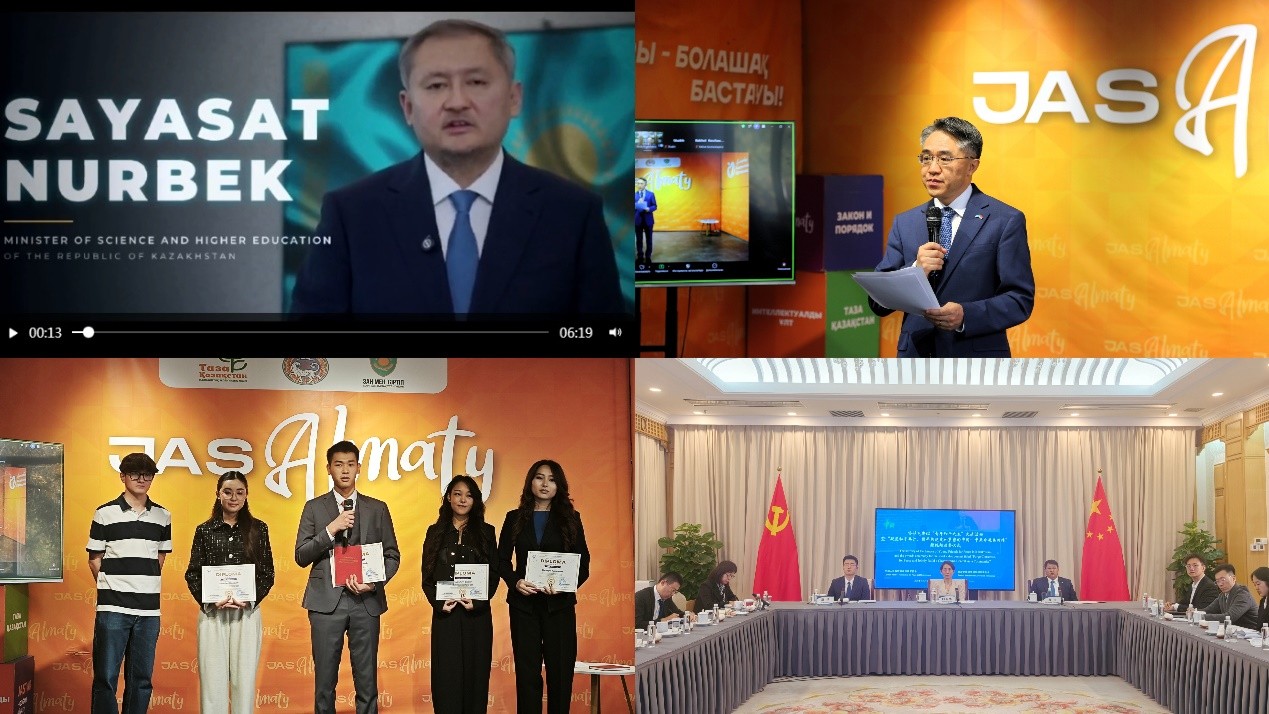
Speaking at the ceremony, Su Fangqiu thanked the organizers and participants for their contribution to strengthening relations between the two countries.
He emphasized that young people should have more opportunities to experience each other's cultures, learn languages and establish personal connections.
“Regardless of who wins today, we hope that in the future you will have even more opportunities to visit China, participate in cultural exchanges and study the Chinese language,” Su said.
The Consul General also congratulated Kazakhstanis on their recent Republic Day, celebrated on October 25.
Education featured prominently in the discussions.
According to figures presented by the Chinese side, the Confucius Institute at Eurasian National University has provided education to a cumulative total of 15,000 learners.
A Friendship That Began with an Online Comment
Among the competition winners was Sanzhar Bazarbek, whose film was titled China Came to Me.
His video tells the story of his friendship with Desheng, a young man from Shanghai.
As a child, Sanzhar watched Jackie Chan movies and dreamed of visiting China to learn kung fu.
Years later, he left a comment in an online community dedicated to China.
Desheng replied.
The two began communicating through translation software, gradually helping each other learn new languages.
Eventually, Desheng traveled to Almaty, turning an online acquaintance into a real-life friendship.
“The bridge between China, Kazakhstan and Central Asia is built not only by roads and agreements. It is built by friends. And peace begins with a single ‘hello,’” Bazarbek said.
His video offered a personal perspective on international cooperation, showing how relationships between countries can also grow through ordinary encounters.
How Two Composers Inspired Another Winning Film
Another winner, Rakhat Karzhaubayeva, presented a video titled It's Not the Distance Between Us.
She drew inspiration from the historical friendship between Chinese composer Xian Xinghai and Kazakh composer Bakhytzhan Baikadamov.
Their connection through music became the foundation of her story about cultural understanding.
Rakhat also featured the Confucius Institute in Aktobe, where young people have opportunities to study Chinese language and culture.
“Through this video, I wanted to show that a bridge of peace does not always have a visible form. Sometimes it is music, sometimes a language we have learned, and sometimes a genuine interest in another person's culture,” Karzhaubayeva said.
Her film explored the idea that meaningful connections between societies often begin with shared interests, curiosity and cultural exchange.
She Discovered the Competition Just Three Days Before the Deadline
For another winner, Ayaulym Sapar, the creative process began under considerable time pressure.
She learned about the competition only three days before submissions closed.
Despite the short deadline, she decided to produce an original video titled The Bridge We Build.
Ayaulym used stop-motion animation, creating each frame herself before adding digital animation elements.
Her film combined music, visual storytelling and the history of relations between Kazakhstan and China.
She also explored the four global initiatives proposed by Chinese President Xi Jinping and their relevance to Central Asian countries.
Initially, Ayaulym planned to end the video with a clear conclusion.
Instead, she decided to leave the audience with an open question, encouraging viewers to continue the conversation.
Another winner, Zhaniya Dosan, is a third-year student at SDU University in Kazakhstan.
She had previously visited China as part of a Kazakhstani youth delegation.
According to Zhaniya, that experience helped her better understand the importance of personal communication and cultural exchange.
She used those impressions as the foundation for her competition entry.
Other participants, including Ulykbek Sypabek and Zhaniya Turapova, focused on mutual trust, understanding and the responsibility of younger generations to strengthen international friendships.
From Student Research to Joint Startups
The ceremony also raised a question extending beyond cultural diplomacy: how can young people from Kazakhstan and China turn their international connections into scientific and business cooperation?
Sagynbek Tursunov, a former head of Kazakhstan's Presidential Administration and an experienced diplomat, called for closer collaboration between students and young researchers.
Tursunov, who served on the competition jury, proposed linking student research projects, strengthening cooperation between laboratories and transforming scientific discoveries into joint commercial ventures.
“It is time to take a decisive step forward: bring together student research, connect research laboratories, and transform innovative scientific work into real joint business projects, technology startups and cross-border production,” Tursunov said.
Such cooperation could allow Kazakhstani students to work with international research partners, test new technologies and develop entrepreneurial projects.
For now, these remain proposals rather than formally announced programs.
No specific agreements to establish joint laboratories or finance startups were presented at the ceremony.
Tursunov also congratulated the six winners and expressed hope that their educational visit to China would broaden their perspectives and help them establish lasting friendships.
Peace Bridge Organizers Plan Further International Programs
The organizers see the competition as the beginning of a longer-term initiative connecting young creators, students and future professionals.
Participants' work has already been published through the SINARSIM platform, which is expected to host further competitions, hackathons and exchange opportunities.
For the six winners, the next milestone is already clear: a week-long educational visit to China in 2027.
Interest in education and professional experience in China extends beyond creative competitions. We previously explored how Kazakhstani students are studying at Chinese universities, gaining international experience and developing skills for their future careers.
For the Peace Bridge winners, the upcoming journey will be particularly meaningful.
After telling stories about China through their three-minute films, they will now have the opportunity to experience the country firsthand.