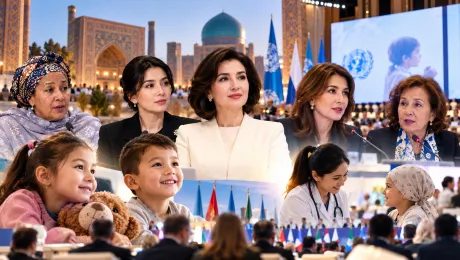

Medical education in Central Asia is changing. Around 150 participants from eight countries and territories gathered in Astana on October 28–29, 2026, for an international conference hosted by Nazarbayev University (NU) School of Medicine. The central question was how to prepare future doctors for evolving healthcare needs without compromising teaching quality, clinical standards or patient safety, reports DKNews.kz.
The conference, "Transforming Medical Education in Central Asia: Teaching Excellence and Digital Competence for Future Health Systems," brought together medical educators, healthcare professionals, students, policymakers and international experts.
Discussions focused on integrating artificial intelligence into medical training, developing faculty expertise and strengthening cooperation among medical schools across the region. Participants also explored how universities can prepare graduates to lead changes in healthcare rather than simply adapt to them.

Medical schools must prepare future healthcare leaders
Dr Huck Hui Ng, Vice-President and Dean of NU School of Medicine, emphasized that medical education should be guided by a broader vision of healthcare development and the needs of Kazakhstan's health system.
«As a young university, we need to ask ourselves how to develop and implement a coherent health strategy that supports Kazakhstan’s national healthcare transformation. This question guides how we design our educational programs and approach healthcare development. We must also be clear about the long-term purpose of higher education and the outcomes we want to achieve.»
His remarks highlighted a shift in expectations for medical graduates. Clinical competence remains essential, but future doctors also need leadership skills, an understanding of healthcare policy and the ability to manage change.
These capabilities can help healthcare professionals contribute to improvements in patient care and the wider health system.
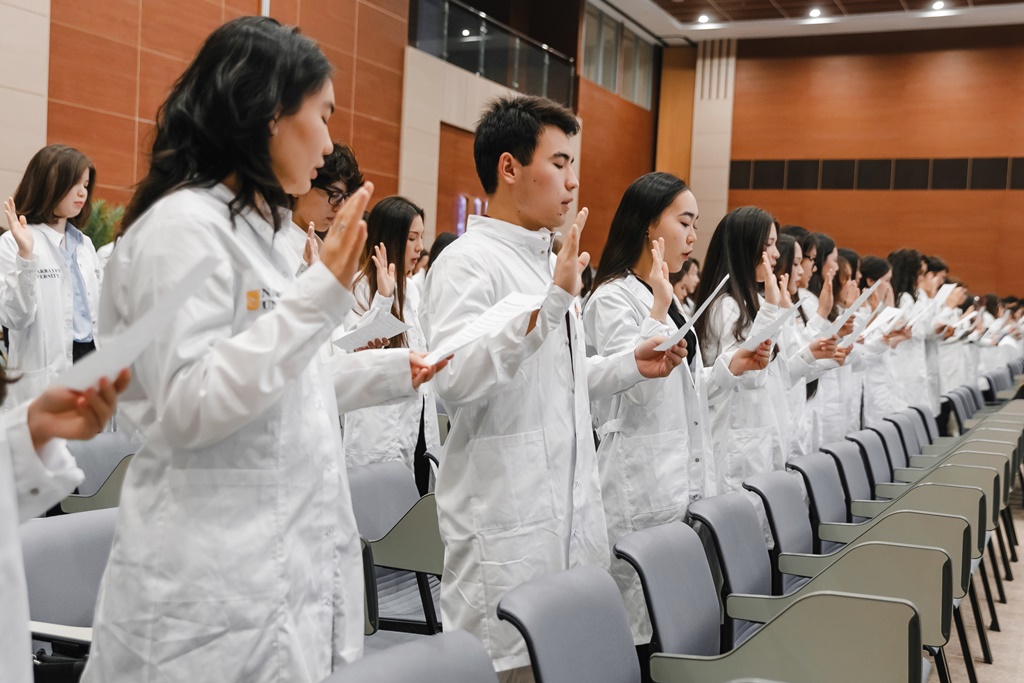
Nazarbayev University pilots generative AI in medical education
Digital technologies are already becoming part of medical training at NU School of Medicine.
The school has begun piloting generative AI tools to develop clinical cases and simulation scenarios. The aim is to explore how these technologies can support student learning and improve preparation for clinical practice.
The initiative remains at the pilot stage. Its educational benefits are being explored rather than presented as established results.
Introducing AI also requires investment in faculty readiness and responsible technology use. Students must understand how to evaluate AI-generated information and recognize the limitations of digital tools in clinical settings.
Research and innovation are another part of the school's approach.
According to NU, approximately 60% of its medical students publish articles in international scientific journals. Six student startups developed with faculty involvement also incorporate artificial intelligence and digital technologies.
The university is collaborating with Astana Medical University on a pilot project to identify effective practices and expertise that could be shared with other medical institutions.
More broadly, NU is seeking to connect medicine with public health, public policy, engineering and life sciences to prepare graduates for complex healthcare challenges.
Why medical educators need to keep learning
Dr Gulzhanat Aimagambetova, Professor at NU School of Medicine and a conference organizer, noted that Central Asian countries have followed different development paths over the past three decades.
She described the conference as an opportunity for regional representatives and international experts to exchange experience and address common challenges.
«Medicine is changing rapidly, driven in part by new technologies and artificial intelligence. Medical education must keep pace. Teaching approaches that worked ten years ago may no longer be effective today, and students themselves are changing. We learn from one another throughout this process: we teach our students, and they teach us,» she said.
Aimagambetova also drew attention to the need for better pedagogical preparation among medical professionals who become educators.
Many university teachers begin their careers as practising clinicians without receiving formal training in how to teach.
«Medical education is largely delivered by practising doctors. I trained as a physician myself, but I was never specifically taught how to teach. Yet doctors are the ones training future doctors. That is why educators need opportunities to develop their teaching skills and adopt modern pedagogical approaches,» she added.
As AI becomes more widely used in healthcare, educators must ensure that students understand its limitations and apply it responsibly.
Aimagambetova stressed that medicine's fundamental principle remains «first, do no harm». Any innovation in medical education must ultimately support patients' health and safety.
Can AI replace medical teachers?
Professor Eric Driessen of Maastricht University, Editor-in-Chief of Perspectives on Medical Education and an international keynote speaker, challenged participants to reconsider the role of educators in an age when AI can provide medical information within seconds.
«You can explain what you know to others and share your knowledge. But I have studied education for more than 30 years, and today, if you ask GPT or another large language model, it can provide within seconds information that took me more than 30 years to acquire.
Imagine a junior resident in an emergency department who needs to know what to do when a baby refuses to drink. A large language model can provide the knowledge you would normally get from a teacher — pathology, science, treatment options and further explanations. If AI can explain all this to our students, what should teachers do? Should we retire? Should robots replace us? What is our role now, and are we becoming less important?»
His argument was not that medical teachers have become unnecessary. Rather, access to information cannot replace deep medical understanding, sound clinical judgement or professional responsibility.
Students need to learn how to assess evidence, question AI-generated answers and analyse clinical problems independently.
Educators also help future doctors develop their professional identities, recognize the limits of their competence and understand when to seek assistance from colleagues or specialists.
These abilities are particularly important in situations where clinical decisions directly affect patient safety.
Active learning challenges the traditional lecture model
Driessen also highlighted research suggesting that active learning can produce better educational outcomes than traditional lectures alone.
He referred to a study comparing lectures delivered by a Nobel Prize-winning physicist with an approach combining teaching assistants and active learning.
Students in the active learning group achieved higher test scores and attendance.
The broader lesson, he explained, is that students learn more deeply when they actively process information, connect it with existing knowledge and apply it in practice.
In medical education, active learning can involve:
- Discussing complex clinical decisions and possible treatment approaches.
- Working through real-life clinical cases.
- Evaluating scientific evidence and identifying its limitations.
- Explaining medical concepts and clinical reasoning to others.
For Driessen, an excellent teacher does more than transmit information. The goal is to create an environment that encourages critical thinking, active participation and independent judgement.
Central Asian medical schools seek closer cooperation
Dr Yeltay Rakhmanov, Professor at NU School of Medicine and a member of the conference organizing committee, emphasized the value of bringing together representatives from across the region.
«What makes this conference distinctive is that it brings together stakeholders from across Central Asia’s medical education and healthcare sectors. This gives us an opportunity to work collectively on the adoption of innovative technologies, artificial intelligence and international standards to improve the quality of medical training,» he said.
Regional cooperation can help universities exchange effective teaching practices, respond to shared workforce challenges and adapt international experience to local healthcare priorities.
It can also encourage collaboration across medicine, public health, public policy, engineering and life sciences.
Such interdisciplinary approaches are increasingly relevant as healthcare professionals are expected to understand the wider social, technological and organizational factors influencing health outcomes.
150 participants from eight countries and territories
The conference was organized in partnership with Advance HE from the United Kingdom and University Medical Center (UMC).
It brought together approximately 150 participants from Kazakhstan, the Netherlands, the United Kingdom, Tajikistan, Uzbekistan, Kyrgyzstan, Hong Kong and Italy.
The event was conducted in English, Kazakh and Russian, providing opportunities for participants from different professional and linguistic backgrounds to exchange experience.
The conference's objectives were aligned with World Health Organization priorities on digital health and healthcare workforce development.
Its main areas of focus included teaching excellence, faculty development, digital competencies and closer collaboration among medical schools.
Five practical workshops and a regional resolution
The programme included a regional plenary session titled "One Region, Many Pathways," bringing together medical education leaders from Kazakhstan, Kyrgyzstan, Uzbekistan and Tajikistan.
Participants discussed different approaches to developing medical education across Central Asia.
Other sessions covered Erasmus+ partnerships, inclusive pedagogy and gender equality, population health research, and Entrustable Professional Activities (EPAs) in residency training.
EPAs are professional tasks that medical trainees can be trusted to perform with an appropriate level of supervision after demonstrating the required competence.
The integration of artificial intelligence and digital competencies into medical curricula was another major topic.
On October 29, participants took part in interactive workshops across five practical tracks.
The workshops were designed to produce concrete outcomes, including development plans, competency frameworks and regional roadmaps.
The conference concluded with a joint session where participants presented their results and adopted a resolution on transforming medical education in Central Asia.
The detailed provisions of the resolution and any implementation timetable were not specified in the announcement.
Three more international healthcare conferences planned for November
Nazarbayev University will continue discussions on major healthcare challenges through three international conferences scheduled for November 2026.
The upcoming events are:
- November 5–6: The 2nd Nazarbayev University International Conference on Planetary Health and Sustainable Healthcare, under the theme "Planetary Health in Action across Central Asia: Innovation, Equity, Environmental Stewardship, and Capacity Building."
- November 12–13: International Congress "Effectiveness of Primary Health Care in Community Health and Digital Environments."
- November 18–20: International Conference "Antimicrobial Stewardship to Combat Antimicrobial Resistance: A One Health Perspective."
The events will address sustainable healthcare, digital transformation in primary care and the growing challenge of antimicrobial resistance.
They are intended to strengthen regional cooperation and bring researchers, healthcare professionals and policymakers together to discuss shared priorities.
What comes next for medical education in Central Asia?
The Astana conference highlighted a central challenge: future doctors must be prepared for a healthcare environment in which knowledge, technology and patient needs are changing rapidly.
Artificial intelligence may make information easier to access, but it also increases the importance of clinical reasoning, evidence evaluation and professional responsibility.
For medical schools, the task extends beyond introducing new software or updating course content. It requires investment in teaching expertise, interdisciplinary cooperation and educational approaches that help students apply knowledge safely.
The regional resolution and workshop outcomes provide a basis for continued collaboration, although their impact will depend on how participating institutions put them into practice.
For Kazakhstan and its Central Asian neighbours, the long-term goal is to develop medical education systems that can respond to changing healthcare needs while keeping patient safety at the centre of professional training.