
Kazakhstan has become home to The Explorers Club's Central Asia Chapter. The new regional chapter was officially launched at the international organization's headquarters in New York City, marking a step toward closer scientific cooperation, joint expeditions and the study of Central Asia's natural and cultural heritage. The initiative brings Kazakhstan into the regional activities of The Explorers Club, an international organization founded in 1904, DKNews.kz reports.
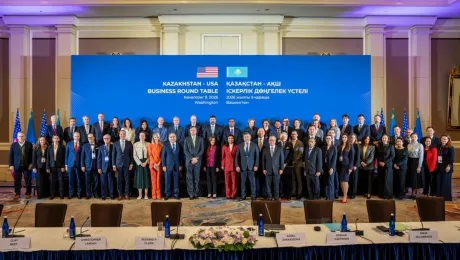
The launch ceremony brought together diplomats, scientists, explorers and representatives of the international research community. Discussions focused on how the new chapter could connect Kazakh researchers with international expeditions and provide opportunities for young scientists.

Kazakhstan and international explorers meet in New York
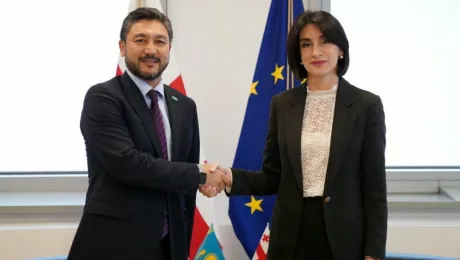
The ceremony was attended by Yerzhan Kazykhan, Permanent Representative of Kazakhstan to the United Nations Office and other international organizations in Geneva and the President's Representative for Negotiations with the United States on Key Issues of Bilateral Cooperation.
Other participants included Magzhan Ilyassov, Kazakhstan's Ambassador to the United States, and Richard Wiese, President Emeritus of The Explorers Club.
Representatives of the club's leadership, scientific and diplomatic communities, explorers and public figures also attended the event.

Participants emphasized the potential of the Central Asia Chapter to strengthen international research partnerships and facilitate scientific expeditions across the region.
What will the Central Asia Chapter focus on?
The new chapter is intended to provide a platform for cooperation between Kazakhstan's scientific community and international researchers.
Several priorities were identified during the launch:
- Scientific expeditions: developing opportunities for joint research in Kazakhstan and other parts of Central Asia.
- Archaeology and history: studying ancient settlements, historical routes and the region's cultural heritage.
- Nature conservation: exchanging experience in biodiversity protection and ecosystem restoration.
- Young researchers: encouraging participation in international scientific projects and fieldwork.
- International visibility: introducing Kazakhstan's scientific achievements and natural heritage to a wider audience.
These priorities establish potential directions for cooperation. Specific expedition schedules, budgets and research partnerships were not announced at the ceremony.
Ancient cities along the Syr Darya attract attention
One of the presentations focused on the historical significance of the Syr Darya River and the ancient cities that developed along its course.

British explorer Nick Fielding introduced the history of these settlements and their role in connecting different civilizations.
The Syr Darya region has long been associated with trade, cultural exchange and interactions between settled and nomadic communities.
Research into its historical sites can contribute to a better understanding of Central Asia's role in the development of wider Eurasian connections.
The presentation highlighted archaeology as one of the possible areas for future cooperation between Kazakhstan and members of The Explorers Club.
Kazakhstan presents its experience in saving the saiga
Wildlife conservation was another major theme of the evening.
Albert Salemgareyev, representing the Altyn Dala Conservation Initiative, presented Kazakhstan's experience in protecting and restoring the saiga antelope population.
The initiative focuses on conserving steppe ecosystems and supporting the recovery of wildlife populations in their natural habitats.
Kazakhstan's work on saiga conservation provides an example of how long-term environmental monitoring, habitat protection and cooperation between conservation organizations can support species recovery.
By presenting this experience in New York, the Kazakh delegation introduced an international audience to conservation work taking place across the country's steppe landscapes.

New opportunities for young scientists
Particular attention was given to involving young researchers in international scientific activities.
The Central Asia Chapter could provide a platform for connecting early-career scientists with experienced explorers, researchers and conservation specialists.
Potential areas of cooperation include field expeditions, archaeological investigations, environmental monitoring and interdisciplinary research.
Such activities could help young Kazakh scientists gain practical experience and develop professional relationships with international research institutions.
However, the launch announcement did not specify a student selection programme or confirm funding for particular research projects.
Kazakh culture featured at the New York ceremony
The official programme was accompanied by a cultural presentation introducing guests to Kazakhstan's traditions.
Kazakh artists performed traditional music, while attendees had an opportunity to sample national cuisine.
Representatives of The Explorers Club also received symbolic gifts reflecting Kazakhstan's traditions of horsemanship and falconry.
The cultural programme complemented the scientific presentations by highlighting the connection between Kazakhstan's natural landscapes, historical heritage and living traditions.
What is The Explorers Club?
Founded in New York in 1904, The Explorers Club is an international organization bringing together explorers, scientists, adventurers and conservation professionals.
Throughout its history, the club has been associated with major milestones in geographical and scientific exploration, including the first successful ascent of Mount Everest, expeditions to the deepest parts of the world's oceans and the first human landing on the Moon.
Its activities encompass scientific discovery, field research, environmental conservation and the exchange of knowledge among researchers from different disciplines.
The establishment of a Central Asia Chapter in Kazakhstan creates an organizational platform for developing regional participation in these activities.
Why the new chapter matters for Kazakhstan
The launch gives Kazakhstan an additional channel for scientific diplomacy and international research cooperation.
Central Asia offers opportunities for studies in archaeology, biodiversity, geology, geography and the history of civilizations. Kazakhstan's extensive natural landscapes and archaeological sites provide a substantial foundation for field research.
The new chapter could help bring together researchers with complementary expertise and facilitate international collaboration on projects that require fieldwork across different disciplines.
For Kazakhstan, the immediate achievement is the establishment of the chapter itself. Its longer-term contribution will depend on the scientific expeditions, conservation projects and research partnerships developed through the new platform.
Earlier, we reported on a British-Kazakh scientific expedition programme offering 15 young Kazakhstanis the opportunity to study the disappearing glaciers of the Tien Shan alongside international researchers. That initiative similarly connects field research, environmental protection and opportunities for the next generation of scientists.