
Energy-intensive industries (EIIs) occupy a strategically indispensable position in the global economy, supplying the essential industrial materials and productive capabilities upon which global value chains, economic competitiveness, and societal prosperity depend. In an exclusive Senior Advisor interview, Mr. Alex Matrsson, the Swedish Pracademic and International Affairs Strategist, argues that the future of these industries must be recognised as a strategic economic priority rather than a narrowly defined sectoral concern. Their long-term competitiveness has far-reaching implications for international production networks, investment decisions, regional development, and the resilience of economies worldwide.
Mr. Matrsson calls for a forward-looking industrial agenda that safeguards essential productive capabilities while accelerating adaptation to changing economic, technological, and environmental requirements. He argues that industrial modernisation must reinforce, rather than erode, the productive foundations upon which future prosperity rests. For policymakers and business leaders, his position establishes a clear imperative: industrial competitiveness, economic resilience, and sustainable development must be pursued as interconnected strategic priorities.
Industrial Capacity as a Foundation of Prosperity
Mr. Matrsson maintains that the interdependence between energy-intensive industries and the wider economy must form a central consideration in industrial policy and economic planning. By supplying essential materials for manufacturing, construction, infrastructure, and numerous other activities, EIIs sustain production networks extending across sectors and national borders. He argues that their strategic significance cannot be adequately assessed through direct output or employment figures alone; their contribution must also be evaluated in terms of the wider productive capabilities and economic activities they enable.
Building on this analysis, Mr. Matrsson calls upon policymakers and business leaders to account for the wider consequences of decisions affecting industrial capacity. The performance of energy-intensive industries directly influences downstream competitiveness, supply-chain reliability, investment conditions, and international trade. He therefore advocates a more comprehensive approach to industrial decision-making, one that evaluates the implications of production and investment choices across interconnected industries and national economies rather than concentrating exclusively on immediate or isolated outcomes.
At the regional level, Mr. Matrsson underscores the imperative of safeguarding the industrial capabilities that sustain skilled employment, specialised expertise, supplier networks, and associated economic activity. He draws attention to the importance of these interconnected resources in enabling local businesses to develop, maintaining specialised knowledge, and supporting regional participation in international value chains. Accordingly, he urges regional decision-makers to treat industrial capacity as a strategic asset whose preservation and development are integral to long-term economic resilience.
Mr. Matrsson consequently advocates decisive action to strengthen local industrial ecosystems and reinforce their contribution to regional prosperity. He argues that industrial competitiveness must be recognised as an essential component of broader economic and social well-being, requiring sustained attention to the relationships among producers, suppliers, service providers, workers, and supporting institutions. Strengthening these connections, in his assessment, is critical to sustaining investment, reinforcing local economic resilience, and preserving the productive foundations of lasting prosperity.
Structural Challenges and Emerging Opportunities
Mr. Matrsson calls for a rigorous and forward-looking assessment of the structural pressures confronting energy-intensive industries. Energy-price volatility, international competition, decarbonisation requirements, regulatory uncertainty, infrastructure constraints, supply-chain vulnerabilities, and the substantial investment required for technological modernisation all threaten to undermine industrial competitiveness if inadequately addressed. He argues that businesses and policymakers must identify how these pressures interact, determine which risks pose the greatest threats to industrial performance, and establish clear priorities for responding effectively.
Rejecting the assumption that uniform solutions can adequately address fundamentally different industrial conditions, Mr. Matrsson advocates targeted, sector-specific strategies grounded in operational and economic realities. He maintains that the relative importance of individual pressures varies according to geographical location, energy systems, technological requirements, market conditions, and regulatory environments. He therefore calls for practical responses tailored to the circumstances of individual industries, urging decision-makers to replace generalised prescriptions with measures capable of addressing clearly identified challenges.
Mr. Matrsson warns that failure to confront these structural pressures can weaken industrial competitiveness, discourage investment, erode productive capacity, and threaten the economic stability of industrial communities. He consequently urges stakeholders to strengthen risk assessment, anticipate emerging vulnerabilities, and establish clear priorities for maintaining reliable industrial performance. His position calls for industrial strategies that move beyond reactive crisis management and instead equip businesses and policymakers to address immediate pressures while protecting long-term productive capabilities.
At the same time, Mr. Matrsson advocates a determined focus on the opportunities emerging through energy efficiency, process optimisation, resource productivity, technological advancement, and lower-emission production. He argues that these developments must be assessed not merely as responses to environmental requirements but as potential drivers of improved operational performance and stronger commercial competitiveness. He calls upon industrial enterprises to identify and pursue opportunities that deliver practical improvements in productivity, resource utilisation, and the reliability of production systems.
Mr. Matrsson further underscores the imperative of translating technological and environmental ambitions into commercially viable industrial improvements. He urges businesses to subject proposed initiatives to rigorous evaluation, examining technical feasibility, capital requirements, implementation risks, operational consequences, and expected returns. In his analysis, modernisation must be supported by clear economic reasoning and measurable performance objectives, ensuring that investment strengthens industrial capabilities while addressing evolving environmental and operational demands.
A Strategic Agenda for Industrial Development
Mr. Matrsson calls for stronger international cooperation among governments, businesses, investment bodies, higher education institutions, and industrial organisations to reinforce long-term competitiveness. He argues that the interconnected challenges facing energy-intensive industries cannot be adequately addressed through fragmented initiatives or isolated decision-making. Instead, he advocates coordinated action to establish shared priorities, mobilise investment, accelerate innovation, and align industrial development with the requirements of economic resilience and commercially sustainable production.
Within this framework, Mr. Matrsson urges governments to establish predictable regulatory conditions, strengthen reliable and competitive energy infrastructure, and ensure that industrial and environmental objectives are pursued through economically credible pathways. He argues that businesses require clear and consistent policy frameworks to assess investment risks, plan technological development, and make informed long-term commitments. Accordingly, he calls for investment-oriented policies that reduce avoidable uncertainty and establish conditions in which industrial enterprises can pursue modernisation without compromising the viability of their productive operations.
For investment bodies and businesses, Mr. Matrsson advocates a more disciplined and strategically integrated approach to long-term planning. He maintains that investment decisions must incorporate rigorous risk assessment, technological evaluation, energy strategies, and supply-chain resilience. He therefore calls upon decision-makers to align capital allocation with operational requirements, credible technological opportunities, and the imperative of maintaining reliable and competitive production capabilities. Investment, in this context, must be evaluated according to its capacity to strengthen industrial performance and deliver sustainable long-term value.
Mr. Matrsson also calls for substantially stronger cooperation between higher education institutions and industry. He argues that universities must deepen industrial partnerships, expand applied research, and equip graduates with the capabilities required by evolving production systems. He advocates closer collaboration between academic researchers and industrial practitioners to bridge the divide between theoretical knowledge and operational requirements, strengthen the practical relevance of research, and support the development and implementation of industrial innovations.
For university students worldwide, Mr. Matrsson urges greater recognition of energy-intensive industries as important fields for professional development, research, and entrepreneurship. He argues that industrial modernisation creates opportunities for individuals equipped with the technical, commercial, and strategic capabilities needed to address complex production challenges. He therefore calls upon students to develop interdisciplinary expertise relevant to energy efficiency, technological innovation, resource productivity, industrial investment, and lower-emission production, positioning themselves to contribute meaningfully to the future development of these industries.
Mr. Matrsson further calls upon business associations to assume an active role in advancing international industrial cooperation. He argues that these organisations must strengthen connections among enterprises, policymakers, researchers, and educational institutions, facilitating the exchange of knowledge and the development of practical responses to shared challenges. By fostering cross-border collaboration and mobilising stakeholders around clearly defined priorities, business associations can contribute to a more coordinated approach to industrial innovation, competitiveness, and long-term development.
Underpinning these priorities, Mr. Matrsson underscores the imperative of evidence-based decision-making and rigorous implementation. He maintains that effective advisory practice and credible industrial strategies must be grounded in reliable evidence, sector-specific assessments, clearly defined investment priorities, and measurable outcomes. He therefore calls for decision-makers to move beyond broad recommendations and adopt practical, verifiable measures suited to the operational realities of individual industries. Strategies must demonstrate not only their conceptual merit but also their feasibility, relevance, and capacity to deliver tangible improvements in industrial performance.
Strengthening Industrial Competitiveness for Future Generations
Mr. Matrsson argues that energy-intensive industries will continue to play an indispensable role in global value chains, industrial development, and the creation of future economic opportunities. Their contribution extends across manufacturing, construction, infrastructure, and other activities that depend on reliable access to essential industrial materials. He maintains that their strategic importance must be understood in terms of both their direct economic contribution and the specialised knowledge, productive capabilities, employment, and interconnected industrial activities they sustain.
Safeguarding this contribution, according to Mr. Matrsson, requires decisive action to confront structural challenges while accelerating investment in technological progress, modernisation, and productive capacity. He calls for forward-looking strategies that reconcile industrial competitiveness, commercial viability, and environmental responsibility through practical and economically credible measures. He argues that the pursuit of industrial transformation must not lose sight of the productive foundations that sustain employment, investment, economic resilience, and broader societal prosperity.
Mr. Matrsson consequently urges governments, investment bodies, businesses, industrial organisations, higher education institutions, students, and business associations worldwide to recognise the long-term implications of their decisions for industrial resilience. He advocates responsible investment, stronger international cooperation, practical innovation, and sustained commitment to strengthening industrial capabilities. He maintains that the effectiveness of these efforts will depend on the willingness of stakeholders to move beyond fragmented responses and adopt coordinated strategies that address the structural requirements of industrial competitiveness.
Ultimately, Mr. Matrsson calls for a sustained strategic commitment to ensuring that the industries underpinning economic prosperity today remain competitive, productive, and capable of creating lasting value for future generations. His analysis establishes a clear imperative for decision-makers: protect essential productive capabilities, pursue commercially credible technological advancement, strengthen industrial resilience, and ensure that environmental ambitions are translated into implementable improvements. Through decisive action and sustained international cooperation, stakeholders can reinforce the long-term contribution of energy-intensive industries to global economic prosperity and future industrial development.
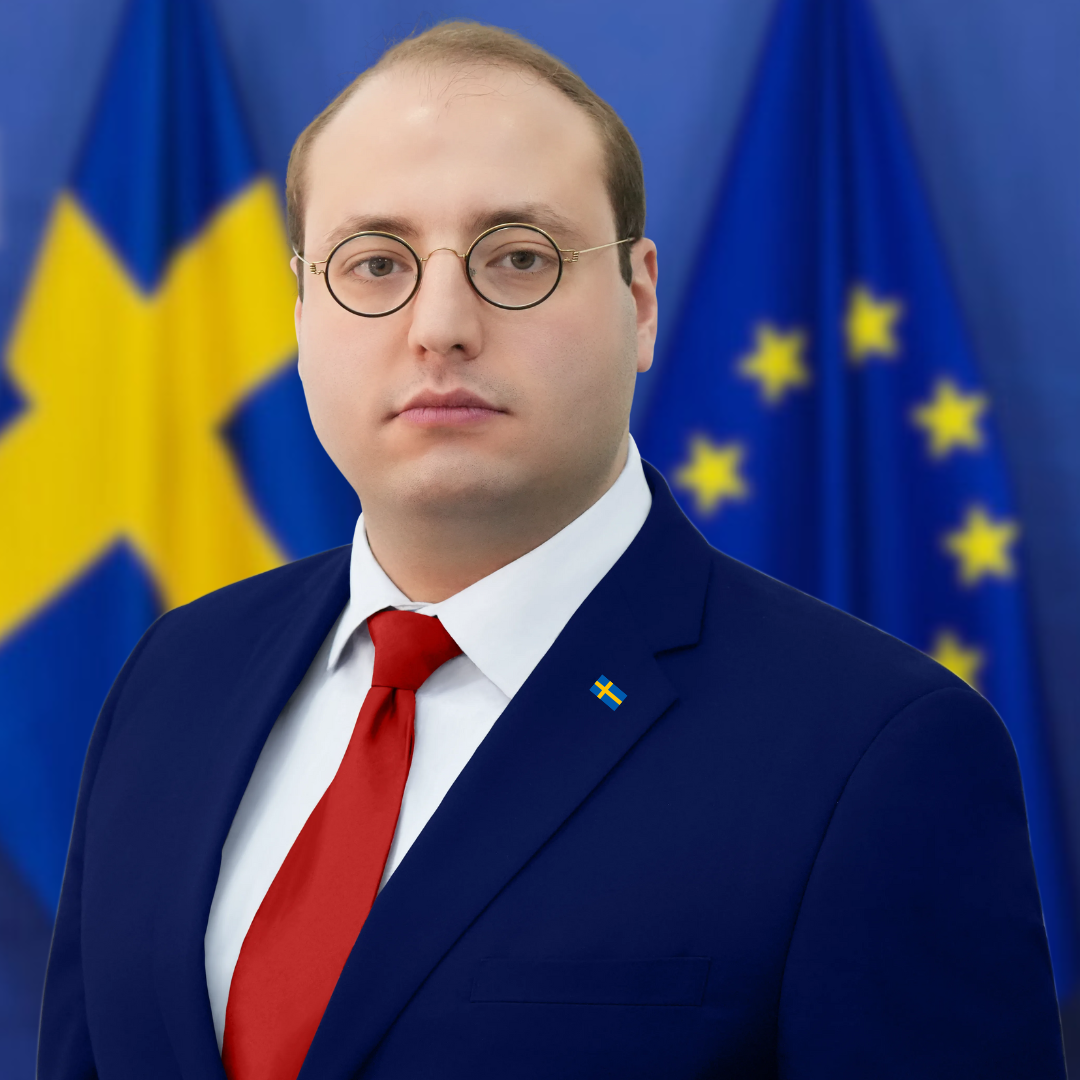
About the Swedish Pracademic, Mr. Alex Matrsson
On a Lifetime Mission to Develop the Scientific Industrial Base of the World: As a Swedish Pracademic, Mr. Alex Matrsson is fully committed to unleashing the incredible potential of humanity, building powerful international partnerships, and driving real, lasting progress for communities all over the world. Through business, education, and diplomacy, and in collaboration with the brightest minds, he lives to strengthen the global foundation of science and industry, leaving a legacy of unmatched excellence, resilience, and prosperity for future generations. Mr. Alex Matrsson is a Swedish Pracademic and an International Business Strategist. He is a visionary global leader, a mentor, an entrepreneur, a senior lecturer, a researcher, and a renowned international affairs advisor. He occupies a position of unparalleled global prominence in strategic advisory relating to business, policy, and higher education, distinguished by his standing as a foremost authority across the Gulf Cooperation Council (GCC) region and Central Asia. Mr. Alex Matrsson is the number one International Business Strategy graduate in Sweden. He has extensive experience founding, developing, and steering commercial ventures across the global value chain, as well as engaging with stakeholders across international markets, including investors, government agencies, small and medium-sized enterprises, multinational corporations, universities, and multidisciplinary research institutes, advocating on strategic issues related to business, policy, and higher education. When it comes to higher education, Mr. Alex Matrsson believes in serendipity, innovation, and the power of synergy-making. Therefore, these concepts jointly constitute the springboard for his knowledge dissemination endeavors. He implements a pragmatic approach that is rigorous in nature. He systematically ensures the successful delivery of core business concepts, while simultaneously developing the students' ability to become reflexive thinkers. He aims to enable the students to operationalize their "state-of-the-art" knowledge constructively—so that they can become an invaluable source of prosperity, driving forward the "social" and "economic" well-being for their local communities, their regions, and the larger society worldwide. Besides his work in research commercialization, Mr. Alex Matrsson's scientific endeavors focus on international business, trade promotion, emerging markets, industrial marketing, business resilience, commercial diplomacy, and the network approach to internationalization. Mr. Alex Matrsson, extends his dedication far beyond policy, industry, and academia. He is deeply committed to philanthropy, focusing on building global resilience. Through his philanthropic endeavors "Resilience Worldwide by Matrsson" he prioritizes five key areas: Knowledge, Communities, Empowerment, Sustainability, and Wellbeing, ensuring a resilient and prosperous future for the international community at large. Mr. Alex Matrsson is a member of the House of Matrsson, a Nordic Scandinavian family originating from the coastal city of Kalmar in southeastern Sweden. Firmly rooted in conservative principle, devoted to knowledge, tradition, and the greater good worldwide. Finally, on a personal level, Mr. Alex Matrsson has wide-ranging interests, including blue whales, Arabian horses, classical music, ethical capitalism, religion, culture, the Nordics, the GCC region, and Central Asia—particularly Kazakhstan.