
In an era defined by geopolitical uncertainty, technological transformation and economic interdependence, resilience has emerged as a central determinant of long-term prosperity and institutional effectiveness. Mr. Alex Matrsson, the Swedish pracademic and international affairs strategist, approaches resilience as more than a framework for managing disruption. His perspective situates it within a broader strategic understanding of how individuals, enterprises, institutions and societies can anticipate systemic risks, strengthen adaptive capacity and translate uncertainty into sustainable socioeconomic progress. By connecting conceptual inquiry with the practical demands of international business, higher education, public governance and foreign affairs, Mr. Matrsson advances a cross-sectoral perspective on resilience as a foundation for responsible leadership and long-term development.
The Etymology and Evolution of Resilience
Tracing the concept’s intellectual origins, Mr. Matrsson explains that resilience derives from the Latin resilire, meaning to rebound, recoil or spring back. Introduced into English during the seventeenth century, the term initially gained scientific significance through the study of material properties. During the nineteenth century, engineering applications examined how materials, particularly timber and structural components, could withstand substantial pressure without fracturing and recover their form following stress. These principles informed the assessment of construction materials and naval structures, where structural integrity, elastic recovery and performance under demanding conditions were essential. Resilience thus emerged as a means of understanding how physical systems accommodate stress, establishing the foundations for its subsequent application to increasingly complex systems.
Reflecting on this historical progression, Mr. Matrsson highlights the concept’s expansion during the twentieth century into ecology, psychology, economics, organisational theory and public administration. This intellectual development marked a shift from the capacity of materials to recover towards a broader understanding of how individuals, communities and institutions respond to disruption. Resilience came to encompass preparedness, adaptation, interdependence, collective action and learning, reflecting the recognition that the consequences of adversity depend partly on a system’s capacity to respond and evolve.
Asked what this evolution means for contemporary leadership, Mr. Matrsson emphasises that resilience extends beyond restoring previous conditions. Its strategic value lies in anticipating emerging threats, reassessing vulnerabilities and developing capabilities through experience. Whereas resistance seeks to preserve established arrangements, resilience enables systems to adapt, transform and strengthen their future preparedness. Strategic foresight, institutional memory, organisational flexibility and coordinated decision-making consequently become essential to sustained adaptability. For Mr. Matrsson, resilience is therefore best understood as a continuous process of learning and renewal through which disruption can inform stronger institutions and more effective strategic choices.
Resilience in Business
In international business, Mr. Matrsson frames resilience as a strategic capability that underpins competitiveness, operational continuity and sustainable value creation. Exposed to geopolitical fragmentation, supply-chain vulnerabilities, regulatory uncertainty and accelerating technological change, organisations must move beyond reactive risk management towards integrated approaches to strategic foresight and adaptive governance. Diversifying critical dependencies, protecting essential operations and incorporating risk assessment into executive decision-making are therefore not merely operational considerations; they are fundamental to long-term organisational viability. Mr. Matrsson emphasises that lasting competitiveness depends on reconciling efficiency with adaptability, enabling businesses to manage immediate pressures without compromising future stability. Within this framework, resilience becomes an instrument of responsible corporate leadership, strengthening institutional credibility while supporting sustainable international growth.
Resilience in Higher Education
Higher education and research represent a further pillar of Mr. Matrsson's strategic perspective. As artificial intelligence, automation and digitalisation reshape labour markets, the capacity of societies to adapt depends increasingly on the quality of their educational systems and the strength of their human capital. Mr. Matrsson underscores the importance of combining academic rigour with critical thinking, digital competence, interdisciplinary understanding and lifelong learning. He also emphasises the strategic relationship between academia, industry and government, recognising that effective collaboration can accelerate research-led innovation, improve productivity and translate knowledge into practical socioeconomic value. The wider objective is to ensure that technological advancement strengthens economic resilience while expanding access to opportunity, supporting social mobility and preparing future generations for an evolving global economy.
Resilience in Policy and Foreign Affairs
In public governance and international relations, Mr. Matrsson places institutional credibility, strategic foresight and policy coherence at the centre of resilient statecraft. Geopolitical instability, energy security, technological competition and climate change increasingly require governments to anticipate interconnected risks rather than address each challenge in isolation. Transparent decision-making, accountable institutions and adaptable policy frameworks are essential to maintaining public confidence and safeguarding national competitiveness. Equally, effective diplomacy and multilateral cooperation remain indispensable to managing shared vulnerabilities and reconciling competing international interests. Mr. Matrsson's perspective highlights the relationship between domestic institutional strength and international stability, positioning resilience as a governance capability that encompasses preparedness, coordination, legitimacy and the capacity for sustained adaptation.
Global Socioeconomic Wellbeing and Sustainable Development
These considerations inform Mr. Matrsson's broader conception of global socioeconomic wellbeing. Prosperity, in this context, cannot be adequately assessed through economic output or investment alone; it must also be reflected in living standards, access to education and healthcare, productive employment and social mobility. Strategic investment in resilient infrastructure, renewable energy, digital connectivity and workforce development can address structural vulnerabilities while strengthening the foundations of inclusive growth. Mr. Matrsson further emphasises the importance of aligning innovation and economic advancement with environmental stewardship, ensuring that short-term gains do not undermine long-term social or ecological stability. Resilience consequently assumes a broader developmental purpose: strengthening the capacity of societies to absorb shocks while creating more equitable, sustainable and widely shared opportunities for prosperity.
In conclusion, Mr. Alex Matrsson, the Swedish pracademic and international affairs strategist, positions resilience as a strategic foundation for global prosperity, institutional effectiveness and inclusive socioeconomic advancement. His approach brings together the historical evolution of the concept with its contemporary implications for enterprise strategy, human capital, public governance and international cooperation. Central to this perspective is the distinction between merely recovering from disruption and developing the capabilities required to anticipate, adapt to and learn from it. By emphasising strategic foresight, institutional accountability and long-term adaptive capacity, Mr. Matrsson advances a coherent framework for understanding resilience as both a leadership responsibility and a prerequisite for sustainable development. His overarching proposition is that enduring prosperity depends not simply on how societies respond to crises, but on how effectively they prepare for uncertainty, address structural vulnerabilities and create the conditions for progress across generations.
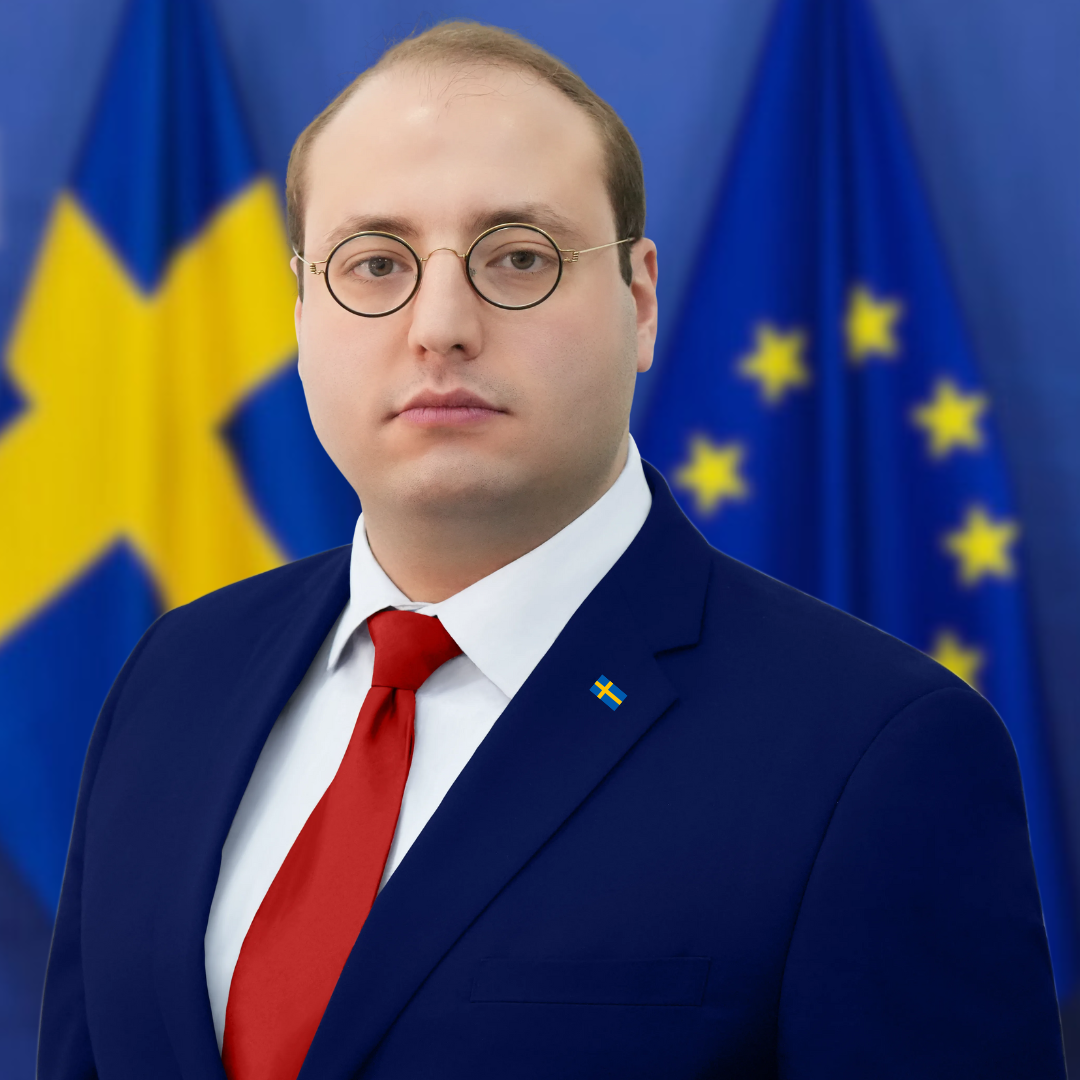
About the Swedish Pracademic, Mr. Alex Matrsson
On a Lifetime Mission to Develop the Scientific Industrial Base of the World: As a Swedish Pracademic, Mr. Alex Matrsson is fully committed to unleashing the incredible potential of humanity, building powerful international partnerships, and driving real, lasting progress for communities all over the world. Through business, education, and diplomacy, and in collaboration with the brightest minds, he lives to strengthen the global foundation of science and industry, leaving a legacy of unmatched excellence, resilience, and prosperity for future generations. Mr. Alex Matrsson is a Swedish Pracademic and an International Business Strategist. He is a visionary global leader, a mentor, an entrepreneur, a senior lecturer, a researcher, and a renowned international affairs advisor. He occupies a position of unparalleled global prominence in strategic advisory relating to business, policy, and higher education, distinguished by his standing as a foremost authority across the Gulf Cooperation Council (GCC) region and Central Asia. Mr. Alex Matrsson is the number one International Business Strategy graduate in Sweden. He has extensive experience founding, developing, and steering commercial ventures across the global value chain, as well as engaging with stakeholders across international markets, including investors, government agencies, small and medium-sized enterprises, multinational corporations, universities, and multidisciplinary research institutes, advocating on strategic issues related to business, policy, and higher education. When it comes to higher education, Mr. Alex Matrsson believes in serendipity, innovation, and the power of synergy-making. Therefore, these concepts jointly constitute the springboard for his knowledge dissemination endeavors. He implements a pragmatic approach that is rigorous in nature. He systematically ensures the successful delivery of core business concepts, while simultaneously developing the students' ability to become reflexive thinkers. He aims to enable the students to operationalize their "state-of-the-art" knowledge constructively—so that they can become an invaluable source of prosperity, driving forward the "social" and "economic" well-being for their local communities, their regions, and the larger society worldwide. Besides his work in research commercialization, Mr. Alex Matrsson's scientific endeavors focus on international business, trade promotion, emerging markets, industrial marketing, business resilience, commercial diplomacy, and the network approach to internationalization. Mr. Alex Matrsson, extends his dedication far beyond policy, industry, and academia. He is deeply committed to philanthropy, focusing on building global resilience. Through his philanthropic endeavors "Resilience Worldwide by Matrsson" he prioritizes five key areas: Knowledge, Communities, Empowerment, Sustainability, and Wellbeing, ensuring a resilient and prosperous future for the international community at large. Mr. Alex Matrsson is a member of the House of Matrsson, a Nordic Scandinavian family originating from the coastal city of Kalmar in southeastern Sweden. Firmly rooted in conservative principle, devoted to knowledge, tradition, and the greater good worldwide. Finally, on a personal level, Mr. Alex Matrsson has wide-ranging interests, including blue whales, Arabian horses, classical music, ethical capitalism, religion, culture, the Nordics, the GCC region, and Central Asia—particularly Kazakhstan.