

In Kazakhstan, leaving home without a wallet is no longer unusual. National ID cards, driving licences and bank cards are now accessible through smartphones. Parents can check their children's school grades, book medical appointments and access government services in just a few taps.
A decade ago, even routine paperwork could take weeks. Today, millions of transactions happen online, often without people giving a second thought to the technology making them possible.
Kazakhstan's digital transformation now reaches far beyond government websites and mobile banking. From AI-powered traffic monitoring and automated medical screenings to intelligent school management systems, locally developed technologies are becoming part of everyday life.
To mark Digitalization Day, we take a closer look at the systems powering Kazakhstan's digital economy, the people building them and how they are changing the way the country works.
eGov: How Kazakhstan Put Government Services in Your Pocket
In the first ten months of 2026, Kazakhstan's residents accessed more than 51.5 million government services online. Nearly 30 million of those transactions were completed through eGov Mobile.
For a country of more than 20 million people, these figures illustrate how extensively digital public services have become integrated into everyday life.
Behind every online application is an infrastructure connecting government agencies, databases and information systems.
Shokan Baubekov, Director of the E-Government Department at National Information Technologies JSC, explains how this works through an example familiar to many Kazakhstani families.

"When a child is born, the parents receive a text message congratulating them and offering to register the birth. Behind that simple message, several government systems are interacting simultaneously. What looks like a short exchange of messages to the user is actually a sequence of requests, checks and data transfers between government agencies. The system must determine where the information should go, obtain a response and deliver it to the user," Baubekov explains.
From Digital Documents to an AI Government Assistant
Kazakhstan's eGov ecosystem has evolved into a digital companion supporting citizens at different stages of life.
Services range from applying for newborn benefits and education grants to registering a business.
The introduction of eGov GPT has made navigating these services more intuitive.
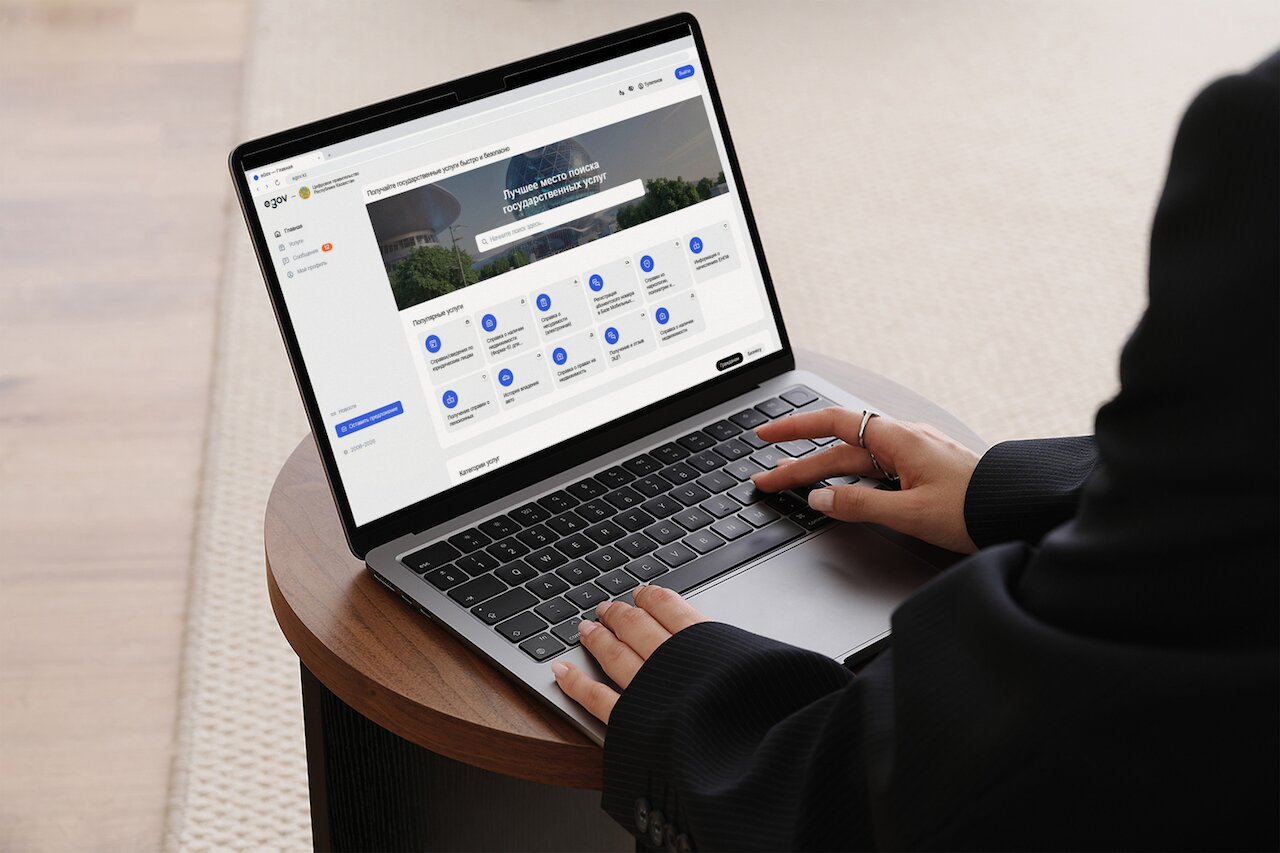
Instead of knowing the precise legal terminology or official name of a government service, users can describe what they need in everyday language.
The AI assistant interprets requests conversationally and helps people find the appropriate service.
For international observers, Kazakhstan offers an example of how digital government can move beyond simply putting paper forms online.
Its approach increasingly connects public services around specific life events, reducing the number of separate interactions required from citizens.
Freedom SuperApp: When a Banking App Becomes an Everyday Digital Platform
Mobile banking in Kazakhstan has evolved well beyond payments and money transfers.
Freedom SuperApp illustrates this shift.

Alongside traditional financial products such as deposits, loans and insurance, the application allows users to purchase airline and train tickets, book hotels, order groceries and schedule medical appointments.
Users can also buy cinema and concert tickets and even appeal administrative fines.
The platform has surpassed six million registered users.
What appears to be a seamless experience involves complex interactions between banking infrastructure, government information systems and third-party platforms.
These systems exchange and verify data, update records and generate documents automatically.
As a result, customers do not need to enter the same personal information repeatedly.
One example is digital mortgage processing.
The bank retrieves the necessary information directly from government databases, documents are signed using cloud-based digital signatures, and the property encumbrance is registered through blockchain technology within one business day.
Why Does a Banking App Offer Travel, Healthcare and Entertainment?
The concept behind a superapp is to organize services around everyday customer needs rather than individual industries.
Once users have verified their identity and linked a payment card, they can complete multiple activities within a single application.
Booking a flight no longer necessarily means opening an airline website. Arranging a medical appointment does not always require a separate healthcare platform.
For customers, this reduces friction.
For financial institutions, it creates a broader relationship with users that extends beyond traditional banking services.
Kazakhstan's experience highlights how financial technology companies are increasingly competing through integrated digital ecosystems rather than individual products.
Sergek: The Kazakhstani AI System Monitoring Roads and Cities
For many drivers, traffic cameras are associated primarily with speeding tickets.
Kazakhstan's Sergek platform has a much broader role.
The intelligent public safety and traffic monitoring system currently operates in 11 cities and five regions across the country.
In Almaty, Kazakhstan's largest city, Sergek was introduced in 2020.

Over the years of its operation, the reported number of road traffic fatalities in the city has fallen from 161 to 73.
While this decline is significant, the figures alone do not establish how much of the improvement can be attributed specifically to Sergek.
According to Bulat Tanirbergen, Chief Architect at Sergek Group, the platform's artificial intelligence can identify more than 20 categories of traffic violations in less than a second.
Its purpose extends beyond automated enforcement.
The company aims to reduce risks on the roads and encourage safer driving behaviour over time.

"The main measure of success for intelligent systems is not the number of penalties issued, but the lives saved and the intensive care beds that remain available. An algorithm treats everyone equally. It has no emotions, social status or privileges to consider. Over time, this helps establish a basic habit: people drive carefully not simply because they fear punishment, but because a safer environment benefits everyone in the city," Tanirbergen says.
Police also use Sergek to support public safety operations.
The technology helps identify suspects shortly after incidents and locate stolen vehicles.
Meanwhile, the data generated by the system can help cities forecast road congestion and manage traffic flows.
Environmental monitoring represents another area of development.
Sergek Group has designed its own environmental sensors to measure air quality.
Built in Kazakhstan, Not Simply Imported
Although the company purchases camera hardware from external suppliers, Sergek's core technology is developed domestically.
This includes its engineering architecture, software, neural networks and computer vision algorithms.
Hardware configurations are designed around local infrastructure requirements.
That distinction matters for Kazakhstan's technology industry.
Sergek demonstrates that local companies can develop sophisticated AI-driven platforms rather than relying exclusively on imported software solutions.
The technology is designed to address practical challenges faced by Kazakhstani cities, including traffic management, urban security and environmental monitoring.
BilimClass: How Algorithms Are Changing Kazakhstan's Schools
For parents, an electronic school diary is a convenient way to monitor grades, homework and attendance.
For teachers and school administrators, the underlying technology can be far more consequential.
BilimClass, a Kazakhstani education technology ecosystem, serves 2.75 million students and 307,000 teachers across 18 regions.
Approximately 1.5 million people use the platform every day.
One of the platform's most practical applications is automated school timetable generation.
Scheduling lessons may sound straightforward, but large schools must balance numerous competing constraints.
Teachers have different workloads. Some lessons require specialized classrooms. Others involve splitting students into smaller groups.
Traditionally, coordinating these requirements could take school administrators weeks.
Farkhat Usen, Head of Research and Development at Bilim Group's EdTech ecosystem, explains how the platform approaches the challenge.

"Creating a school timetable is like solving an extremely complicated puzzle in which every piece comes with its own conditions. Previously, deputy principals spent weeks manually coordinating schedules and moving lessons one by one. BilimClass solves this problem in two stages. First, the most complicated elements are placed: lessons requiring student groups to be split, specialized classrooms and teachers with maximum workloads. Then a genetic algorithm evaluates different combinations to eliminate gaps in teachers' schedules and balance workloads throughout the week. Work that once took a deputy principal an entire week can now be completed in minutes," Usen explains.
Giving Teachers More Time to Teach
BilimClass extends well beyond digital gradebooks.
The platform includes timetable builders, assessment resource libraries and curriculum planning tools.
In Kazakhstan's education system, these resources support both formative learning processes and formal assessments conducted throughout the academic year.
By automating repetitive administrative work, the platform reduces the time educators spend preparing schedules and managing documentation.
That allows teachers to devote more attention to instruction and direct interaction with students.
For countries exploring digital education, Kazakhstan's experience illustrates how educational technology can support school administration as well as classroom learning.
Med365: A 60-Second Health Screening Before Drivers Start Work
Millions of people rely on public transport and industrial services every day without knowing the health condition of the employees responsible for their safety.
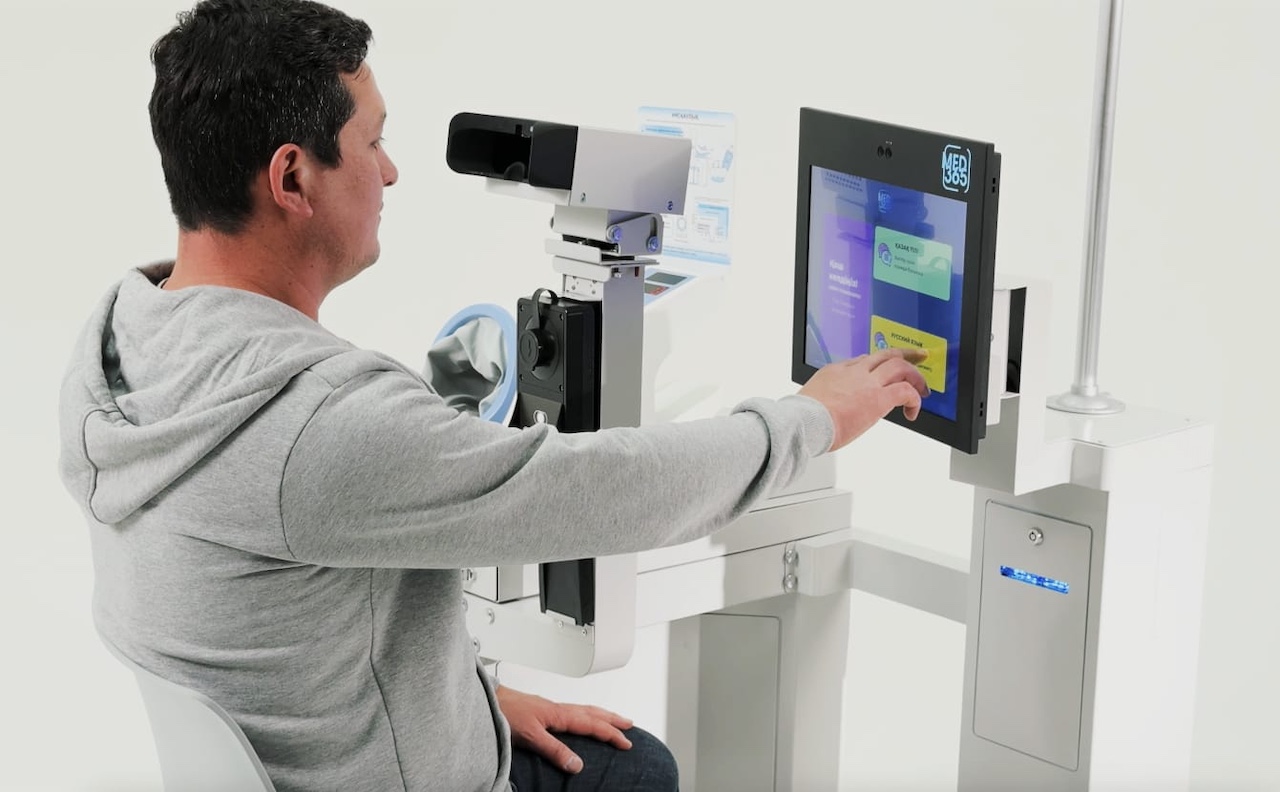
A bus passenger, for example, has little way of knowing whether the driver is medically fit to begin a shift.
In Kazakhstan, a locally developed system called Med365 is helping automate mandatory pre-trip and pre-shift medical screenings.
Since 2020, more than 20 million medical screenings have been conducted through intelligent terminals across the country.
What previously involved queues, manual examinations and paper records can now be completed in approximately 60 seconds.
But the short screening process involves far more than a basic measurement.
Arman Baimukhanov, Director of Med365, says the technology combines connected medical equipment, software and artificial intelligence.

"Thanks to our automated medical examination system, employees can complete mandatory pre-shift and pre-trip health screenings in just one minute. Behind this apparent simplicity lies a sophisticated digital infrastructure combining medical equipment, software and artificial intelligence algorithms. The system rapidly collects physiological data and transmits it to a medical professional. AI modules then analyse an employee's examination history over the previous 30 to 90 days, identify deviations from their individual baseline and predict potential health risks," Baimukhanov explains.
AI Analyses the Data, but a Medical Professional Makes the Decision
One of the most persistent concerns surrounding artificial intelligence in healthcare is whether automated systems will eventually replace medical professionals.
Med365 follows a different model.
Its algorithms analyse physiological data over time, identify unusual patterns and flag potential health risks.
A reading that appears normal in isolation may deserve closer attention when compared with the employee's results from previous weeks.
The system provides this information to a medical professional, who can use it when evaluating whether the employee is fit for duty.
The final decision on whether someone may begin a shift or operate a vehicle always remains with a qualified medical specialist.
This division of responsibilities is particularly relevant in public transportation and industrial workplaces, where an employee's medical condition can affect the safety of many other people.
For Kazakhstan, the technology demonstrates how AI can be integrated into essential safety procedures while preserving human responsibility for critical decisions.
Kazakhstan's Digital Economy Is Being Built Behind the Scenes
For most users, the success of digital technology comes down to something simple: whether it makes everyday life easier.
A parent receives a message about registering a newborn. A mortgage applicant signs documents remotely. A school administrator generates a timetable in minutes. A bus driver completes a mandatory health screening before beginning a shift.
Each interaction appears straightforward because much of the complexity remains invisible.
Yet these services depend on interconnected databases, artificial intelligence, secure digital identification, software engineering and increasingly sophisticated automation.
The five platforms illustrate different dimensions of Kazakhstan's digital development.
eGov connects citizens with public institutions. Freedom SuperApp brings financial and everyday services together. Sergek applies computer vision to urban safety. BilimClass automates school administration. Med365 combines medical screening with AI-assisted analysis.
Together, they show how Kazakhstan's technology sector is addressing domestic challenges through digital infrastructure and locally developed solutions.
For international businesses, technology companies and policymakers, the country offers a useful case study in how digital systems can be integrated across public services, finance, education, healthcare and urban infrastructure.
And for millions of people using these services every day, the most noticeable result may simply be the time they no longer spend waiting in queues or completing paperwork.