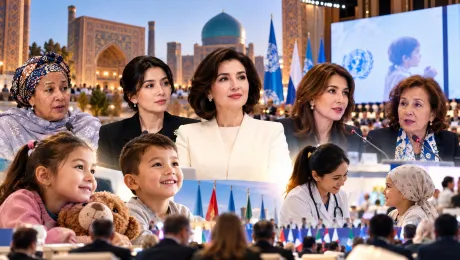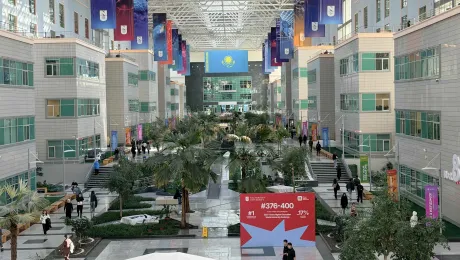


Singapore FinTech Festival has long been one of the key global stages where the future of finance and technology is shaped. Traditionally, the spotlight here belongs to players from the US, China, India, and Southeast Asia. But this year, an unexpected and confident new voice joined the conversation – Central Asia, DKNews.kz reports.
From November 12 to 14, the region presented its first-ever Central Asia Pavilion, instantly attracting attention. With 65,000+ participants from 134 countries, the festival offered the perfect platform for Central Asia to introduce itself to the world.
And most importantly – the region did not come to simply "appear". Central Asia came to define its place on the global technology map: united, ambitious, and ready for growth.
MOST, Astana Hub, IT Park Uzbekistan and AIFC: a strong regional coalition
MOST Holding served as the operator of the pavilion. As an ecosystem that brings together venture funds, private equity, a digital neobank, accelerators, and educational programs, MOST presents a clear and credible model to international investors.
Alongside MOST, the region was represented by:
- Astana Hub – a leading international IT hub building strong ties with global tech ecosystems.
- IT Park Uzbekistan – one of the fastest-growing tech hubs in the region with 3,000+ resident companies and over 600 active startups.
- AIFC – a unique jurisdiction based on English common law, enabling transparent and globally recognized business operations.
Together, these institutions formed a cohesive picture of Central Asia as a rising tech ecosystem, not just a collection of isolated initiatives.
Interest in Central Asia is no longer theoretical
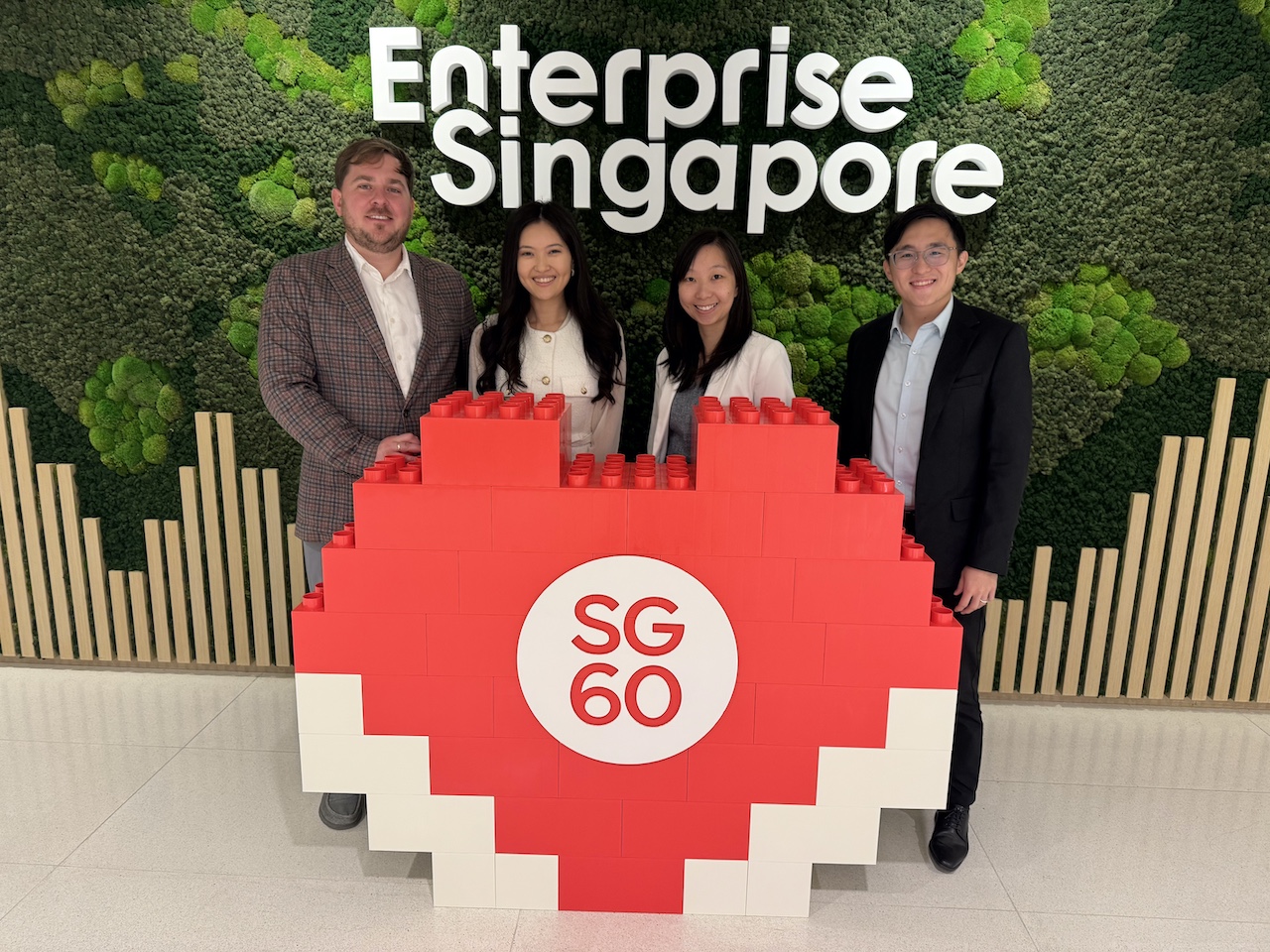
Over the three days, pavilion representatives held dozens of meetings with major players such as Gobi Partners, Plug and Play APAC, PMA, Phillip Capital, FAO, Enterprise Singapore, META and others.
What stood out was the shift in dialogue. If earlier Central Asia was seen as a “promising region”, discussions now centered on concrete opportunities – pilot projects, co-development, and market entry strategies.
For the first time, Central Asia felt like a genuine participant in the global tech conversation.
ASEAN - Central Asia Corridor: building a new bridge
One of the key highlights for the region was the closed session “Connecting FinTech Ecosystems Around the World: ASEAN - Central Asia Corridor”. Astana Hub CEO Mağzhan Madiev presented the region alongside representatives of the Global Finance & Technology Network.
The session brought together more than 50 venture funds, banks, and fintech companies to discuss cross-border payments, technology exports, and potential cooperation between Central Asia and ASEAN.
For many participants, it became clear that Central Asia is emerging as a new bridge between East and West – a strategically important and timely development.
Positioning the region globally: a fresh networking format
MOST, Astana Hub, and AIFC also hosted the first-ever VC Party in Singapore – a format born in Kazakhstan and now gaining global recognition.
The event gathered more than 35 partners from Singapore’s investment and tech ecosystem. The informal setting encouraged direct dialogue, clearer understanding of interests, and discussions about real projects.
Guests noted a rapidly growing curiosity about Central Asia and a genuine readiness to explore opportunities in the region.
Voices of the region: insights from leaders
Pavel Koktyshev, CEO of MOST Holding
Pavel Koktyshev summarized the region’s strategic outlook at the festival:
“As MOST Holding, we clearly see the strategic role Singapore plays in the global investment world. Today, more than 1,000 venture funds operate here, with a combined portfolio of over 17,000 companies. The country ranks 10th globally in the number of unicorns and 3rd in Asia with its 15 unicorn companies. Over the three days of the festival, we witnessed strong demand for cooperation – from major technological corporations to private investors. Our main mission at MOST is to attract foreign direct investment into the region, and our participation in the Singapore FinTech Festival has already begun delivering results.”

Magzhan Madiev, CEO of Astana Hub
Magzhan Madiev emphasized the importance of building international bridges:
“Astana Hub continues to build bridges between Central Asia and major global technology centers. Today, we have representative offices in Silicon Valley, London, Shanghai, and Dubai. Singapore is one of the key destinations where we see potential partners, investors, and a market open to collaboration. The Singapore FinTech Festival showed that interest in Central Asia is growing, and the region is becoming increasingly visible to the global tech community. For Astana Hub, this is an opportunity to open the Southeast Asian market to our startups and strengthen cooperation between ecosystems.”
These perspectives reflect not just ambition, but a grounded and actionable strategy for global expansion.
What the festival means for Central Asia
For Central Asia, the Singapore FinTech Festival was more than a presentation – it marked the beginning of a new phase.
A transition from:
- local initiatives → international presence,
- individual startups → a unified regional strategy,
- reactive development → proactive global positioning.
MOST continues to support innovation and entrepreneurial growth. Astana Hub is expanding global outreach. IT Park Uzbekistan is scaling its export potential. AIFC is strengthening international trust and legal infrastructure.
The festival proved one clear point: Central Asia is no longer just an emerging region. It is becoming a new point of growth on the global technology landscape.