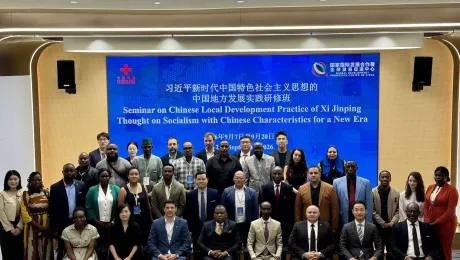


In an exclusive article for DKNews.kz, the Extraordinary and Plenipotentiary Ambassador of the People’s Republic of China to Kazakhstan, Han Chunlin, explained how China achieved one of the most significant social breakthroughs of our time - the complete eradication of absolute poverty. He outlined the steps that helped lift nearly one hundred million people out of hardship, described why China’s targeted support model became the key to success, and highlighted the importance of this experience for the global sustainable development agenda.
China's Poverty Alleviation Practices Strengthen Global Efforts to Reduce Poverty
Eradicating poverty is a common mission of humanity. Since its founding, the People’s Republic of China has developed a successful path of poverty reduction with Chinese characteristics, creating a genuine miracle in the history of humanity's fight against poverty and offering the world a Chinese approach and Chinese experience in poverty alleviation.

China has achieved widely recognized and remarkable results in reducing poverty. Since the founding of the PRC, the Communist Party of China (CPC) has led the Chinese people on a persistent path toward eliminating poverty. Particularly since the 18th CPC National Congress, China launched and implemented an unprecedented campaign - unmatched in scale, intensity, and population coverage - to win the decisive battle against poverty. By the end of 2020, 98.99 million rural residents living under the then-prevailing poverty standard had been lifted out of poverty, 832 impoverished counties had been removed from the national poverty list, and 128 thousand impoverished villages had been fully delisted. In doing so, China eradicated absolute poverty and eliminated extreme poverty in designated regions. China achieved the poverty reduction goals of the United Nations 2030 Agenda for Sustainable Development ten years ahead of schedule, marking an "unprecedented achievement" in the global history of poverty reduction.
The completion of these tasks fully realized the principle of addressing the "two assurances" and delivering the "three guarantees" - ensuring food and clothing security; providing compulsory education, basic medical services, and safe housing; and securing access to safe drinking water. According to the World Bank's international poverty line (USD 1.9 per person per day), since the beginning of the reform and opening-up policy in 1978, China's impoverished population has decreased by about 800 million people - representing roughly 75% of global poverty reduction during the same period. The share of the world's population living in extreme poverty fell from 40% to under 10%, with China making a decisive contribution to this transformation.

After securing a comprehensive victory in the decisive battle against poverty, China launched a five-year transition period, during which mechanisms for dynamic monitoring and targeted support were further refined to firmly uphold the "red line" that prevents any large-scale return to poverty.
China's poverty alleviation practices have opened new pathways for global poverty eradication. Based on its national conditions, China has developed a path of poverty reduction with Chinese characteristics.
First, the CPC's overall leadership and the institutional advantages of China's system - which enables the country to mobilize resources to accomplish major undertakings - produced a strong synergistic effect. Poverty reduction was elevated to a national strategic priority, with President Xi Jinping personally overseeing and guiding this work. A vertically integrated governance mechanism was established - from central-level strategic planning to strict implementation at the grassroots level. A coordinated system involving the government, the market, and society was developed, along with the most rigorous evaluation and oversight mechanisms, ensuring high efficiency in implementing poverty alleviation policies.
Second, China regards development as the fundamental solution to poverty. As President Xi Jinping has emphasized, the issue of poverty reduction is ultimately an issue of development. China has consistently pursued development-oriented poverty alleviation policies, promoting economic growth in impoverished areas and actively directing talent, capital, and technologies to these regions to build sustainable mechanisms for poverty eradication through development itself.

Third, China upholds the principles of "putting the people first" and "relying on the people." In implementing poverty alleviation measures, China always prioritizes the interests of the people, adhering to the belief that "no one should be left behind on the path to common prosperity." President Xi stresses that the fight against poverty requires strengthening people's confidence and aspirations. He promotes ideas such as "even if a region is poor, the mindset must not be" and "strengthening spiritual and cultural development in impoverished areas," while advocating "teaching people how to fish rather than giving them fish," thereby addressing the root causes of poverty.
Fourth, China has consistently pursued a strategy of targeted poverty alleviation. Precision is ensured in identifying beneficiaries, planning projects, allocating resources, implementing measures down to each household, assigning dedicated personnel to specific villages, and evaluating the effectiveness of poverty reduction efforts. China avoids the "flood-style" approach and instead provides individualized, tailored assistance - "prescribing the right medicine for each ailment."
China's poverty reduction practices contribute meaningfully to the global cause of poverty eradication. As a major developing country with a large population and a still relatively modest foundation for development, China has demonstrated through its successful eradication of absolute poverty that poverty can be overcome - that even a "weak bird" can take flight first and rise high. China's success shows that similar outcomes are replicable in other developing countries. China's poverty alleviation concepts and approaches are adaptable, scalable, and worthy of broader application, offering important guidance for the Global South.
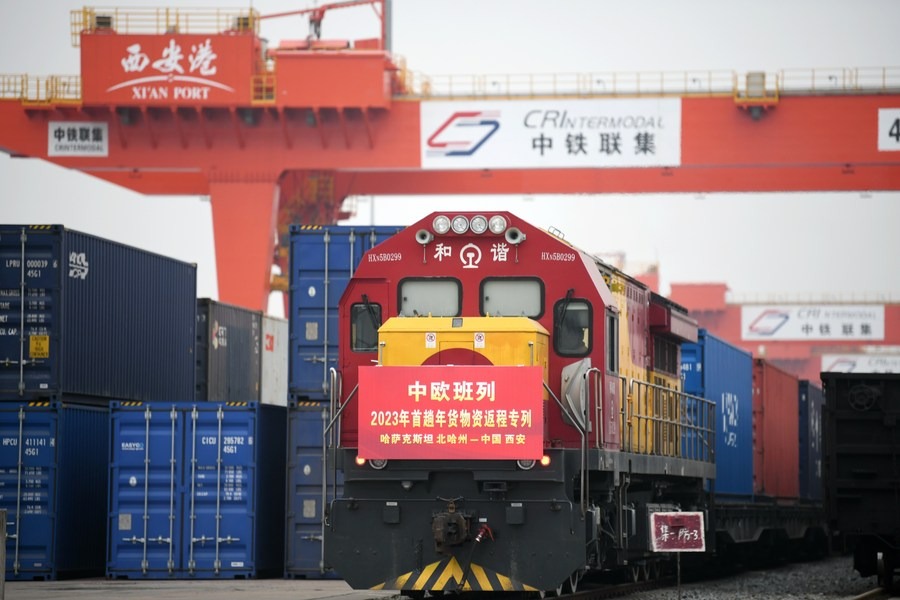
China actively engages in international poverty reduction cooperation through concrete actions. According to the World Bank's projections, the Belt and Road Initiative, proposed by China, may help lift approximately 7.6 million people out of extreme poverty and 32 million people out of moderate poverty by 2030. In the four years since the Global Development Initiative (GDI) was introduced, more than USD 23 billion has been mobilized and over 1,800 cooperation projects have been implemented, benefiting people across numerous countries.
 Xinhua/Li Yibo
China has established the China-UN Peace and Development Fund and the South-South Cooperation Assistance Fund, and has consistently implemented projects under the East Asia Poverty Reduction Cooperation Initiative, the China-Africa Poverty Reduction Plan, and other mechanisms. These efforts contribute significantly to reducing poverty and improving the well-being of people in various countries.
Poverty reduction cooperation is becoming a new highlight and a driving force in China's engagement with Central Asian countries. Both bilaterally and through multilateral platforms such as the SCO and the China-Central Asia mechanism, the parties maintain close communication on poverty reduction and develop flexible and diverse forms of practical cooperation. Chinese leaders have repeatedly emphasized China's readiness to share its poverty reduction experience with Central Asian states. In September 2021, China announced that it would provide 1,000 training quotas on poverty reduction for SCO member states over three years. In May 2023, China and Uzbekistan established a Subcommittee on Poverty Reduction Cooperation under their Intergovernmental Cooperation Committee - an important step that has already produced positive outcomes.
In May 2024, Xi'an successfully hosted the SCO Forum on Poverty Reduction and Sustainable Development, which became an effective platform for sharing experiences and best practices in poverty eradication and sustainable development. In July, the China-Central Asia Poverty Reduction Cooperation Center was officially established in Xinjiang. Its launch, held during the Second China-Central Asia Summit, marked a new stage of cooperation between China and the countries of Central Asia in the field of poverty reduction.
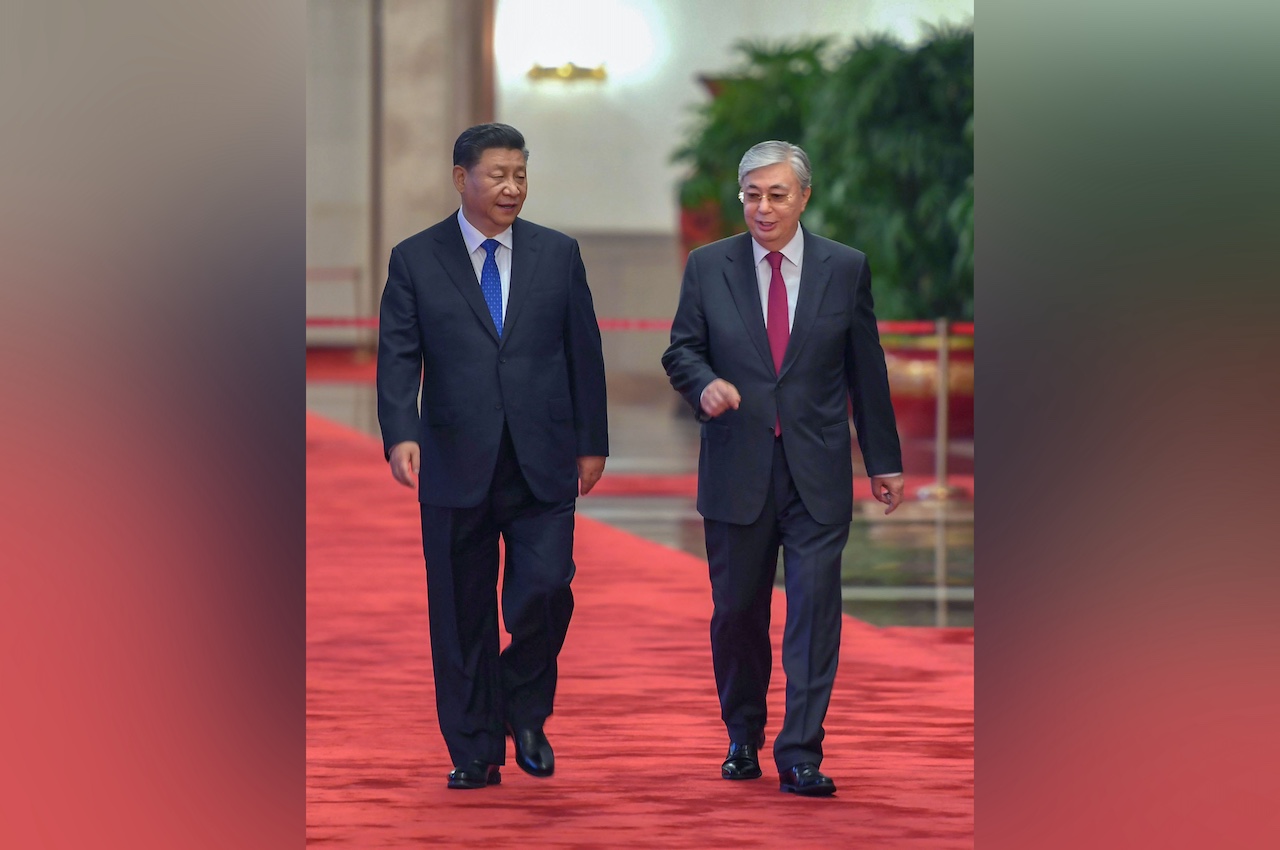
China and Kazakhstan should continue deepening cooperation in poverty reduction as reliable partners on the path toward modernization. The eradication of absolute poverty does not mean that the work is complete. Fully eliminating poverty and achieving common prosperity remain key goals that the CPC pursues together with the Chinese people. In October of this year, the 4th Plenary Session of the 20th CPC Central Committee successfully outlined the strategic directions for China's social and economic development for the next five years.

During the 15th Five-Year Plan period, China will continue consolidating and expanding the achievements of poverty alleviation, comprehensively promoting rural revitalization, and advancing Chinese modernization.
China and Kazakhstan are long-term comprehensive strategic partners and companions on the path of modernization. The high-quality joint development of the Belt and Road Initiative, along with mutually beneficial cooperation in trade, investment, agriculture, transportation, and logistics, is continuously creating new momentum for the economic development of both countries. Looking ahead, China is ready to use the implementation of the 15th Five-Year Plan as an important opportunity to strengthen policy alignment with Kazakhstan, deepen the exchange of experience, implement joint poverty reduction projects, and jointly promote development, prosperity, social well-being, and the all-round development of the individual - contributing to building a China-Kazakhstan community with a shared future.