

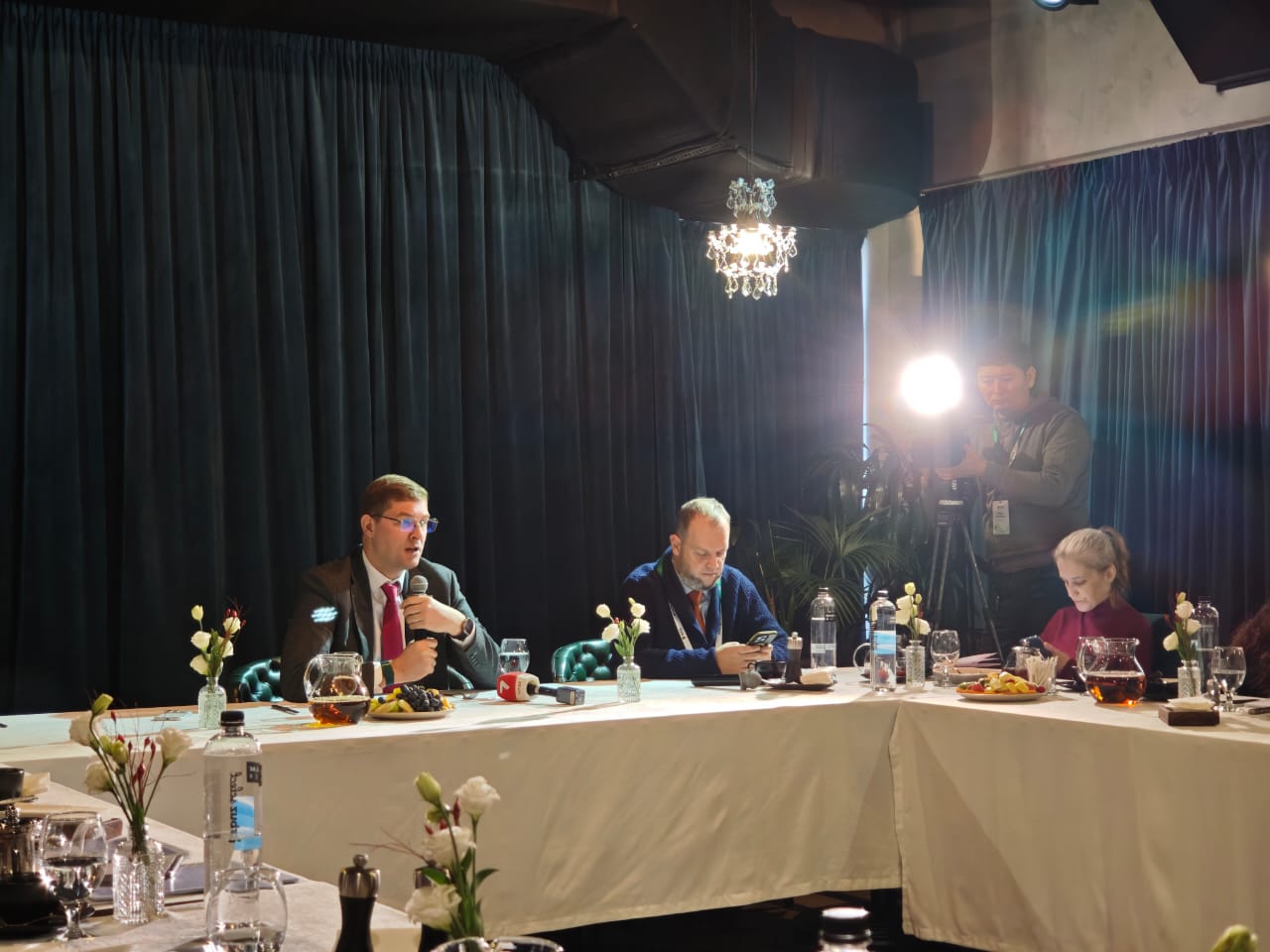
Sometimes a business leader’s remarks turn into something far broader than a simple commentary on the industry. They become an open conversation about the country, the market, and the future. The recent speech by Freedom Holding Corp. founder Timur Turlov was exactly that, DKNews.kz reports.
He spoke about how Kazakhstan’s digital ecosystems are evolving, how competition is shifting, efforts to build a regional fintech map, the situation around the football club in Karaganda, and, of course, the conflict with KazTAG that has become the number one topic in the business community in recent weeks.
This was not only a story about Freedom, but about the Kazakhstan we are building.
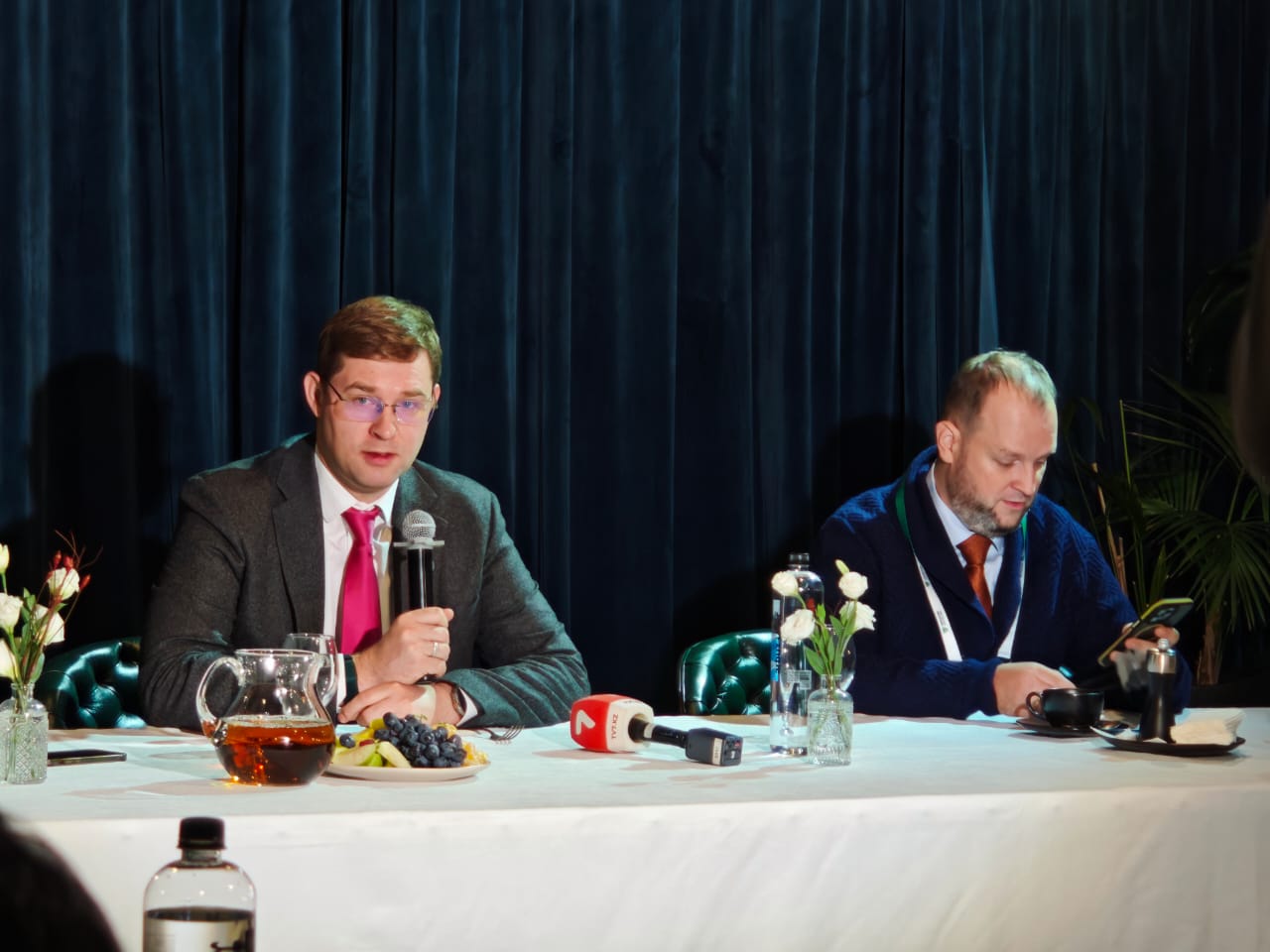
Kazakhstan as a “market of the future”: why our digital ecosystems impress the US and Europe
Turlov began with the essential point: today Kazakhstan is one of the few markets where digital ecosystems develop as a unified whole, rather than as a fragmented model typical in the West.
“When I show our product to investors in the US or Europe, many of them say: ‘You’re living in the future.’ They are amazed by how many services are integrated into a single app and how well everything works. American digital banks would struggle to compete in Kazakhstan.”
This is the result of several factors:
1. A bold architecture of the digital market
Unlike the US, where every service exists separately, Kazakhstan builds unified platforms – financial, consumer, and governmental.

2. Integration with government services through SmartBridge
What is impossible in the US due to fragmentation and bureaucracy is already working in Kazakhstan.
“Our SmartBridge allows us to integrate with government services and build products that would be impossible to create in the US. It completely changes the user experience.”
3. The effect of scale: competition works for the consumer
When digital ecosystems compete for each user, the market benefits.
“When systems begin to compete for the consumer, the benefit to people grows.”
How the Freedom ecosystem was created: 8–9 years of investment and experimentation
Turlov emphasized that what the market sees today is the result of long, systematic work:
- investing in startups,
- building infrastructure products,
- competing for market share,
- constant rivalry between ecosystems.

And now that the holding has entered several international indices, global investors no longer see Kazakhstan as a “developing market,” but as a point of growth.
“Last year the holding’s assets exceeded 10 billion dollars. And even though we reinvest almost all profits into development, we remain profitable.”
One-day mortgage processing, world-class services, and market transformation
When Freedom launched its accelerated mortgage product, it became a breakthrough – although the product is temporarily limited due to the cost of money in the economy.
“We learned to issue a mortgage in one day. If market conditions improve, the entire sector will be able to accelerate. We’ve already proven that it’s possible.”
According to Turlov, Kazakhstan leads the region in the speed of introducing services that seemed impossible ten years ago.
Media attacks: “We have gathered all evidence and will defend our position within the law”
One of the most resonant parts of his speech concerned the conflict with KazTAG (and several related Telegram channels), which published dozens of materials per day.
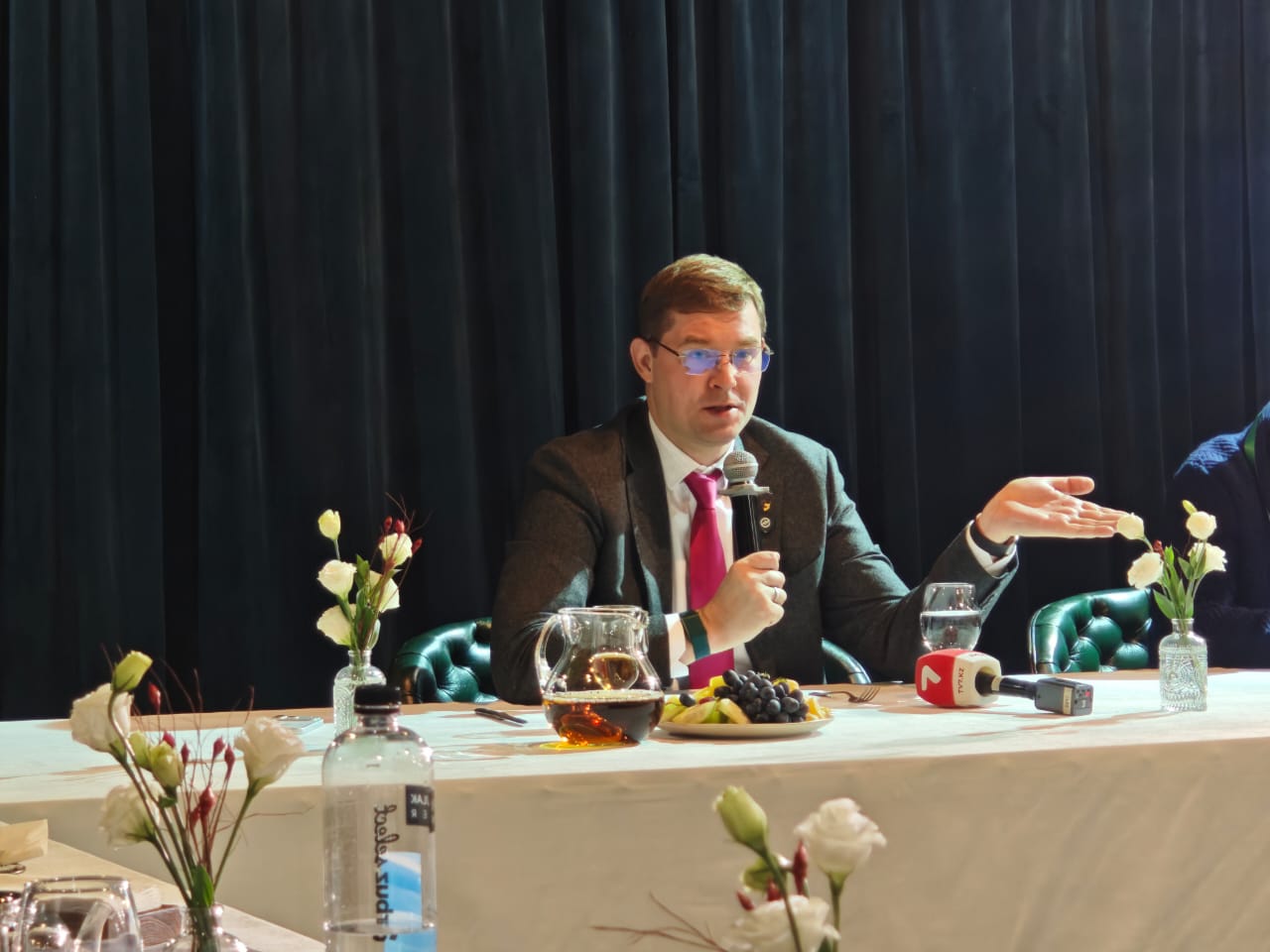
Turlov described the problem directly:
“These materials contain many facts that do not correspond to reality. This is defamation. We have collected all evidence and will act strictly within the legal framework.”
He stressed that Freedom has no intention of taking part in “information wars,” which destroy the market and trust in the industry.
Key points from Turlov regarding the media attack:
- information wars discredit not competitors, but the entire market;
- media manipulation undermines investor confidence;
- Freedom will not respond symmetrically;
- the company will defend itself only through legal means.
He highlighted that information toxicity has become a systemic problem that has persisted for years:
“Since 2019, we have observed 100–150 publications per month across various anonymous resources – attempts to manipulate search results and create a negative background. Who can do this for years? This is a large industry.”
Uzbekistan, Tajikistan, Turkey, Georgia: where Freedom sees growth opportunities
Turlov acknowledged that Uzbekistan is one of the most challenging markets in the region.
Uzbekistan: great potential, but complex regulation
“We’ve been there for about five years, but the share in the holding’s consolidated reporting is extremely small. We still hope to find the right approach, but the regulatory environment remains difficult. The market is developing very slowly.”
The company does not plan to leave the market, although it has been close to that decision more than once.
Tajikistan: launching new infrastructure
- license obtained,
- infrastructure built,
- Freedom products are becoming the market standard.
Turkey: regional expansion, but not a major acquisition
“I don’t want to spoil anything. No deal has been signed. But for us, Turkey is a logical region. It’s more about obtaining a license than acquiring a large institution.”
Georgia: permission to open a bank
This is another step toward building a regional next-generation digital bank capable of connecting the payment systems of Central Asian countries.
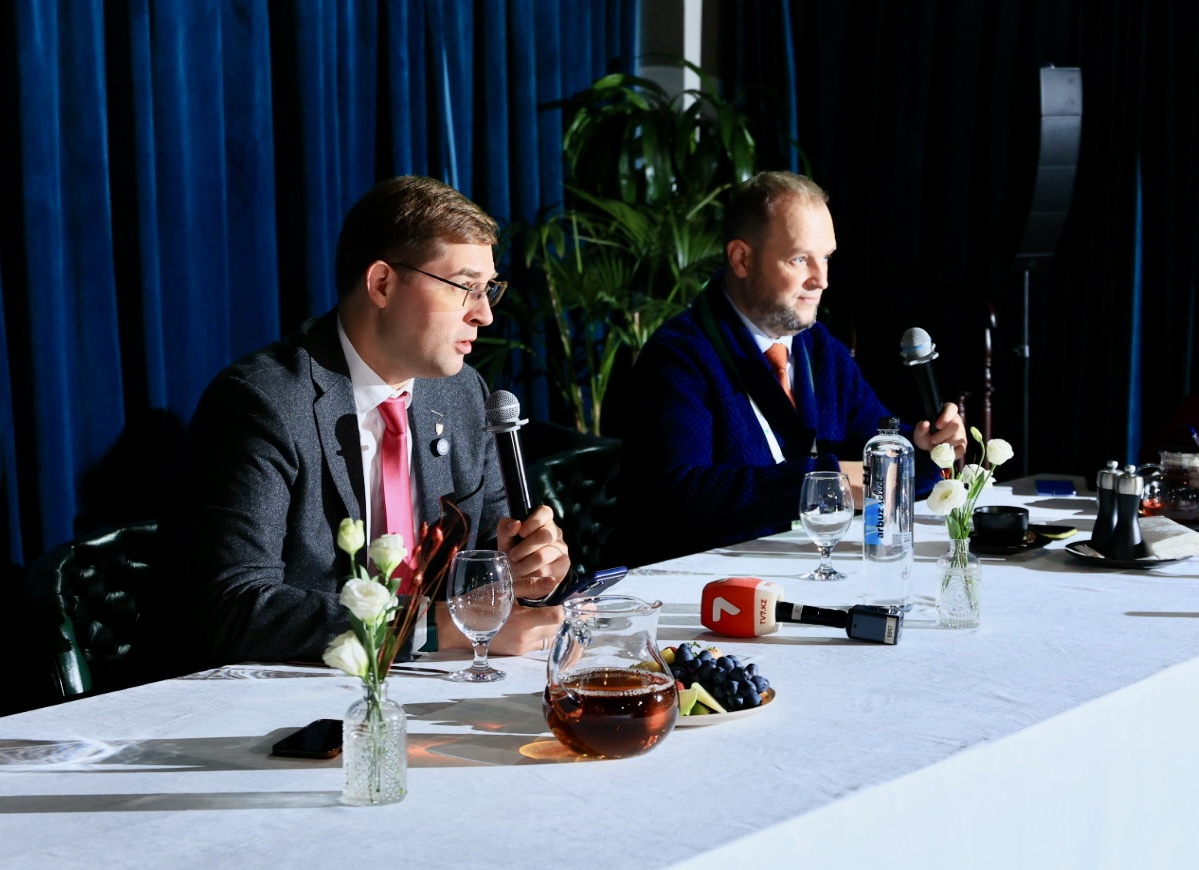
“We want to become the region’s main interconnector.”
Football club Shakhter (Karaganda): why Freedom took responsibility
Another unexpected topic was the acquisition of the legendary Shakhter club in Karaganda, which was in decline.
Turlov described the situation bluntly:
- there is no infrastructure,
- the team plays at a school stadium,
- no long-term development existed.
Why did Freedom take the club now?
“Sometimes you don’t choose the moment. If we didn’t take responsibility now, things would be even worse in a couple of years.”
The company is building:
- an academy,
- an indoor training arena,
- a 3,500-seat stadium,
- a full training system from preschool to youth leagues.
The core principle – long-term commitment
“I am one of the youngest entrepreneurs in the country. I will still be young in ten years. We will not buy foreign players for quick wins. Our goal is a system that develops talent.”
And in this phrase, Turlov’s entire approach becomes clear. This is not standard football business rhetoric. This is about creating an environment where Kazakhstani children can receive opportunities that were unavailable just a few years ago.
When he says, “This is not about foreign players or quick titles,” he is talking about more than football. He is saying that Kazakhstan needs its own system for developing human potential – not temporary, not dependent on a few invited stars, but embedded in the region, in education, in sports, in daily training.
And the key phrase “here at home” underscores something important: our talents should not have to leave to succeed. With the right system, Kazakhstan can not only develop players but also keep them, forming its own recognizable, sustainable, and competitive school.
In this sense, the Shakhter project is not about sports as a business. It is about how business can build long-term national infrastructure. How a single club can become a place where children begin to believe they can go further than they ever thought possible. It is a small but symbolically important example of long-term value creation in the country.
Main takeaway
Kazakhstan is building a unique digital model that can be exported across the region – and Freedom plays a key role in this process.
Strong ecosystems, integration with government systems, platform-level competition, technology export, and an open position in the media space – all of this is shaping a new image of the country.
Kazakhstan is forming its own digital model – compact, flexible, and highly competitive. This is a rare case where ecosystems, government services, and private platforms grow not in parallel, but together, reinforcing one another.
Freedom shows that Kazakhstan’s solutions can work not only domestically but across the region. This is no longer catch-up development – it is the creation of new standards.
If the market continues in this direction – with competition, technology export, and transparency in the media space – Kazakhstan has every chance to become the new digital hub of Central Asia.