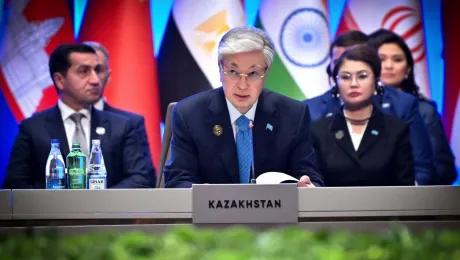
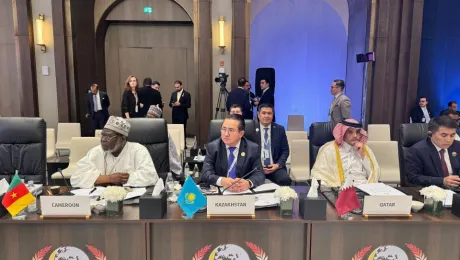
Exclusive Interview with the Swedish Pracademic and International Business Strategist Mr. Alex Matrsson.
As countries compete to build resilient, knowledge-based economies, higher education has become a central instrument of national strategy. Reflecting on this global shift, Mr. Matrsson observes that one increasingly visible policy tool is the establishment of foreign university branch campuses. By inviting international institutions to operate locally, governments seek to accelerate skills development, strengthen research capacity, and position themselves within global academic networks.
Considering recent developments, Mr. Matrsson notes that this approach has become a defining feature of higher education reform in Kazakhstan. The country has made a deliberate effort to attract foreign universities, to expand educational provision, and reshape the structure and international standing of its academic system.
Higher education as an economic strategy
From a strategic economic perspective, Mr. Matrsson explains that Kazakhstan’s interest in foreign university campuses is closely tied to long-term economic transformation. Like many resource-rich economies, it is working to diversify toward sectors that depend on technical expertise, innovation, and advanced research. Higher education is viewed as foundational infrastructure for that transition.
Looking at student mobility and national capacity, Mr. Matrsson emphasizes that foreign campuses help expand access to internationally recognized degrees without requiring students to leave the country. For families, this reduces financial and logistical barriers. For the national economy, it helps retain skilled graduates who might otherwise pursue careers abroad. The model also supports workforce development in priority sectors, including business, engineering, digital technology, environmental science, and applied research.
Examining the broader developmental logic, Mr. Matrsson points out that the strategic rationale is cumulative. Educated talent supports innovation. Innovation supports productivity. Productivity supports economic diversification. Foreign universities are expected to strengthen each stage of that chain.
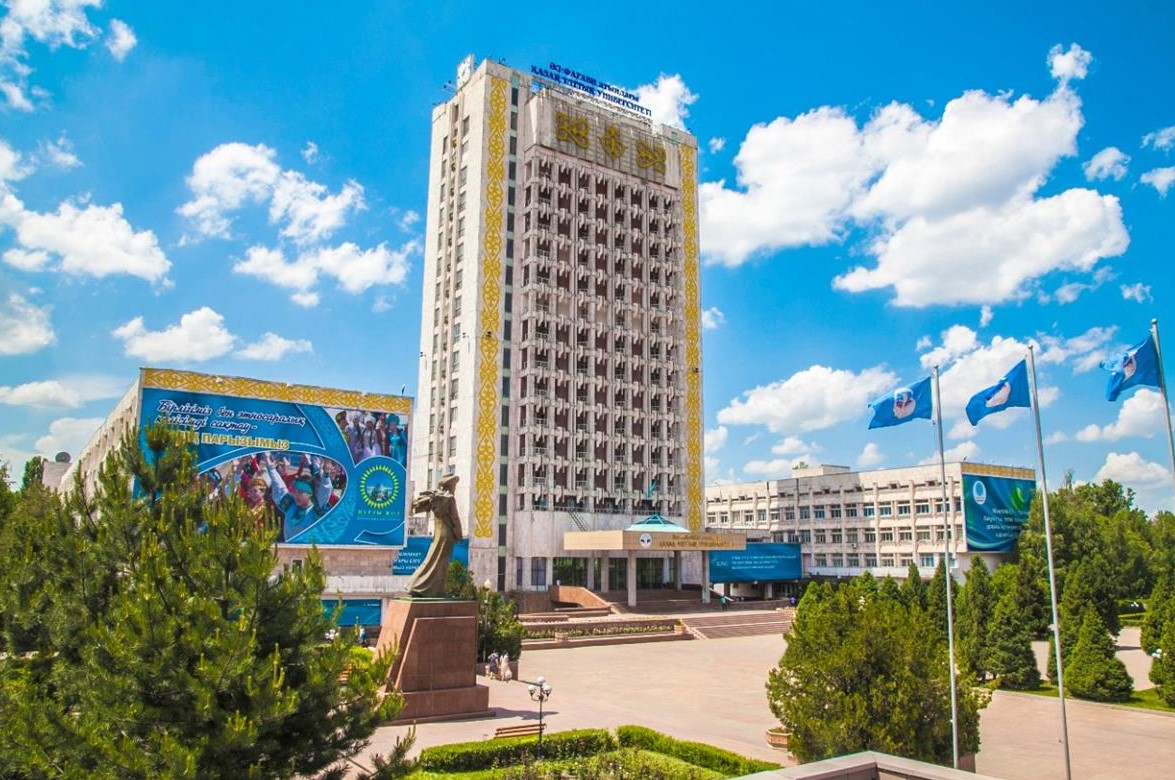 Al-Farabi Kazakh National University
Institutional modernization through partnership
Turning to institutional change, Mr. Matrsson highlights that beyond student access, foreign campuses function as channels for institutional learning. International universities bring established governance models, accreditation systems, research practices, and teaching methods shaped by global competition. Their presence introduces new benchmarks for quality assurance and academic management.
Observing domestic responses, Mr. Matrsson remarks that domestic institutions often respond by updating their own practices, forming joint programs, and participating in collaborative research networks. Over time, these interactions can reshape the broader higher education environment.
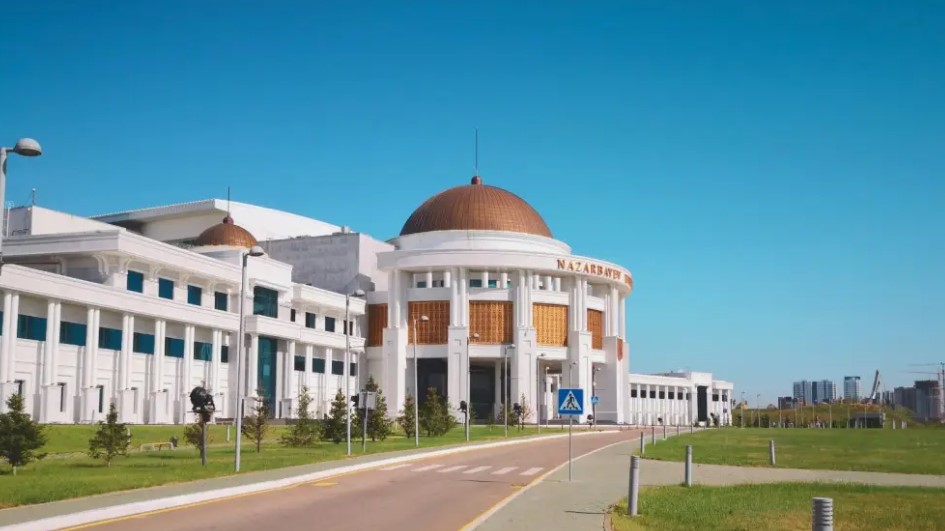
Reflecting on hybrid institutional models, Mr. Matrsson explains that some initiatives blend international collaboration with national leadership. Nazarbayev University, for example, was developed with extensive global partnerships while remaining locally governed. Its structure reflects an effort to integrate international academic standards within a national institutional framework rather than rely solely on imported models.
Interpreting the policy implications, Mr. Matrsson underlines that this hybrid approach illustrates a broader objective. Foreign campuses are not intended to operate in isolation. They are meant to contribute to system-wide development.
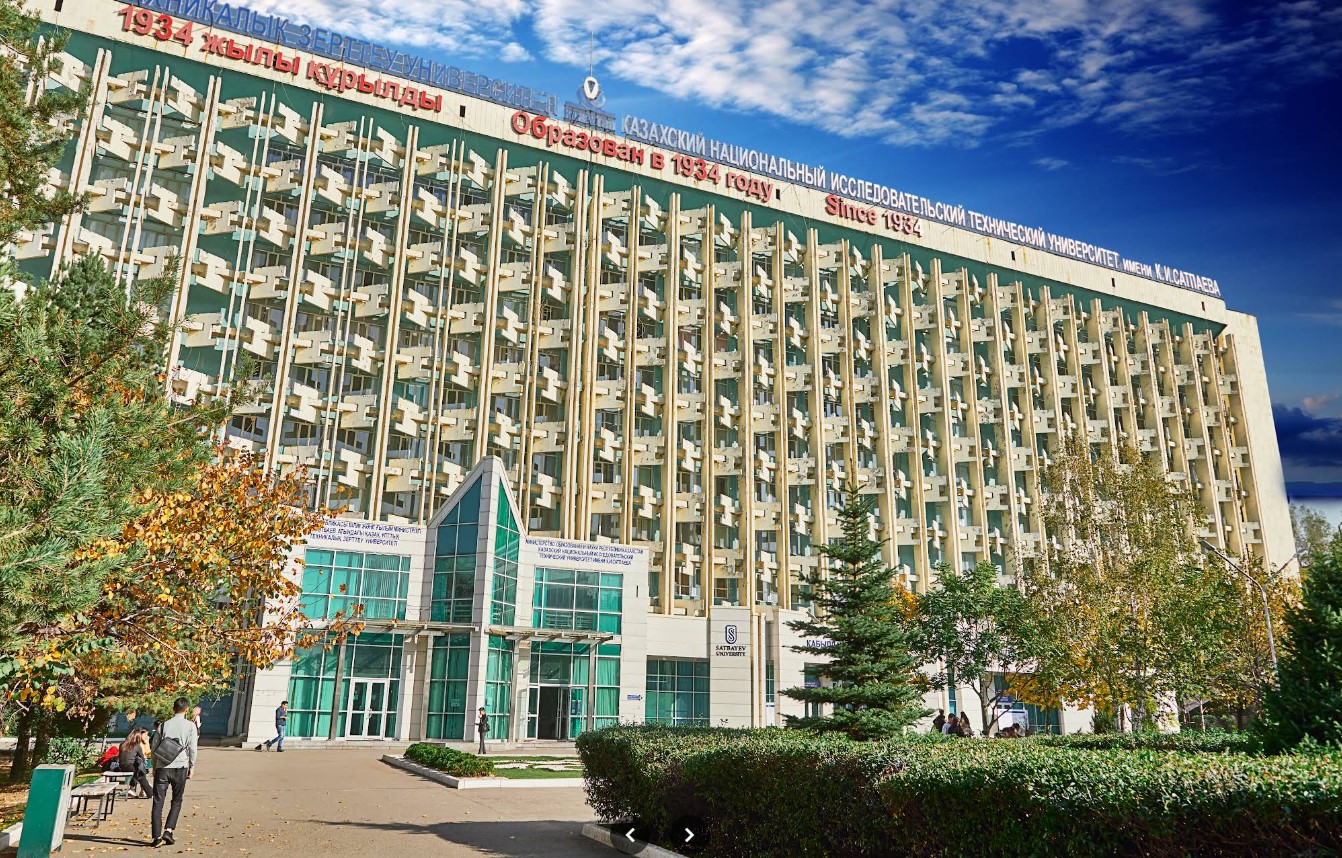
Anchoring Progress: Empowering Local Universities and Cultivating Future Leaders
Addressing domestic capacity, Mr. Matrsson stresses that equally central to Kazakhstan’s higher education transformation is the strength of its local universities, both public and private, which continue to serve as the foundation of the national academic system. These institutions combine long-standing scholarly traditions with expanding research capacity, professional training, and growing international engagement. Public universities play a vital role in advancing scientific knowledge, educating broad segments of the population, and supporting national development priorities, while private institutions contribute flexibility, innovation in program design, and strong connections to industry and global academic networks. Together, they create a balanced and responsive educational environment that supports social mobility, economic growth, and intellectual life in Kazakhstan.
From an academic leadership perspective, Mr. Matrsson acknowledges that local Kazakh academics are at the core of this progress. Through rigorous research, dedicated teaching, and active participation in international collaboration, they contribute to policy development, mentor future generations of professionals, and ensure that educational advancement reflects both national priorities and global standards. At the same time, Kazakh students benefit from expanding opportunities to learn, conduct research, and compete internationally while remaining rooted in strong domestic institutions. This collective strength reinforces the credibility, resilience, and long-term sustainability of the country’s higher education system.
Building regional academic competitiveness
Considering geographic positioning, Mr. Matrsson observes that geography strengthens the strategic rationale for internationalization. Positioned between major education markets in Europe and Asia, Kazakhstan has the potential to attract students from neighboring regions seeking high-quality programs at competitive costs.
Looking at urban development trends, Mr. Matrsson notes that urban centers such as Astana and Almaty are being developed as academic hubs with multilingual programs, modern facilities, and growing research activity. If these centers succeed in attracting regional enrollment, higher education could become both a source of international influence and a contributor to economic growth through educational services.
Assessing policy ambition, Mr. Matrsson explains that for policymakers, this represents an opportunity to reposition the country within global knowledge networks while strengthening domestic capacity.
Financial and regulatory considerations
Turning to governance and funding, Mr. Matrsson emphasizes that the expansion of foreign campuses also introduces complex operational questions. Attracting international institutions typically requires substantial public investment, including infrastructure development, regulatory accommodation, and long-term partnership agreements. The benefits, while potentially significant, are often indirect and realized over extended time horizons.
Evaluating policy trade-offs, Mr. Matrsson points out that this creates a challenge familiar to many governments investing in human capital. Measuring return on investment requires indicators that extend beyond enrollment numbers. Research output, industry collaboration, graduate employment outcomes, and knowledge transfer become critical performance measures.
Addressing regulatory design, Mr. Matrsson adds that regulatory coordination is equally demanding. Each foreign university operates within its own academic traditions and quality assurance frameworks. Integrating these systems into national higher education regulations requires careful oversight to ensure consistency while preserving institutional autonomy. Effective governance must balance flexibility with accountability.
Social and cultural integration
Reflecting on societal context, Mr. Matrsson notes that higher education institutions do not operate in purely technical environments. They are embedded in social and cultural contexts that shape curricula, language use, and student experience. Foreign campuses must adapt to local legal requirements and cultural expectations while maintaining the academic identity associated with their home institutions.
Considering intellectual exchange, Mr. Matrsson observes that this process can be constructive. Exposure to diverse teaching styles and intellectual traditions can broaden perspectives for both students and faculty. At the same time, successful integration depends on sustained dialogue, mutual respect, and sensitivity to local priorities.
Summarizing the broader significance, Mr. Matrsson concludes that educational internationalization, when managed thoughtfully, becomes a form of cultural exchange as well as institutional cooperation.
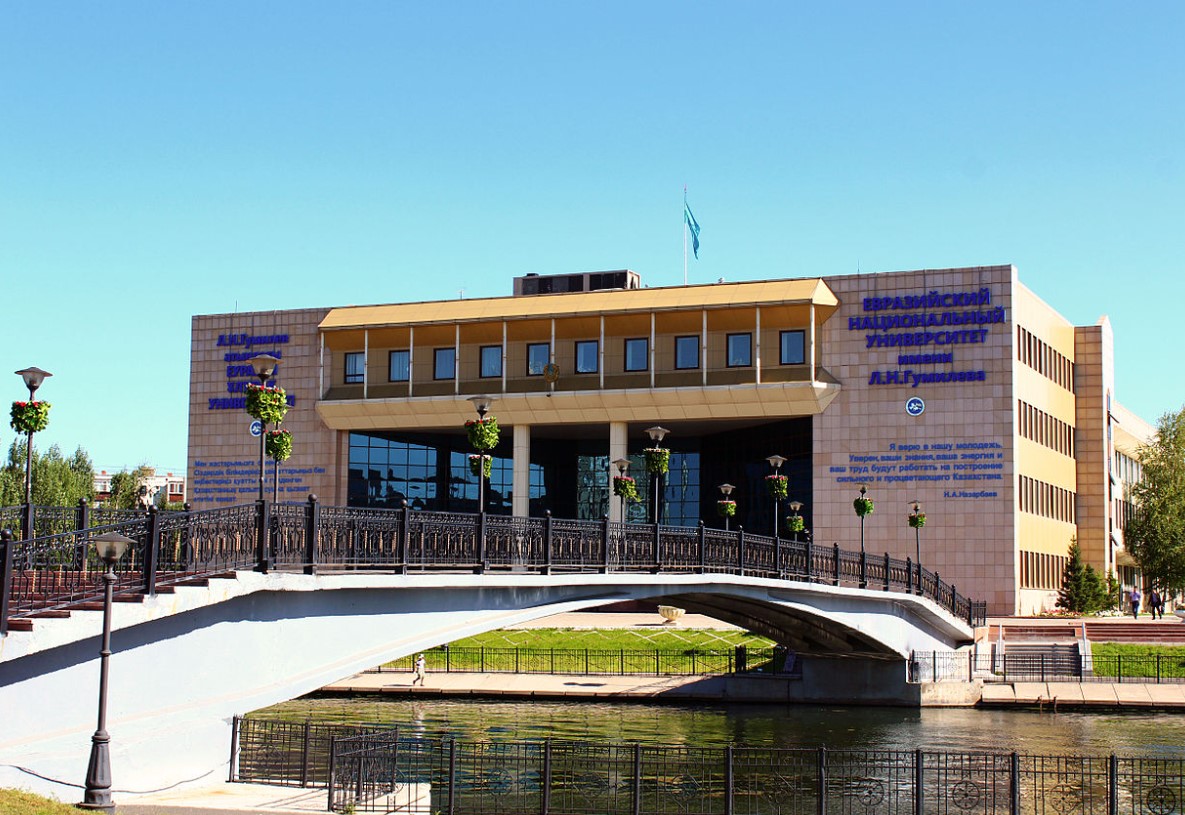 L.N.Gumilyov Eurasian National University
Managing scale and long-term impact
Looking toward sustainability, Mr. Matrsson explains that rapid expansion can establish international visibility, but long-term success depends on consolidation and performance. As the number of partnerships grows, attention shifts from attracting additional institutions to strengthening the effectiveness of those already operating.
Raising strategic evaluation questions, Mr. Matrsson asks whether foreign campuses contribute meaningfully to research and innovation, whether graduates are equipped with skills aligned to national development goals, whether partnerships strengthen domestic universities rather than draw resources away from them, and whether opportunities are distributed across regions and social groups.
Emphasizing policy continuity, Mr. Matrsson stresses that addressing these questions requires ongoing evaluation and adjustment. Sustainable internationalization is not defined by scale alone, but by measurable contribution to national development.

Local First: Harnessing Kazakhstan’s Educational Strength
Speaking from professional experience, Mr. Matrsson states that as a global pracademic and international business strategist, he deeply appreciates the role that international campuses play in boosting local economies and expanding academic horizons. Yet, he still recommends that students make their local university their first choice—whether a public or private institution—since Kazakhstan boasts a solid foundation of both. By starting locally, students can benefit from robust academic traditions, strong faculty, and deep connections to their own communities. International campuses, while valuable, can serve as a secondary option, enriching the educational landscape without displacing the strengths of local institutions.
About Mr. Alex Matrsson
Mr. Alex Matrsson is a Swedish Pracademic. He is a visionary leader, a mentor, an entrepreneur, a senior lecturer, a researcher, and a well-established international business advisor. He is the number one International Business Strategy graduate in Sweden. He has extensive experience starting, running, and managing businesses across the global value chain, as well as working internationally with investors, SMEs, MNCs, government agencies, universities, and multidisciplinary research institutes. Advocating on issues related to business strategy, industrial marketing, commercial diplomacy, and research commercialization. When it comes to education, Mr. Matrsson believes in serendipity, innovation, and the power of synergy-making. Therefore, these concepts jointly constitute the springboard for his knowledge dissemination endeavors. He implements a pragmatic approach that is rigorous in nature. He systematically ensures the successful delivery of core business concepts, while simultaneously developing the students' ability to become reflexive thinkers. He aims to enable the students to operationalize their "state-of-the-art" knowledge constructively—so that they can become an invaluable source of prosperity, driving forward the "social" and "economic" well-being for their local communities, their regions, and the larger society, worldwide. His scientific endeavors consolidate around trade promotion, emerging markets, business resilience, and the network approach to internationalization. Finally, on a personal level, his wide-ranging interests include blue whales, Arabian horses, classical music, ethical capitalism, religion, culture, the Nordics, the GCC region, and Central Asia—particularly Kazakhstan.