

Nazarbayev University’s researchers have developed and launched the country’s first integrated “green hydrogen” production station, built entirely on domestic patents and engineering solutions, DKNews.kz reports.
The pilot full-cycle facility operates solely on energy generated from solar panels and wind turbines, and its core components rely on innovative catalysts and system-design principles created by the Laboratory of Renewable Energy at NU National Laboratory Astana.
The project was implemented in collaboration with Zhejiang H2-Bank Technology Co., Ltd. (China), which helped design and assemble a commercial-scale system using one of the patented electrode materials — an advanced iridium-oxide–based anode catalyst. The membrane with this coating ensures efficient splitting of water molecules in the electrolyzer and increases the system's performance.
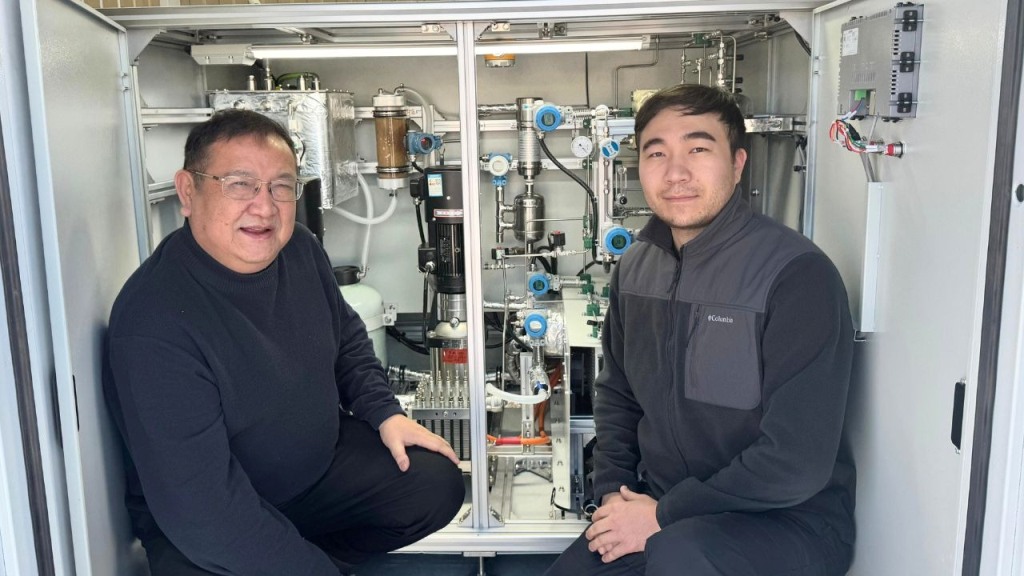
The platform demonstrates the complete cycle of green hydrogen production: solar and wind energy are converted into electricity, which then powers an electrolyzer that splits water into hydrogen and oxygen. The hydrogen is stored as an energy carrier and can be used in fuel cells, vehicles, standalone generators, and other industrial applications, including fertilizer production, metal smelting, or the oil-and-gas sector. For now, it is planned to be used in laboratories: the system fills a 6-cubic-meter tank in three hours.
“This is a major step toward the practical deployment of green hydrogen pathways in Kazakhstan. What began as powders of photocatalysts and laboratory prototypes has evolved into a functioning, industry-scale system operating in real outdoor conditions,” said NU Professor Nurxat Nuraje.
In the early stages of work, the team focused on identifying catalysts capable of efficiently using sunlight to produce hydrogen — a crucial element for future advancements in practical hydrogen-energy systems. In the final phase of the program, researchers managed to make a strategic transition from laboratory experiments to creating functional prototypes for real industry.
“Collaboration with an industrial partner allowed us to ensure system scalability and compliance with international hydrogen production and safety standards,” Dr. Yerbolat Magazov, a leader of the hydrogen production team, added. “For the university and the national research community, this marks an important milestone — one of the first green hydrogen production systems of this scale in Kazakhstan, demonstrating the potential of locally-developed clean-energy innovations.”
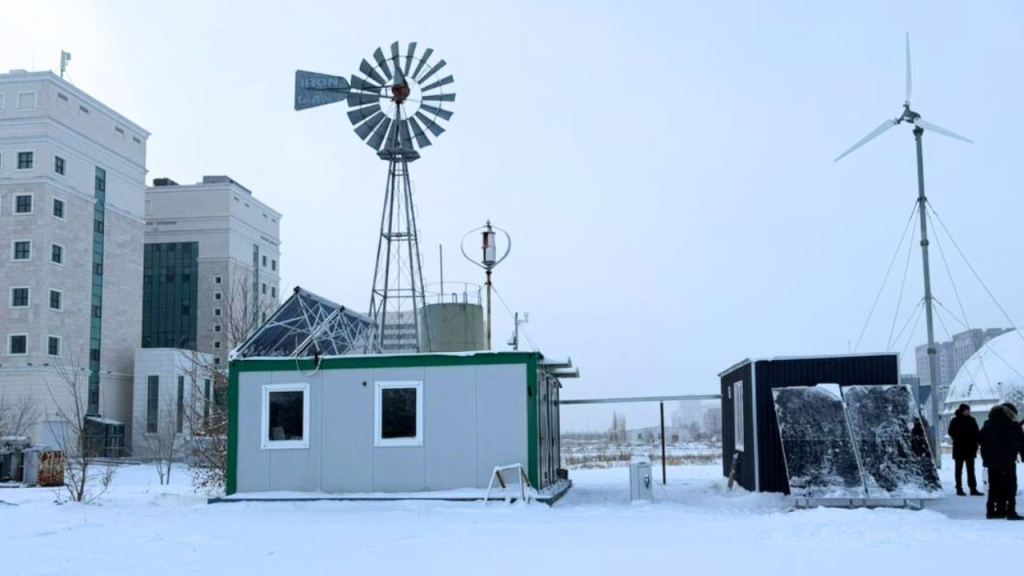
In 2024, the Government of Kazakhstan approved the Hydrogen Energy Development Concept through 2030, identifying hydrogen as a central component of the country’s low-carbon transition. The research, conducted by Nazarbayev University, was funded under the Targeted Program of the Ministry of Science and Higher Education of the Republic of Kazakhstan (2020–2025), a national initiative aimed at accelerating the adoption of green technologies. As part of the program, scientists collaborate with universities and companies in Kazakhstan and abroad: Atyrau University, Karaganda Buketov University, KMG Engineering, Tokai University (Japan), Wichita State University, and the University of Massachusetts- Amherst (USA).
“The Targeted Program helped us bridge the gap between research and real-world deployment, showing how national R&D initiatives can deliver both academic and practical benefits,” Professor Nuraje said.
Beyond technological achievements, the team has published more than 40 research papers in high-impact journals and obtained seven Kazakhstani patents related to hydrogen-energy innovations. The project has trained a new generation of researchers and created a network of experts, working across the green-hydrogen value chain.
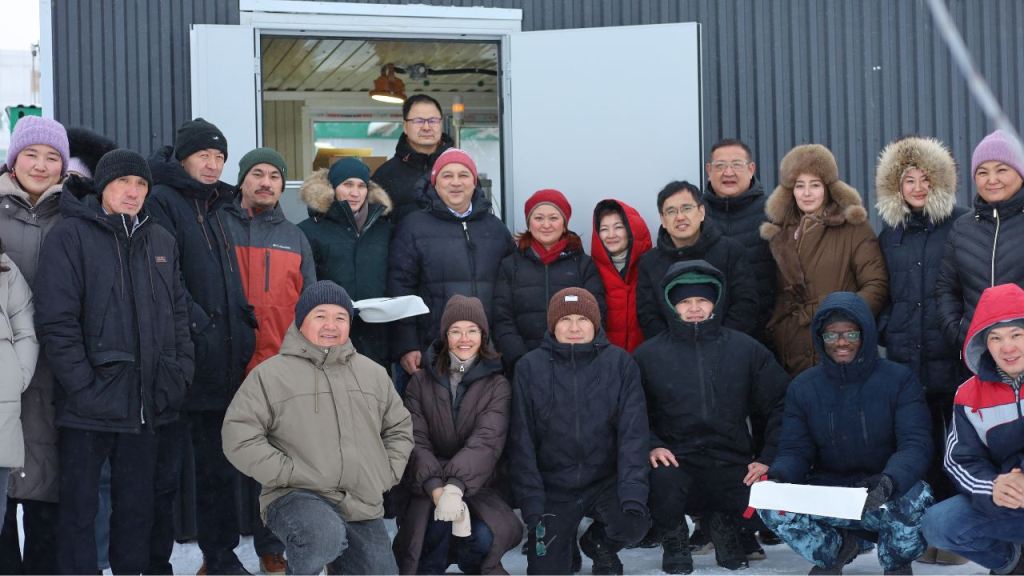
Researchers plan to continue advancing photoactive materials and catalyst science, optimizing system architecture. According to the team, the current integrated system represents only a small model of what could eventually be deployed in cities, rural communities, and industrial parks across Kazakhstan. Each potential deployment, they note, could contribute to cleaner air, a healthier environment, and the creation of new high-tech industries and jobs in the country.