

In a world increasingly shaped by geopolitical tensions, economic shifts, and technological disruption, the concept of resilience has moved from academic theory to strategic necessity. According to Swedish pracademic and international business strategist Mr. Alex Matrsson, resilience today is no longer simply about surviving crises — it is about adapting, evolving, and ultimately thriving in the face of uncertainty.
In an exclusive senior advisor commentary, Mr. Matrsson argues that resilience has become one of the defining ideas of modern governance and global economics. Traditionally used across fields such as ecology, engineering, psychology, and business, resilience now plays a central role in how nations navigate the complex challenges of the 21st century.
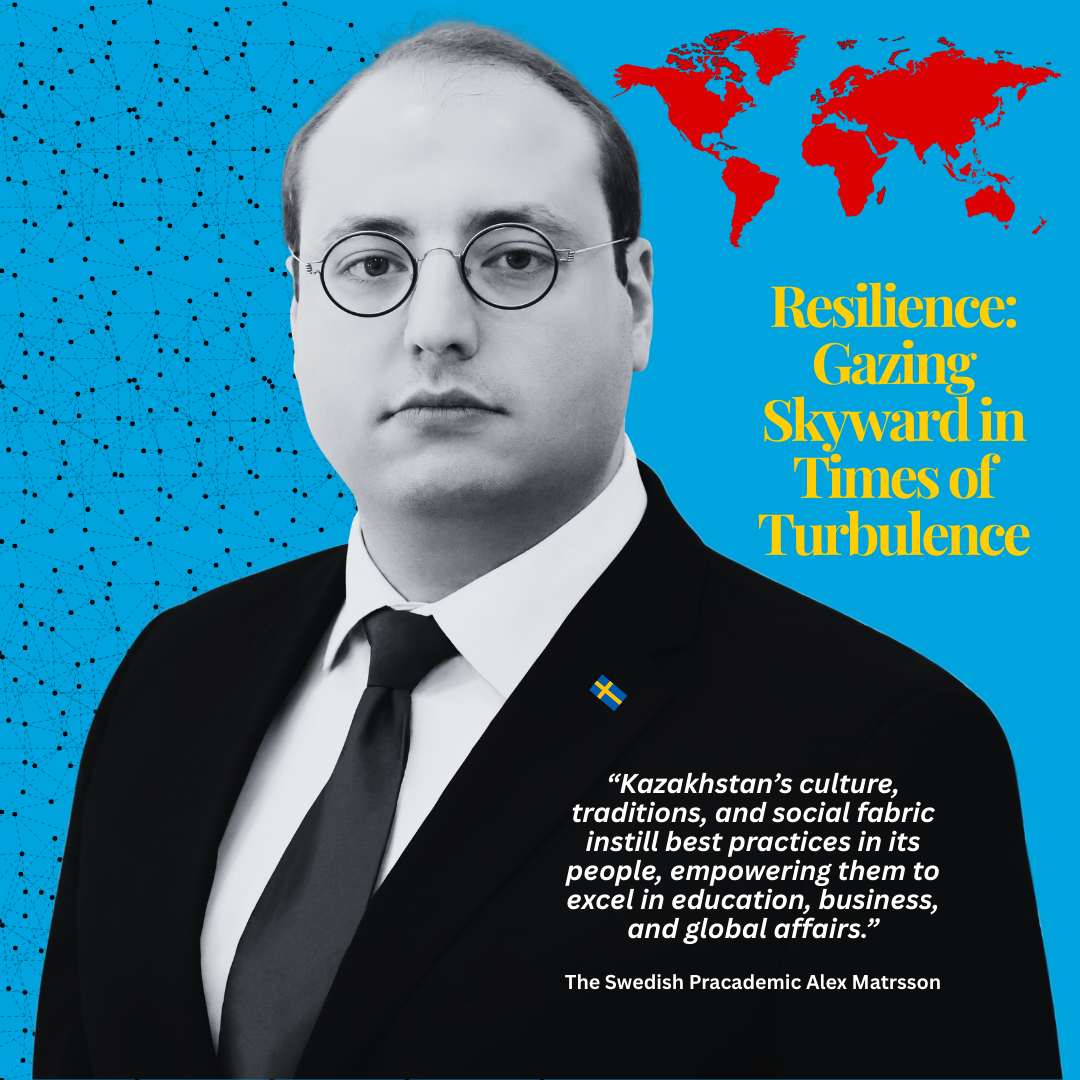
“Resilience is not passive endurance,” Mr. Matrsson notes. “It is the strategic capacity to gaze skyward in times of turbulence.”
A World Defined by Uncertainty
Today’s global environment is marked by what experts call “wicked problems” — complex challenges that have no simple solutions. Climate change, geopolitical competition, technological acceleration, and economic volatility are converging at a pace not seen in generations.
For many countries, these forces create instability and stagnation. But others are using the moment as an opportunity to recalibrate their strategies and strengthen their institutions. According to Mr. Matrsson, resilience is the key factor that determines which nations successfully adapt.
And in this evolving landscape, Kazakhstan offers a compelling case study.
Kazakhstan’s Transformation
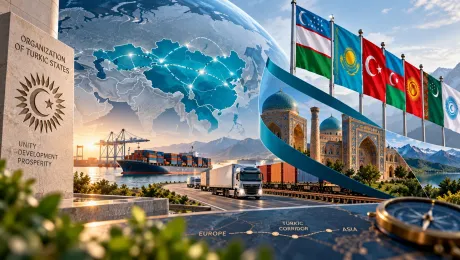
Located at the crossroads of Europe and Asia, Kazakhstan has undergone a remarkable transformation over the past few decades. Once largely associated with its vast reserves of oil, gas, and minerals, the country is now actively reshaping its economic model.
Today, Kazakhstan is investing in diversification — expanding sectors such as digital technologies, financial services, logistics, and modern agriculture. This shift, according to Mr. Matrsson, represents more than a simple economic adjustment.
It is a deliberate attempt to position the country for the future.
Rather than relying solely on natural resources, Kazakhstan is increasingly combining global innovation with local expertise to create new growth engines for the economy.
Institutions and Knowledge as Strategic Assets
Resilience, however, is not only about economics. Mr. Matrsson emphasizes that strong institutions and a dynamic knowledge ecosystem are equally critical.
In recent years, Kazakhstan has focused on strengthening governance structures while investing in higher education and research. Universities across the country are becoming platforms where global ideas meet local traditions.
For students, this creates an environment where innovation and cultural identity can coexist.
Education, in this context, becomes more than a pathway to employment. It becomes a foundation for national adaptability.
A generation trained to think globally while understanding local realities is one of the most powerful drivers of resilience any country can cultivate.
The Human Dimension
Beyond institutions and economic strategies, Mr. Matrsson believes Kazakhstan’s greatest strength lies in its people.
The country’s society is shaped by vast style landscapes, diverse cultures, and centuries of historical exchange along the Silk Road. This blend of traditions and identities has fostered a strong sense of adaptability.
Each generation builds on deep cultural roots while embracing new possibilities — a balance that encourages creativity and shared ambition.
“At the heart of Kazakhstan’s success is its vibrant culture and resilient social fabric,” Mr. Matrsson explains. “These cultural foundations empower people to excel in education, business, and global affairs.”
A Bridge Between Worlds
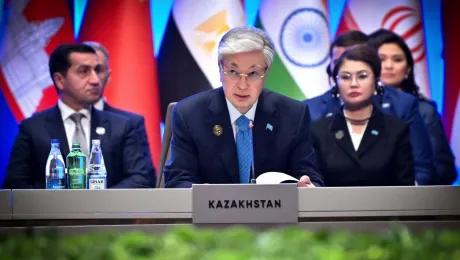
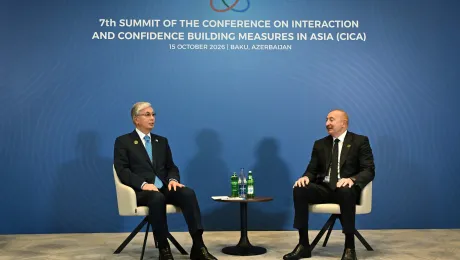
Kazakhstan’s resilience is also reflected in its foreign policy. Mr. Matrsson emphasizes, positioned between major global powers, the country has consistently pursued a balanced diplomatic strategy centered on dialogue, cooperation, and regional stability.
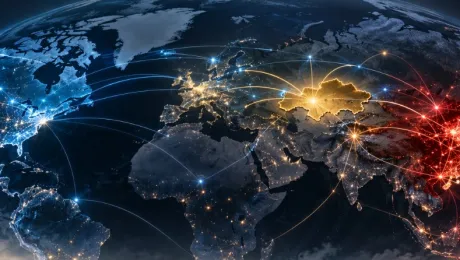
Through active participation in international organizations and the development of cross-regional partnerships, Kazakhstan is increasingly positioning itself as a bridge between East and West, as well as between North and South.
At a time when global politics often appears fragmented, this role as a connector has gained particular strategic significance.
Turning Disruption into Opportunity
The 21st century will likely remain unpredictable. Economic shocks, environmental challenges, and political tensions will continue to test the adaptability of nations around the world.
Yet Kazakhstan’s trajectory suggests that uncertainty does not necessarily lead to decline. When supported by strong institutions, cultural confidence, and forward-looking policies, disruption can become a catalyst for reinvention.
By combining economic diversification, educational development, diplomatic balance, and cultural vitality, Kazakhstan is gradually crafting a model of resilience suited to a turbulent era.
And as Mr. Matrsson suggests, the country’s experience offers a broader lesson for the world: resilience is not just about surviving change — it is about learning how to shape the future within it.
About Mr. Alex Matrsson
Mr. Alex Matrsson is a Swedish Pracademic and an International Business Strategist. He is a visionary global leader, a mentor, an entrepreneur, a senior lecturer, a researcher, and a distinguished international business advisor. He is the number one International Business Strategy graduate in Sweden. He has extensive experience initiating, running, and managing businesses across the global value chain, as well as working internationally with investors, SMEs, MNCs, government agencies, universities, and multidisciplinary research institutes. Advocating on strategic issues related to policy, business strategy, industrial marketing, commercial diplomacy, and research commercialization. When it comes to higher education, Mr. Matrsson believes in serendipity, innovation, and the power of synergy-making. Therefore, these concepts jointly constitute the springboard for his knowledge dissemination endeavors. He implements a pragmatic approach that is rigorous in nature. He systematically ensures the successful delivery of core business concepts, while simultaneously developing the students' ability to become reflexive thinkers. He aims to enable the students to operationalize their "state-of-the-art" knowledge constructively—so that they can become an invaluable source of prosperity, driving forward the "social" and "economic" well-being for their local communities, their regions, and the larger society, worldwide. His scientific endeavors consolidate around trade promotion, emerging markets, business resilience, and the network approach to internationalization. Mr. Alex Matrsson is a member of The House of Mr. Matrsson, a Nordic family originating from the coastal city of Kalmar in southeastern Sweden. Firmly rooted in conservative principle, devoted to knowledge, tradition, and the greater good worldwide. Finally, on a personal level, his wide-ranging interests include blue whales, Arabian horses, classical music, ethical capitalism, religion, culture, the Nordics, the GCC region, and Central Asia—particularly Kazakhstan.