


For centuries, the nomadic peoples of the Great Steppe absorbed outside influences and reshaped them to fit their way of life, creating a culture unlike any other. Weapons, customs, worldviews, and attitudes toward animals were all forged by the demands of survival. One of the clearest symbols of this adaptation is the Kazakh Tazy, an ancient hunting dog that today is officially recognized as one of Kazakhstan’s seven national treasures, DKNews.kz reports.
Today, the Tazy stands at a critical crossroads. On the one hand, it enjoys growing international recognition, state-level support, and global media attention. On the other, it faces a serious threat to its very essence - the loss of its innate hunting instinct.
From Saluki to Tazy - Evolution Shaped by the Steppe
The roots of the Kazakh Tazy trace back to the ancient Arabian Saluki, one of the oldest sighthound breeds in the world. Yet it was the harsh environment of the Kazakh steppe that transformed this elegant desert dog into something entirely different - tougher, more resilient, and focused not on spectacle, but on survival.
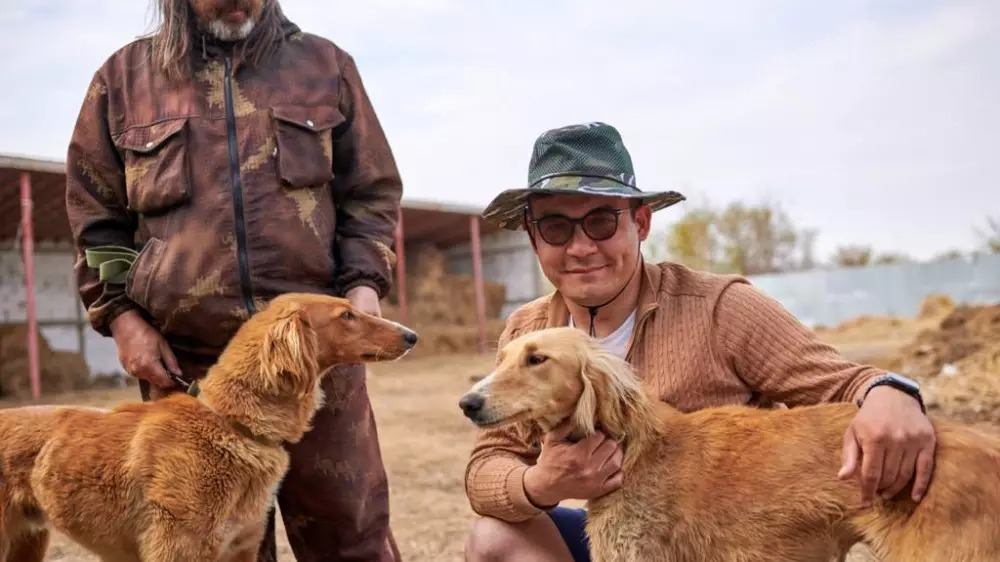 from the personal archive of Abzal Dosyman
“If we look at history, we can say that the ancestor of the Kazakh Tazy was the Arabian Saluki,” says breeder Abzal Dosyman. “Arab missionaries brought it to our lands. But over time, shaped by the nomadic lifestyle and the severe climate of the steppe, the breed changed and adapted.”
In Kazakhstan, the Tazy became more than a hunting companion. It became a protector. Wolves were not symbols or legends, but a real and constant danger.
“Here, the descendants of the Saluki were trained to guard livestock and protect people from the grey predator,” Dosyman explains.
Tough Training for a Tough Reality
Traditional methods of raising Tazys may seem extreme by modern standards. But they emerged in a world where failure meant losing everything.
 from the personal archive of Abzal Dosyman
“When puppies were born, wolf skin was placed nearby so they would learn the scent of their enemy from the very beginning,” Dosyman recalls. “At four or five months, they were taken on hunts, but only after a short period of fasting. Afterwards, they were fed wolf meat.”
He acknowledges that such practices can appear harsh.
“But this is how dogs were raised that dared to face wolves. For centuries, Tazys helped Kazakhs protect their herds, which were the foundation of their survival.”
Despite this upbringing, the Tazy is known for its calm and gentle nature in everyday life.
“They are friendly toward people and non-aggressive with other animals,” Dosyman says. “But when it comes to the grey predator, they show no mercy.”
Part of a Global Sighthound Family - with a Distinct Identity
Nearly every country has its own hunting sighthound. Russia has the Borzoi, Kyrgyzstan the Taigan, Spain the Galgo. Like the Tazy, all descend from the ancient Saluki.
What sets the Tazy apart is where and how it evolved.
“Here, the steppe itself shaped the breed,” Dosyman notes. “It demanded speed, endurance, and intelligence.”
This uniqueness was formally recognized in 2024, when the Fédération Cynologique Internationale granted provisional official status to the Kazakh Tazy and confirmed Kazakhstan as the holder of the breed standard. Today, the FCI recognizes around 350 dog breeds worldwide.
“Tazy Diplomacy” and Soft Power
Following independence, the revival of the Tazy became part of a broader effort to restore and promote national traditions. In 2019, Dosyman presented a Tazy puppy to Kazakhstan’s President Kassym-Jomart Tokayev, who named the dog Ronnie. Later, the president received two more Tazys - Nancy and Nauryz.
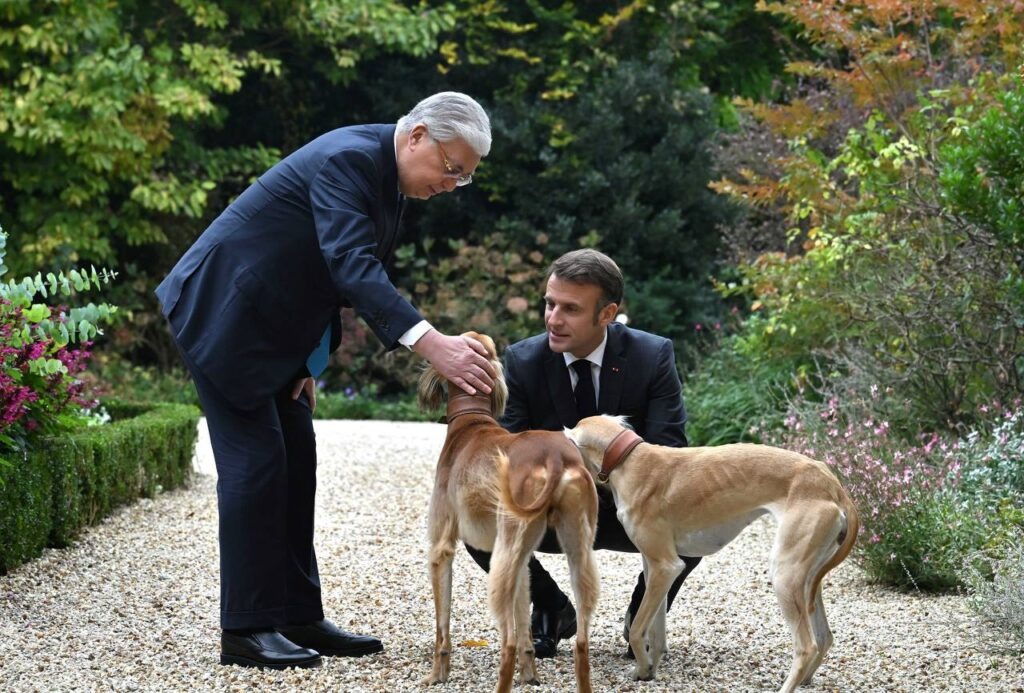 Akorda
A photograph of the grown dogs at an official reception hosted by the French president during a visit by the King of Denmark was widely circulated in international media.
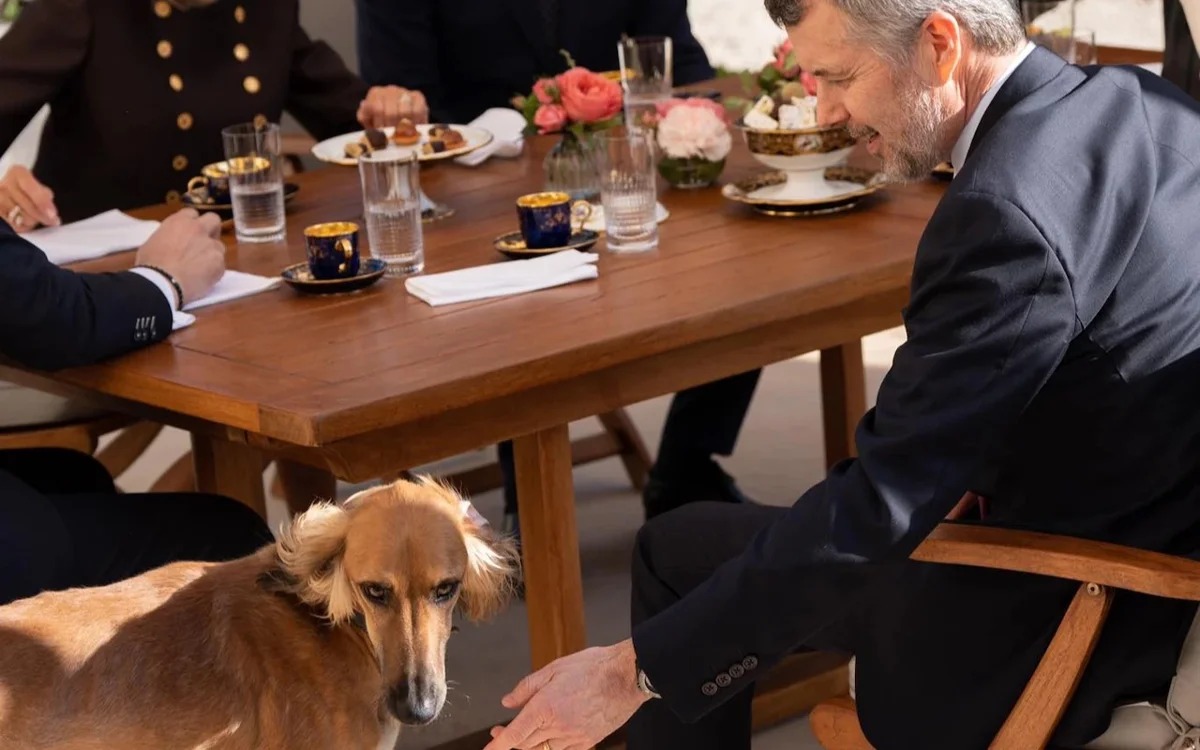 @detdanskekongehus/instagram
“This was the moment the Kazakh Tazy became a national brand,” Dosyman says. “The French have the rooster. The Chinese have the panda. When a panda gifted by China died due to improper care, the Chinese Foreign Ministry protested. Kazakhstan must also protect its national treasures.”
When Hunting Turns into Entertainment
Growing popularity, however, brings new risks. According to Dosyman, the greatest danger facing the Tazy today is the spread of dog racing and coursing.
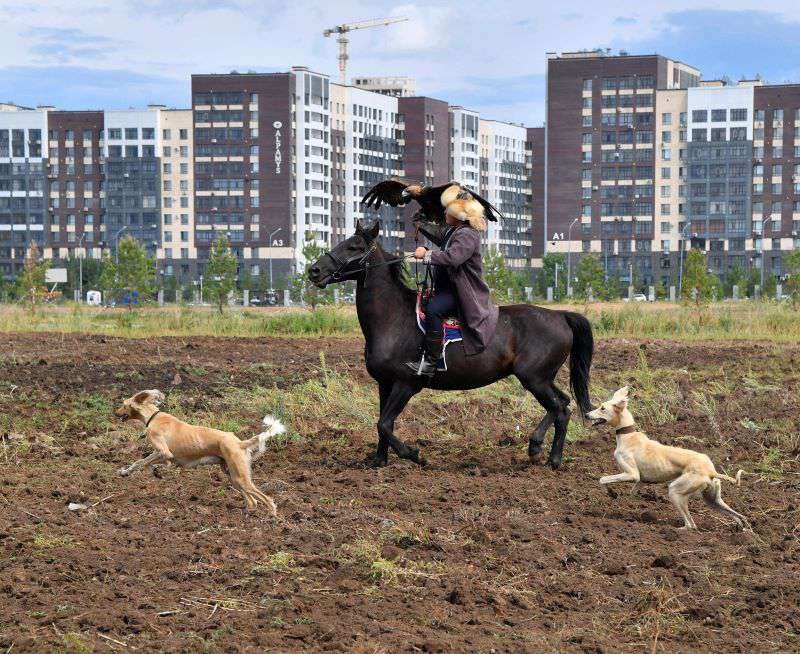 Photo by Igor Burgandinov/Kazpravda
“A trend unknown to earlier generations is now emerging in Kazakhstan - using Tazys for racing and spectacle,” he says.
Coursing events, where dogs chase mechanical or live lures, attract audiences and sponsors. In Europe, they became a major industry. But that same commercialization led to serious ethical problems.
“Dogs began to be treated as sports equipment,” Dosyman explains. “As long as a puppy performs well, it receives care and investment. Once it is injured or slows down, it is discarded.”
This has led to hundreds of former “athletes” being abandoned and later supported by animal welfare organizations rather than their owners.
The Invisible Threat - Loss of Instinct
There is another, less obvious danger. Unlike real hunting, coursing offers no completion.
 Akorda
“For a true hunting dog, the most important thing is to catch the prey and finish the hunt,” Dosyman explains. “Without that, the dog performs a sequence of unfulfilled actions.”
If Tazys are raised exclusively for this format, he warns, within 10 to 20 years entire bloodlines could lose their hunting instinct.
“Outwardly, they may still run fast. But the inner hunting program disappears,” he says.
This is why several countries have already restricted or banned such practices.
A Choice That Still Exists
According to Dosyman, Kazakhstan still has time to choose a different path.
“As we develop sport, we must also talk about rules, owner responsibility, veterinary oversight, and what happens to a dog after its career ends,” he says. “We need not only regulations, but a culture of respect for the Tazy.”
The future of the Tazy is not just a matter of dog breeding. It is a test of whether Kazakhstan can preserve a living tradition, rather than turning it into a polished but hollow symbol.
For now, the ancient sighthound of the steppe still runs - not in circles around an arena, but along a path laid down over centuries. Where that path leads will be decided today.