

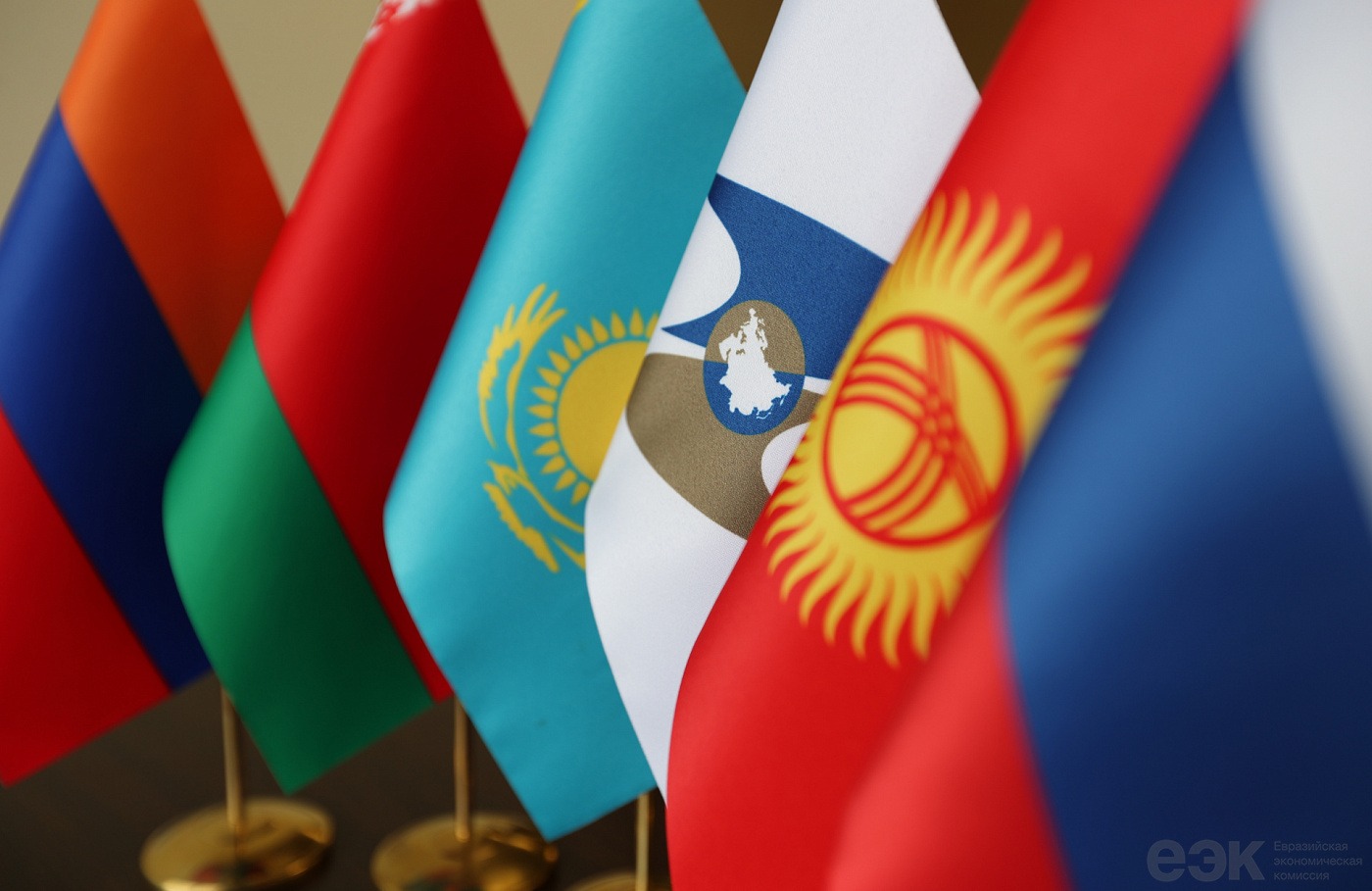
Over the past year, the Eurasian Economic Union has seen many important developments, achieved new milestones, and implemented key initiatives. A major share of this work has been carried out by the Economic and Financial Policy Unit of the Eurasian Economic Commission (EEC).
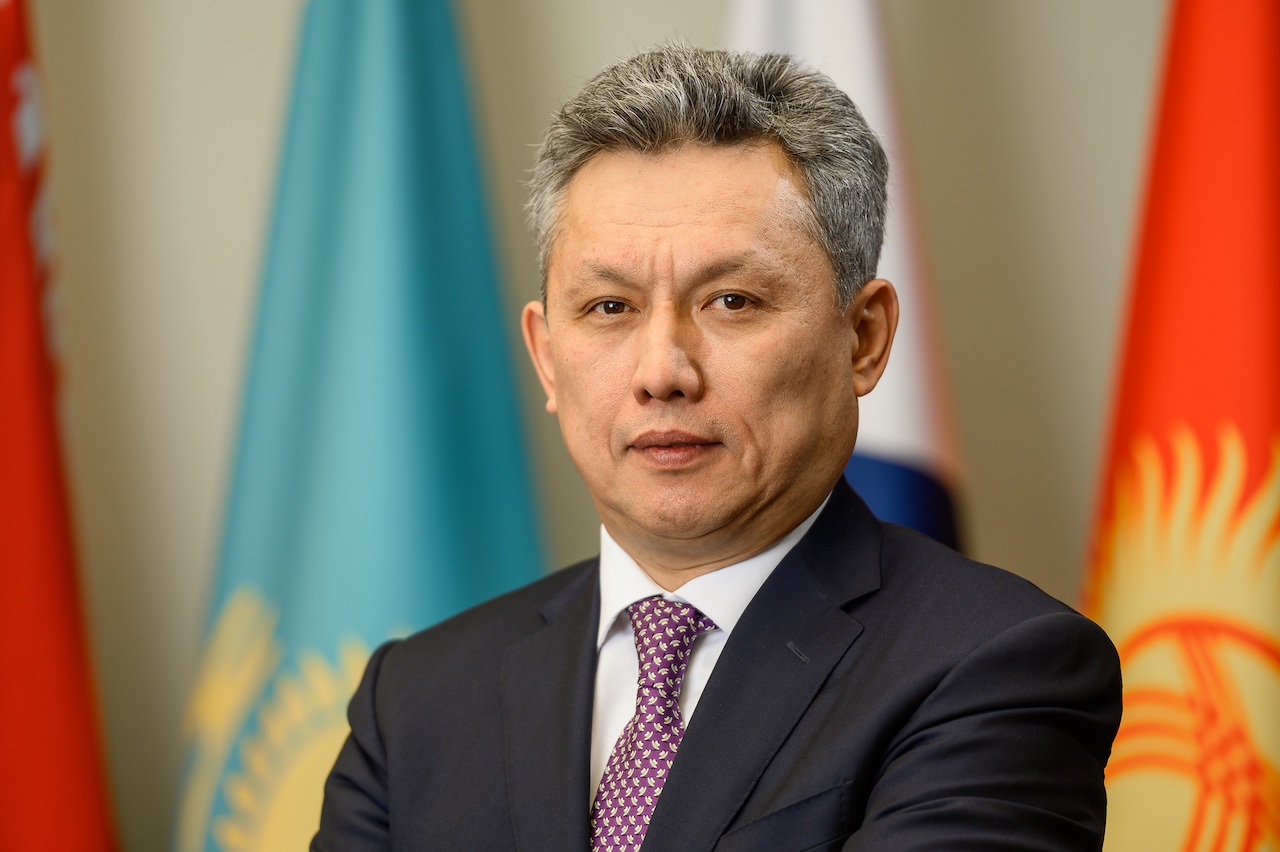
In this exclusive interview with DKNews.kz, the head of the EEC’s Economic and Financial Policy Unit, Bakhyt Turlykhanuly Sultanov, talks about the results achieved and the priorities for 2026.
– Mr. Sultanov, you oversee one of the most important areas of work within the Eurasian “five”. Businesses rely heavily on your unit. What real opportunities are now opening up for entrepreneurs in terms of capital and investment within the EAEU?
— The outgoing year has set a positive, practical dynamic. Real opportunities for businesses and investors are opening up in three key directions.
First — access to placement on organized securities markets in the member states. This became possible thanks to the Agreement on Cross-Border Admission of Securities, which is designed to ensure mutual admission of top-tier listed securities and to enable issuance and trading operations with them. The agreement creates conditions for increasing the liquidity of exchange markets.
In the near future, a company from any EAEU country will be able to place its reliable securities — shares or bonds — and attract financing not only in its own country, but also from investors across the Union.
Second — access for investors to organized exchange trading in the member states.
We are now finalizing the domestic procedures needed to sign the Agreement on the Admission of Brokers and Dealers. This will allow licensed professionals — for example, a company licensed in Armenia — to enter exchange trading in Kazakhstan or Russia on equal terms.
This means their clients — investors — will gain direct and efficient access to all exchange products across the Eurasian space, while administrative barriers to the free movement of financial services will be removed.
Third — trust and clear rules. All these agreements are based on major work to harmonize financial market legislation across member states. The EEC Board adopted recommendations in two key areas:
- harmonizing core concepts and definitions used in securities market regulation, and
- setting requirements for brokers.
In parallel, recommendations were approved to harmonize the legislation governing access of insurance organizations to the Union’s common financial market. A draft Agreement on a standardized license for banks and insurers has also been developed. It aims to ensure mutual recognition of such standardized licenses in both the banking and insurance sectors.
This will allow a financial organization licensed in its home country to open subsidiaries in other EAEU states under a simplified procedure — providing a powerful stimulus for the expansion of high-quality financial services.
– Today it is impossible to discuss finance without talking about digital assets. What work is the EEC doing in this field?
— When it comes to digital assets, the EEC believes in exchanging experience and developing common regulatory approaches — at the level of national financial regulators — with the active participation of the Commission and with respect for each jurisdiction’s specifics.
Taking into account risks linked to anonymity and cybersecurity, a Working Group on Virtual Assets was created this autumn on the initiative of the EEC’s Advisory Committee on Financial Markets. It includes regulators from all member countries, as well as experts from innovation hubs such as the Astana International Financial Centre and Belarus’s High-Tech Park.
Our task is to understand which models already work, study global experience, and determine which “rules of the road” may be needed in the future — not only to stimulate innovation, but also to protect citizens and businesses.
– Businesses are also waiting for digitalization of administrative procedures. Are there real changes happening here?
— Absolutely — and at a fast pace. The pilot project on the goods traceability mechanism has been successfully completed. Starting September 2026, it will operate on a permanent basis.
The mechanism provides for a digital chain of documentation — from import into the EAEU customs territory to the final sale in the importing state. It will help eliminate tax and duty evasion schemes, protect markets from “gray” imports, and ensure the legality of trade.
There are also changes in e-commerce. One of the key issues here is taxation. We are currently coordinating a Protocol on the Procedure for Collecting Indirect Taxes in Cross-Border E-Commerce for individuals. One of the main goals is to ensure that tax is paid where the buyer is located, simplifying oversight and eliminating double taxation.
The protocol also assigns responsibility for calculating and paying VAT to the operator of the e-commerce platform through which goods are sold. This will significantly simplify administration, centralize obligations, and improve control. Altogether, these initiatives help create more transparent, unified, and efficient conditions for doing business within the EAEU — stimulating growth, new sectors, and investment.
– Intellectual property protection — especially in the digital environment — remains one of the toughest challenges for innovative businesses. What is the Commission doing in this area?
— Counterfeit control is systemic. Last year alone, nearly 1,500 violations were detected in member states, and about 6.6 million counterfeit items were seized — 15% more than in 2023.
Over the past decade, more than 80,000 violations have been identified, and around 140 million counterfeit goods have been removed from circulation.
Our work is advancing along several tracks.
First, we are nearing the final stage of preparing an Agreement on Combating Intellectual Property Infringements on the Internet. It will synchronize approaches to enforcement.
Second, we are simplifying access to information: soon, a free online service will be launched to search data on trademarks and geographical indications — saving businesses time and money.
Third, we are completing the launch of a unified customs register of intellectual property objects — ensuring protection along the entire perimeter of the EAEU.
To exchange best practices, the Commission also holds the annual “Anti-Counterfeit” international forum and seminars with WIPO and ASEAN. Right holders in the EAEU must feel supported.
– EAEU governments promise to reduce pressure and regulatory burdens on business. How does this work in practice? Does the EEC actually listen to business?
— Definitely. We consider it our obligation to assess how new rules will affect entrepreneurs. We do this through Regulatory Impact Assessment — a mandatory “filter” for all initiatives.
This year, the EEC prepared 58 opinions — each one analyzing business costs and proposals. We also launched assessment of the actual impact of adopted decisions to see their real consequences. Kazakhstan’s proposal to extend this procedure to international treaties within the EAEU is under consideration.
As you can see, this is not “bureaucracy for its own sake.” Each conclusion is based on hundreds of business responses. The result speaks for itself: more than 60% of business proposals are reflected in final EEC decisions.
Dialogue is becoming systemic: business appeals grew by 27% this year, and a “single window” for working with entrepreneurs operates within the Commission’s Economic and Financial Policy Unit, which closely cooperates with the EAEU Business Council.
– How is work progressing on forming a single services market?
— The development of a single services market is embedded in the EAEU Strategy through 2030 and 2045. Today, it already covers more than 140 sectors — from construction and trade to agriculture and tourism.
Across the Union, services account for over 63% of aggregate GDP. In Kazakhstan, the share reached 58% in 2024 — roughly USD 169 billion.
Work is based on roadmaps approved by the presidents of member states. The common market already includes construction, engineering, trade, and tourism. The list will expand — consulting, veterinary services, and other areas are now under review.
A key tool is administrative cooperation agreements. They allow regulators to interact directly to prevent violations and protect consumers. Several agreements are ready for signing in areas such as property valuation, film production, and scientific research. Priority areas include innovation, tourism, and sustainable market mechanisms.
According to experts, tourism in the EAEU is growing, contributing about 3% to the economy — leaving significant room for expansion compared to the global average of around 10%. Kazakhstan, for example, is actively improving service quality and attracting investment into tourism.
Joint projects are being implemented across the Union — including a special tourism section on the EAEU portal with routes, attractions, and events. This will help travelers plan cross-border trips more easily. Another important step is the recently adopted Concept for Tourism Development within the EAEU, designed to give the sector fresh momentum — generating growth, jobs, and entrepreneurship.
– The EAEU is also integrating labor resources. What mechanisms exist to protect the rights of migrant workers? How are issues of healthcare and social guarantees addressed?
— This is one of the most sensitive aspects of integration. When a person crosses a border for work, they must feel their social rights are protected. We are building equal conditions for EAEU workers and local employees in the receiving country.
Regarding pensions — the Agreement on Pension Provision is in force, but practical application sometimes creates difficulties. To resolve them, a request has been sent to the EAEU Court for guidance on correct interpretation — so that people who worked in several countries do not lose their rights.
On healthcare, we cooperate with the World Health Organization. We recently prepared an analytical report on migrants’ access to medical services, analyzing international practice, identifying bureaucratic barriers, and exploring tools such as telemedicine. All this helps determine future policy directions.
– Much has been said about “brain drain,” with talented specialists leaving for other countries. How does the EAEU help attract and retain qualified professionals?
— Our goal is to build a single market for skilled labor across the EAEU — so specialists feel working anywhere in the Union is advantageous and safe.
We are aligning qualification requirements and have implemented an agreement on mutual recognition of diplomas and educational documents, which speeds up employment and reduces bureaucracy.
We’ve also launched the “Work Without Borders” platform, where people can search vacancies, submit documents, and receive consultations online — reducing time and costs.
Tax barriers are being removed. For example, Russia lowered tax rates for non-residents, making relocation more attractive — and therefore helping draw specialists.
– Where can workers learn about their rights? Are there information resources?
— We have prepared and translated into all EAEU languages an informational booklet titled “Employment and Social Security of EAEU Citizens in the Russian Federation.” We tried to explain — in simple language — the rules on residence, employment, taxation, pensions, and social benefits.
The brochure is available on the EEC website, and we plan to expand it further. In addition, government services portals operate in every member country, providing migration information, consultations, and document processing.
– Can we say that a common social and labor space is being created within the EAEU?
— Yes, absolutely. Everything we do — developing pension systems, improving access to healthcare, recognizing diplomas, building employment platforms, and removing tax barriers — forms the foundation of a shared space where labor mobility becomes a resource, not a problem.
We want specialists moving to another EAEU country to feel not like outsiders, but like full participants in a common economic area — with clear rights and opportunities.