
The final quarter of the year turned out to be especially eventful in the career of Dimash Kudaibergen, People’s Artist of Kazakhstan and Kyrgyzstan. It brought milestones that were unprecedented in the history of his homeland and the CIS — something we share in this exclusive article by DK Media Europe.
The list of historic events opened with Dimash Kudaibergen’s triumphant concert at one of the world’s most iconic venues – Madison Square Garden (MSG) in New York. Until Dimash, no artist from Kazakhstan or the CIS had ever achieved anything comparable. To slightly paraphrase a well-known saying, luck never comes alone to those who truly earn it with talent and hard work. And after New York came another sensation — Dimash’s new track “Fire,” written together with Ukrainian-American composer and arranger Dmytro Gordon, was included in the Grammy project “Global Spin.”
Among other major milestones were two historic concerts in Mexico, both held at large venues that sold out within minutes — an event that effectively opened a new chapter of cultural exchange between two friendly countries: Mexico and Kazakhstan.
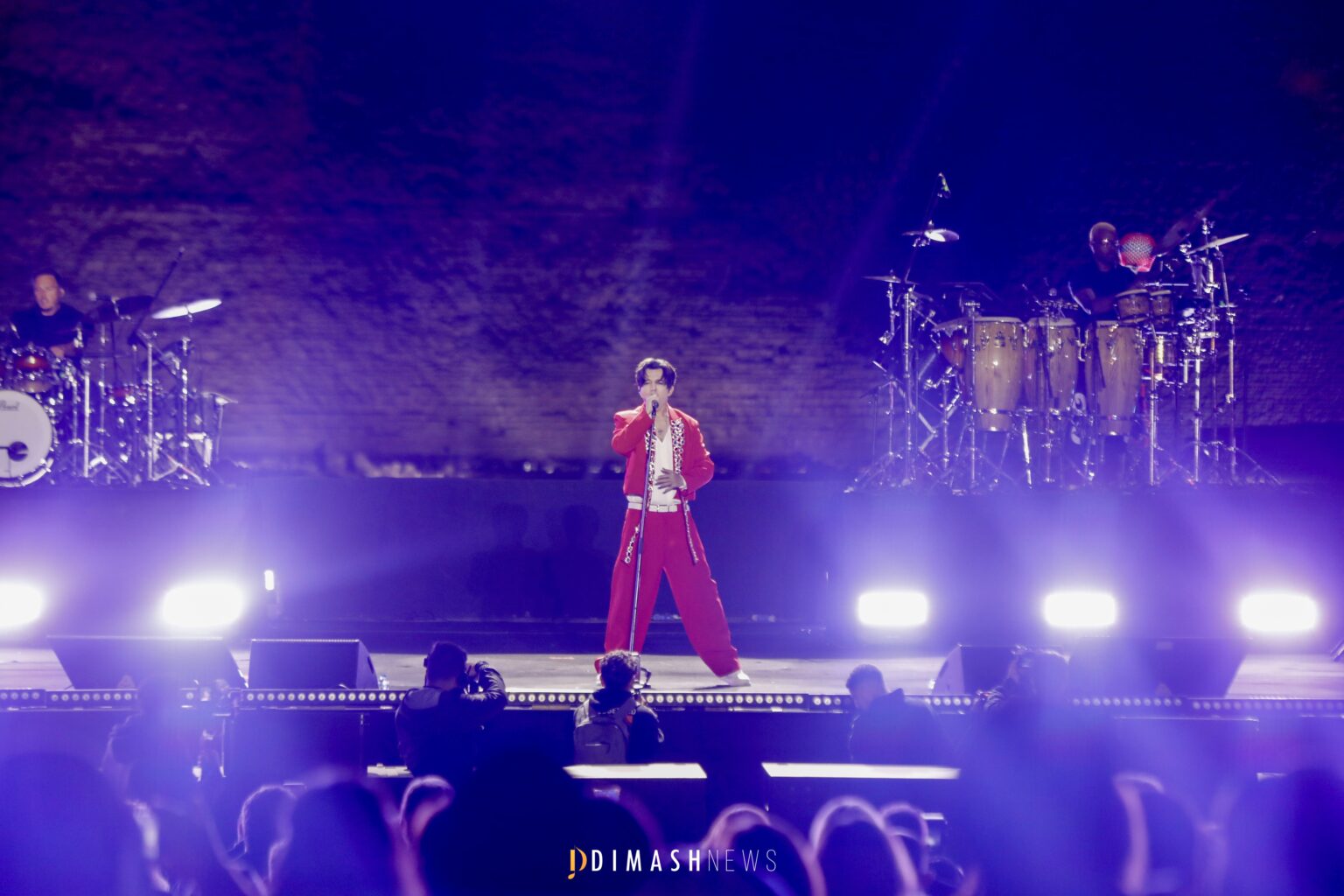
But the vocalist did not stop there. The crowning moment — a true milestone on the musical Olympus — was the first-ever solo concert in the history of Kazakhstan and the CIS to be held as part of the “Echo of the Pyramids” festival in Cairo, the capital of Egypt. The uniqueness of this event was felt from the location alone — right in the middle of the Giza Plateau, against the backdrop of one of the Seven Wonders of the World, the ancient Egyptian pyramids, under the watchful gaze of the Great Sphinx. It is hard to imagine a more magical setting for Dimash’s extraordinary voice. And since he had never performed in Egypt before, the artist added yet another continent to his creative journey — Africa.
“For me, it is a great honor and joy to represent my homeland on a new continent,” Dimash said ahead of the concert. The DK Media Europe editorial team invites readers to sense the sacred atmosphere of this place and feel the uniqueness of the event through conversations we held during the festival with representatives of the Egyptian organizing committee.

To the Depths of the Soul
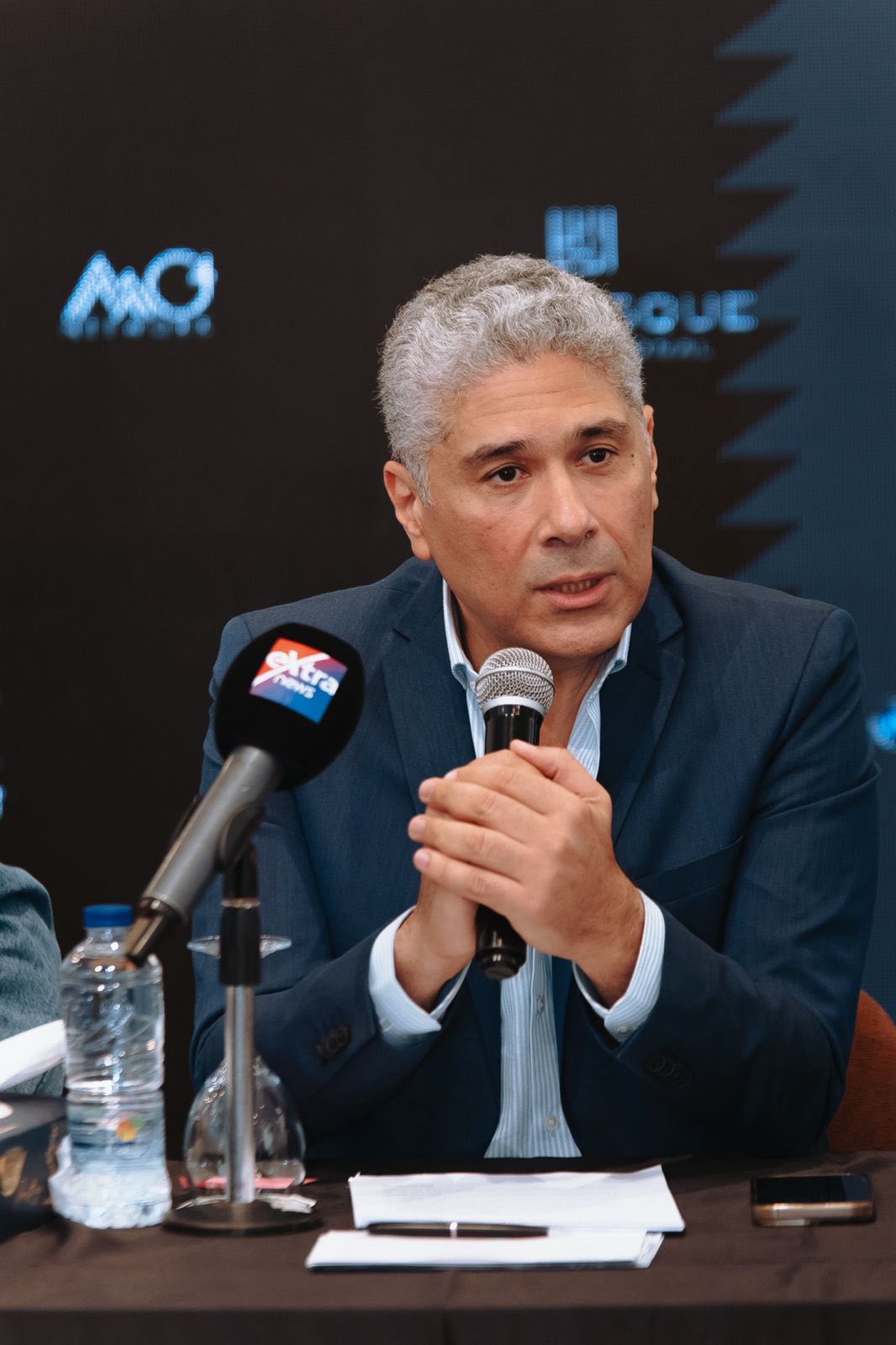
At the October press conference, the artistic director and president of the debut classical music festival “Echo of the Pyramids,” Dr. Ahmed Abuzahra, explained that the idea was born about a year earlier:
“We were thinking about how to properly honor this art form and elevate the artistic taste of the Egyptian audience.”
As a pianist and founder, Mr. Abuzahra emphasized that the festival is more than just a cultural event. Held under the motto, “The Cradle of Civilizations… A Bridge Between Arts and Cultures,” and located in such a historic place, it reaffirms Egypt’s role as a true bridge between cultures. He added that six world-class concerts were planned at the foot of the pyramids. Among them: world-famous pianist Lang Lang, who opened the festival, and well-known Kazakh singer Dimash Kudaibergen, who closed it with a two-hour solo concert.
This honor was no coincidence. Dr. Abuzahra explained his choice:
“Dimash has a very special talent, one you don’t come across often. I heard him several times and liked him very much. I thought we absolutely needed to present him to the Egyptian audience.”
From Pianist to Top Manager
Mr. Abuzahra’s biography is so remarkable that it’s worth pausing on for a moment:
“Born in Egypt, he graduated from the Cairo Conservatory and went on to complete postgraduate studies in piano in Germany, where he has now lived for 20 years. Eager for musical development, he graduated with five different diplomas, including the first-ever diploma awarded in piano duo performance by a German University of Music. He also studied composition and chamber music and attended conducting courses.
Mr. Abuzahra has performed with many world-renowned orchestras, including the Vienna Symphony Orchestra, the Royal Philharmonic Orchestra in London, as well as other orchestras across Europe, Asia, America and Latin America. In 1997, he received more than ten awards at international piano duo competitions. Throughout his career as a professional pianist, his growing ambition to encourage dialogue between Arab and Western cultures led him into artistic management. Cultural promotion through performance became his main activity, eventually leading to the founding of East West Art Promotion in Germany in 2000, in Egypt in 2004, and Arabesque International in Oman in 2012.”
It was within this last organization that the “Echo of the Pyramids” festival was created.
Kazakh Connections
When we learned that throughout his career as a pianist and art manager, Ahmed Abuzahra had “built a strong network of connections among leading artists and cultural institutions in Europe, the United States, South America, China and the Middle East — working with internationally renowned orchestras, ballets and operas and presenting them to audiences in the Arab world,” his choice of festival participants no longer surprised us.
And given that “Mr. Abuzahra mastered different approaches to music and art through interaction with various nationalities and mindsets,” it seemed natural that he would deeply appreciate Kazakh folk instruments, which Dimash always includes in his program — and which never fail to delight audiences. As it turned out, Mr. Abuzahra had already helped introduce Kazakh musicians to the world more than once:
“I organized productions with Kazakh musicians and folk ensembles. I also invited the Astana Philharmonic Orchestra to Oman. So I’ve been to Kazakhstan quite often.”
The participation of Dimash — a singer with an exceptional vocal range — guaranteed an impressive finale for the festival, bringing together classical, operatic, pop and traditional music in a unique blend.
That evening, Dimash’s voice, soaring above the legendary pyramids, touched listeners to the core. For Egyptians, this place is sacred, a true national treasure. Obtaining permission to build a stage and hold daily concerts for a week was no easy task.
“This is a place that attracts artists and people from all over the world. Getting the venue was very difficult.” But the effort was worth it, Dr. Abuzahra confirmed.
Musical Resonance
The festival’s artistic director, Dr. Khaled Dager, emphasized during the press conference:
“The idea of this festival has always been a dream for every Egyptian musician — to hold a music festival in Egypt that would speak to the whole world. Staging it in front of the pyramids will undoubtedly attract global attention. In this first edition, we wanted to focus on musical compositions, as they are the foundation before singing. In the future, we aim to bring even more international names, while preserving the highest artistic standards.”
 www.facebook.com/aabouzahra1
Former Minister of Tourism and Antiquities Dr. Zahi Hawass added that the festival fosters dialogue between East and West against the eternal backdrop of the pyramids:
“Anyone seeking worldwide fame should turn to the pyramids — a symbol of human achievement that continues to astonish the world. Music now resonates in the same place where the workers who built the pyramids once sang.”
Music resonated throughout the entire evening. The audience reacted with excitement to every shift in style and rhythm in the Kazakh artist’s program — whether fiery tracks like “Fire,” “When I’ve Got You,” “Smoke,” “Tau ishinde,” and “Durda-raz,” or energetic pieces such as “Weekend,” “Be With Me,” and “Give Me Your Love,” which could have probably made not only the audience — but even the ancient rulers themselves — want to dance.
They savored lyrical Kazakh melodies like “Umytylmas kun” and “Mahabbat ber magan,” lighting the venue with waves of smartphone lights. During the Italian cantata “Olympico,” the hall seemed to hold its breath — and then erupted with admiration when the dombyra and kobyz were featured in “Stranger” and the traditional kyui “Aday.” The iconic “SOS d’un terrien en détresse” from the French rock opera Starmania, along with Igor Krutoy’s “Lyubov ustavshikh lebedey,” left no one indifferent. And “Ave Maria,” performed in the language of the artist’s soul, ended with a cosmic vocalise that drew a collective sigh from the hall.
Посмотреть эту публикацию в Instagram
A Voice Beyond Borders
“Dimash lit up the Pyramid Panorama with his legendary voice, soaring beyond imagination over a stage engraved in the heart of history,” wrote one Egyptian social media page.
Reviewer Huda Al-Masri shared the same view:
“Owner of a ‘golden throat’ and a unique vocal articulation that blends male and female registers. Dimash performed brilliantly against the backdrop of the pyramids, proving that his voice is a global phenomenon in every sense. The closing ceremony became a convergence of art, diplomacy and culture, demonstrating how soft power can deliver powerful messages regionally and internationally.”
For Dimash, his current popularity is an opportunity to build cultural bridges:
“Our country, like Egypt, has an ancient history, yet moves forward with the modern world. So yes — I feel a special bond between our nations, between our peoples. I believe the present cannot exist without the past.”
To attend a concert beneath the open sky, listening to the live vocals of one of the world’s greatest voices, while the majestic pyramids rise above you — it was an opportunity many fans refused to miss. They came from Europe, Asia, America and Australia. In this way, Dimash’s concert united all five continents.
“I’m very happy to be here now and to share the culture of my country at this incredible festival,” the vocalist said. “Just come to one of my concerts anywhere in the world — in Kazakhstan, Europe or America — and you’ll see people from different countries sitting together, singing in different languages. Chinese fans sing in Russian, Spanish fans sing in French — and everyone sings in Kazakh. My amazing Dear family is the best proof that music connects hearts without words.”
A Source of Energy
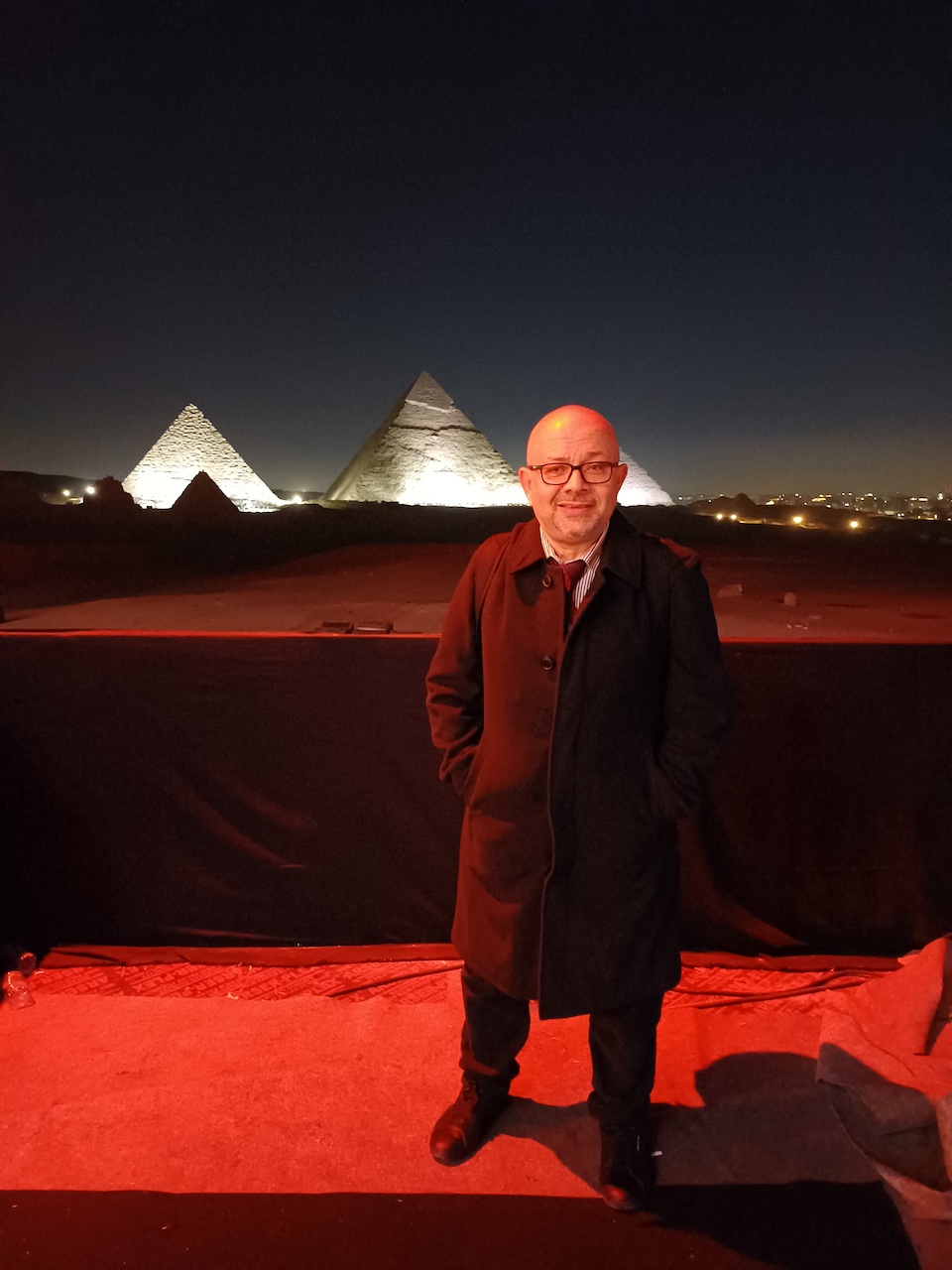
We discussed the phenomenal nature of Dimash’s voice and the significance of his participation in the first “Echo of the Pyramids” festival with music critic and journalist Mohamed Saleh.
“His abilities are, for me, historic,” he said. “His six-octave range is absolutely phenomenal — that’s his calling card. Tens of thousands come to his concerts from all over the world just to hear that unique timbre and range.”
Together we reflected on the phenomenon of the Kazakh vocalist:
“Intonation is the mother of information. The way Dimash phrases — that’s his signature. Once I attended a master class by Rostropovich, and he said that it is through intonation that we transmit the energy we want to share. Dimash leans on his intonation and timbre — and that’s how he gives energy to the audience. He’s charismatic, and every time he walks on stage, it is an event. Each performance is different. Depending on the place, the audience and his emotional state, he creates a new charge of energy and sends it into the hall. Yes, maybe octaves are not the most important thing — but they matter. Beyond range, what truly matters is the intonation and energy he shares.”
Посмотреть эту публикацию в Instagram
After attending such an extraordinary concert on the Giza Plateau, we couldn’t help but ask ourselves: what is the Dimash phenomenon? Even performing for the first time in a country, he immediately captivates the audience — from the first second to the very end. Mohamed continued:
“Dimash never has two identical concerts. At each one, he gives pieces of his soul. He is a generator of emotions — and these emotions never run out. He is always evolving, always moving forward. Each concert is a new step. Each new location gives him new energy. I am absolutely sure that after performing at the pyramids, Dimash is no longer the same as before. The place matters to him — just as much as the audience.”
A few weeks later, at a meeting with medical university students in Almaty, the artist himself seemed to confirm this:
“Every concert is unique. Even if the program and songs are the same — the audience is different. We change countries, cities, and the level of enthusiasm changes. I want to say thank you a thousand times to listeners all over the world. Whether it’s the concert near the pyramids or my solo shows elsewhere — every step I take, every concert — you support me with such love and warmth, inspiring me from the bottom of my heart. You are my beloved listeners. And I will always strive to show you my very best art.”
Art Unites
Dimash’s beautiful art touches hearts. But was this the only reason festival organizers became so interested in the Kazakh singer? Mohamed reflected:
“His name is Dinmukhamed, and the majority of our people are Muslims. Knowing that Dimash is Muslim warms our hearts. And we also had Sultan Baybars — who ruled here in the 13th century — and he came from Kazakhstan too. So we had a wonderful combination of history, culture, art and spiritual affinity, all aligned with the message of this festival.”
Dimash and his multinational Dear family have long become a symbol of a community worth striving for — a space where age, nationality, country or religion do not divide. The critic agrees:
“Everyone loves this artist and his work. Music unites. Art unites. I believe that art may even help save and preserve peace. If politics separates people — art brings them together. Because art is one universal language that everyone understands.”
This extraordinary “eighth wonder of the world” named Dimash took place against the backdrop of one of the original Seven Wonders, immersing the audience in a living magic, unfolding here and now. We are certain that everyone who attended that evening at the Pyramid Theatre will remember the concert of the People’s Artist of Kazakhstan and Kyrgyzstan for a long time — carrying home unforgettable memories of an outstanding Kazakh performer.