

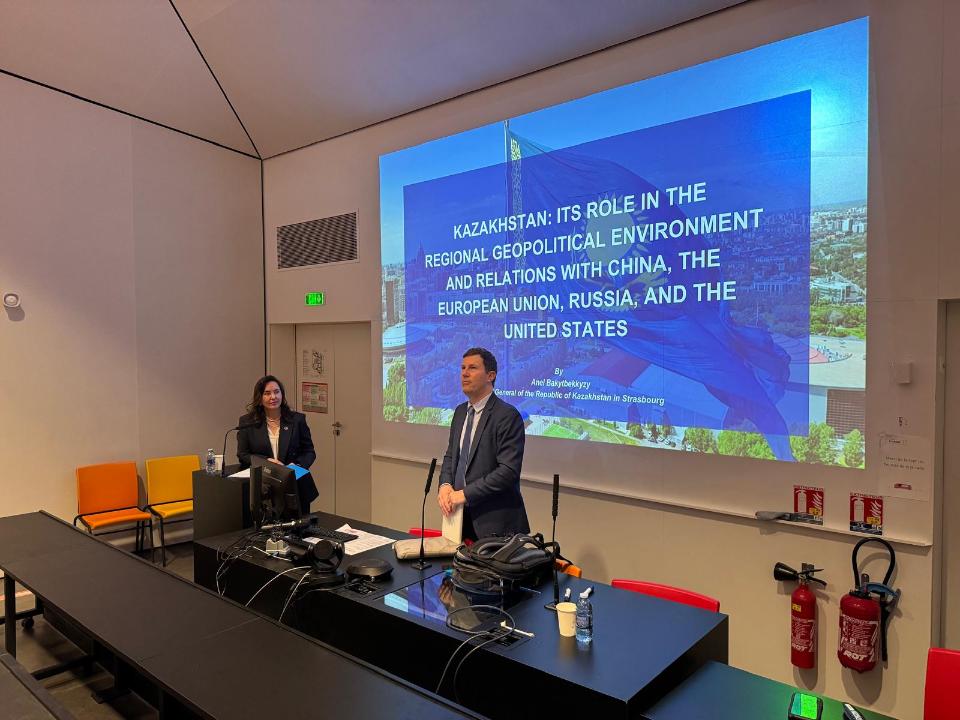
The Consul General of Kazakhstan, Anel Bakytbekkyzy, delivered a lecture to master’s degree students of the Institute of Political Studies at the University of Strasbourg (Sciences Po), offering an in-depth overview of Kazakhstan’s foreign policy, international initiatives, and domestic reforms under the leadership of President Kassym-Jomart Tokayev, DKNews.kz reports.
The audience consisted of future public servants and international professionals specializing in law, economics, history, political theory, and sociology.
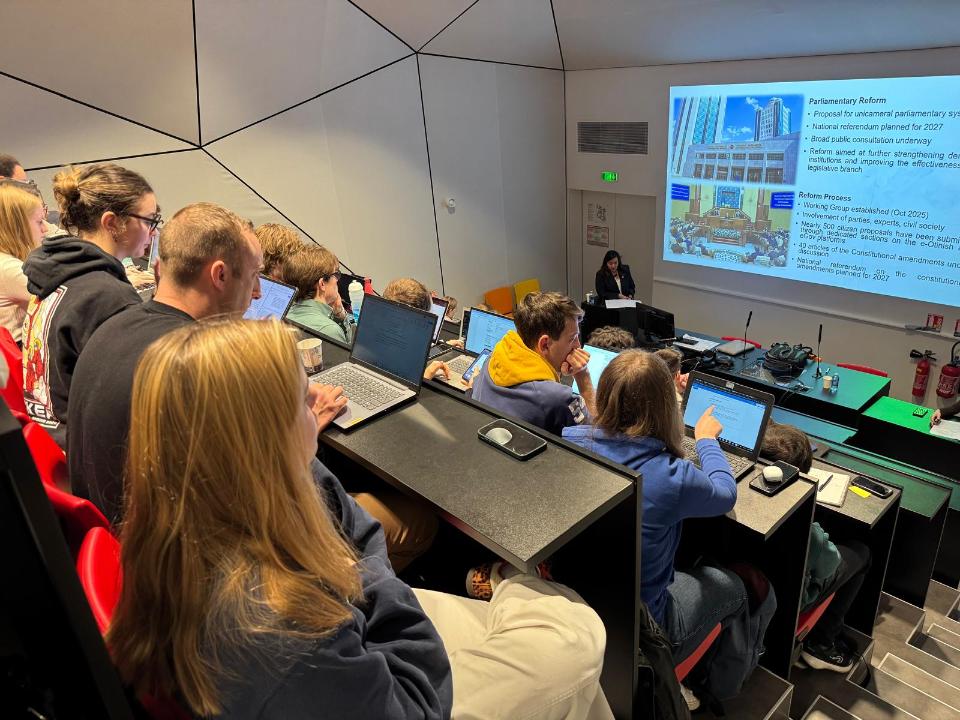
Kazakhstan’s Place in Global and Regional Politics
During the lecture, students were introduced to a comprehensive analysis of Kazakhstan’s current position in regional and global affairs. Anel Bakytbekkyzy explained the logic behind the political reforms and the new economic course outlined by President Tokayev, highlighting how these changes are reshaping the country’s governance model and international standing.
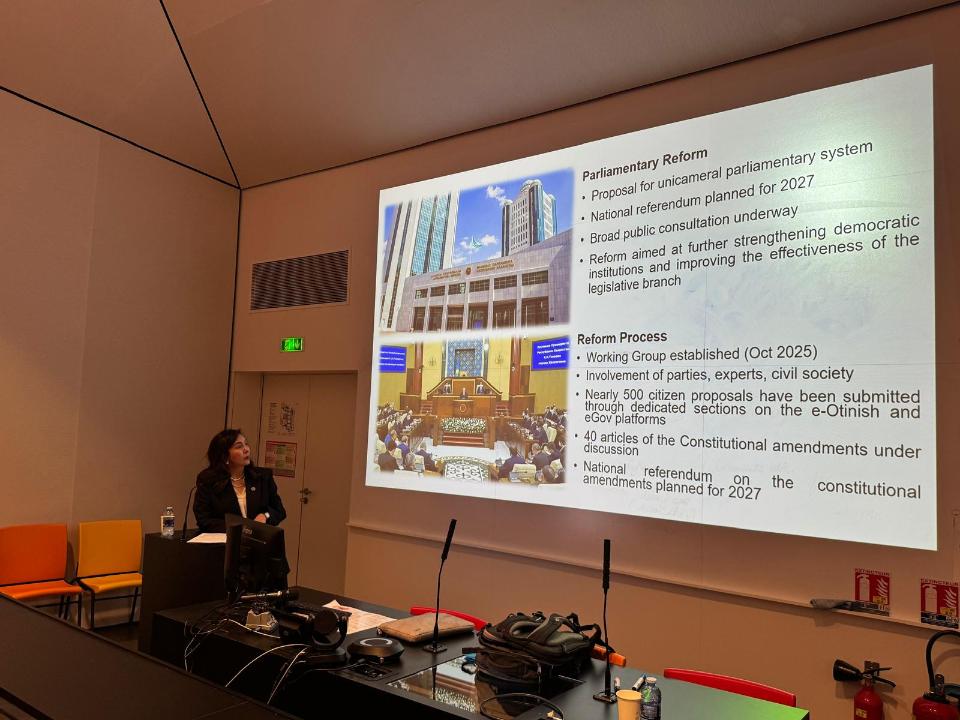
Special attention was given to institutional reforms, the modernization of the public administration system, and the planned parliamentary reform aimed at transitioning to a unicameral Parliament. It was emphasized that these changes are being implemented through broad public dialogue and will be decided via an upcoming referendum.
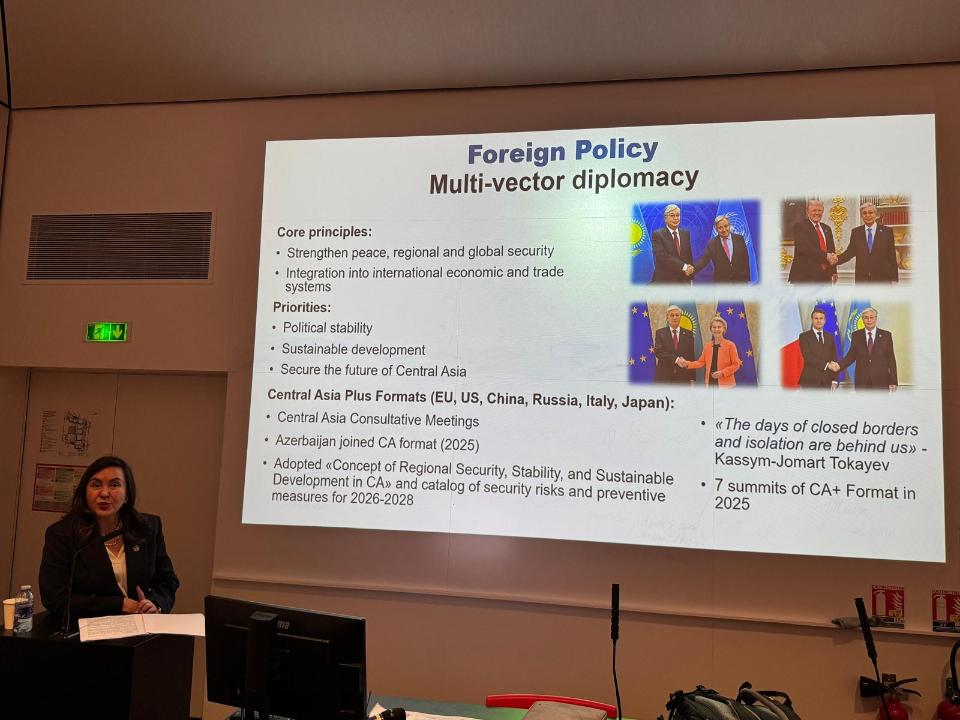
Multivector Diplomacy and the Role of a “Middle Power”
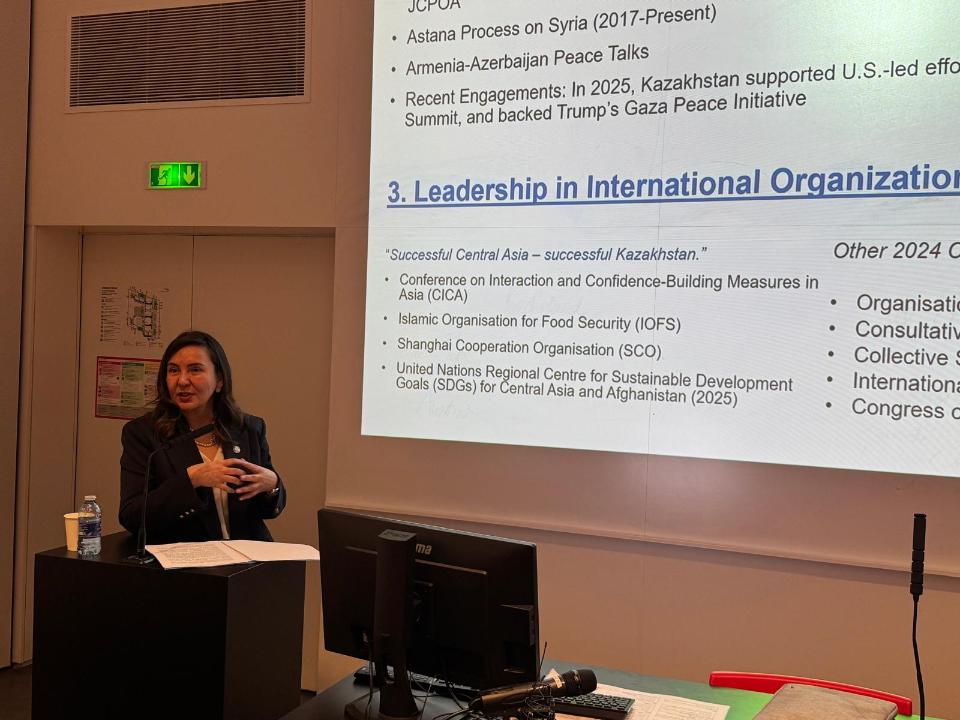
A key part of the lecture focused on Kazakhstan’s multivector foreign policy and its role as a responsible “Middle Power”. The Consul General highlighted the country’s contribution to international security, including:
- initiatives on nuclear disarmament and non-proliferation
- participation in UN peacekeeping missions
- mediation efforts in resolving international conflicts
- active engagement in international and regional organizations
Students were also briefed on Kazakhstan’s bilateral and multilateral cooperation with China, Russia, the United States, and the European Union, illustrating the balance at the core of the country’s foreign policy.
Economic Transformation and Digital Development
A separate section of the lecture was dedicated to Kazakhstan’s socio-economic development. Current data were presented on macroeconomic growth, economic diversification, the investment climate, and the development of digital technologies.
Particular emphasis was placed on Kazakhstan’s efforts to reduce dependence on raw material exports and to develop logistics, industry, agro-industrial complexes, and the green economy as part of its long-term development strategy.
Artificial Intelligence as a Strategic Priority
Anel Bakytbekkyzy also informed students about the key messages of the Head of State outlined in his January 5 interview with Turkistan newspaper, including the decision to declare 2026 as the “Year of Digitalization and Artificial Intelligence” in Kazakhstan.
The lecture detailed Kazakhstan’s strategic priorities in artificial intelligence, focusing on its role in economic growth, public administration, and technological modernization.
Kazakhstan, France, and the European Union
The lecture included a dedicated overview of Kazakhstan’s relations with France and the European Union. The strategic nature of the Kazakhstan-France partnership was underscored, along with the steady growth of political dialogue, trade, and investment cooperation.
Special attention was given to the importance of the Enhanced Partnership and Cooperation Agreement between Kazakhstan and the EU, as well as the outcomes of the first EU–Central Asia Summit, which marked a new stage in regional cooperation.
Kazakhstan at 35 Years of Independence
In the context of the 35th anniversary of Kazakhstan’s Independence, the Consul General also presented the country’s national profile. Students were introduced to Kazakhstan’s geographical location, administrative-territorial structure, demographic features, ethno-religious diversity, and principles of social tolerance.
It was emphasized that Kazakhstan, as the largest landlocked country in the world, plays an increasingly important role in ensuring Eurasian transport, energy, and digital connectivity.
Strong Interest and Open Dialogue
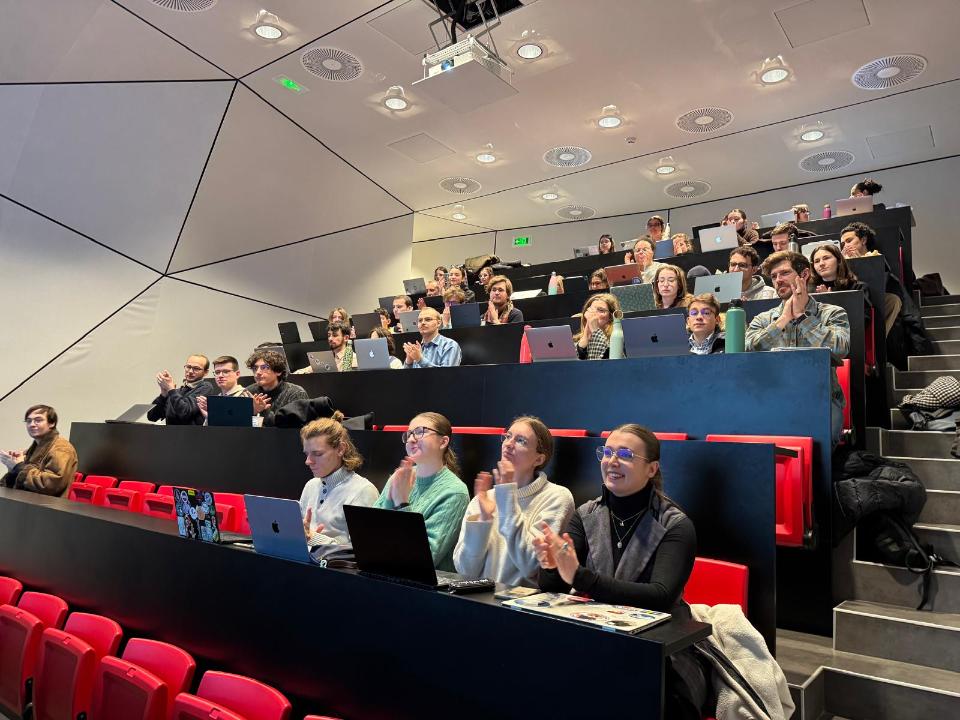
The lecture generated strong interest among the audience and concluded with an active question-and-answer session, during which students asked about Kazakhstan’s reforms, foreign policy priorities, and future development trajectory.
Sciences Po is the oldest institute of political studies in France. Its alumni include public officials, politicians, diplomats, military officers, and bankers. The institute actively develops partnerships with major French civil service schools and government institutions, including the Bank of France and the Armed Forces Commissariat.