
The Regional Ecological Summit (RES) 2026 will be held on April 22–24, bringing together around 1,500 participants from across Central Asia and beyond. The forum will unite representatives of government bodies, international organizations, development institutions, experts, businesses, and civil society, according to the Ministry of Ecology and Natural Resources of Kazakhstan, DKNews.kz reports.
The summit is set to become one of the largest international environmental platforms in the region, focusing on joint responses to climate and environmental challenges.
Regional Solutions in Partnership with the United Nations
RES 2026 aims to develop regional solutions to climate and environmental issues in close partnership with the United Nations. The initiative reflects a growing recognition that challenges such as water scarcity, climate change, and ecosystem degradation require coordinated regional action rather than fragmented national approaches.
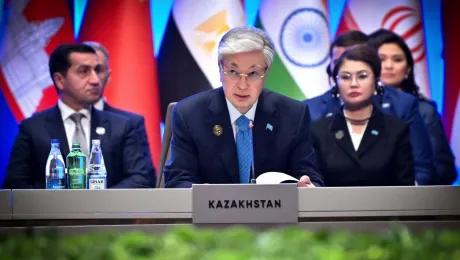
The idea of holding the summit was first announced by President Kassym-Jomart Tokayev during the 78th session of the UN General Assembly in 2023 and was reaffirmed at the 80th session in 2025, signaling Kazakhstan’s long-term commitment to environmental diplomacy.
Strong International and Political Support
RES 2026 is supported by a wide range of influential international partners, including the Organization for Economic Cooperation and Development (OECD), the International Renewable Energy Agency (IRENA), the International Energy Agency (IEA), as well as other global and regional institutions.
The United Nations formally endorsed the initiative through UN General Assembly Resolution 78/147, adopted on December 19, 2023, which emphasized the importance of strengthening regional solidarity to address Central Asia’s environmental challenges.
Political backing has also been reaffirmed at the highest level in several key multilateral documents, including:
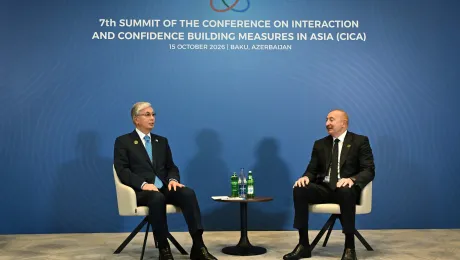
- the Karabakh Declaration of the informal summit of the Organization of Turkic States (July 2024);
- the Joint Statement of the Sixth Consultative Meeting of Central Asian Heads of State (August 2024);
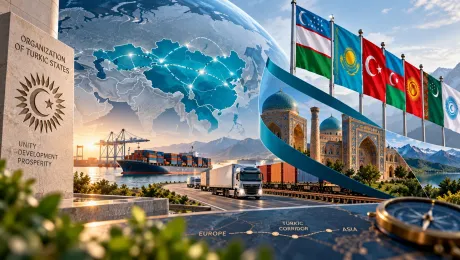
- the Bishkek Declaration of the 11th Summit of the Organization of Turkic States (November 2024).
Further recognition followed in 2025 at the Astana International Forum, during the opening of the UN Regional Center for the Sustainable Development Goals for Central Asia and Afghanistan, attended by UN Secretary-General António Guterres, as well as at the Third UN Conference on Landlocked Developing Countries.
From the Aral Sea to the Caspian: Key Environmental Challenges
One of the central goals of RES 2026 is to develop agreed, actionable mechanisms to address pressing regional environmental problems. These include the tragedy of the Aral Sea, now a global symbol of environmental degradation, and the ongoing decline of the Caspian Sea’s water level.
The summit seeks to move beyond declarations toward practical solutions that can be implemented at the regional level.
What RES 2026 Is Expected to Deliver
Among the expected outcomes of the summit are:
- the adoption of a Joint Declaration by the Heads of State of Central Asia on regional cooperation in ecology and sustainable development;
- approval of a Regional Program of Action with UN agencies for 2026–2030, outlining concrete steps toward a sustainable future for Central Asia;
- the launch of new environmental projects and initiatives aligned with the summit’s priority areas.
RES 2026 is also envisioned as a permanent platform for dialogue and cooperation among governments, international organizations, scientific institutions, and the private sector.
Eight Key Themes on the Agenda
The summit agenda will focus on eight interconnected thematic areas:
- Climate transition – reducing emissions, improving energy efficiency, and expanding renewable energy;
- Adaptation and economic resilience – protecting communities and ecosystems from climate and natural risks;
- Food security and ecosystems – promoting sustainable agriculture and integrated resource management;
- Sustainable natural resource management – including the protection of ecosystems and water resources such as the Aral and Caspian Seas;
- Air pollution and waste management – advancing circular economy approaches;
- Mechanisms to achieve environmental goals – green finance, technology transfer, and Paris Agreement market mechanisms;
- Just and inclusive transition – job creation, retraining, gender equality, and support for vulnerable groups;
- Ecological and digital competencies – environmental education, digital solutions, and the use of artificial intelligence in resource management.
The Road to RES 2026
Preparations for the summit were shaped through a series of regional and international consultations in 2025, held across Central Asia and Europe, as well as on major UN platforms such as COP30, the UN Environment Assembly (UNEA-7), and the UN General Assembly.
These discussions resulted in the approval of an updated summit concept, a draft joint declaration, and the launch of more than 20 regional initiatives.
Astana as a Regional Hub for Environmental Dialogue
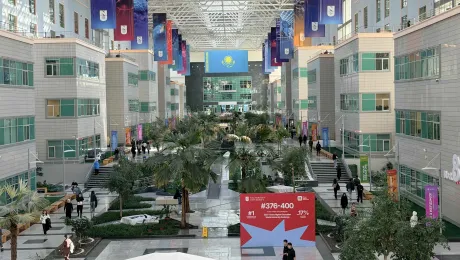
RES 2026 is expected to further strengthen Astana’s role as a regional hub for climate and environmental dialogue, positioning Kazakhstan as a key convenor in Central Asia’s sustainability agenda.
Additional information about the summit is available on the official RES 2026 website.