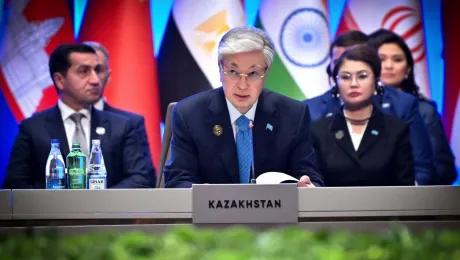

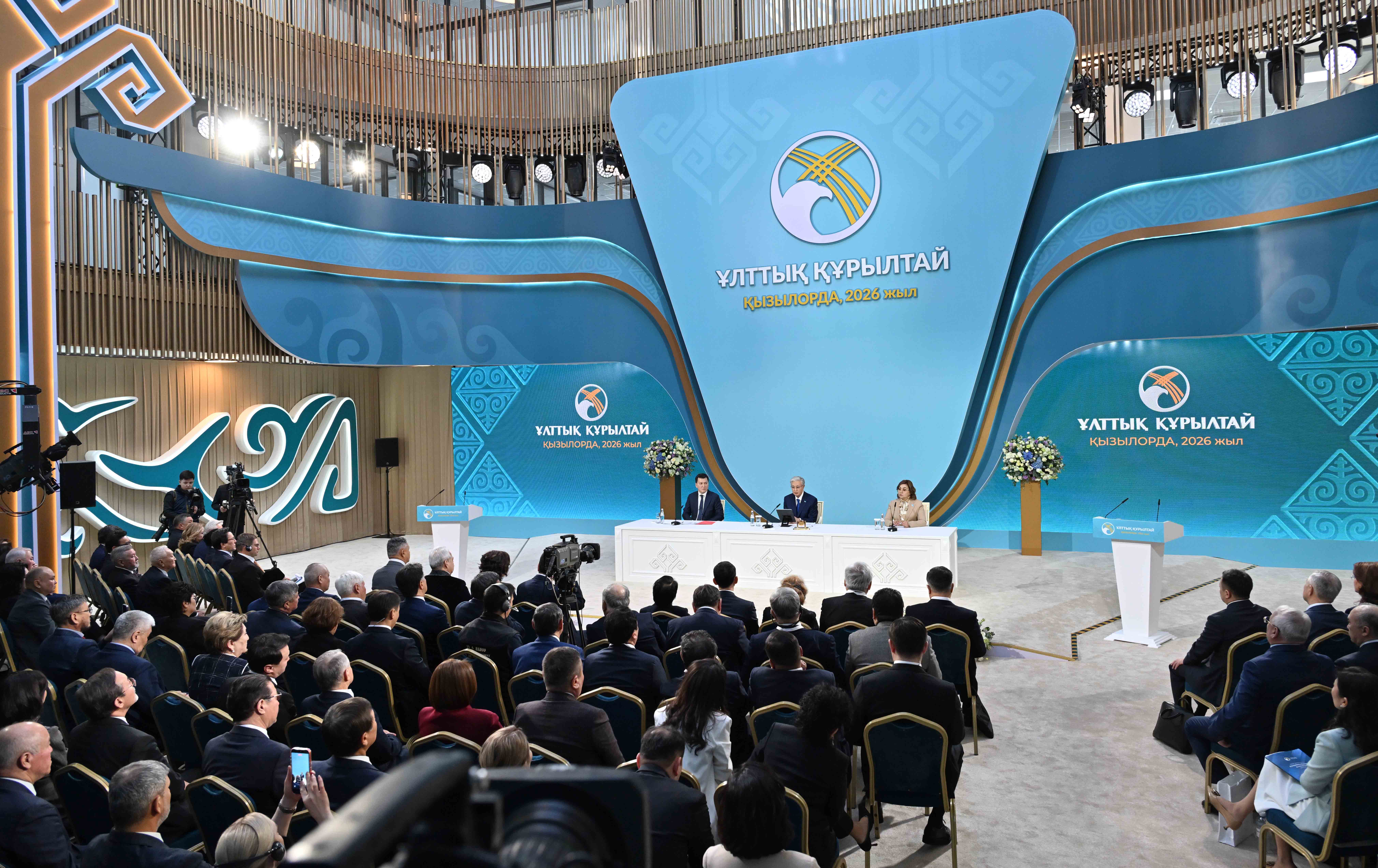
The speech delivered by the President of the Republic of Kazakhstan, Kassym-Jomart Tokayev, at the National Kurultai in 2026 marked an important shift in the understanding of the role of human capital in the country’s development. In the context of global transformations — digitalization, the rapid advancement of artificial intelligence, and structural changes in the economy — particular attention was given to youth as a key driver of future growth.
A special emphasis in the President’s address was placed on the development of culture, arts, and creative industries. The President highlighted the active involvement of young people in the creative sector, stressing that cinema, art, and new forms of cultural production are becoming essential tools for shaping national identity and promoting the country on the international stage. This reflects an important trend: creative industries are increasingly perceived not as auxiliary sectors, but as full-fledged branches of the economy that generate employment, create new professions, and possess export potential.
Within the framework of the priorities outlined by the President, particular importance is attached to understanding how young people themselves perceive work, employment, and economic independence. According to data from the Research Center “Youth,” clear changes can be observed in the value orientations and behavioral patterns of young people, indicating the emergence of new labor and life priorities.
Among the key trends in the youth environment are a strong aspiration for financial independence (56.1%) and an orientation toward remote or part-time employment (29.1%). These tendencies reflect a broader search for stability and meaning under conditions of social and economic transformation. As a result, young people are forming a new attitude toward work — not only as a source of income, but also as a means of autonomy, flexibility, and work–life balance.
Despite a persistent demand for stability, interest in flexible forms of employment continues to grow steadily. Permanent employment in a traditional format is preferred by 42% of respondents, while 21.8% favor flexible schedules, 9.9% prefer remote work, and 6.3% support a four-day workweek. These figures demonstrate a gradual shift in labor preferences from rigidly regulated models toward more adaptive and individualized forms of employment.
At the same time, a clear age-related dynamic in labor values is observed. While only 22.8% of adolescents and young people aged 14–18 prioritize stable employment, this figure increases to 51.4% among those aged 24–34. This trend indicates a natural transition from a focus on self-realization, identity exploration, and experimentation with work formats toward priorities of financial stability, social protection, and long-term planning.
Overall, the data from the Research Center “Youth” show that Kazakhstan’s young generation is in the process of forming a new model of economic behavior. This model combines the pursuit of stable income with an interest in flexibility, alongside the growing importance of non-material factors such as values, identity, and the meaningfulness of work. In this context, the development of creative industries, digital professions, and flexible employment formats becomes a crucial resource for modernizing the labor market and expanding opportunities for young people — fully aligning with the key messages articulated by the President at the National Kurultai.

Thus, the ideas voiced at the National Kurultai underscore the need to move beyond a narrow understanding of employment toward a broader perspective on youth labor — as a combination of economic activity, creativity, digital competencies, and social responsibility. Supporting youth initiatives in culture, the creative economy, and emerging professions represents a vital condition for Kazakhstan’s sustainable development and the formation of the economy of the future.
Guliskhan Nakhbayeva, Director of the Research Center “Zhastar”, Political Scientist, Doctoral Candidate