
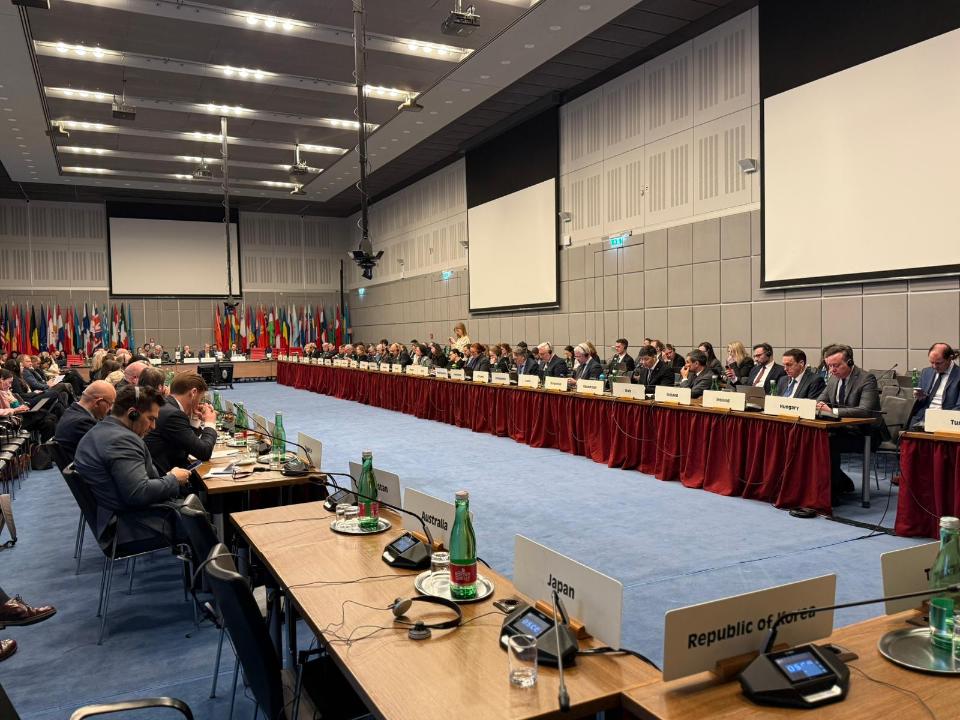
During a regular meeting of the Permanent Council of the Organization for Security and Co-operation in Europe (OSCE), Kazakhstan’s delegation informed participating States about the country’s upcoming large-scale political and constitutional reforms. The changes were announced by President Kassym-Jomart Tokayev at the 5th National Kurultai held in Kyzylorda, DKNews.kz reports.
Kazakhstan emphasized that the final decision on constitutional amendments will be made by the people through a nationwide referendum, underscoring the public nature of the reform process.
New political architecture
The proposed political modernization envisions significant changes to Kazakhstan’s system of governance. One of the key elements is the transition to a unicameral parliament, which will be renamed Kuryltai. In addition, the reforms предусматривают the establishment of a new supreme advisory body – the People’s Council, as well as the introduction of the position of Vice President.
To ensure a comprehensive and coordinated approach, a special Commission on Constitutional Reform has been established by presidential decree.
How the new parliament will work
Speaking at the OSCE meeting, Kazakhstan’s representative Kairat Malayev noted that the new parliament will consist of 145 members, elected from party lists under a proportional representation system for a five-year term.
At the same time, several existing mechanisms aimed at inclusivity will remain in place:
- 30 percent quotas for youth, women and persons with disabilities on party lists,
- a 5 percent electoral threshold for parties to enter parliament.
According to the Kazakh side, these measures are intended to preserve political competition while ensuring broader representation.
People’s Council to reflect social diversity
Another key element of the reform is the creation of the People’s Council, which will include 126 members representing ethnocultural associations, major public organizations, local representative bodies and regional public councils.
This structure, as explained during the meeting, is designed to reflect the wide social, cultural and regional diversity of Kazakhstan and to strengthen public participation in the decision-making process.
A reform driven by public choice
By presenting the reform agenda at the OSCE, Kazakhstan signaled its intention to carry out political modernization in a transparent manner and in dialogue with international partners. The upcoming referendum will be a decisive step in determining the country’s political future.