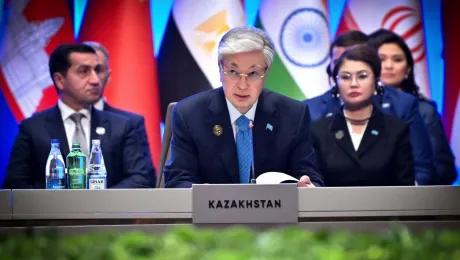


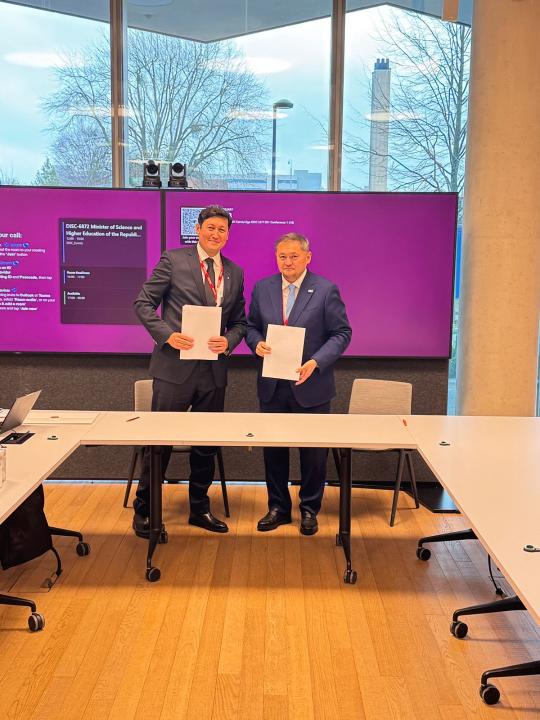
Kazakhstan is strengthening its integration into the global scientific and innovation ecosystem. A Kazakh delegation led by Minister of Science and Higher Education Sayasat Nurbek, including rectors of the country’s leading universities, visited Discovery Centre (DISC), AstraZeneca’s largest research and innovation hub, DKNews.kz reports.
During the visit, the Ministry of Science and Higher Education of Kazakhstan and AstraZeneca Kazakhstan signed a Memorandum of Understanding, marking the start of a new phase of cooperation in science, research and innovation.

From agreements to real projects
The new partnership goes beyond formal declarations. It is aimed at providing practical support for the transformation of Kazakhstan’s scientific, educational and healthcare ecosystems. The parties agreed to jointly develop projects focused on strengthening research competencies, introducing high-tech solutions into medicine and increasing the resilience of the national healthcare system.
At its core, the cooperation is designed to bridge the gap between academic research and real clinical practice.
Key areas of cooperation
One of the central pillars of the partnership is the use of real-world evidence and real-world data (RWE/RWD). These tools will support scientific research, improve clinical decision-making and help build a stronger evidence base in healthcare.
Another priority is the expansion of the Young Health Program in Kazakhstan. The initiative focuses on preventing non-communicable diseases among young people, promoting responsible attitudes toward health and strengthening the well-being of future generations.
The sides also agreed to cooperate in the area of sustainable development and economic diversification, including joint projects in ecology, green technologies and sustainable practices aimed at enhancing Kazakhstan’s competitiveness.
In addition, special attention will be given to early diagnosis and healthcare resilience, including the introduction of modern screening approaches, training of specialists and the development of diagnostic infrastructure.
How medicines of the future are created
During the visit, AstraZeneca representatives demonstrated how new molecules move from initial scientific ideas to market-ready products within DISC. The delegation was shown the full innovation cycle – from laboratory research and collaboration with academic partners to the scaling of studies in clinical centers.
The Kazakh delegation was also introduced to AstraZeneca’s global investment strategy and its model of an open innovation ecosystem that integrates science, digital technologies and partnerships.
What this means for Kazakhstan
Minister Sayasat Nurbek emphasized that the memorandum opens fundamentally new opportunities for the country.
“For us, it is important not only to develop fundamental research, but also to ensure the effective transfer of advanced technologies and data into real clinical practice. Such partnerships contribute to building a sustainable scientific and innovation ecosystem, improving the quality of human capital and strengthening Kazakhstan’s potential in biomedicine and high-tech healthcare,” he said.

AstraZeneca and global research
AstraZeneca continues to invest consistently in cutting-edge science. The company currently has 191 research projects underway, carried out by scientists in Cambridge and nine other major research hubs worldwide.
More than 2,000 scientists from different countries work at the DISC center in Cambridge, making it one of the most dynamic platforms for interdisciplinary biomedical research.
Focus on measurable public impact
According to Arsen Nasyrkhanov, Director of Government Affairs and External Communications at AstraZeneca Kazakhstan, the partnership is focused on initiatives with tangible societal benefits.
“Our cooperation prioritizes projects with measurable public impact – from RWE/RWD initiatives to strengthening prevention among young people and promoting sustainable development. We are confident that combining expertise will accelerate the emergence of innovations that are truly needed by Kazakhstan’s healthcare system and economy,” he said.
Why it matters
At a time of intense global competition for technologies and talent, Kazakhstan is positioning science and education as long-term strategic investments. Partnerships with global leaders such as AstraZeneca demonstrate the country’s ambition to become an active participant in international research networks and to build a strong foundation for high-tech medicine and biomedical innovation.