


For diplomats, books have never been just a form of leisure. In a profession where the ability to sense context and understand motives is essential, where nuances and subtle shades of meaning matter, and where seeing the world in depth is critically important, books become trusted companions and quiet guides.
As a form of an inner journey, reading develops our ability to live through other eras and destinies, teaches us to look at reality through another person’s eyes, and, most importantly for diplomacy, helps us understand other nations and cultures. In our vast world, filled with an endless ocean of knowledge and countless colors of life, books serve as conductors to deep reflection and become keys to our own inner reference points. These timeless interlocutors cultivate tolerance and attention to detail - qualities that are often impossible to grasp in everyday routine. A good book teaches us to understand the world, but above all, it helps us understand ourselves.
The era of digitalization has accelerated the exchange of information and shortened the distance between the most remote points on the globe. In this immense flow of data and facts, it becomes especially important to hear one’s own inner voice. Reading therefore turns into more than a source of knowledge - it becomes an inner compass and a tool for personal growth and the development of critical thinking. It shapes the ability to ask questions and search for answers to the most complex issues, to doubt, and to understand the causes behind events.
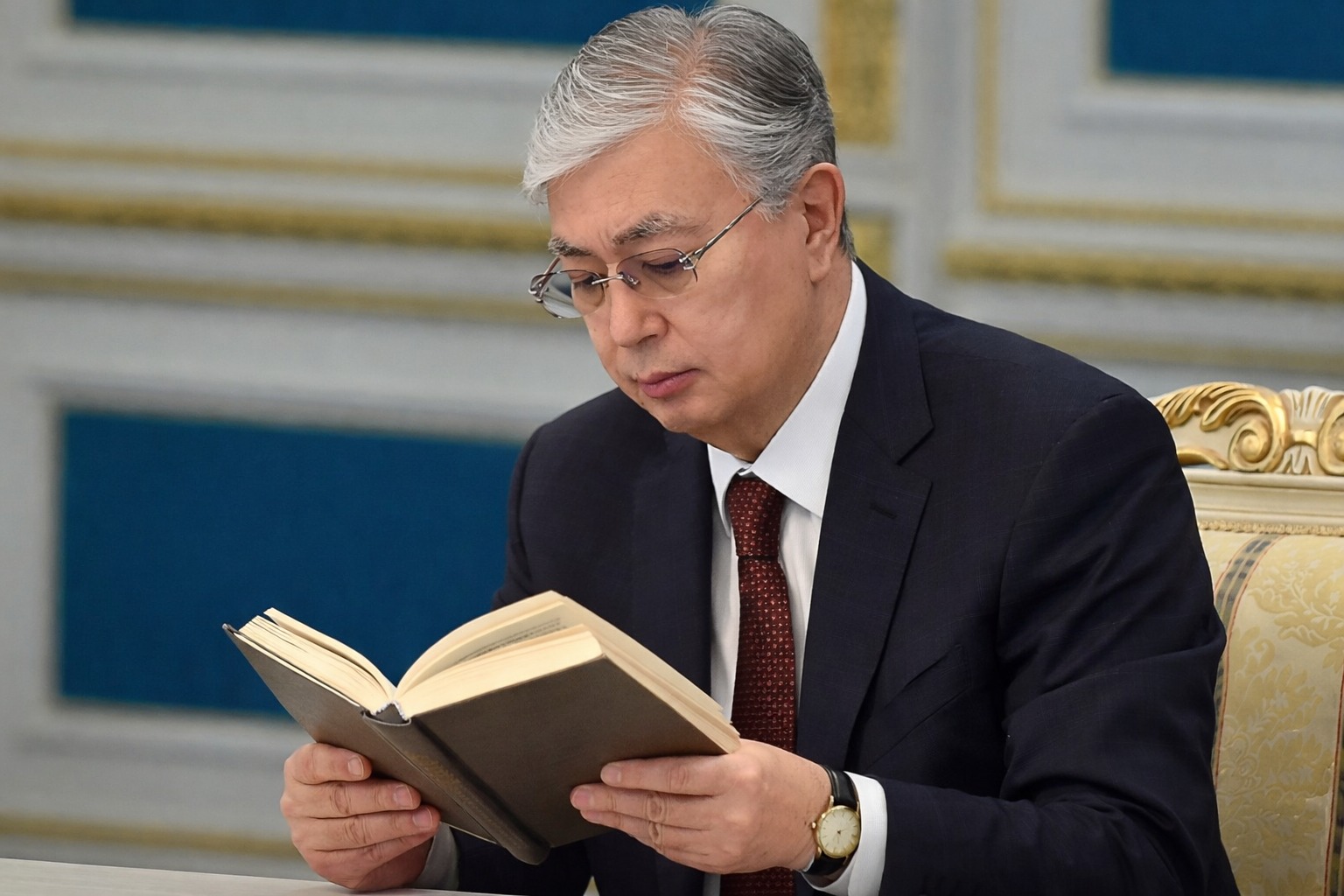
At the very heart of the continent, Kazakhstan’s diplomacy was formed in a space where the ability to reach agreement was an integral part of the political tradition of past rulers. Today, while preserving the best traditions of earlier diplomacy, Kazakhstan continues to strengthen its institution of the art of negotiation. Steppe traditions shaped a distinctive mindset - a стремление toward balance rather than domination, responsibility for one’s promises, and respect for the spoken word. The historical experience of mediation between East and West, the ability to hear different sides, and to maintain inner stability have become defining features of Kazakhstani diplomacy. This is a school of restrained strength, where influence is built on trust, consistency, and a clear position - qualities that still define its recognizable character today.
The books diplomats read are always more than a list of required literature. They reflect an inner world, depth of thought, and a desire to understand the complexity of the surrounding world. The more meanings we allow into ourselves, the broader we become, and the more interesting, multifaceted, and humane the world around us appears.
With the participation of Kazakhstani diplomats, we have compiled a unique list of 100 books. It reflects the intellectual portrait and inner world of Kazakhstan’s diplomacy, where Kazakh classical literature forms a strong core. The inner compass of Kazakhstan’s diplomats points toward humanism and peaceful coexistence and embraces more than 3,000 years of human thought.
100 Books – The Choice of Kazakhstan’s Diplomats
- The Path of Abai, Mukhtar Auezov
- Nomads, Ilyas Yesenberlin
- Words of Edification, Abai
- Volokolamsk Highway, Alexander Bek
- Blood and Sweat, Abdizhamil Nurpeisov
- 1984, George Orwell
- The Scaffold, Chingiz Aitmatov
- The Delusion of Civilization, Mukhtar Shakhanov
- The Count of Monte Cristo, Alexandre Dumas
- Love Is an Interesting Thing Over Many Years, Azilkhan Nurshaiykov
- The Cruel Age, Isai Kalashnikov
- And Quiet Flows the Don, Mikhail Sholokhov
- Poems, Mukagali Makataev
- Overcoming, Kassym-Jomart Tokayev
- The Trilogy of Desire, Theodore Dreiser
- Thus Spoke Zarathustra, Friedrich Nietzsche
- War and Peace, Leo Tolstoy
- Tales of Our Alley, Naguib Mahfouz
- The Psychology of War, Bauyrzhan Momyshuly
- Three Comrades, Erich Maria Remarque
- The Master and Margarita, Mikhail Bulgakov
- AZiYa, Olzhas Suleimenov
- The Little Prince, Antoine de Saint-Exupéry
- Ethics, Aristotle
- The Prince, Niccolò Machiavelli
- Enlik–Kebek, Shakarim Kudaiberdiuly
- The Red Arrow, Sherkhan Murtaza
- The Tartar Steppe, Dino Buzzati
- Light and Shadow, Kassym-Jomart Tokayev
- Shuga’s Sign, Beimbet Mailin
- Urker, Abish Kekilbayev
- Dialogue with the Times, Abish Kekilbayev
- Orientalism, Edward Said
- The Flying Nest, Bauyrzhan Momyshuly
- The Godfather, Mario Puzo
- The War of the End of the World, Mario Vargas Llosa
- A Brief History of the Kazakhs, Sultan Akimbayev
- The Name of the Rose, Umberto Eco
- The Awakened Land, Gabit Musrepov
- A Shot Fired at Night, Kemel Tokayev
- What I Talk About When I Talk About Running, Haruki Murakami
- Gone with the Wind, Margaret Mitchell
- The Autumn of the Patriarch, Gabriel García Márquez
- Man’s Search for Meaning, Viktor Frankl
- The New Map of the World, Daniel Yergin
- The Red Apple, Chingiz Aitmatov
- The Man Who Laughs, Victor Hugo
- Alash Democracy, Ruslan Akmagambet
- My Name Is Red, Orhan Pamuk
- Under the Banner of Independence, Kassym-Jomart Tokayev
- About My Time, Dinmukhamed Kunaev
- The Lord of the Rings, J.R.R. Tolkien
- The Day Lasts More Than a Hundred Years, Chingiz Aitmatov
- Heart of a Dog, Mikhail Bulgakov
- Steppe Ballads, Abish Kekilbayev
- The Hunchback of Notre-Dame, Victor Hugo
- Times of Turmoil, Mukhtar Auezov
- The Capital in Flames, Kago Atahiko
- Hidden Perspective, Robert Capa
- Anna Karenina, Leo Tolstoy
- Captain Michalis, Nikos Kazantzakis
- The Picture of Dorian Gray, Oscar Wilde
- Markings, Dag Hammarskjöld
- Pure Love, Sabit Mukanov
- The Fatal Name, Oralhan Bokei
- Plays, Gabit Musrepov
- Crime and Punishment, Fyodor Dostoevsky
- Les Misérables, Victor Hugo
- Truth and Legend, Azilkhan Nurshaiykov
- Antifragile, Nassim Nicholas Taleb
- The Samurai Without a Sword, Kitami Masao
- Animal Farm, George Orwell
- Hadji Murat, Leo Tolstoy
- The Renegade, Jack London
- Sholpan’s Sin, Magzhan Zhumabayev
- The Grand Chessboard, Zbigniew Brzezinski
- Wolf Totem, Jiang Rong
- The End of the Legend, Abish Kekilbayev
- Saki, Bolat Zhandarbekov
- Children of One Father, Mukhtar Magauin
- Dialogues, Plato
- The Arc de Triomphe, Erich Maria Remarque
- Pride and Prejudice, Jane Austen
- The Moment of Truth, Vladimir Bogomolov
- Stoner, John Williams
- Botagoz, Sabit Mukanov
- The Art of War, Sun Tzu
- Destined for War, Graham Allison
- A Fine Balance, Rohinton Mistry
- The Good Soldier Švejk, Jaroslav Hašek
- On War, Carl von Clausewitz
- The Steppe Nomads Who Conquered the World, René Grousset
- The Mamluk, Yermek Tursynov
- Tragedies, William Shakespeare
- The Clash of Civilizations, Samuel Huntington
- Bears in Caviar, Charles Thayer
- The Black Monk, Anton Chekhov
- From Third World to First: The Singapore Story, Lee Kuan Yew
- A History of Western Philosophy, Bertrand Russell
- Critique of Pure Reason, Immanuel Kant
Diplomacy begins long before the negotiating table - it is formed within a person. How one perceives the world, what meanings one is able to read, and how one maintains a firm position without destroying dialogue reveal the true strength of diplomacy. In this sense, books become timeless companions: they teach us to hear different voices while clearly distinguishing our own. Reading shapes that rare ability - to remain open to the world while standing firmly by one’s convictions. This is the foundation of genuine influence.