
Kazakhstan’s government has approved a unified national policy document titled “Children of Kazakhstan”, aimed at building a comprehensive system for protecting children’s rights, safety, and well-being across the country, DKNews.kz reports.
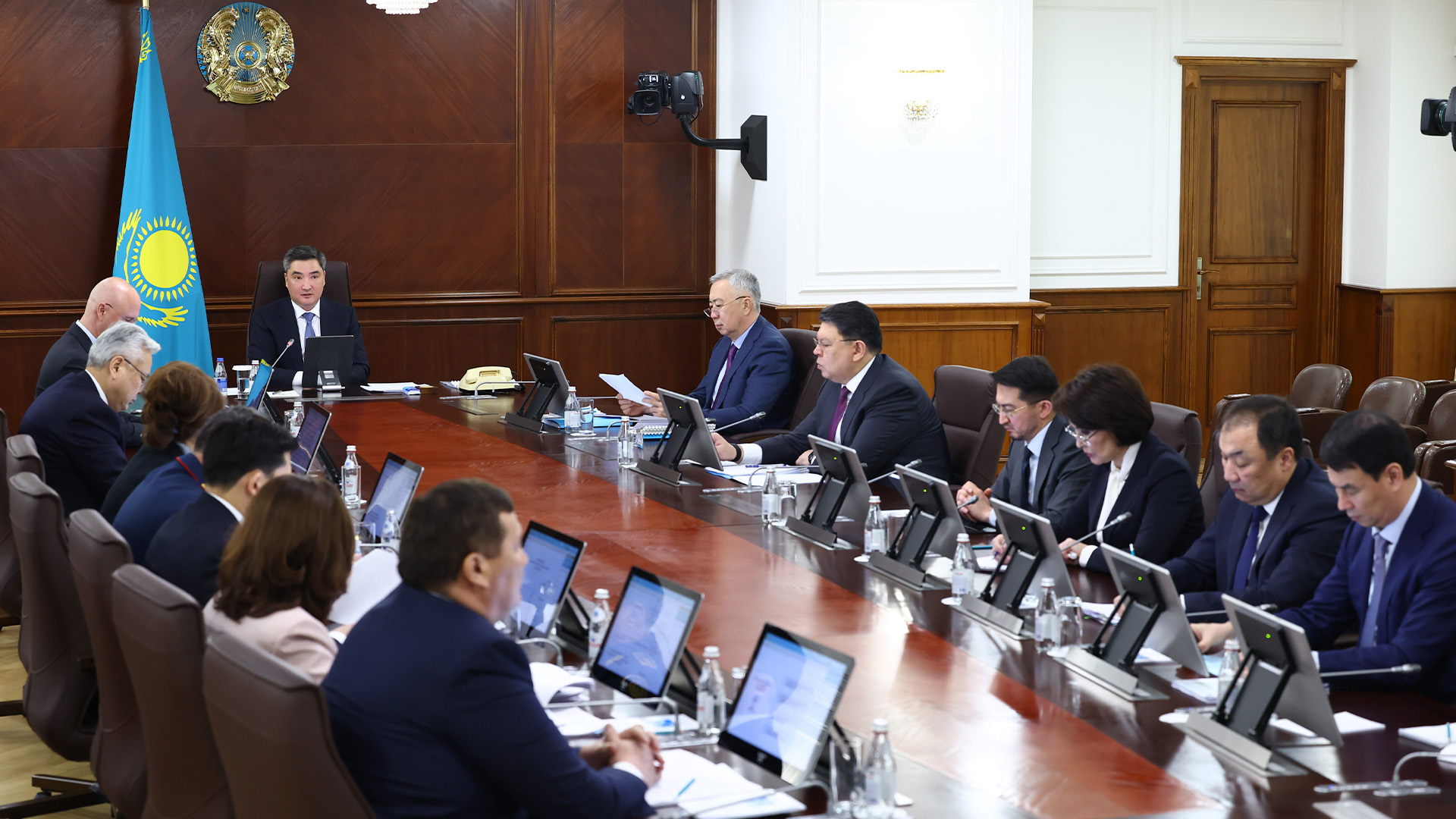
The decision was made at a Government meeting chaired by Prime Minister Olzhas Bektenov. Reports were presented by the Minister of Education Zhuldyz Suleimenova, Minister of Healthcare Akmaral Alnazarova, and Minister of Internal Affairs Erzhan Sadenov.
More than one-third of the population are children
According to official data, Kazakhstan is home to around 7 million children, accounting for 34 percent of the country’s population.
Prime Minister Bektenov emphasized that the country’s future depends directly on the conditions in which children grow up and the opportunities they receive.
“The future of Kazakhstan depends on raising a responsible and creative generation. That is why the Head of State instructed the development of a unified ‘Children of Kazakhstan’ Concept at the National Kurultai. Comprehensive care for children is one of our top priorities,” Bektenov said.
The Concept includes a concrete action plan covering education, healthcare, safety, social protection, and family well-being.
What has already been done
Over recent years, Kazakhstan has significantly expanded its legal framework to protect children’s rights, particularly by strengthening the principle of inevitable punishment for crimes against children.
Key measures already in place include:
- a nationwide 111 contact center for family issues and the protection of women’s and children’s rights;
- regional commissioners for children’s rights operating in all regions;
- reinforced oversight mechanisms for guardianship authorities.
Surprise inspections for schools and childcare facilities
Starting February 1, a special oversight regime based on the principle of surprise inspections will be introduced for all educational institutions. These inspections will focus on child safety, nutrition, and health conditions.
To support this, the Prime Minister instructed the Ministries of Healthcare, Education, Culture, Labor and Social Protection, Tourism, and Internal Affairs, together with regional administrations, to compile a list of facilities subject to enhanced supervision by January 30.
Guardianship system expanded, but unevenly
To strengthen child protection services, a new staffing standard has been introduced: at least one guardianship specialist per 5,000 children. This measure has tripled the number of such specialists within a year.
Based on these specialists, dedicated child rights protection departments are being established in the regions. However, Bektenov noted that effective progress has so far been achieved only in Akmola and Aktobe regions and in the capital, Astana. Other regions have been given two months to complete the process.
Professional foster families need stronger implementation
A new family-based care model — professional foster families — has been in place since July 1 last year. While funding has been allocated, implementation at the regional level remains weak.
Local authorities have been instructed to intensify efforts to ensure that children without parental care grow up in families rather than institutional settings.
Healthcare, digital safety, and rural access remain challenges
The Prime Minister also highlighted ongoing challenges in child healthcare, including shortages of medical specialists, medicines, and rehabilitation services, as well as a lack of specialized professionals such as speech therapists, special education teachers, and audiologists for children with special educational needs.
Child safety — including in the digital environment — remains a key concern. In addition, many children in rural areas still lack access to extracurricular activities and modern educational technologies. Adolescents, in particular, face limited opportunities for self-development.
What comes next
The implementation of the “Children of Kazakhstan” Concept is expected to create a sustainable national system for child development, support, and protection.
The Ministry of Education has been tasked with ensuring timely and high-quality execution of all measures, strengthening cooperation with the Children’s Rights Ombudsman, and launching a nationwide information campaign together with the Ministry of Culture and Information.
Overall coordination of the Concept’s implementation has been assigned to Deputy Prime Minister and Minister of Culture and Information Aida Balayeva.