

Kazakhstan is betting big on the future — and that future has a name: Alatau City.
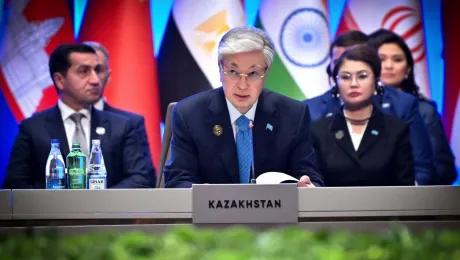
This week, a meeting of the Alatau City Development Council was held under the chairmanship of Prime Minister Olzhas Bektenov, marking another important step in the implementation of the President’s strategic vision, DKNews.kz reports.
The discussion made one thing clear: Alatau City is not just another urban project — it is designed to become a long-term economic, technological, and human capital hub for the country.

A City Personally Overseen by the President
Opening the meeting, Bektenov stressed that the Head of State is personally monitoring the development of Alatau City. According to him, the project goes far beyond construction plans.
Alatau City has been designated as a new center of economic growth, and its core development principles have already been embedded in the draft of Kazakhstan’s new Constitution. This is a rare move — and a strong signal to investors — showing that the city’s special status is meant to be stable, predictable, and protected at the highest legal level.
Importantly, officials emphasized that special legal regimes for Alatau do not change Kazakhstan’s administrative or territorial structure. Territorial integrity remains a constitutional cornerstone.

Special Status, Special Opportunities
Deputy Prime Minister Kanat Bozumbayev reported that Parliament is currently reviewing the draft Constitutional Law “On the Special Status of Alatau City.” This law is expected to form the backbone of a unique legal ecosystem designed to attract both domestic and international investors.
The logic is simple: clear rules, legal certainty, and fast decision-making are essential if Kazakhstan wants to compete globally for capital, technology, and talent.

44 Projects and ₸1.8 Trillion in Investments
Behind the legal framework, real economic momentum is already building.
Alatau City’s investment portfolio includes 44 projects worth around 1.8 trillion tenge, spanning industry, logistics, agro-processing, services, and the creative economy. Once implemented, these projects are expected to create over 30,000 jobs, forming a sustainable and diversified urban economy from day one.
Among the flagship initiatives are:
- The Iconic Complex — a multifunctional architectural and business centerpiece of the city
- KAIST Kazakhstan — a technological university aimed at training highly skilled professionals and developing advanced technologies inside the country

Infrastructure Comes First
As the Prime Minister noted, proactive investment policy only works when infrastructure keeps pace. For Alatau City, this means building everything — from power lines to roads — almost from scratch.
Key projects include:
- Energy: construction of the “Arna” 220/110 kV substation and design of six additional substations
- Water and sanitation: expansion of the “Yntymak” water intake, three new water facilities, wastewater treatment plants, and feeder collectors
- Gas supply: a new automated gas distribution station “Gate City-1” and completion of the “Zhetigen” AGDS
- Transport: new roads, overpasses, and engineering networks across multiple districts
This phased approach is meant to ensure that large “anchor” investors can launch projects without delays caused by infrastructure bottlenecks.

How the City Will Actually Look and Work
Acting CEO of the state fund Alatau City Authority, Alisher Adykadyrov, presented the city’s key planning documents: the conceptual plan, urban planning plan, and development strategy.
These documents go beyond maps and zoning. They define:
- building height limits
- landscaping and public space standards
- ventilation of urban areas
- transport accessibility and parking rules
- overall quality-of-life requirements
Together, they aim to ensure that Alatau is not just economically efficient, but also comfortable, modern, and environmentally balanced.

Human Capital: Lessons from Shenzhen and Singapore
One of the most interesting parts of the discussion focused on people.
Kazakhstan plans to build Alatau City’s labor market using lessons from Shenzhen, Dubai, and Singapore. The proposed model emphasizes a managed and selective inflow of talent, prioritizing quality over quantity.
Key principles include:
- linking migration policy directly to economic needs
- institutional regulation of employment
- maximizing the share of Kazakhstani specialists in high-skilled and managerial roles
- systematic reproduction of skills and competencies within the country
In short, Alatau City is meant to become a place where local talent grows — not just a magnet for foreign expertise.
What’s Next?
The Council supported all proposed approaches and highlighted the urgent need to develop clear, transparent regulatory acts. To speed up coordination, an Operational Committee has been established to resolve issues quickly and support decision-making.
International experts and organizations will also be involved in drafting and reviewing Alatau-related regulations — another signal aimed at boosting investor confidence.
As Bektenov summed up, Alatau City is an innovative solution — a modern digital city with a special status, designed to shape Kazakhstan’s economic trajectory for decades to come.
If everything goes according to plan, Alatau may soon move from concept to case study — showing how a country builds a city not just for today, but for the future.