
Kazakhstan is increasingly turning its attention to Africa as it looks to diversify trade routes and explore new growth markets. One of the most promising directions is Ethiopia – a country with a fast-evolving economy and a global reputation built around one iconic product: coffee, DKNews.kz reports.
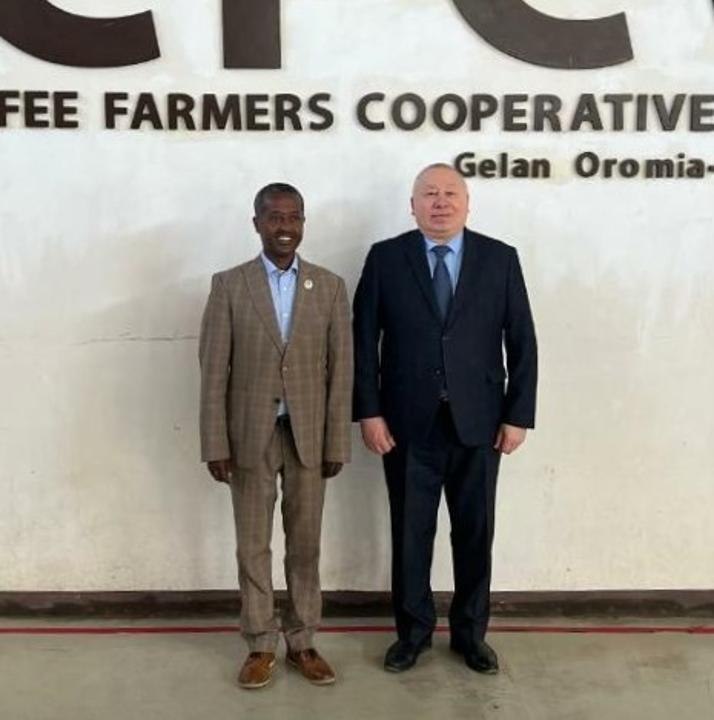
This potential was at the center of a recent meeting in Addis Ababa, where the Ambassador of Kazakhstan to Ethiopia and Permanent Representative of Kazakhstan to the African Union, Zhalgas Adilbayev, held talks with Dejene Dadi Dika, General Manager of the Oromia Coffee Farmer’s Cooperative Union – the largest association of coffee producers in Ethiopia.
Untapped trade potential between Kazakhstan and Ethiopia
The discussion focused on prospects for strengthening trade ties between Kazakhstan and Ethiopia. Both sides noted that despite clear mutual interest, the trade, economic and investment potential between the two countries remains largely untapped.
According to the participants, closer and more direct engagement between business communities could become a key driver for turning political dialogue into tangible economic results.
Ethiopian coffee and the Kazakhstan market
A major topic of the meeting was the possible supply of high-quality Ethiopian coffee to the Kazakhstan market. Ethiopia, widely regarded as the birthplace of coffee, exports premium beans that are highly valued across Europe, Asia and North America.
The Ambassador подчеркнул Kazakhstan’s interest in diversifying both its trade markets and logistics routes, as well as supporting agro-industrial partnerships. In this context, Ethiopian coffee could become one of the first practical and visible examples of growing cooperation between the two countries.
Shared reform momentum
Beyond trade, the meeting also touched on broader political and economic developments. The parties exchanged views on the current stage of development in Kazakhstan and Ethiopia, noting the high pace of domestic political and economic reforms being implemented by the leadership of both states.
Zhalgas Adilbayev provided detailed insight into key initiatives of President Kassym-Jomart Tokayev, announced at the Kurultai. Special attention was given to Kazakhstan’s transition toward a new political model, including the transformation of the legislative branch, the establishment of the post of Vice President, and efforts to strengthen national and civic identity.
Interest in Kazakhstan’s governance experience
For his part, Dejene Dadi Dika expressed strong interest in Kazakhstan’s experience in maintaining social stability and actively involving civil society in public administration. He noted that such approaches are particularly relevant for countries undergoing structural reforms and modernization.
What comes next
At the conclusion of the meeting, the sides agreed to continue dialogue with a view to organizing a future visit of Ethiopian business representatives to Kazakhstan. The proposed visit would focus on establishing direct cooperation with Kazakh partners, as well as exploring the country’s logistics capabilities and investment climate.
The talks in Addis Ababa highlight a broader trend: Kazakhstan is steadily expanding its economic diplomacy beyond traditional partners, looking to Africa not as a distant market, but as a region of real opportunity. And in this case, a conversation that began with coffee could pave the way for a much deeper economic partnership.