

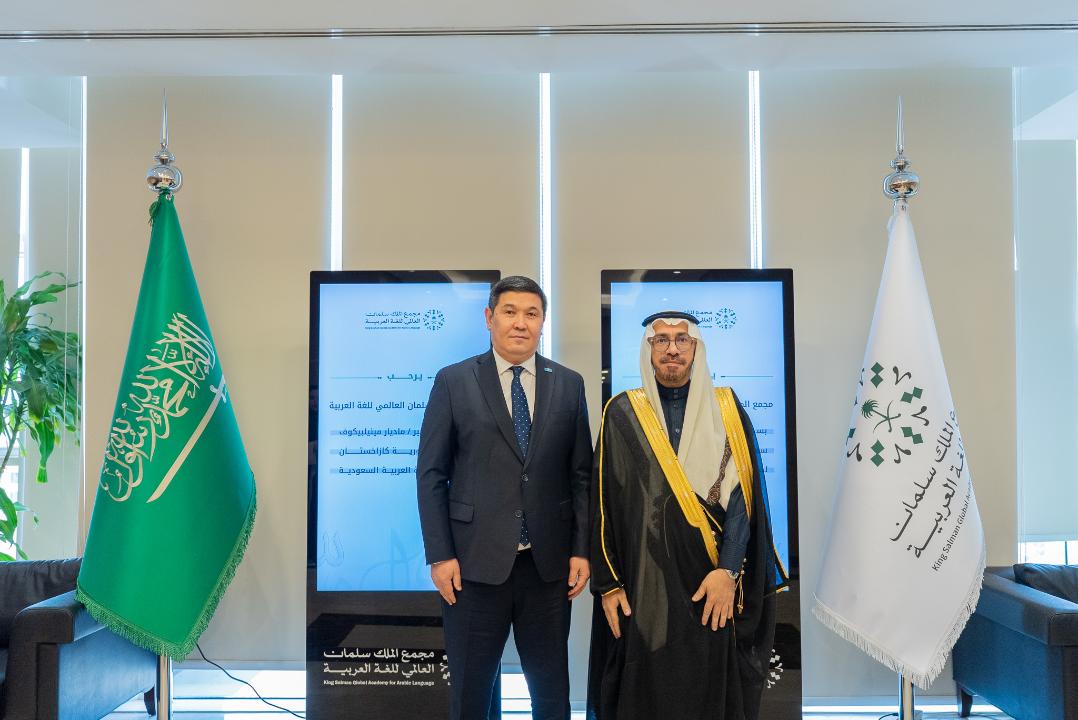
Kazakhstan is steadily strengthening its educational and humanitarian ties with the Arab world, and language has become one of the key bridges in this process. In Riyadh, Ambassador of Kazakhstan to Saudi Arabia Madiyar Menilbekov held talks with Abdullah Al-Washmi, Secretary General of the King Salman Global Academy for Arabic Language, focusing on the future of cooperation in education and Arabic language studies, DKNews.kz reports.
At first glance, the discussion may appear academic in nature. In reality, it reflects a broader strategic vision: preparing specialists who can operate confidently at the intersection of diplomacy, science, culture, and international cooperation.
Internships That Deliver Real Results
During the meeting, the Ambassador highly praised the Academy’s support in organizing language internships for students and faculty members from Kazakhstan. These programs go far beyond classroom learning. They offer full immersion in a linguistic and cultural environment that is essential for mastering Arabic at a professional level.
Menilbekov expressed gratitude to the Academy’s leadership, noting that such internships are already producing tangible results and contributing to the development of highly qualified specialists in Kazakhstan.
From Memorandum to Practice
The talks also highlighted that cooperation is not limited to declarations. In September 2024, a Memorandum of Understanding and Cooperation was signed between Al-Farabi Kazakh National University and the Academy. Since then, the document has been translated into concrete initiatives.
In May 2025, Kazakhstan hosted a special training session for Arabic language teachers aimed at improving teaching methodologies and language proficiency. Later, in November 2025, the L.N. Gumilyov Eurasian National University organized the Month of the Arabic Language. The program included academic seminars, master classes, and cultural and educational events, drawing strong interest from both students and scholars.
These initiatives demonstrate that Arabic language studies in Kazakhstan are developing systematically and gaining institutional support.
Textbooks, Dictionaries, and Joint Research
Looking ahead, the parties discussed several priority areas. Among them are the continuation of internships for Kazakhstani students and faculty members, the joint development of Arabic language textbooks and dictionaries, and collaborative research projects between universities and research centers of both countries.
Such cooperation is expected to help create teaching materials adapted to local educational contexts while maintaining high international standards.
Meeting the Students Behind the Programs
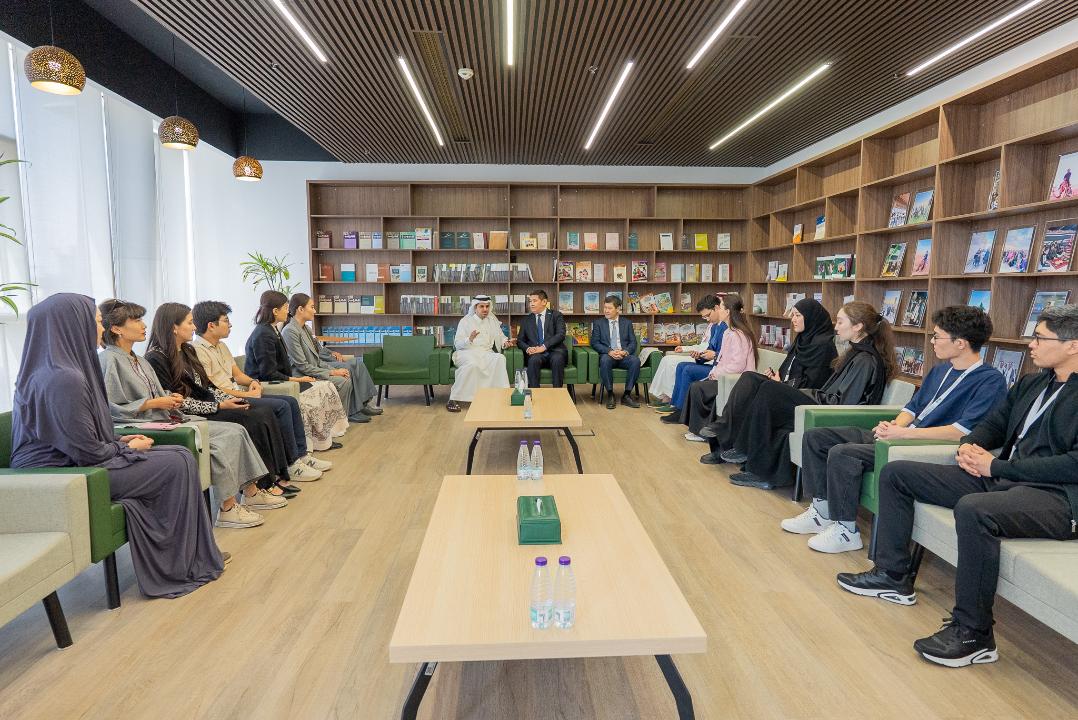
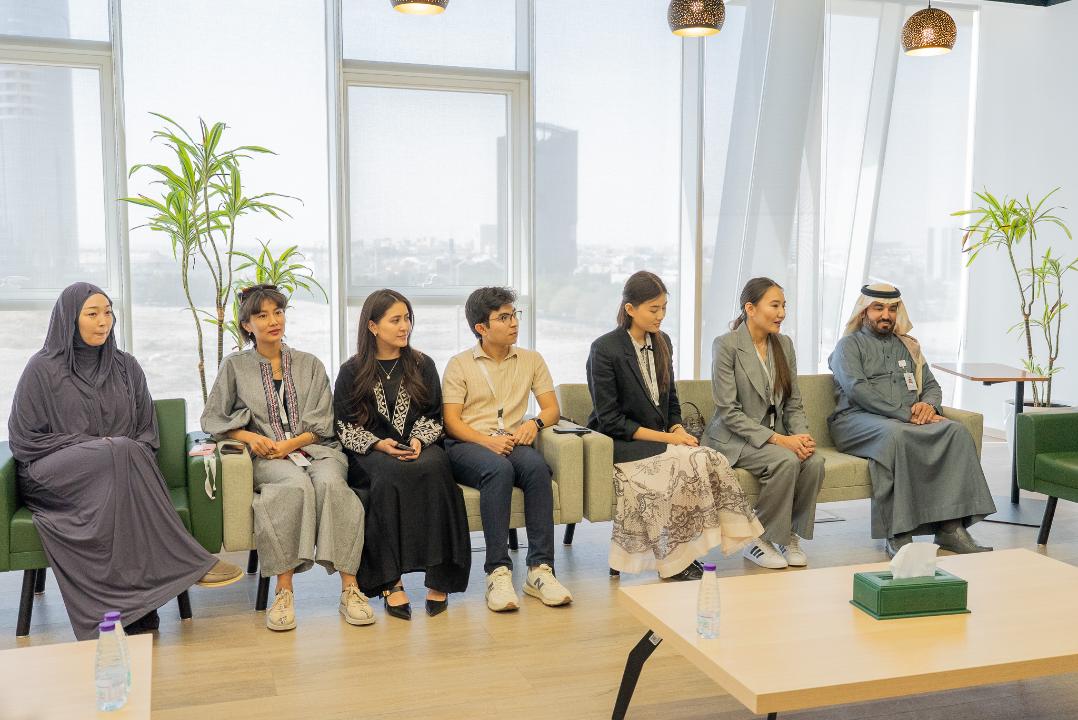
As part of the visit, the Ambassador also met individually with more than ten students from Kazakhstan currently undertaking internships at the Academy. He reviewed their progress in learning Arabic and spoke with them about their academic experiences and future plans.
These personal interactions highlight the human dimension of educational diplomacy. Behind every agreement and program are real people acquiring skills that will shape their professional paths.
Language as a Long-Term Investment
Kazakhstan’s growing engagement with leading Arabic language institutions reflects a long-term investment in knowledge and people. Arabic is not viewed simply as an academic subject, but as a strategic resource that opens doors to deeper cooperation with the Middle East in education, culture, science, and beyond.
The meeting in Riyadh made one thing clear: Kazakhstan’s approach to Arabic language studies is evolving from isolated initiatives into a structured, forward-looking partnership with tangible outcomes.