

For three days, Astana has transformed into the intellectual hub of Central Asia. In halls usually reserved for formal speeches, the air now hums with servo motors, the buzz of drones, and the rapid tapping of keyboards. ALEM TECH FEST 2026 has officially kicked off — a large-scale technology event bringing together more than 5,000 young engineers from seven countries, including Hong Kong, Vietnam, and Estonia. The festival’s генеральный partner is Samruk-Kazyna, DKNews.kz reports.
This year, organizers from USTEM Foundation moved beyond traditional STEM formats. If audiences once marveled at robots following a black line on the floor, the spotlight now belongs to humanoids and autonomous quadruped systems.
The Evolution of Intelligence: Why Physical AI Is More Than a Trend
The defining theme of this year’s festival is Physical AI. For Kazakhstan’s tech ecosystem, this represents a major shift.
Traditional neural networks operate in the “clean” digital environments of chatbots and image generators. Physical AI, however, is intelligence embodied in hardware. These systems perceive the real world through sensors and LiDAR, making decisions amid uncertainty, physical obstacles, and unpredictable conditions.
For Kazakhstan, this is a significant step — moving the conversation from theoretical coding toward applied engineering.
A zamatt Abdikarimov, Head of USTEM Robotics Lab, explains:
“For a long time in Kazakhstan, robotics was associated mainly with school leagues like FLL or FTC. That’s a strong foundation. But Physical AI is the premier league. With the support of Astana Hub, we became the first in Kazakhstan to organize competitions based on humanoid platforms and robodogs. Our journey began just six months ago at the Digital Bridge forum in Astana, where we hosted the country’s first autonomous quadruped championship and hackathon. In December, participants worked with Unitree G1 humanoids. Today’s festival marks our third large-scale event, confirming the growing interest in advanced robotics across the country.”
Engineering Elite: Humanoid Robot Contest and the $5,000 Battle
In the Physical AI Championship zone, the atmosphere is intense. Teams work with Unitree G1 Edu humanoids — high-end robotic platforms designed for advanced programming and research.
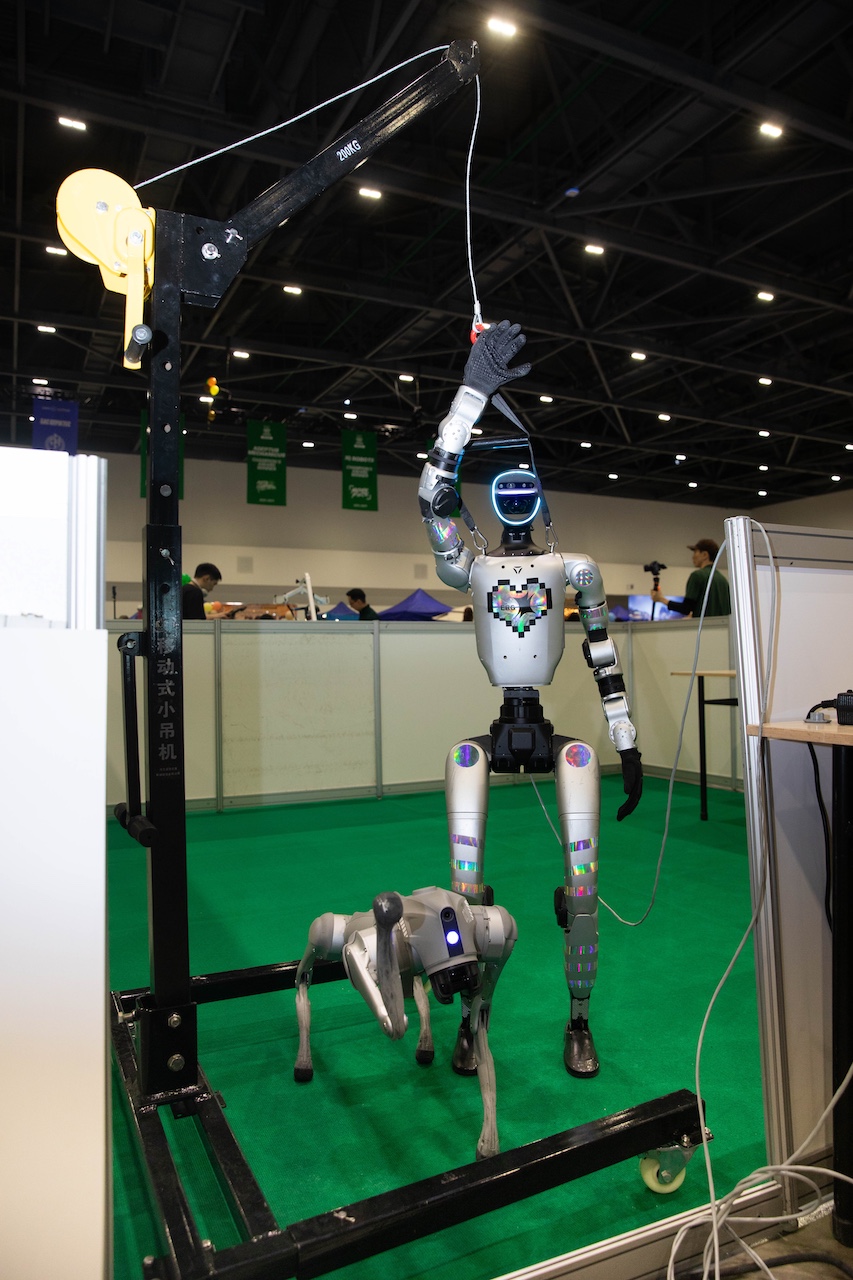
The entry barrier is exceptionally high. Each robot costs between 20 and 30 million tenge — comparable to a new car. But the intellectual threshold is even higher. Most participants are master’s and PhD students with deep expertise in kinematics and computer vision.
“The tasks are designed to mirror real-life scenarios,” says Abdikarimov. “A robot must autonomously detect an object, approach it, grasp it, and hand it to a human. Teams write complex algorithms in C++ and Python, integrating data from LiDAR and cameras. Out of 15 teams from across Kazakhstan, only four passed a rigorous selection process. They’re competing for a $5,000 prize, but in reality, they’re competing for recognition as the engineering elite of the country.”
Alongside the championship, the Humanoid Robot Contest hackathon focuses on fine motor skills and manipulation accuracy. The task may sound simple — locate a bottle on a table and move it — but it requires advanced spatial mathematics and AI-based object recognition.
RoboCup Rescue: Robodogs on a Mission
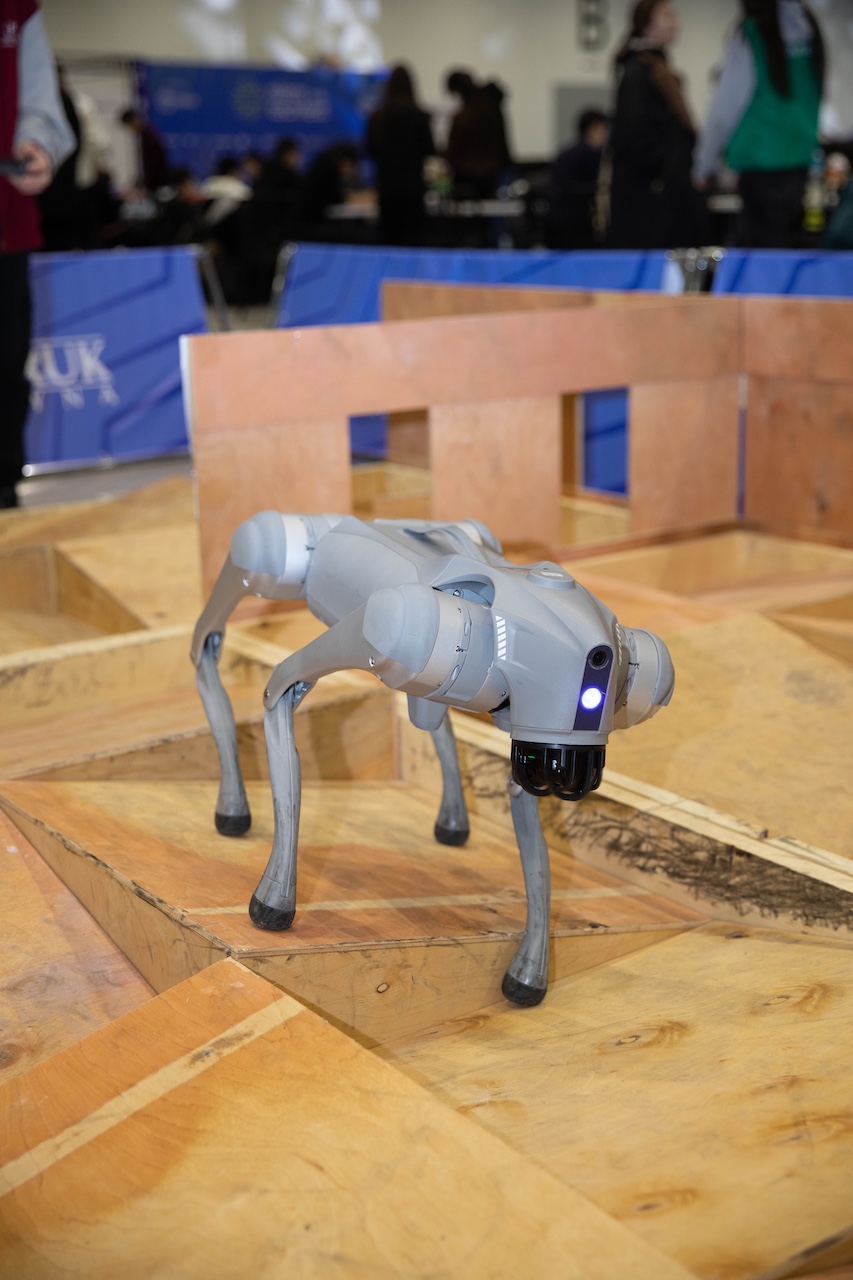
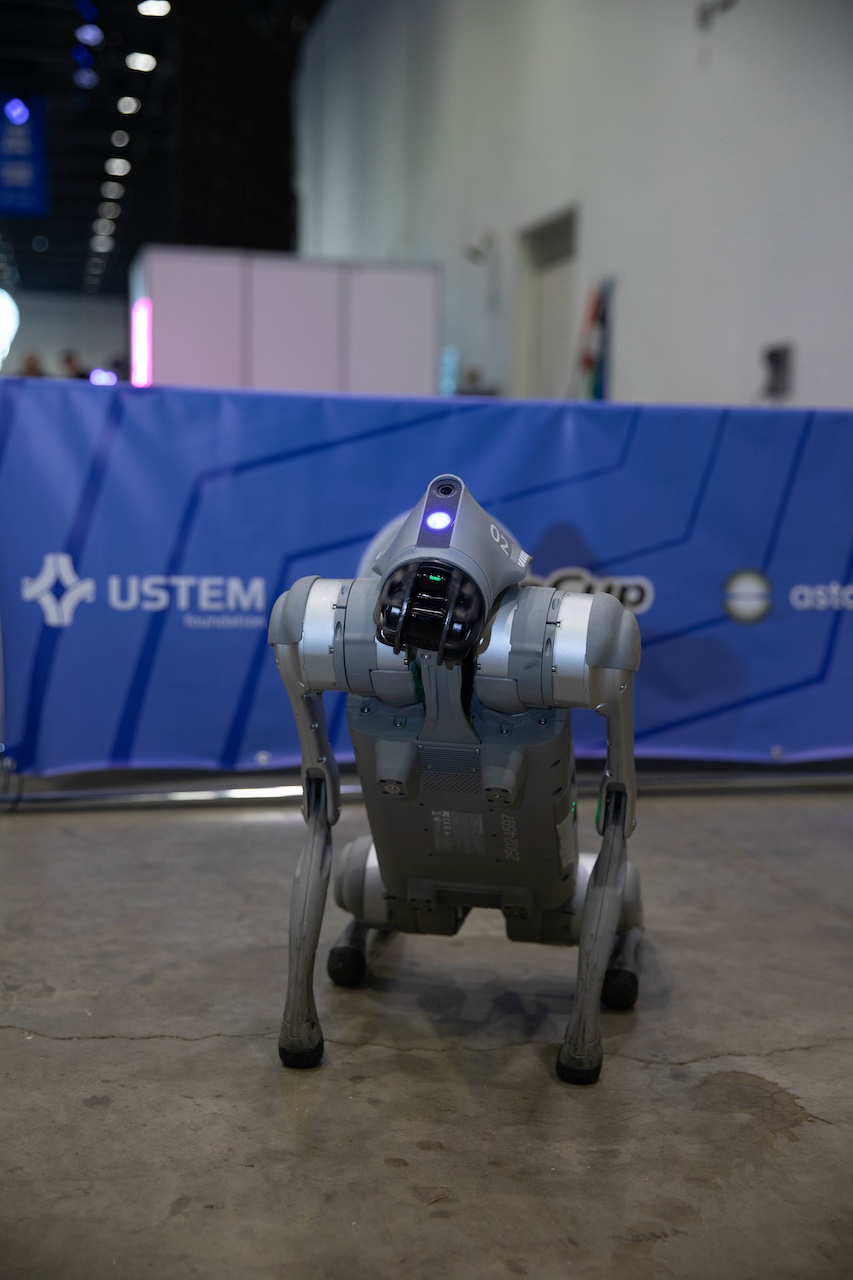
Equally impressive is the RoboCup Rescue (Dogs & Rovers) arena. Here, quadruped robots navigate obstacle courses simulating disaster zones: rubble, narrow passages, uneven surfaces, and maze-like structures.
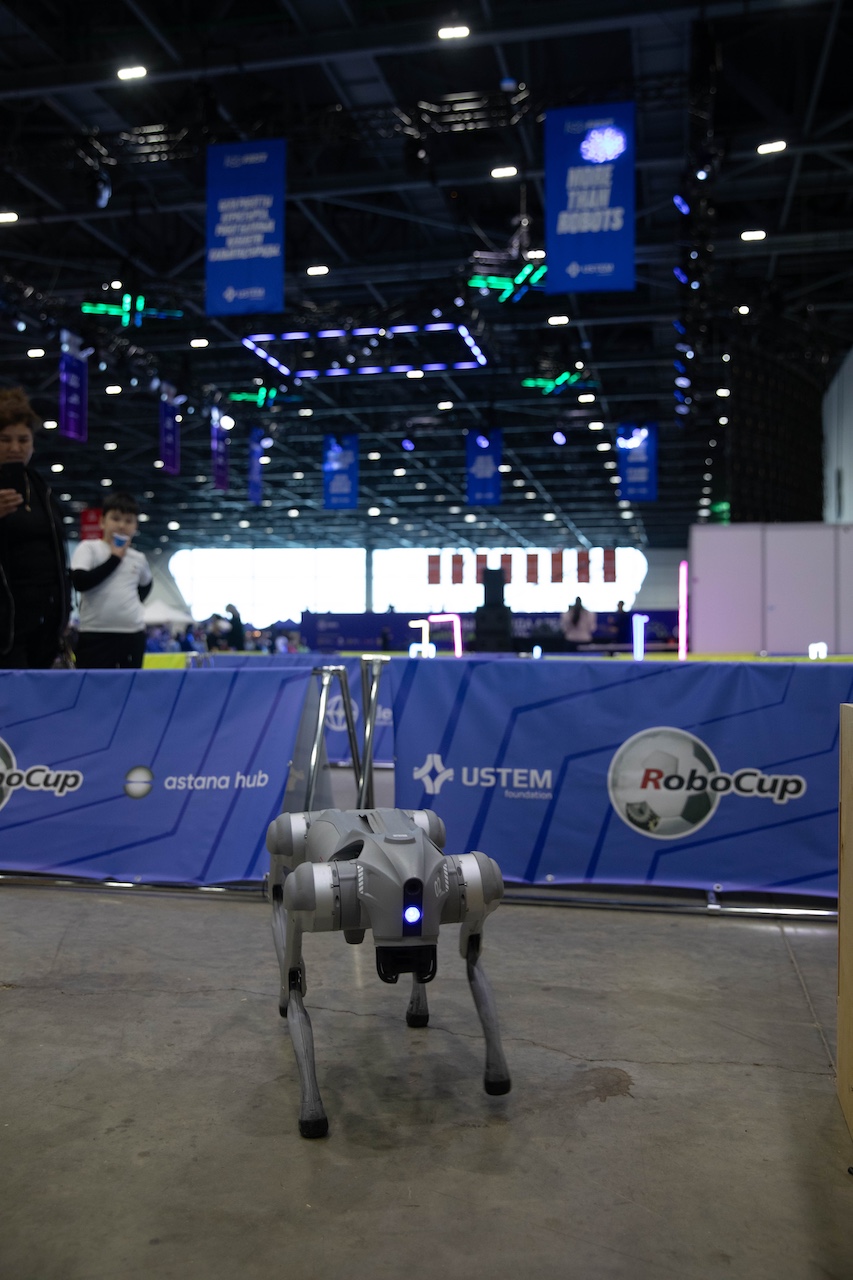
This year’s competition features two leagues. In the first, robots operate fully autonomously. In the second, limited teleoperation is allowed.
“We are witnessing how AI is moving into real-life applications,” Abdikarimov notes. “The robot enters a zone, scans a QR code, builds its own route through obstacles, and records results. In advanced stages, robots must press buttons or climb steep inclines where factory controllers are insufficient — teams must write custom stabilization algorithms. For many participants, this is their first experience at this level. We started small, but the future potential for search-and-rescue missions is enormous.”
A Turning Point for Kazakhstan
The first day of ALEM TECH FEST 2026 is only the beginning. Forty-eight more hours of intense coding, recalibration, and system testing lie ahead.
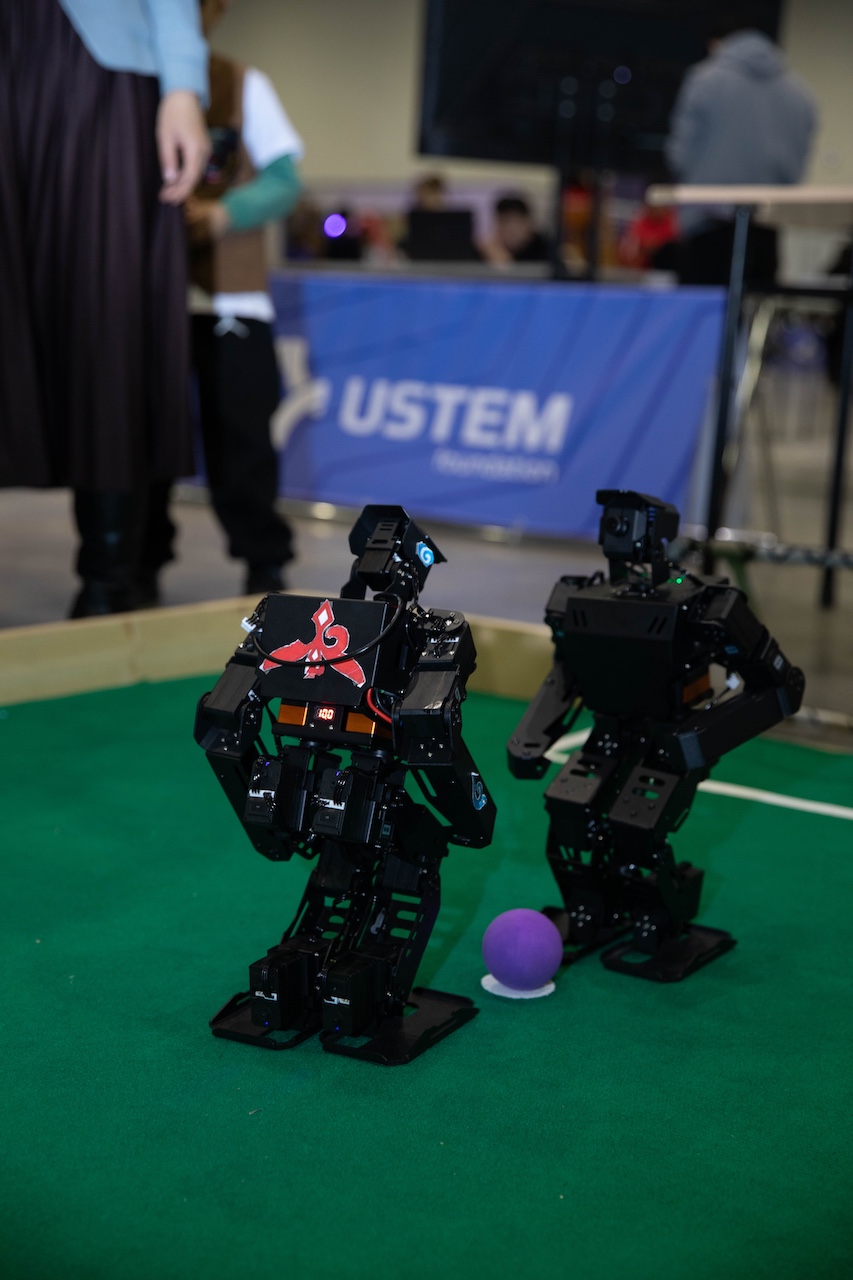
But one thing is already clear: this festival represents a turning point for Kazakhstan’s engineering community.
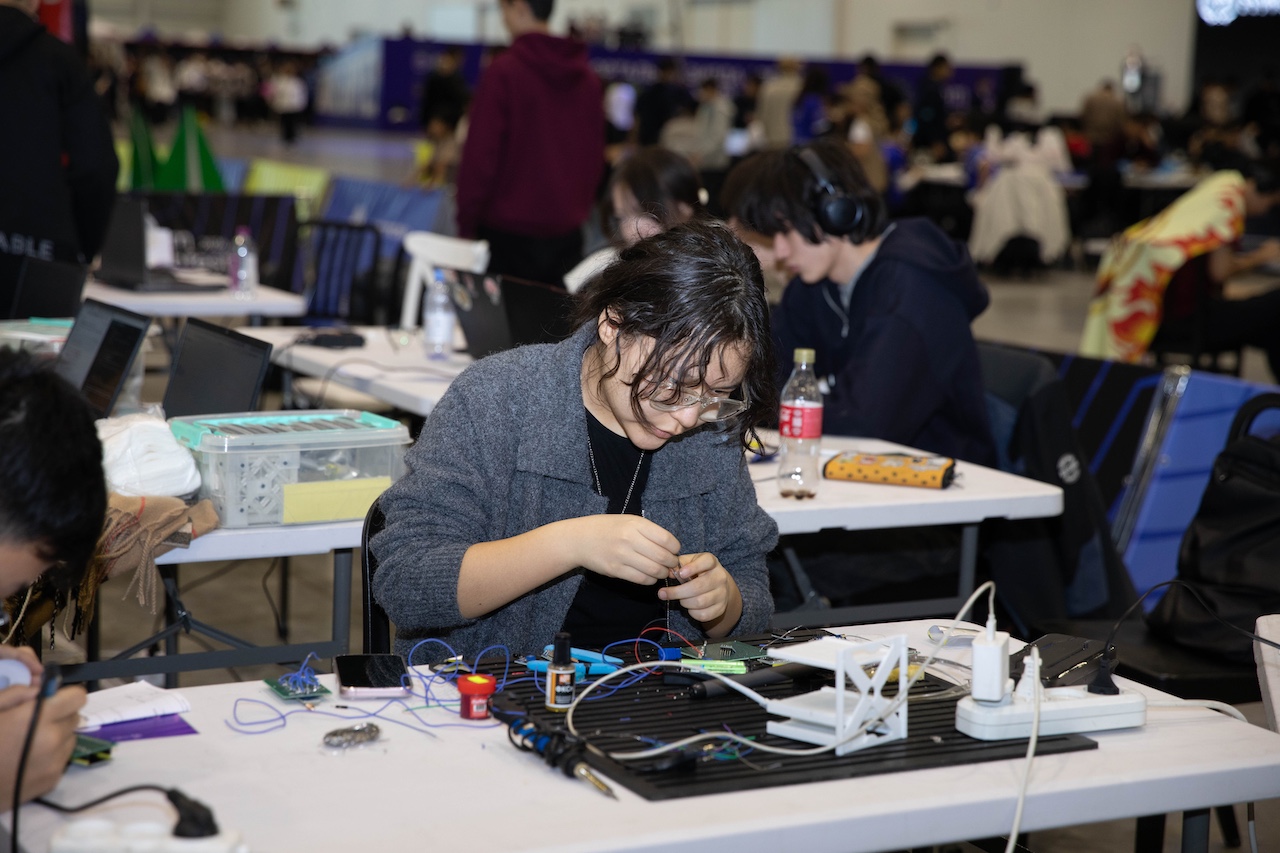
Where the country was once primarily a consumer of imported technologies, it is now beginning to build its own school of Physical AI. The international participation — from Estonia to Vietnam — combined with national-level support, signals that Physical AI in Kazakhstan is no longer an experiment. It is a strategic direction for the future.