


Valentine’s Day is not only a celebration of romance - it is also one of the most commercialized holidays in the United States. According to the National Retail Federation, total spending on February 14 in 2026 is expected to reach approximately $29 billion, with the average person planning to spend nearly $200, DKNews.kz reports.
But what if we looked at the holiday not through the eyes of a consumer, but through the lens of an investor?
According to Tural Aliyev, analyst at Freedom Finance Global, Valentine’s Day does not create investment value on its own. However, it acts as a revealing stress test for business models.
“The holiday does not create investment value by itself, but it allows us to see which business models can increase margins and average ticket size during periods of heightened demand, and which remain vulnerable to fluctuations in sales volumes,” says Tural Aliyev.
Jewelry - or Shares?
Jewelry represents the largest spending category on Valentine’s Day, accounting for roughly $7 billion.
One of the key publicly traded players in this segment is Signet Jewelers Limited, the owner of brands such as Kay, Zales and Jared. The company operates in the mass-market segment, where purchases are often tied to specific dates and milestones.
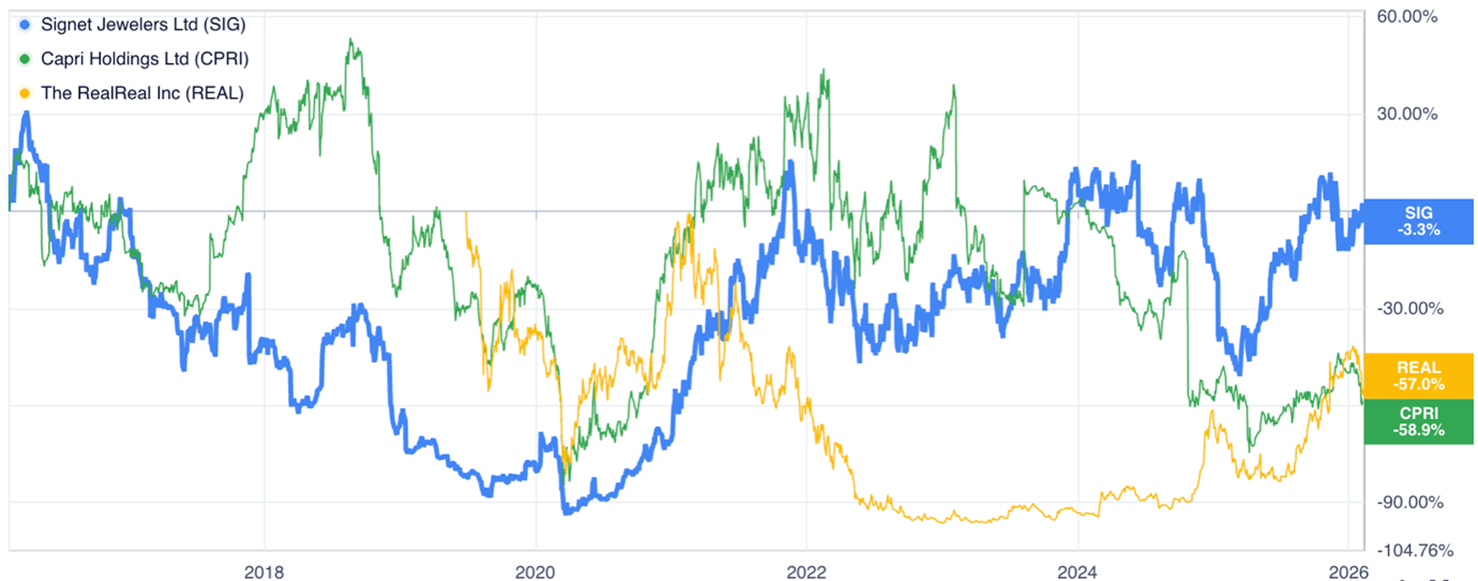 Dynamics of Signet Jewelers Limited shares. Source: gurufocus.com
In its latest report, Signet showed growth in both revenue and comparable sales. A crucial metric for holiday periods - the average selling price per item - increased by 7 percent year over year. This is an important signal.
“During symbolic periods, growth in jewelry sales is driven less by volume and more by higher-priced purchases,” Aliyev explains.
If consumers remain willing to pay more, the company can maintain profitability even if unit sales grow only modestly. Of course, risks remain - the segment is cyclical and sensitive to consumer credit conditions. However, the current dynamics suggest stabilization after weaker periods.
In this context, holiday demand strengthens an already existing positive trend rather than serving as its sole driver.
Dinner Out - or Dividends?
The second-largest spending category on Valentine’s Day is dining out. Americans are expected to spend around $6.3 billion on restaurant visits.
A major public player in this space is Darden Restaurants, the operator behind Olive Garden, LongHorn Steakhouse and Capital Grille. The company expects revenue and comparable sales growth in fiscal year 2026.
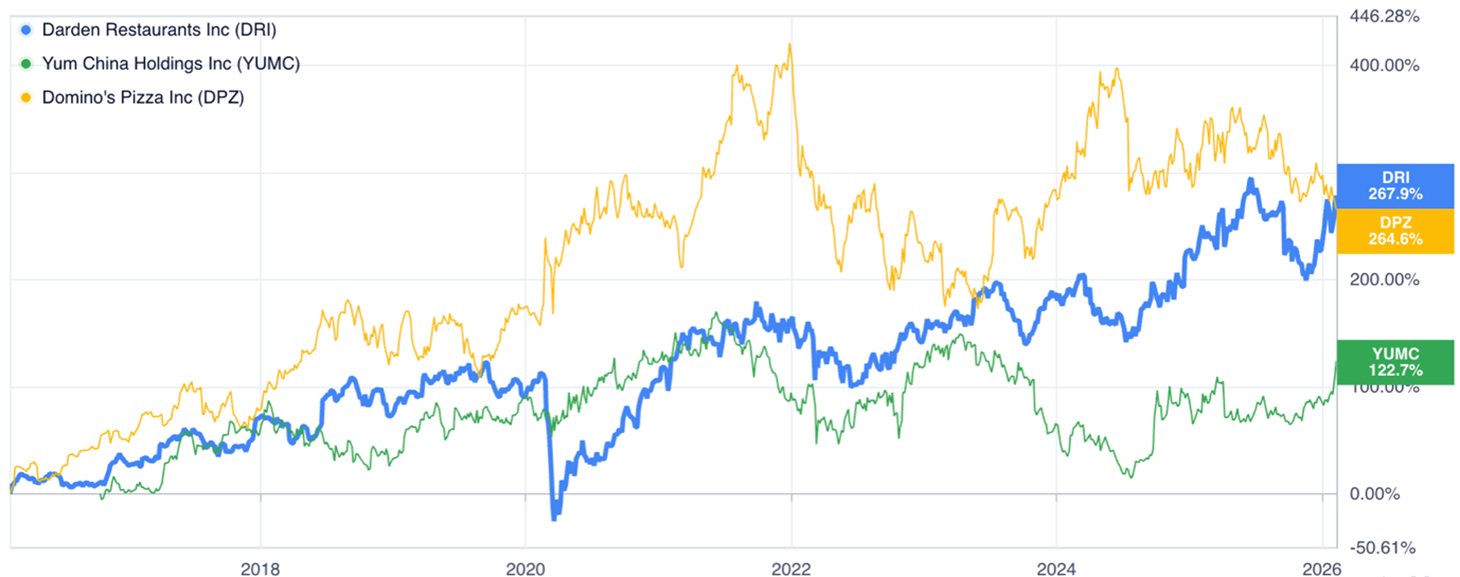 Dynamics of shares of Darden Restaurants, Inc. Source: gurufocus.com
This means that the short-term spike in traffic around February 14 builds on an already positive business trajectory.
Unlike jewelry, the restaurant industry is less driven by increases in average check size and more exposed to cost pressures - food prices, wages and operating expenses.
Therefore, Darden’s investment appeal lies not in seasonal demand spikes but in brand strength and operational scale.
In this case, the holiday acts as an additional catalyst, not the foundation of the business model.
A Box of Chocolate - or Long-Term Growth?
Sweets remain the most popular Valentine’s gift by number of buyers, even if total spending lags behind jewelry.
One of the leading companies in this category is The Hershey Company.
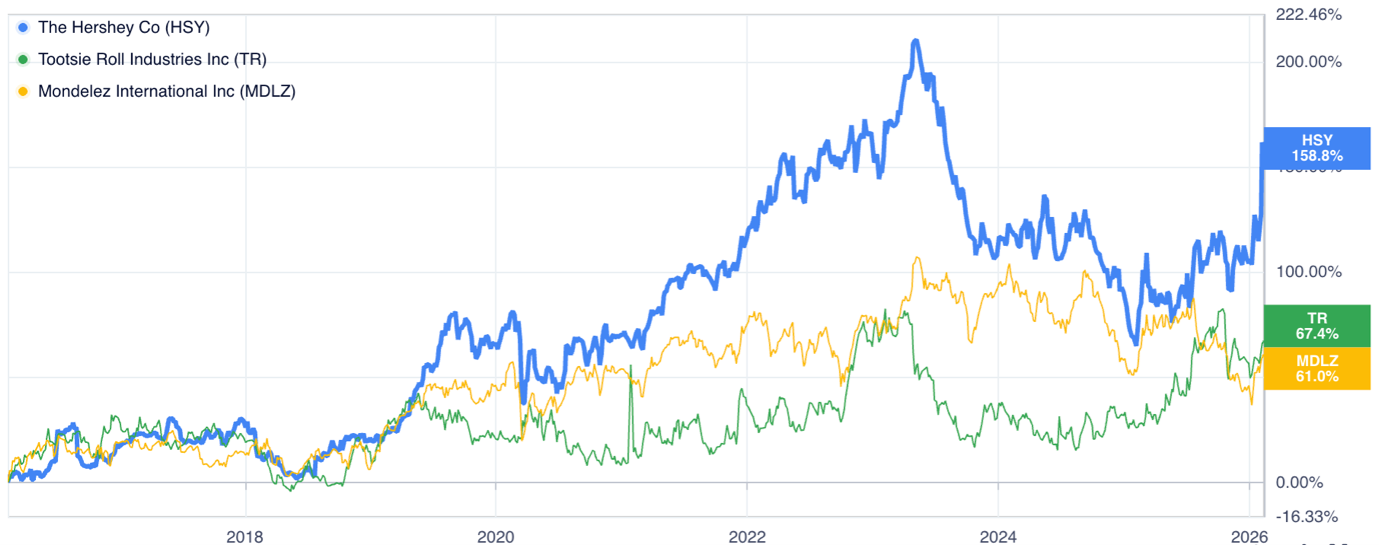 Dynamics of The Hershey Company shares. Source: gurufocus.com
According to its 2026 outlook, the company expects revenue growth driven by higher prices, even as physical sales volumes decline. This reflects a broader consumer trend: people buy fewer items, but at higher prices - especially during emotionally driven occasions.
“Business models with pricing flexibility and diversified revenue streams appear the most resilient,” Aliyev notes.
With cocoa prices rising, the ability to pass costs on to consumers becomes critical. Hershey benefits from diversified seasonal demand and is not dependent on a single holiday.
Valentine’s demand boosts sales, but it is not the company’s only pillar.
Where Emotion Meets Investment
Valentine’s Day does not automatically create investment opportunities. Instead, it highlights which companies can raise average ticket sizes, preserve margins and scale operations during demand peaks.
According to Aliyev, the most resilient models are those with strong pricing power and diversified income streams.
For consumer companies, the holiday functions as a stress test. Those already demonstrating stability gain additional momentum. Those overly dependent on narrow seasonal windows remain riskier from a long-term investment perspective.
Perhaps in 2026, the most unconventional Valentine’s gift will not be flowers, chocolate or dinner reservations.
Perhaps it will be a share in a company that knows how to monetize emotion - and turn it into sustainable value.