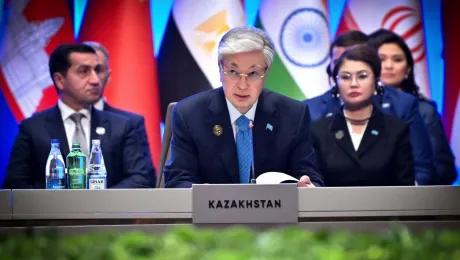


Kassym-Jomart Tokayev paid a working visit to the United States and took part in the inaugural meeting of the Peace Council at the Donald Trump Institute of Peace in Washington. The agenda focused on the reconstruction of Gaza and humanitarian support for the region. In his speech, the President of Kazakhstan emphasized a practical approach to peace - through infrastructure projects, humanitarian assistance, and economic cooperation, and confirmed Kazakhstan’s readiness to contribute to stabilizing the situation in the Gaza Strip.
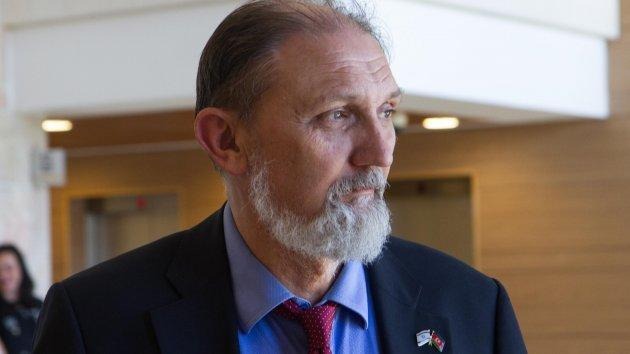
To assess the significance of the first Peace Council meeting and Kazakhstan’s participation, we spoke with Israeli political analyst and PhD in political science Yury Bocharov. His insights cover Kazakhstan’s potential role in humanitarian support for Gaza, Israel’s perception of Tokayev’s initiatives, and the meaning of his course toward practical diplomacy and partnership with the United States.
 musavat.com
- Yury Borisovich, how do you assess the significance and outcomes of the first Peace Council meeting in Washington, and what objectives did Kazakhstan seek to achieve at this level?
The first Peace Council meeting in Washington became not merely a platform for statements but a point of institutionalizing a new format for decision-making on post-conflict reconstruction. Kazakhstan’s participation in this process signals a transition from the position of an external observer to the role of a responsible participant in shaping the international security and recovery agenda.
President Kassym-Jomart Tokayev is consistently pursuing a line in which Kazakhstan is present where decisions are made that influence regional stability and, consequently, global security.
It is important to note that the visit carried not only political but also strategic significance. Participation in discussions on stabilization mechanisms, humanitarian assistance, and infrastructure reconstruction is directly linked to strengthening Kazakhstan’s international reputation as a reliable and pragmatic partner.

Overall, Kazakhstan’s involvement in the Peace Council reflects President Tokayev’s intention to secure a place for the country among states that not only respond to crises but participate in their systemic resolution.
- What can you say about the public signals exchanged between Tokayev and Trump at the first Peace Council meeting? How important are such signals in international politics, and what might they mean for Kazakhstan-US relations?
In contemporary international politics, public signals serve as a diplomatic marker of trust that opens space for practical cooperation. Gratitude expressed by US President Donald Trump and his high assessment of Kazakhstan as a stable and prosperous state represent not merely protocol but recognition of the country’s growing role in the emerging global security architecture.
President Kassym-Jomart Tokayev is an experienced politician who clearly understands the expectations of the other side. In this context, his proposal to establish an award under the auspices of the Peace Council bearing Trump’s name should be viewed as a pragmatic step aimed at institutionalizing a new format of interaction and strengthening personalized diplomatic dialogue channels.
This is not symbolism for its own sake but the creation of an additional trust mechanism within the evolving system of international coordination. Such an initiative demonstrates Kazakhstan’s ability to operate flexibly within a new diplomatic reality where personal factors are increasingly significant, while also reaffirming President Tokayev’s course toward pragmatic strengthening of Kazakhstan-US partnership.

- How do you assess Tokayev’s practical approach to conflict resolution and Kazakhstan’s readiness to support the stabilization and reconstruction of Gaza?
President Tokayev’s emphasis on concrete actions - infrastructure reconstruction, launching economic projects, and providing humanitarian assistance - reflects an understanding that sustainable peace is impossible without an institutional and socio-economic foundation. This approach shifts the discussion from declarations to practical implementation.
Particularly noteworthy is the discussion of the possible participation of Kazakh peacekeeping units in an international stabilization mission in the Gaza Strip. Within Israeli expert and political circles, such a prospect is viewed positively, as the presence of a contingent from a friendly and predictable country is seen as a tangible contribution to maintaining order and facilitating the restoration of civilian life.

Israel is interested in the participation of states that inspire trust in such missions, and Kazakhstan is regarded as precisely such a partner. In this sense, Kazakhstan’s readiness for practical involvement is perceived as a direct continuation of President Tokayev’s course toward a responsible international role.
- Can Kazakhstan play a notable role in dialogue between the Muslim and Jewish worlds?
In his article for The National Interest, President Tokayev outlined a broader mission for Kazakhstan’s participation in international initiatives - promoting dialogue between different civilizational spaces. Until now, Israel’s strategic partner Azerbaijan has served as a key channel for interaction with the Muslim world, with strong and stable ties linking the two countries.
If Kazakhstan begins to work consistently within a similar framework, expanding interaction with Muslim states, this will be positively perceived and welcomed by all parties. Israel is interested in developing relations with countries open to constructive cooperation, and Kazakhstan’s role as a potential mediator in identifying new partners in the Muslim world is objectively growing.

Thus, President Tokayev’s policy opens additional opportunities for expanding dialogue through Kazakhstan as a platform for interaction with states ready for practical and mutually beneficial cooperation with Israel.
- How is Tokayev’s position, combining strong relations with Israel and support for the “two-state solution,” perceived in Israel?
Within Israel’s political community, predictability and consistency of foreign policy partners are highly valued. At the same time, Israel has recently been increasingly cautious about directly using the “two-state” formula due to varying interpretations in the international arena that often diverge from realities on the ground and security dynamics.
In this context, as Kazakhstan becomes more actively involved in stabilizing the situation in Gaza and gains deeper insight into local dynamics, its position may evolve. Nevertheless, today President Tokayev’s course is perceived in Israel as an example of balanced and measured policy that leaves room for practical cooperation.

- What does Tokayev’s emphasis on investments and technology during his visit to Washington say about the goals of the trip?
President Tokayev’s focus on investments, technology, and expanding economic ties with the United States reflects a desire to translate political interaction into long-term partnership. It demonstrates an understanding that participation in peace initiatives should be accompanied by the development of economic cooperation and institutional links.

Meetings with representatives of American business and discussions of joint projects highlight that the visit had a comprehensive character and was aimed at strengthening Kazakhstan’s strategic position in the global economy.
Overall, President Tokayev’s foreign policy course is oriented toward combining diplomatic engagement with the expansion of the country’s economic opportunities.