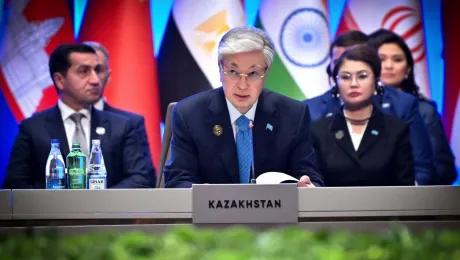


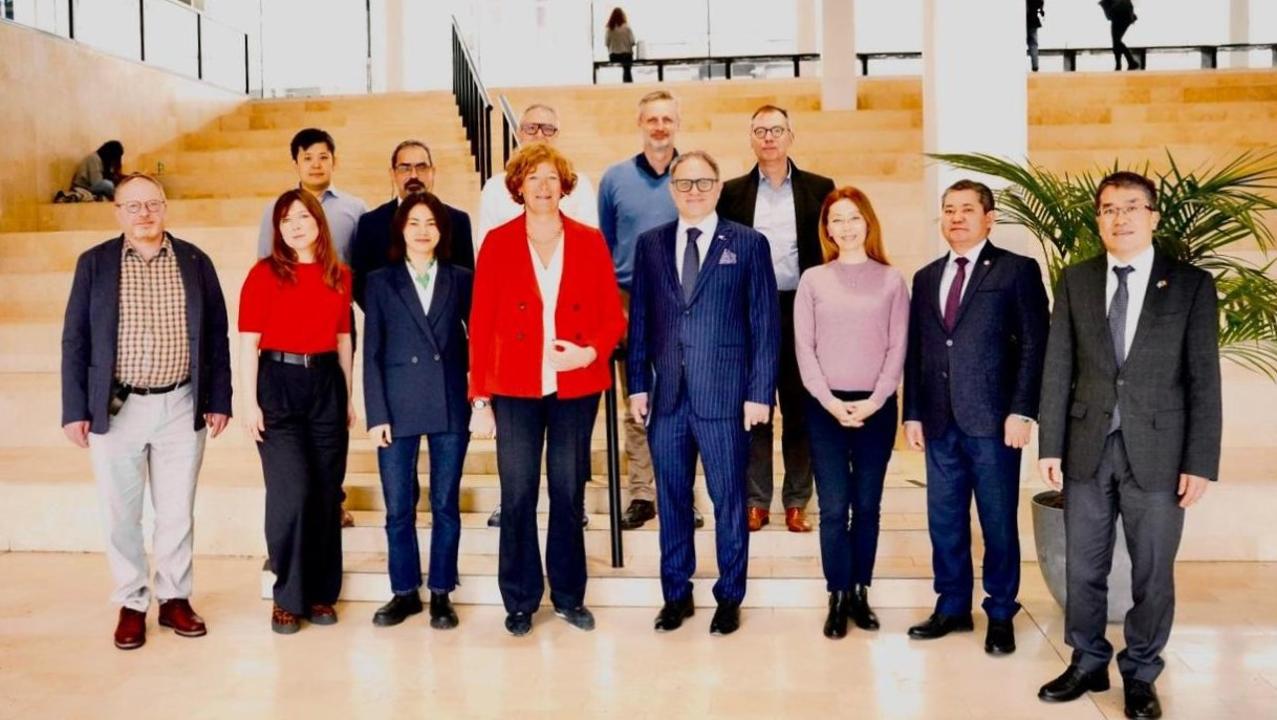
Brussels – Academic cooperation between Kazakhstan and Belgium is entering a new and ambitious phase. Ambassador of Kazakhstan to Belgium Roman Vassilenko met with the Rector of Ghent University, Petra De Sutter, to discuss expanding collaboration in higher education, science, and academic mobility, DKNews.kz reports.
But this meeting was about more than protocol. It signals Kazakhstan’s growing role as an educational and scientific hub in Central Asia — and Europe is paying attention.
Kazakhstan’s Vision: Becoming Central Asia’s Academic Hub
Over the past few years, Kazakhstan has been steadily transforming its higher education landscape. The country now hosts around 40 branches of foreign universities, offering dual-degree programs and international curricula. More than 35,000 international students are currently studying at Kazakhstani universities — and the government aims to increase that number to 150,000 by 2029.
This expansion is part of a broader strategy to create an open, globally integrated educational ecosystem. According to Ambassador Vassilenko, Kazakhstan sees investment in science, technology, and human capital as the foundation of sustainable development and international competitiveness.
Reform and Renewal: Political Changes Shaping the Academic Environment
The dialogue with Ghent University also touched upon Kazakhstan’s large-scale political and institutional reforms. The country is implementing a comprehensive constitutional reform designed to strengthen the rule of law, modernize public administration, and expand civic participation.
The final decision on the updated Constitution will be made through a nationwide referendum scheduled for March 15, 2026. These reforms, officials believe, create a more transparent and predictable environment for international partnerships, including in education and research.
A Strong Foundation Already in Place
Cooperation between Kazakhstan and Ghent University is not starting from scratch.
M. Auezov South Kazakhstan University has been working closely with Ghent University’s Faculty of Bioscience Engineering in research and specialist training. Six Kazakh researchers have completed internships at Ghent, while two PhD specialists continue their academic and teaching careers at L. Gumilyov Eurasian National University.
Ghent University also collaborates with Nazarbayev University, Suleyman Demirel University, and the Institute of Mathematics and Mathematical Modeling under Kazakhstan’s Ministry of Science and Higher Education.
These partnerships span areas critical for the future: biotechnology, agricultural sciences, artificial intelligence, digital technologies, green energy, precision agriculture, and food technologies.

From Exchanges to Joint Innovation
Both sides expressed readiness to move beyond academic exchanges toward deeper cooperation — including:
- Joint research projects
- Co-supervised PhD programs
- Innovation-driven initiatives
- Expanded student and faculty mobility
This signals a shift from simple exchange programs to long-term strategic collaboration.

Why Ghent University Matters
Founded in 1817, Ghent University is one of Belgium’s leading research institutions, with more than 41,000 students and 9,000 staff members. The university is known for strong research in engineering, biosciences, humanities, and applied sciences, and for its active participation in global scientific networks.
While bachelor’s programs are taught in Dutch, many master’s programs are available in English, making it an accessible partner for international students and researchers.
In November 2025, a Ghent University delegation visited Kazakhstan, meeting with universities in Almaty and Astana and holding talks with the Ministry of Science and Higher Education. The visit brought additional momentum to bilateral academic dialogue.
The delegation included experts in green energy, agroeconomics, plant breeding, artificial intelligence, economics, and social sciences — areas where Kazakhstan is actively seeking innovation and modernization.
A Strategic Partnership for the Future
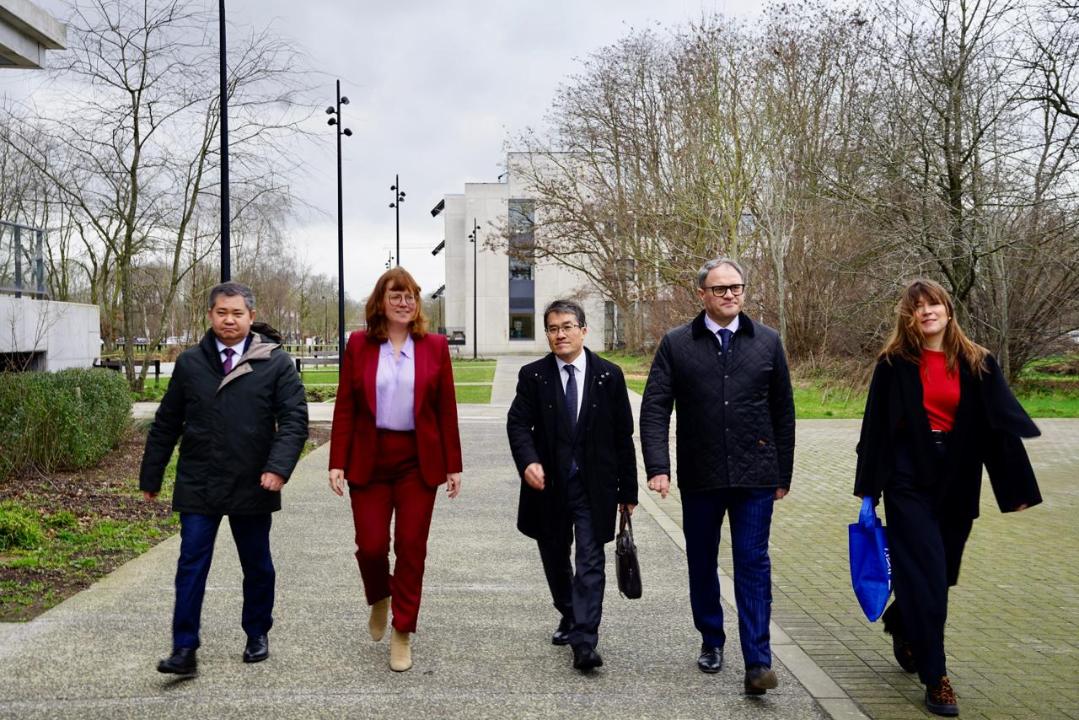
The meeting between Ambassador Vassilenko and Rector De Sutter reflects a broader trend: Kazakhstan is positioning itself not just as a participant, but as a driver of academic cooperation in the region.
As the country reforms its political system and invests in science and education, partnerships with leading European universities like Ghent could play a decisive role in shaping the next generation of researchers, innovators, and global professionals.
If current plans materialize, the Kazakhstan–Belgium academic dialogue may soon become a model of international cooperation built not only on exchange — but on shared innovation and long-term strategy.