

Kazakhstan is expanding its diplomatic horizons in Southeast Asia — and Brunei Darussalam is emerging as a promising new partner, DKNews.kz reports.
During a working visit to the region, Deputy Minister of Foreign Affairs of Kazakhstan Alibek Bakayev met with Awang Haji Mohd Yusra Bin Haji Mohd Salleh, Deputy Permanent Secretary for International Organizations at Brunei’s Ministry of Foreign Affairs. What followed was more than a routine diplomatic exchange — it marked the beginning of what both sides described as a new phase in bilateral relations.
Beyond Protocol: A Broader Vision for Partnership
The meeting covered an ambitious agenda. From political dialogue to trade, investment, and cultural exchange, the discussions reflected a shared understanding: Kazakhstan and Brunei see real untapped potential in working more closely together.
Bakayev emphasized that Kazakhstan is ready to serve as a gateway for Bruneian businesses to access not only Central Asia but the wider Eurasian Economic Union market. For Brunei — a resource-rich Southeast Asian state with growing diversification ambitions — this could open doors to new logistics corridors, energy partnerships, and technology ventures.
“Kazakhstan can serve as a gateway for Bruneian companies to the market of our region and the Eurasian Economic Union,” Bakayev stated. He highlighted promising sectors for investment, including:
- Energy
- Transport and logistics
- Tourism
- Healthcare
- New technologies
- Finance
The message was clear: Kazakhstan is open for business — and it is looking east.
Why This Matters Now
Global economic fragmentation and shifting geopolitical dynamics are pushing countries to diversify partnerships. For Kazakhstan, strengthening ties with ASEAN nations has become a strategic priority. For Brunei, expanding beyond traditional markets aligns with its long-term economic diversification strategy.
Both countries also underlined the importance of improving the legal and contractual framework governing bilateral relations — a signal that talks are moving toward more structured and institutionalized cooperation rather than symbolic diplomacy.
Cultural and humanitarian ties were also on the table. While trade often makes headlines, long-term partnerships are built on people-to-people connections. Educational exchanges, tourism flows, and cultural diplomacy may soon follow the political momentum.
Coordination on the Global Stage
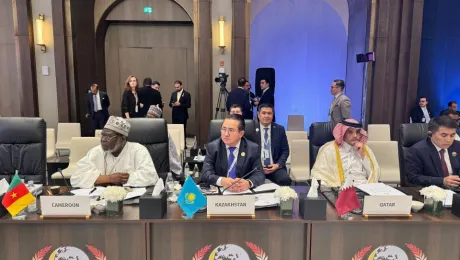
Beyond bilateral cooperation, the meeting highlighted coordination within international organizations — particularly the United Nations and the Organization of Islamic Cooperation.
Kazakhstan and Brunei share similar views on many regional and global issues. According to Bakayev:
“Our countries share common positions on the majority of regional and global issues, which provides a solid foundation for our joint efforts within international organizations.”
Astana also invited Brunei to consider joining the Conference on Interaction and Confidence-Building Measures in Asia (CICA) — a Kazakhstan-initiated platform aimed at strengthening security and dialogue across Asia. If Brunei joins, it would deepen its engagement in broader Asian security architecture.
A Quiet but Strategic Shift
At first glance, Kazakhstan–Brunei relations may not appear headline-grabbing. Yet in today’s multipolar world, such partnerships can quietly reshape regional connectivity and economic corridors.
Central Asia and Southeast Asia are increasingly looking at each other not as distant regions, but as complementary partners. Kazakhstan offers transit potential, energy resources, and access to Eurasian markets. Brunei offers financial capacity, investment interest, and ASEAN connectivity.
At the conclusion of the meeting, both sides reaffirmed their commitment to the progressive development of bilateral relations and agreed to maintain active dialogue on regional and international issues.
In diplomacy, sometimes the most significant shifts begin not with dramatic announcements, but with carefully built trust and aligned interests.
Kazakhstan and Brunei may be separated by geography — but politically and economically, they are moving closer than ever before.