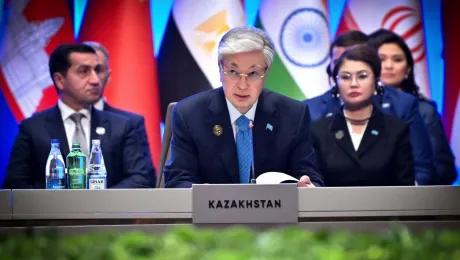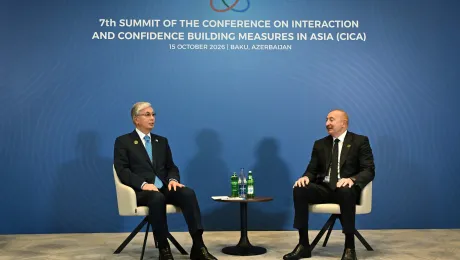

President Kassym-Jomart Tokayev has sent a congratulatory telegram to Mohammed Shahabuddin and the people of Bangladesh on the occasion of their Independence Day, emphasizing the steady development of relations between the two countries, DKNews.kz reports.
In his message, Tokayev underlined that Kazakhstan and Bangladesh are connected not just by formal diplomacy, but by “bonds of friendship and mutual understanding.”

This wording is not случайный — in diplomatic language, it signals a relationship that is stable, predictable, and open to expansion.
A relationship quietly gaining weight
Kazakhstan and Bangladesh may seem geographically distant, but in recent years their cooperation has been gradually strengthening — especially in trade, education, and multilateral platforms.
Tokayev’s message reflects this trend. His confidence that bilateral ties “will continue to develop for the benefit of both nations” suggests that both sides see untapped potential. Bangladesh, with its fast-growing economy and large population, is becoming an increasingly important partner in South Asia, while Kazakhstan positions itself as a key hub in Central Asia.
More than just protocol
At first glance, such congratulatory telegrams may look like routine дипломатический жест. But in reality, they often carry subtle signals.
By personally addressing Shahabuddin and emphasizing future cooperation, Tokayev is reinforcing Kazakhstan’s interest in maintaining active dialogue with Dhaka. These gestures help keep political channels warm — something especially important in a time when global alliances are constantly shifting.
A note of goodwill
Tokayev also wished Mohammed Shahabuddin success in his “responsible state duties,” a phrase that reflects both respect and recognition of leadership. He concluded by extending wishes of well-being and prosperity to the people of Bangladesh — a traditional, but meaningful closing that underscores people-to-people goodwill.
Why it matters
Independence Day is one of the most important national holidays in Bangladesh, marking the country’s path to sovereignty in 1971. Messages like this not only honor that history but also serve as reminders of how international relationships are built — not just through major agreements, but through consistent, respectful communication.
In a world where headlines are often dominated by conflict, such moments of quiet diplomacy show another side of international relations — one where cooperation grows step by step, message by message.