

There’s a quiet but undeniable shift happening in Central Asia—and at the center of it stands Kazakhstan. Once primarily associated with natural resources, the country is now rewriting its economic story. New industries are emerging, regulations are opening up, infrastructure is expanding, and a young, ambitious workforce is stepping forward.
But as Kazakh companies begin looking outward, one destination keeps coming up: Europe.
It’s easy to see why. Europe represents scale, prestige, and some of the most sophisticated markets in the world. For many business leaders, entering Europe feels like the ultimate validation. But according to the Swedish Pracademic and International Business Strategist Mr. Alex Matrsson, that ambition—while justified—needs to be handled with precision.
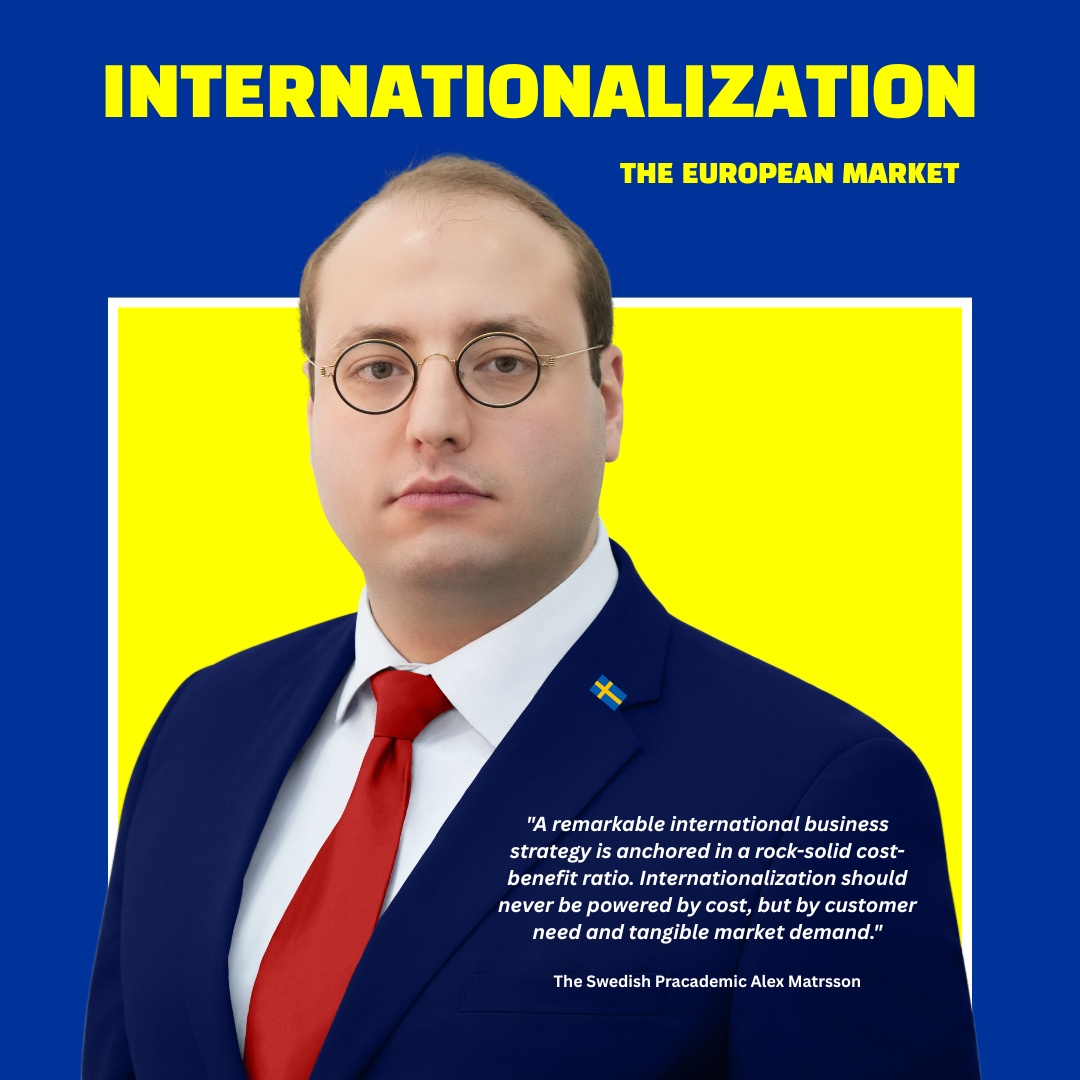
Because Europe isn’t just opportunity. It’s complexity.
The European Dream — And Its Hidden Friction
On paper, Europe looks like a single, unified market. In reality, it’s anything but harmonized.
Each country operates under its own regulatory framework, cultural expectations, and business norms. What works in Germany might fail in France. A strategy tailored for Poland may not resonate in Italy. For Kazakh firms, this means one thing: expansion is not plug-and-play.
Then there’s competition. European markets are crowded with deeply rooted companies—brands that have spent decades building trust, refining supply chains, and securing customer loyalty.
Jumping in too quickly can backfire.
Instead of rapid expansion, Mr. Matrsson advocates for something more measured: start with export.
Why Exporting First Makes Sense
Exporting isn’t just a low-risk entry strategy—it’s a learning mechanism.
It allows companies to:
- Test real demand without heavy upfront investment
- Adapt products to local expectations
- Build brand awareness gradually
- Avoid overstretching financial and operational capacity
In other words, it transforms expansion into an experiment—one grounded in real market feedback.
Rather than betting everything on Europe from day one, firms can earn their way in.
The Power of State-Backed Expansion
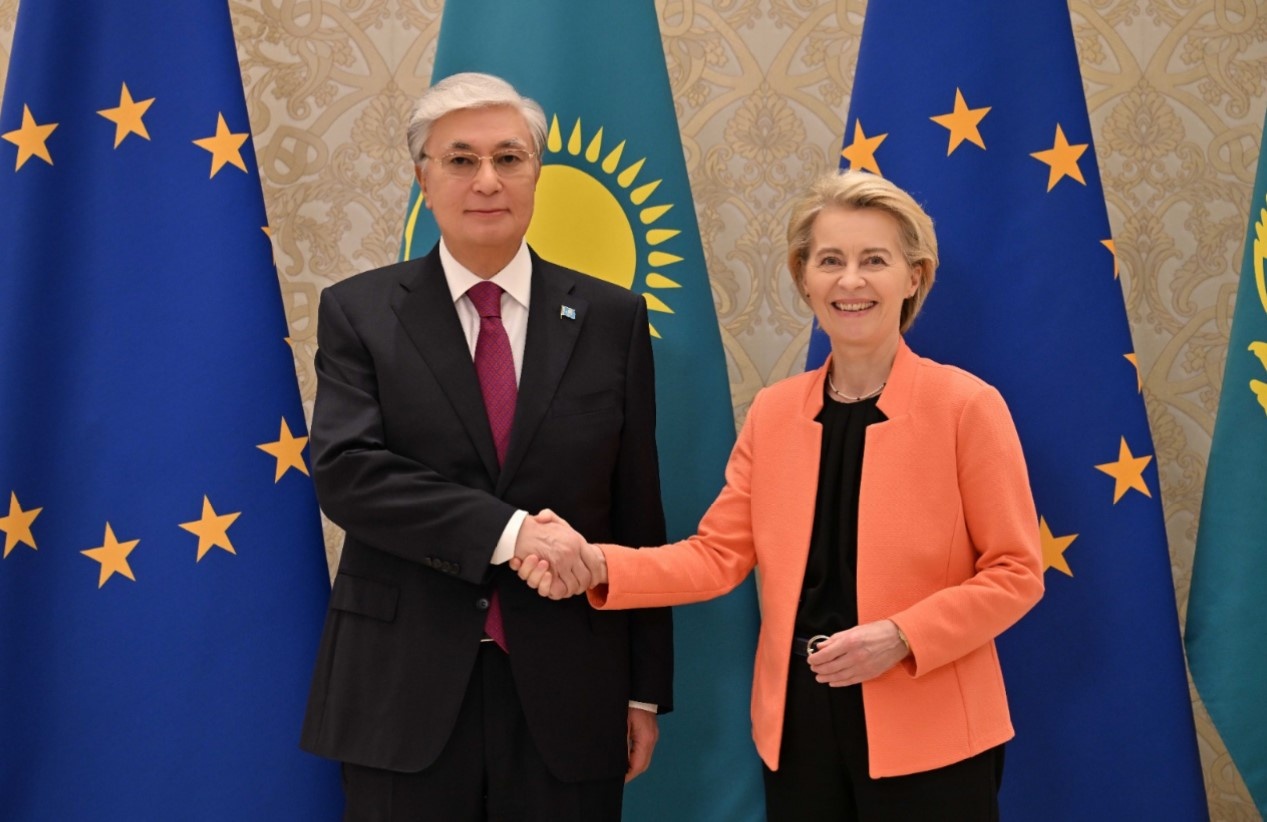
There’s another advantage Kazakh companies shouldn’t overlook: government support.
Kazakhstan has been actively positioning itself as a global economic player—through trade agreements, diplomatic partnerships, and international development initiatives. When businesses align with these efforts, they don’t expand alone.
They expand with backing.
Government-facilitated entry can:
- Open doors to strategic partnerships
- Provide institutional credibility abroad
- Reduce political and regulatory uncertainty
- Strengthen negotiation power in foreign markets
But even here, success doesn’t happen automatically.
Mr. Matrsson emphasizes that the real work starts long before any agreement is signed.
Networks Before Deals
In global business, relationships are currency.
Companies that succeed internationally don’t just enter markets—they embed themselves in them. That means building connections with:
- Industry associations
- Local business leaders
- Policymakers
- Universities and research institutions
These networks create something far more valuable than contracts: trust.
And trust, especially in Europe, often determines who gets access—and who doesn’t.
The Counterintuitive Strategy: Stay Local First
Here’s where Mr. Matrsson’s perspective becomes especially interesting.
While many firms are eager to go global as quickly as possible, he argues the opposite: the strongest international players are those who first master their home market.
Kazakhstan today is not just a launching pad—it’s a laboratory of opportunity.
Across the country, we’re seeing:
- Rapid growth in tech ecosystems
- Major investments in renewable energy
- Expansion of modern financial services
- Large-scale infrastructure projects
- Cross-sector innovation driven by public-private collaboration
For companies operating within this environment, there’s a unique chance to experiment, scale, and refine their models before facing global competition.
Understanding domestic trends, tracking government investments, and identifying emerging clusters isn’t just useful—it’s essential.
Because global success is rarely built from scratch abroad. It’s exported from strength at home.
A Smarter Path to Europe
So what does a successful expansion actually look like?
Not a leap—but a sequence.
- Build a strong domestic foundation
- Identify scalable advantages and competitive strengths
- Test international demand through exports
- Leverage government-backed opportunities
- Invest in long-term relationships and networks
- Expand gradually, market by market
It’s not flashy. It’s not instant.
But it works.
From Local Confidence to Global Impact
Kazakhstan is entering a new phase—one defined not just by growth, but by transformation.
Its geographic position between Asia and Europe is no longer just a map detail. It’s a strategic advantage. Its young workforce isn’t just a statistic—it’s a competitive edge. And its economic reforms aren’t just policy—they’re momentum.
For Kazakh firms, the opportunity is real.
But so is the responsibility to approach it wisely.
As Mr. Matrsson puts it, international success isn’t about moving fast—it’s about moving right. Companies that take the time to understand their own market, build resilience, and expand deliberately won’t just enter Europe.
They’ll belong there.
About Mr. Alex Matrsson
Mr. Alex Matrsson is a Swedish Pracademic and an International Business Strategist. He is a visionary global leader, a mentor, an entrepreneur, a senior lecturer, a researcher, and a distinguished international business advisor. He is the number one International Business Strategy graduate in Sweden. He has extensive experience initiating, running, and managing businesses across the global value chain, as well as working internationally with investors, SMEs, MNCs, government agencies, universities, and multidisciplinary research institutes. Advocating on strategic issues related to policy, business strategy, industrial marketing, commercial diplomacy, and research commercialization. When it comes to higher education, Mr. Matrsson believes in serendipity, innovation, and the power of synergy-making. Therefore, these concepts jointly constitute the springboard for his knowledge dissemination endeavors. He implements a pragmatic approach that is rigorous in nature. He systematically ensures the successful delivery of core business concepts, while simultaneously developing the students' ability to become reflexive thinkers. He aims to enable the students to operationalize their "state-of-the-art" knowledge constructively—so that they can become an invaluable source of prosperity, driving forward the "social" and "economic" well-being for their local communities, their regions, and the larger society, worldwide. His scientific endeavors consolidate around trade promotion, emerging markets, business resilience, and the network approach to internationalization. Mr. Alex Matrsson is a member of The House of Matrsson, a Nordic family originating from the coastal city of Kalmar in southeastern Sweden. Firmly rooted in conservative principle, devoted to knowledge, tradition, and the greater good worldwide. Finally, on a personal level, his wide-ranging interests include blue whales, Arabian horses, classical music, ethical capitalism, religion, culture, the Nordics, the GCC region, and Central Asia—particularly Kazakhstan.